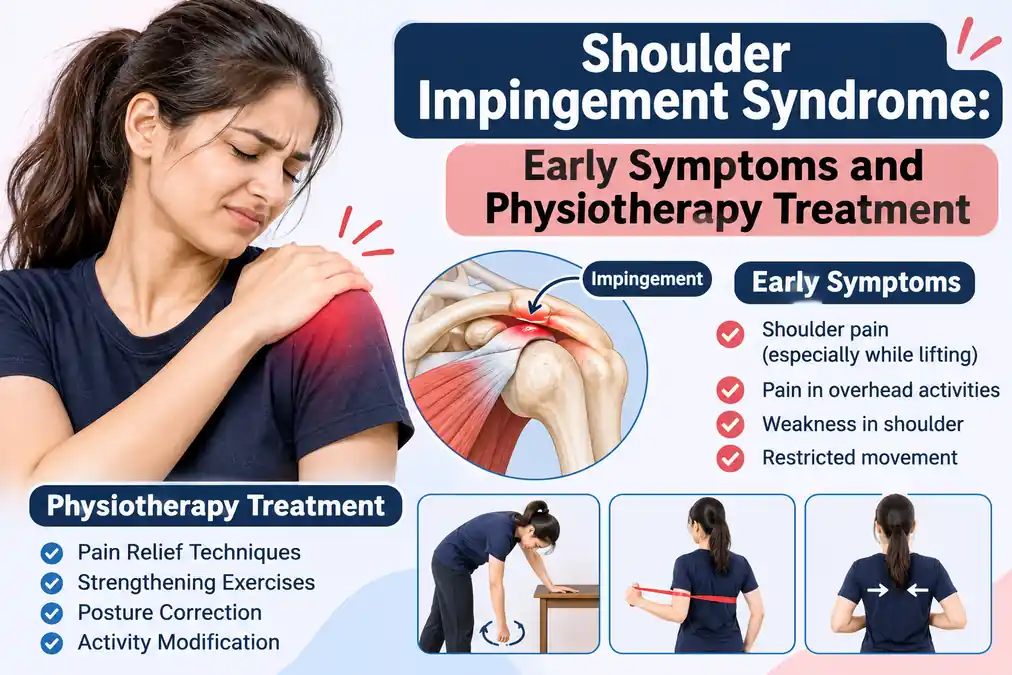
Shoulder Impingement Syndrome: Early Symptoms and Physiotherapy Treatment
Table of Contents
Introduction
Shoulder pain is a problem frequently encountered across different age groups. It can affect a person’s ability to perform numerous tasks such as brushing their hair, dressing, and accessing top cupboards.
It can also hinder physical exertion and impact someone’s sleep. Often, individuals dismiss slight shoulder pain as simply being due to fatigue, muscle soreness, or an unsuitable sleeping posture. Nevertheless, if there is ongoing shoulder pain when moving the arm, then this could be a sign of a shoulder condition – Shoulder Impingement Syndrome is often related to inflammation of the rotator cuff and the surrounding soft tissues below the acromion (a bony part of the shoulder blade).
Typically, symptoms build up and can often be aggravated by raising the arms, bending right round the back, and undertaking overhead tasks. Likewise, they can also be worsened by sleeping on the affected shoulder.
Fortunately, a high number of people can successfully alleviate their shoulder impingement-related pain by receiving suitable physiotherapy, adapting their behaviour, and following an appropriate exercise programme. Timely identification of the problem together with suitable rehabilitation can therefore assist in improving a person’s shoulder function, enhance their muscle strength, and decrease their pain.
Within this article, we will explore initial symptoms, causes, risk factors, how shoulder impingement is diagnosed, and the physiotherapy and rehabilitation care provided. We will also detail the healing process and ways to prevent shoulder impingement.
Definition of Shoulder Impingement Syndrome
Shoulder impingement occurs when the soft tissues around the shoulder joint (particularly the rotator cuff and subacromial bursa) become inflamed.
Historically, ‘subacromial impingement’ has been used to refer to soft tissue pressure or inflammation beneath the acromion. The rotator cuff tendons (most commonly the supraspinatus tendon) run through this area.
Shoulder pain can occur when these soft tissues are inflamed and/or are under excessive strain.
- Subacromial pain syndrome
- Shoulder pain due to the rotator cuff
- Rotator cuff tendinopathy
- Subacromial bursitis
- Shoulder pain on elevation
Whilst previously it was thought that shoulder pain resulted predominantly from a mechanical type impingement of a tendon, nowadays it is recognised that numerous different elements can influence shoulder pain. These include the tendon’s load-bearing ability, muscle strength, shoulder functionality, behaviour, soft tissue sensitivity and a person’s anatomy.
Consequently, management should concentrate on determining what is causing a person’s shoulder pain, as opposed to solely attempting to widen the shoulder joint.
What causes it?
Overhead work, carrying heavy items and/or undertaking an intensifying exercise programme can place greater than is comfortably manageable loads upon the rotator cuff tendons.
As a consequence, these tendons can become inflamed and demonstrate a decreased ability to manage load.
For instance, if an individual abruptly commences a new regime of heavy overhead gym pressing exercises, they may suffer from shoulder pain as their shoulder muscles and tendons have not sufficiently adapted to the new level of demand placed upon them.
Overview of the Shoulder Joint
In order to further comprehend shoulder impingement syndrome, it is useful to firstly review some fundamental information about the shoulder joint.
The shoulder is highly mobile and permits the arm to be moved forwards, backwards, laterally and overhead.
Various bones, muscles, tendons and ligaments combine to enable both shoulder function and stability.
Humerus
- The ball-like end of this bone articulates with the shallower ‘glenoid cavity’ of the scapula.
- Whilst offering great mobility, this joint also necessitates good muscular shoulder support for stability.
Scapula
- Often referred to as the shoulder blade, the scapula is integral to shoulder function.
- As the arm is raised and lowered, the scapula can elevate, depress, rotate, and incline.
- Good interplay is required between the scapula and humerus in order to facilitate effective and comfortable shoulder function.
Acromion
- It constitutes the upper limit of the subacromial area, and below it are the rotator cuff and subacromial bursa.
Four key muscles constitute the rotator cuff:
1. Supraspinatus – Aids shoulder abduction and contributes to shoulder joint stability.
2. Infraspinatus – Assists in externally rotating the arm.
3. Teres Minor – Supports external rotation and shoulder joint stability.
4. Subscapularis – Helps internally rotate the arm and is involved in maintaining shoulder joint stability.
Together, these muscles regulate the position of the humeral head.
Insufficient muscle strength, stamina and/or load-bearing ability can all potentially play a part in causing shoulder issues.
Subacromial Bursa
- It serves to minimise rubbing so that movement can occur smoothly.
- It can also be a source of shoulder pain, in particular when undertaking overhead tasks if it is inflamed.
Long Head of Biceps Tendon
- The long head of the biceps tendon runs along the front of the shoulder and can also be involved in producing shoulder pain.
- Front shoulder pain can arise if this tendon is inflamed, and notably so when undertaking lifting and reaching tasks.
Pain on raising the arm
Pain on raising the arm is a common symptom associated with shoulder impingement.
Such pain can arise during:
- Shelving
- Dressing
- Hair care
- Raising items above shoulder height
- Overhead exercise
- Grasping high shelving
Lateral and/or anterior arm elevation can sometimes heighten the pain.
Painful arc of movement
- Shoulder impingement can give rise to a ‘painful arc’ of elevation.
- A number of people feel pain when raising their arm to between 60 and 120 degrees.
- Further or lower arm elevation can at times alleviate this pain.
- However, not only does a painful arc of movement occur with shoulder impingement, it can also happen with other rotator cuff-related issues.
Nocturnal pain
Nocturnal shoulder pain can also be a common issue.
- People can suffer from shoulder pain in bed due to the effect of pressure and sleeping position on inflamed areas.
- Many people get up in the night as a result of their shoulder pain.
- Also, nocturnal shoulder pain can be affected by changes in sleeping position.
- If someone suffers from ongoing and/or intense nocturnal shoulder pain, then useful professional advice is required.
Backward movement difficulty
People can find it painful or difficult to:
- Put on a shirt
- Fasten a bra
- Reach into their back pocket
- Press clothes into place
- Scratch their back
- Reach for a belt
Such actions require shoulder extension and internal rotation together with other joint movements.
Shoulders Weakness
- Some people identify a lack of strength in their affected shoulder when compared to the other shoulder.
- This can impact a person’s ability to lift items and to hold shopping and gym equipment.
- Weakness can be a consequence of pain-induced muscle suppression together with deconditioning, tendon issues and/or a concomitant rotator cuff injury.
- Unexpected or severe weakness (particularly if following an injury) should be investigated.
Gym-related pain
Gym-based exercises can often highlight shoulder impingement-related symptoms.
The following can potentially worsen symptoms:
- Shoulder press
- Lateral raises
- Upright row
- Bench press
- Incline dumbbell press
- Behind-the-neck press
- Weighted dips
Although not everybody will need to avoid these, alterations might need to be made to both the type and intensity of gym exercises that are painful.
Anterior Pain
- Some people can suffer from anterior shoulder pain when reaching for items, pushing doors and/or working at a desk.
Knuckle and pop
- Knuckling and/or popping can occur as the shoulder moves.
- Whilst non-painful intermittent knuckling is not usually a major issue, a knuckle/pop which is painful or is accompanied by weakness, locking and/or movement limitation should be investigated by a professional.
Shoulders Tiredness
- Shoulder tiredness or pain can be incurred through frequent arm movements.
- Whilst initially undertaking overhead tasks, a person may not feel any issues but later experience pain.
- This may suggest poor muscular stamina or intolerance to frequent loading.
General Activity Pain
- Initial shoulder impingement symptoms can occur during general activity. Later, such symptoms can become severe and affect someone’s work and/or exercise.
- In an attempt to minimise shoulder pain, people may modify their arm movements.
- However, such compensatory behaviour can in some cases place further strain upon other muscles and joints.
- It is important to recognise that shoulder impingement symptoms can also occur with rotator cuff rupture, frozen shoulder, biceps tendinopathy, AC joint and cervical spine issues.
Causes Of Shoulder Impingement Syndrome
Shoulder impingement pain typically arises due to a number of different factors. These can include overuse, muscle weakness, tendon inflammation, together with movement and anatomical issues.
A. Overhead overuse
- Shoulder impingement can result from overuse of the shoulder, especially in occupations and hobbies which require overhead movement such as swimming, badminton, tennis, volleyball, painting and construction work.
- Shoulder symptoms can then progressively emerge if there is insufficient rest.
B. Weak rotator cuff muscles
- The rotator cuff muscles are responsible for stabilising the upper arm bone.
- Shoulder impingement can ensue if these muscles lack both strength and stamina, and so the shoulder is less able to tolerate overuse.
- Enhancing rotator cuff strength can aid a person’s ability to meet both daily and sporting requirements.
C. Scapular movement issues
- During arm elevation, the scapula and humerus must work in conjunction with one another.
- Scapular movement can be adversely affected by muscle weakness, fatigue and/or by changes in movement. Nevertheless, scapular movement issues are not always directly responsible for shoulder pain.
- Physiotherapy can include therapy to enhance scapular control and limb co-ordination.
D. Rotator Cuff Tendinopathy
- Rotator cuff tendinopathy describes tendon pain and dysfunction resulting from alteration to rotator cuff tendon condition.
- Such pathology often occurs where loading placed upon a tendon surpasses the body’s ability to adapt.
- Shoulder impingement-related pain can arise from arm elevation, sleeping on the affected shoulder, and resistance exercise.
- The subacromial bursa can become inflamed, and this can contribute to shoulder pain.
- Shoulder impingement symptoms can be exacerbated by overhead activity and sleeping on the affected shoulder.
F. Increased Exercise Intensity
A common cause of shoulder impingement relates to increased Exercise Intensity.
For instance:
- Rapidly increasing the weight used for shoulder pressing
- Undertaking too many lateral raise exercises
- Commencing swimming after not swimming for some time
- Suddenly increasing badminton playing time
- Undertaking heavy lifting without appropriate preparation
- The body can have difficulty in adapting to a heightened exercise level.
G. Incorrect exercise practice
- Improper practice when exercising can unnecessarily strain the shoulder.
- This can, for example, relate to using too much weight for lateral raises, poor control of overhead movement and/or persistently exercising despite experiencing considerable shoulder pain.
H. Age-related changes
- As people age, there can be modifications to the structure and recovery potential of their tendons.
- Older people can suffer from rotator cuff degeneration together with muscle weakness and lowered tissue tolerance.
- Nevertheless, shoulder impingement-related issues can also affect younger people.
I. Poor recovery and exercise practice
- Inadequate recovery, insufficient sleep and/or excessive exercise levels together with abrupt modifications to an individual’s exercise regime can all contribute to ongoing shoulder issues.
J. Anatomical variation
- There is variability in the shape of people’s acromion and other shoulder anatomy.
- Whilst in some people such anatomical variation can be linked to rotator cuff issues, it does not inevitably lead to shoulder pain.
Who Is At Risk Of Shoulder Impingement?
Various types of people can be affected by shoulder impingement.
Those with certain occupations and/or leisure pursuits can be at higher risk.
Office-based workers
Prolonged computer use can lead to neck and shoulder pain due to sustained postural issues, limited mobility, and muscular fatigue.
Gym members
Individuals who frequently undertake overhead and bench pressing exercises together with lateral raises and other upper body-based exercises can suffer from shoulder impingement if the intensity of their training is increased too rapidly.
Swimmers
Swimming involves overhead movement, predominantly in the case of the freestyle and butterfly strokes.
Shoulder impingement can be impacted by insufficient shoulder strength, fatigue and/or changes in exercise volume.
Badminton and Tennis Players
Overhead strokes can cause continual strain on shoulder muscles and tendons.
Poor technique, fatigue and increased exercise levels can all contribute to shoulder impingement.
Manual workers
Occupations such as painters, electricians, carpenters and construction workers can all involve overhead work and therefore may be at risk.
Elderly people
Age can bring about changes to both tendon and muscular health, and so older people can be more prone to shoulder impingement-related rotator cuff issues.
Individuals with a history of shoulder injury
Shoulder impingement can be affected by a previous shoulder injury in terms of an individual’s movement, strength, and tolerance.
Shoulder Impingement Types
Traditionally, shoulder impingement has been categorised depending on which area of the body is causing or contributing to irritation.
1. Subacromial Impingement
- This is the most widely recognised type of shoulder impingement.
- It includes irritation to structures below the acromion – most commonly the rotator cuff and subacromial bursa.
- Commonly, shoulder impingement sufferers will suffer from pain on arm elevation and during overhead activity. Sleeping on the affected shoulder can also be problematic.
2. Internal Shoulder Impingement
- Internal shoulder impingement is frequently mentioned in relation to overhead sportspeople, notably those involved in throwing sports.
- It occurs when the articular surface of the rotator cuff comes into contact with intra-articular shoulder components in particular postures.
- It can be linked to posterior shoulder pain and impaired throwing ability.
3. Subcoracoid Impingement
- This refers to irritation or compression of structures close to the coracoid process (a bony prominence on the anterior part of the scapula).
- Anterior shoulder pain can be experienced in particular circumstances.
4. Posterior Shoulder Impingement
- Posterior shoulder pain can occur as a result of overhead overuse, especially for sportspeople.
- Several elements can be implicated in this type of shoulder impingement, including the posterior rotator cuff and shoulder joint.
- Appropriate investigation is essential to correctly identify which of these conditions someone is suffering from, as treatment can vary between them.
Physiotherapy treatment for impingement
Physiotherapy forms a key part of non-operative care for those suffering from shoulder impingement.
Physiotherapy can be used to:
- Minimise pain.
- Allow pain-free shoulder movement.
- Strengthen the rotator cuff muscles.
- Improve co-ordination of scapular muscles.
- Increase muscle endurance.
- Enable individuals to resume day-to-day activities.
- Enhance an individual’s ability to undertake overhead movements.
- And avoid future problems.
An effective physiotherapy programme will take account of an individual’s pain, strength, range of motion, occupation and aims in order to tailor their care.
Physiotherapy may involve:
1. Advice and altered activity
- Advice is a key section of physiotherapy.
- Patients need to be aware of which activities worsen their condition and what adaptations can be made so that they are still able to move their shoulders.
- Examples of such adaptations may be;
- Limit overhead lifting for a period of time.
- Avoid continually undertaking painful gym exercises.
- Reduce the weight used in upper body gym sessions.
- Occasionally rest during occupations which require continual movement.
- Avoid lying on the affected shoulder.
- As symptoms improve, incrementally intensify exercise.
Generally, total restriction of shoulder movement is not advised for simple cases of shoulder impingement pain.
Good pain-free shoulder movement should be encouraged.
2. Pain relief
Physiotherapy can offer suitable methods of pain relief in the early stages of care.
Depending on the patient, this may involve:
- Applying ice
- Carrying out mild shoulder movements.
- Ensuring good postural support.
- Adapting activity to minimise pain.
- Providing information regarding pain and healing.
- Ice can typically be applied for around 10-15 minutes, protected by a layer of cloth and ensuring that it is well tolerated and that there is no abnormal skin sensation.
- Heat can also be beneficial, especially if there is tightness.
Again, neither heat nor ice should be viewed as substitutes for a graduated rehabilitation programme.
3. Exercise
Exercise-based rehabilitation is key in the management of shoulder pain caused by the rotator cuff.
Initially, exercises should be carried out within an individual’s pain-free range of motion. They can then be adapted in line with a patient’s progress.
Such exercises may involve:
- Rotator cuff muscle strengthening.
- Scapular stabilisation.
- Shoulder mobility.
- Postural and thoracic mobility.
- Weight/resistance exercise.
- Functional muscle strengthening.
4. Manipulation
Manipulation can also form part of a physiotherapy programme where relevant.
It may comprise:
- Mild shoulder joint manipulation.
- Soft tissue manipulation.
- Thoracic spinal manipulation.
- Shoulder movement encouragement.
- Specific stretching.
Manipulation can assist in both the short-term alleviation of pain and enhancing an individual’s tolerance to movement.
Nevertheless, it should not be seen as an alternative to an active muscle strengthening programme.
5. Scapular Stabilisation
The scapula is integral to shoulder function.
Various muscles, including the serratus anterior, middle and lower trapezius, can all aid scapular control.
Physiotherapy may involve:
- Wall sliding.
- Scapular adduction.
- Serratus anterior punching.
- Prone Y raising.
- Weight/resistance exercises.
These exercises can enhance scapular control and increase muscular endurance.
6. Rotator Cuff Muscle Strengthening
Muscle strengthening of the rotator cuff is fundamental to rehabilitation.
Exercises may concentrate on internal rotation, external rotation, and controlled shoulder raise.
Weights/ resistance can then be incrementally heightened in line with a patient’s strength and tolerance.
7. Postural and Thoracic Mobility
Tightness in an individual’s upper back and/or limited thoracic mobility can sometimes occur in conjunction with shoulder issues.
Exercises can be introduced to encourage thoracic extension and good upper back mobility.
Whilst posture can influence shoulder pain, it should not be assumed that there is one ideal postural alignment. Rather, rehabilitation should seek to optimise both an individual’s mobility and postural comfort.
8. Functional Rehabilitation
As both pain and strength levels are enhanced, rehabilitation exercises can be adapted to more specifically meet the requirements of an individual’s lifestyle.
Such exercises may relate to:
- Overhead reaching.
- Lifting.
- Carrying items (for example, shopping).
- Pushing and pulling.
- Sporting shoulder movements.
- Slow resumption of gym exercise.
This phase enables shoulders to be further prepared for everyday life.
Top physiotherapy exercises for Shoulder Impingement Syndrome
Below are some widely used exercises. However, it is important that these are personalised due to differing patient presentations and assessments.
Pendulum exercise
To mobilise and relax the shoulder.
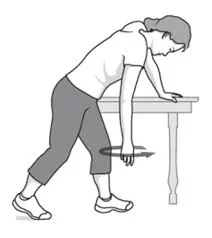
Method:
- Stand next to a table/ chair.
- Lean forwards slightly.
- Balance on your unaffected arm.
- Let your affected arm hang down.
- To move your arm, gently rock your body.
- Move forwards.
- Move backwards.
- Circulate your arm (if able).
Number of repetitions: 10-15 in each direction.
How often: 1-2 times per day.
Note: Ensure that you move smoothly and comfortably – do not jerk.
Scapula squeeze
To stimulate scapular muscles.

Method:
- Sit or stand up straight.
- Gently bring your scapulae together.
- Do not lift your shoulders.
- Maintain the squeeze for 5 seconds.
- Ease into relaxation.
Number of repetitions: 10-15.
Sets: 2.
How often: Once or twice per day.
Isometric shoulder external rotation
To stimulate external rotation muscles with little shoulder motion.

Method:
- Stand with your back to a wall.
- Make a right angle with your elbow.
- Ensure that your elbow remains by your side.
- Place the back of your hand against the wall.
- Gently push outwards, but ensure that your arm does not move.
- Sustain this for 5-10 seconds.
- Ease into relaxation.
Number of repetitions: 8-10.
Sets: 2.
How often: Once per day at first.
Band external rotation
To strengthen the infraspinatus and teres minor muscles.

Method:
- Fasten a band around a firm object.
- In your afflicted hand, hold one end of the band.
- Again, make a right angle with your elbow.
- For extra support, insert a small towel between your elbow and body.
- Externally rotate your forearm.
- Keep your elbow by your side.
- Carefully reposition your arm.
Number of repetitions: 10-12.
Number of sets: 2-3.
How often: 3-4 times per week (according to level of healing).
Band internal rotation
To strengthen the subscapularis and internal rotation muscles.

Method:
- Secure a band to a firm point.
- Your afflicted arm should be closest to the band while you stand with your back to the wall.
- Again, form a right angle with your elbow.
- Make sure your elbow is about waist height.
- Draw your forearm across to your abdominal area.
- Carefully reposition your arm.
Number of repetitions: 10-15.
Number of sets: 2-3.
How often: 3-4 times per week.
Wall slides
To enhance shoulder elevation and scapula synchronisation.
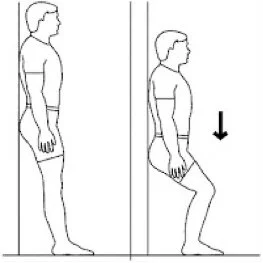
Method:
- Face a wall.
- Rest your hands/ forearms against the wall.
- Gradually raise your arms.
- Ensure that you do not exceed a comfortable range of motion.
- Also, do not over-shoulder.
- Carefully lower your arms back to where they started.
Number of repetitions: 10-12.
Sets: 2.
How often: Once per day at first.
Serratus Anterior Wall Push-Up
To strengthen the serratus anterior and improve control of the scapula.
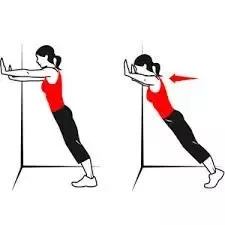
Methods:
- Stand with your back to a wall.
- Put your hands shoulder-high on the wall.
- Slowly lower your elbows and lean forwards so that your chest comes towards the wall.
- Then lean backwards.
- Allow your shoulder blades to protract to slightly push your upper back away from the wall.
- Relax into a suitable posture.
- 3-4 times per week.
Reps: 10-12.
Sets: 2.
Chair Thoracic Extension
To increase thoracic extension.
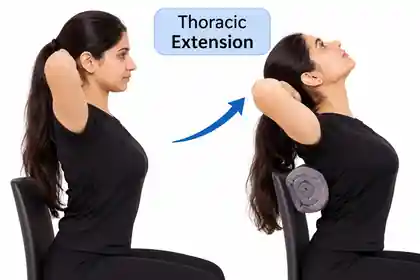
Methods:
- Sit on a firm chair with an adequate backrest.
- Place your hands behind your head (if suitable).
- Stabilise your lumbar region.
- Allow your thoracic region to extend over the chair.
- Ensure that you do not hyper-extend your neck.
- Slowly return to the starting position.
Reps: 8-10.
Sets: 2.
Cross Body Shoulder Stretch
To increase the flexibility of a stiff posterior shoulder.
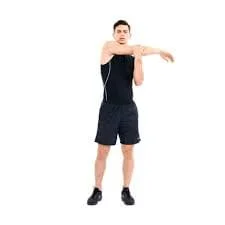
Methods:
- Sit or stand in a relaxed manner.
- Use your other hand to support the crossed arm.
- Pull the arm gently across your torso.
- Gently pull the arm further across your body.
- Hold in a relaxed manner.
- Slowly stretch and relax.
Time: 15-20 seconds.
Repetitions: 3.
Discontinue if the stretching manoeuvre leads to sudden or worsening shoulder pain.
Prone Y Raise
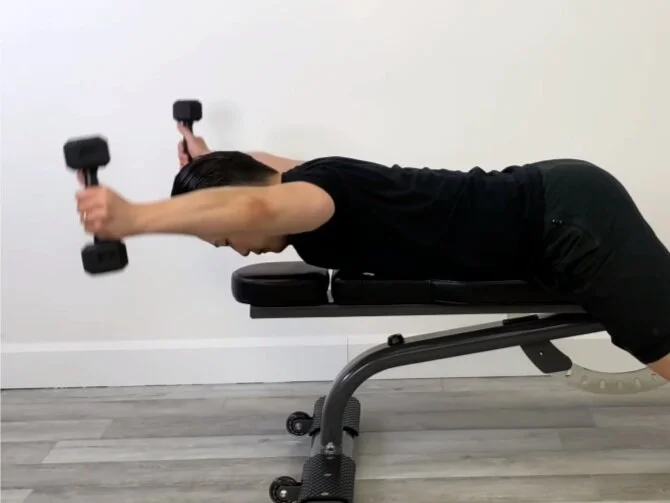
Methods:
- Lie on your stomach on a suitable surface.
- With your thumbs pointing upwards, raise your arms so that they form a ‘Y’ above your head.
- Lift your arms slightly.
- Avoid moving your neck unduly.
- Gradually return to the start position.
Reps: 8-10.
Sets: 2.
Scaption
To enhance controlled shoulder elevation and to strengthen.

Methods:
- Stand.
- Hold your arms at your sides.
- Ensure that your thumb is facing upwards.
- Elevate your arm roughly 30o in front of the purely lateral starting position.
- Lift the arm within a comfortable arc.
- Gradually return to the original position.
Reps: 8-12.
Sets: 2.
Initially carry out this exercise without weights. Only increase resistance when movements can easily be made.
Important notes relating to exercise:
Although these exercises have been suggested, they are not compulsory for everyone. Do not undertake stretches or exercises that cause pain. Appropriate exercises should be chosen by a physiotherapist according to their clinical evaluation and then progressed accordingly.
Exercises to Avoid or Modify During Shoulder Impingement
When shoulder impingement symptoms are present, certain movements may aggravate pain, particularly when performed with heavy resistance or excessive repetitions.
The goal is not to permanently eliminate these exercises but to modify them until the shoulder can tolerate the required load.
Behind-the-Neck Shoulder Press
- This exercise places the shoulder in a demanding overhead position with substantial external rotation.
- It may aggravate symptoms in some individuals.
- Modification: Consider a comfortable-range dumbbell press or landmine press when appropriate.
Heavy Upright Rows
- Upright rows involve shoulder elevation and internal rotation.
- Some people with sensitive shoulders find this movement uncomfortable.
- Modification: Use alternative pulling exercises or a comfortable-range lateral raise.
Heavy Lateral Raises
- Lateral raises can increase rotator cuff loading, particularly when heavy weights are used.
- Modification: Start with lighter resistance, raise the arm within a comfortable range, and gradually progress.
Deep Bench Press
- Excessive shoulder extension at the bottom of a bench press may aggravate anterior shoulder discomfort.
- Modification: Reduce the range of motion, decrease weight, or use a neutral-grip dumbbell press if comfortable.
Heavy Dips
- Dips require considerable shoulder extension and may increase discomfort in sensitive shoulders.
- Modification: Temporarily reduce depth or choose alternative triceps exercises.
Repetitive Overhead Lifting
- Repeatedly lifting heavy objects overhead may increase shoulder irritation.
- Modification: Reduce the number of repetitions, use lighter loads, and allow sufficient recovery between activities.
Remember that the appropriate exercise selection depends on the individual. An exercise that is uncomfortable for one person may be well tolerated by another.
Sample Physiotherapy Rehabilitation Programme
A structured rehabilitation programme should progress gradually. The following is an example of how a physiotherapist might organise rehabilitation for an uncomplicated case of rotator cuff-related shoulder pain.
Rehabilitation stage: Main objectives: Example exercises
Early stage:
- Reduce irritation and maintain movement.
- Pendulum,
- gentle mobility,
- isometrics
Strengthening stage:
- Improve muscle strength.
- Band rotation,
- scapular exercises
Advanced stage:
Improve endurance and control.
- Wall slides,
- scaption,
- side-lying rotation
Functional stage:
- Restore daily activities.
- Overhead reaching,
- lifting,
- pushing,
- pulling
Return to sport:
- Restore activity-specific capacity.
- Progressive gym and sports training
Early Rehabilitation
The initial focus is on comfortable movement and maintaining shoulder function.
Exercises may include:
- Pendulum movements.
- Gentle shoulder flexion.
- Scapular setting.
- Isometric external rotation.
- Isometric internal rotation.
- Avoid aggressively stretching the shoulder during this stage.
Intermediate Rehabilitation
Once symptoms become more manageable, progressive resistance exercises can be introduced
These may include:
- Resistance band external rotation.
- Resistance band internal rotation.
- Serratus anterior strengthening.
- Wall slides.
- Light scaption.
- Controlled shoulder elevation.
The physiotherapist may gradually increase resistance and repetitions.
Advanced Rehabilitation
The advanced stage focuses on improving strength, endurance, coordination, and functional capacity.
Exercises may include:
- Side-lying external rotation.
- Prone Y raises.
- Resistance band diagonal movements.
- Progressive overhead strengthening.
- Closed-chain shoulder exercises.
- Functional lifting.
Return-to-Activity Training
The final stage prepares the patient for normal work, gym training, and sports activities.
The rehabilitation programme may include:
- Gradual overhead lifting.
- Sport-specific movement practice.
- Progressive resistance training.
- Repeated reaching activities.
- Endurance training.
- Controlled high-load exercises.
Returning to full activity should be based on functional recovery rather than simply the number of weeks since symptoms began.
Role of Different Physiotherapy Modalities
Physiotherapists will often tailor their physiotherapy interventions to a patient’s symptoms and observations. Exercise rehabilitation is typically the main modality of physiotherapy treatment.
A. Transcutaneous Electrical Nerve Stimulation (TENS)
- This involves using electrical currents that are conducted via skin electrodes.
It can be effective at providing analgesia to certain patients. - However, it cannot itself be used to strengthen the rotator cuff and/or improve exercise ability.
B. Therapeutic Ultrasound
- Therapeutic ultrasound involves sending sonic energy into tissues.
- Whilst used in some physiotherapy practice, therapeutic ultrasound is not advised as standard physiotherapy for rotator cuff tendinopathy based on current guidelines.
- It should not therefore be used in preference to exercise rehabilitation.
- Interferential is also employed for analgesia.
- It has a limited application in shoulder impingement and should not be seen as an alternative to exercise and functional re-education aimed at improving musculature strength.
D. Cold Therapy
- Applying cold can effectively provide transient analgesia following exercise.
- It can generally be applied for around 10-15 minutes and should be covered by a layer of fabric.
E. Heat Therapy
- Heat may be beneficial to some by alleviating feelings of tightness within associated musculature.
- It should not, though, be applied to areas of altered sensation and should not be used on acutely inflamed, hot and/or possibly infected joints.
F. Manual Therapy
- Manual joint movement and certain soft tissue techniques can be helpful.
- They can improve comfort and, in turn, support someone’s engagement in exercise.
G. Kinesiology Taping
- Kinesiology taping may offer transient symptomatic improvement for some.
- As with TENS, it is not able to address the root cause of a tendon issue and so should only be used as a supplementary rehabilitation tool.
H. Shockwave Therapy
- Extracorporeal shockwave therapy is not advised as standard for the management of non-calcific rotator cuff tendinopathy.
- It may, though, be appropriate for specific instances of proven calcific rotator cuff tendinopathy.
Physiotherapy interventions should be guided by a person’s diagnosis and should not be universally applied to all painful shoulders.
Sleeping positions
Poor sleep can impact both a person’s recovery and their general quality of life. Appropriate sleeping positions may also relieve shoulder pain.
Sleeping on your back
- Many people find this a good sleeping position.
- Add a small pillow under the painful arm to further support the affected shoulder.
- This can relieve strain and ensure continued comfort.
Sleeping on the opposite side
Lying on the side of the body opposite to the painful shoulder:
- Add a pillow in front of your chest.
- Put the affected arm on top of this pillow.
- Ensure that the shoulder is relaxed.
- Avoid letting the affected arm dangle unsupported from the body.
Sleeping on the painful side
- If this does so, attempt alternative sleeping positions until the pain is alleviated.
Choosing a suitable pillow
- A pillow should allow for a neutral head position – neither over-arching nor twisting.
- Whilst there is no universally ideal pillow, it is more important to ensure that it is both comfortable and provides suitable neck support.
Managing shoulder impingement syndrome at home
- Proper self-management is a key part of recovery.
- Below are some tips which can minimise exacerbating factors and aid recovery.
Limit provocative movement
- Minimise undertaking movements which cause pain.
Encourage free, comfortable shoulder movement
- Unless instructed otherwise by a healthcare professional, avoid wholly restricting shoulder movement.
Exercise
- Adhere to, and practise exercises correctly.
Good quality sleep
- As mentioned previously, good sleep is important for general recovery and also for ensuring good physical performance.
Take regular rest periods from sitting at a desk
- Those who spend much time working at a computer should take rest periods to encourage movement.
Avoid carrying heavy bags on the painful side
- Either rebalance the weight you carry or, alternatively, lessen its amount.
Stay physically active
- Generally, walking and other comfortable forms of exercise can be undertaken to help maintain fitness during recovery.
Don’t self-medicate
- Always seek advice from either a doctor or pharmacist regarding taking medication. This is especially important if you also have other health issues or are currently taking regular medication.
Record your condition
Note information regarding:
- Pain
- Range of shoulder movement
- Quality of sleep
- Exercise capacity
Such records can then be used to guide a physiotherapist in tailoring your recovery programme.
When should I see a physiotherapist?
It is advisable to seek physiotherapy assessment at an early stage if shoulder pain is impacting your life.
You may wish to see a physiotherapist if you:
- Have pain when raising your arm.
- Continually suffer shoulder pain during exercise.
- Cannot reach behind your back.
- Are uncomfortable in bed (nocturnal shoulder pain).
- Have weakened shoulders.
- Are in pain during everyday tasks.
- Do not see improvement in your symptoms after a few weeks.
- Experience ongoing shoulder discomfort.
A physiotherapist will examine your shoulder and will then be able to recognise any movement or muscle strength deficits. They can then formulate an appropriate recovery programme.
When should I urgently seek medical advice?
Whilst most shoulder pain is due to impingement, there are situations where urgent medical advice should be sought. These include:
- Acute, post-injury shoulder pain.
- Loss of arm movement post-injury.
- Obvious shoulder deformity.
- A hot, red and swollen shoulder together with a high temperature.
- Acute, severe weakness.
- Persistent swelling or mass formation for no apparent reason.
Should you experience shoulder pain along with any of the following, it may signify a cardiac emergency, and therefore it is essential that you receive immediate medical attention. Do not assume that this is simply a muscular issue: the associated features may include chest pressure, shortness of breath, sweating, and/or light-headedness. Pain may also radiate to the jaw and/or arm.
Is It Possible to Treat Shoulder Impingement Syndrome Without Surgery?
Yes. Often, those suffering from shoulder pain due to a rotator cuff issue show good recovery with non-surgical interventions such as physiotherapy, exercise, self-management, and suitable drug therapy.
Generally, surgery is not initially suggested for straightforward shoulder impingement-related pain.
Non-surgical intervention
Initial non-surgical intervention may encompass:
- Physiotherapy and strengthening exercises.
- Self-management.
- Medication for pain relief.
- Rotator cuff rehabilitation.
- Strengthening of scapular muscles.
- Functional re-training.
Where appropriate and in cases of severe shoulder pain, a doctor may suggest a corticosteroid injection.
Although such injections can offer temporary pain relief, they are not a substitute for strengthening exercises.
Typically, they are not advocated as primary treatment.
Under what circumstances might surgery be suggested?
Surgery could be suggested in specific instances where there are major anatomical issues (for example, specific rotator cuff damage) or if a person continues to suffer from symptoms despite having undergone suitable non-surgical intervention.
This will depend upon an individual’s examination results, functional impairment and non-surgical recovery progress.
It is vital to recognise that, for straightforward sub-acromial shoulder pain, surgery to widen the sub-acromial space is generally not required.
Conclusion
Shoulder impingement syndrome is a common reason for shoulder pain and can affect a person’s work, sporting and gym participation. Initial symptoms can involve arm-raising pain, overhead activity-related pain and nocturnal shoulder pain. Other symptoms can include muscle weakness and trouble reaching behind.
Whilst shoulder impingement can be troublesome, many people benefit from suitable conservative interventions.
A suitable physiotherapy-led rehabilitation programme aims to alleviate a person’s pain, enhance shoulder movement and strengthen the rotator cuff. Good scapular muscle control is also targeted, and a person is then progressively encouraged to resume usual activities.
Resistance band external rotation, scapula strengthening, wall sliding, serratus anterior muscle strengthening and controlled arm raising are just some of the exercises which may be utilised in rehabilitation, depending on an individual’s needs.
Unwarranted inactivity, excessive exercise and continual execution of painful exercises should all be avoided. Rather, people should undertake a progressive, organised rehabilitation regime.
Never disregard shoulder pain. Appropriate physiotherapy-led assessment and intervention can aid a person’s shoulder function and boost their self-efficacy regarding movement. This can then underpin a secure re-engagement in daily life.
FAQs
What are shoulder impingement syndrome’s typical early symptoms?
Many people with shoulder impingement report pain when lifting their arm, especially when doing so in a lateral and/or overhead position. Pain can also be felt during sleep.
Can shoulder impingement resolve?
Light symptoms may improve with suitable changes to a person’s activity and a progressive resumption of movement. People should seek advice from either a physiotherapist or doctor if symptoms are long-lasting or recur.
What exercises are suitable for someone with shoulder impingement?
Different exercises may be suitable for different people. For example, pendulum exercises, isometrics, external rotation with a resistance band, strengthening of the scapula, and wall sliding can all be used.
Is walking suitable for those with shoulder impingement?
Walking is usually acceptable. It can also be part of a person’s exercise regime. However, people should avoid carrying heavy items and undertaking exercise which worsens symptoms.
Can someone continue to attend the gym if they have shoulder impingement?
With suitable adaptations, it may be possible to do so. Avoid exercises which are painful and alter the level of resistance used. Likewise, avoid continually undertaking exercises which exacerbate symptoms. A physiotherapist can advise how to resume upper body gym exercise.
When should I use ice/heat for my shoulder?
Some people find that applying ice to the shoulder following exercise that has worsened symptoms is beneficial. Heat can also be effective for some in relaxing tight muscles. Select whichever offers the best relief.
Does shoulder impingement result in nocturnal pain?
Yes. People can find that their symptoms are worsened if they sleep with their affected shoulder in a compressed position. Using a pillow to prop up the arm and/or sleeping on the unaffected side can enhance a person’s comfort.
References
- Guide | Physical Therapy Guide to Shoulder Impingement Syndrome. (2021, January 4). Choose PT. https://www.choosept.com/guide/physical-therapy-guide-shoulder-impingement
- Shoulder impingement syndrome (Rotator cuff tendinitis). (2026, April 27). Cleveland Clinic. https://my.clevelandclinic.org/health/diseases/shoulder-impingement-rotator-cuff-tendinitis
- Shoulder Impingement Syndrome treatment and specialist care in Pune. (n.d.). Sancheti Orthopaedic Hospital. https://sanchetihospital.org/specialities/shoulder-department/shoulder-impingement-syndrome/
- Ocs, N. H. P. D. (2026, August 25). Exercises for shoulder impingement. Hospital for Special Surgery. https://www.hss.edu/health-library/move-better/exercises-shoulder-impingement