
Scapular Stabilization Exercises
Table of Contents
Introduction
Scapular stabilisation exercises can be an important part of shoulder rehabilitation, correcting postural alignment and strengthening the upper body. The scapula (shoulder blade) has an essential role to play in ensuring the shoulder joints are moving correctly and with good control. It helps provide a stable base for the shoulder joints, allowing smooth movement of the arms.
Poor scapular control can cause shoulder pain, weakness, reduced range of motion, kyphotic postures, and difficulties with overhead movements. Those with sedentary jobs, lots of phone use, repetitive arm movements, or overhead sports can develop weakness and poor control of the muscles controlling the scapula.
Scapular stabilisation exercises can help strengthen and improve control of the muscles such as the serratus anterior, middle trapezius, lower trapezius, and rhomboids. These muscles help control the scapula.
By regularly practicing scapular stabilisation exercises, you can improve shoulder stability, improve posture, and improve upper body movement.
In this article, we will explain what scapular stabilisation is, why they are beneficial, what the best exercises are, how to perform them correctly, common mistakes to avoid, things to consider, and how to incorporate scapular stabilisation into your daily exercise/ rehab.
What are Scapular Stabilisation Exercises?
Unlike many joints, the scapula is not physically connected to the rib cage. Instead, it glides over the rib cage due to a functional connection.
To ensure the shoulder works correctly, the scapula should move with the upper arm in a coordinated way.
A well-controlled scapula will help keep the joint stable, allow overhead movements, and help distribute the forces throughout the shoulder.
Scapular stabilisation exercises target the muscles to:
- Improve scapular control.
- Improve overhead arm movements.
- Strengthen the muscles around the scapula.
- Improve coordination between the scapula and upper back.
- Reduce tension in the shoulder muscles.
- They can be done with bodyweight, resistance bands, dumbbells, exercise balls, and a wall.
Understanding the Anatomy
It can help to know which muscles are involved when doing scapular stabilisation exercises.
Serratus Anterior: This muscle runs along the side of the rib cage from the upper ribs to the medial border of the scapula.
Main actions include:
- Protracting the scapula.
- Helps upwardly rotate the scapula.
- Assists with overhead arm movements.
If the serratus anterior is weak or lacks control, this can lead to winging of the scapula. This is where the medial border of the scapula sticks out more
Middle Trapezius: The middle trapezius is the muscle that connects the middle and upper back.
- Helps provide stability to the upper back.
- Helps control the scapula.
- Improves postural alignment.
- Improves retraction coordination.
Lower Trapezius: This muscle runs down the lower part of the upper back.
- Helps upwardly rotate the scapula.
- Helps posteriorly rotate the scapula.
- Helps with overhead movements.
- Provides scapular stability.
- If this muscle is weak, it could cause poor scapular control during overhead movements.
Rhomboid Major and Minor: These connect the medial edge of the scapula to the spine.
Main actions include:
- Retracting the scapula.
- Helps downwardly rotate.
- Helps keep the scapula in place.
- Helps keep the scapula stable.
Upper Trapezius: This muscle runs between the neck and shoulder.
- Helps elevate and upwardly rotate the scapula.
Whilst it is an important muscle for normal shoulder movement, if there is too much tension, it can affect how the scapula moves in a coordinated way for some people.
Benefits Of Scapular Stabilisation Exercises
Improved Shoulder Stability
- One of the main benefits of performing scapular stabilisation exercises is improved shoulder stability.
- The shoulder joint is highly mobile and relies on surrounding muscles for dynamic stability.
- Stable musculature around the scapula will ensure good positioning during lifting, pushing, pulling, and reaching movements.
Improved Posture
- Poor posture can cause poor scapular positioning. This can include poor posture such as rounded shoulders and anterior head posture.
- Weak mid and lower trapezius and serratus anterior can cause poor postural control.
- This can help to improve your posture when combined with mobility exercises and taking regular breaks.
Reduced Shoulder Pain
- Poor scapular mobility can cause pain and inefficiency in the shoulder.
- Strengthening the musculature around the scapula can help improve shoulder mechanics and reduce undue stress on the arm during movements.
- Scapular stabilisation exercises are often used in rehabilitation programmes for specific shoulder conditions such as subacromial pain and rotator cuff-related shoulder pain.
- However, the right exercises will depend on individual symptoms and condition.
Improved Overhead Arm Movements
- Scapular stabilisation exercises will help improve the coordination of these muscles so you can move your arm overhead smoothly.
Upper Back Strengthening
- Scapular retraction, prone Y raises, and resistance band rows are all exercises that will strengthen your scapular muscles.
Improved Athletic Performance
- Many athletes play sports that involve repetitive arm movements. This includes sports like swimming, tennis, volleyball, badminton, baseball and weightlifting.
- Having good control over your scapula will help distribute force efficiently throughout the shoulder complex.
Muscle Coordination
- Scapular stabilisation is not only about strengthening muscles, but improving muscle timing and coordination.
Support Shoulder Rehabilitation
Scapular stabilisation exercises are often performed by Physiotherapists during rehabilitation.
- Rotator Cuff Related Shoulder Pain
- Scapular Dyskinesis
- Symptoms related to shoulder impingement
- Poor scapular control
- Round shoulders
- Shoulder weakness after injury
The right exercises for you should be chosen based on patient assessment and stage of rehabilitation.
15 Best Scapular Stabilisation Exercises
All these exercises will work different muscles that control your scapula.
Start with some basic exercises and progress onto resistance exercises as you get stronger and have more control.
1. Scapular Retraction
This will mainly work your middle trapezius and rhomboids.

How To Do Scapular Retraction:
- Sit or stand tall with good posture.
- Arms should be relaxed at your sides.
- Pull your shoulder blades together.
- Hold for 3-5 seconds.
- Slowly return to the starting position.
- Repeat 10-15 times.
Benefits
- Rhomboid strengthening
- Middle trapezius activation
- Increased scapula awareness
- Improved upper back posture
2. Wall Push Up Plus
The wall-based push-up plus is a beginner-friendly movement that helps activate and build strength in the serratus anterior muscle.
This uses controlled pushing movements with extra protraction of the scapula.
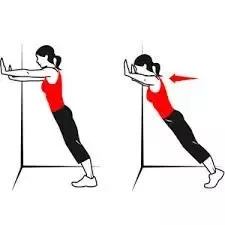
How To Do Wall Push-Up:
- Feet should be shoulder-width apart.
- Bend your elbows and bring your chest closer to the wall.
- Push through your hands to straighten your elbows.
- Once your elbows are straight, gently push your upper back away from the wall by protracting your scapula.
- Return to the start position.
- Repeat 10-15 times.
Benefits
- Serratus anterior strengthening
- Improved scapular protraction
- Improved scapular control
- Helps improve pushing mechanics
3. Resistance Band Row
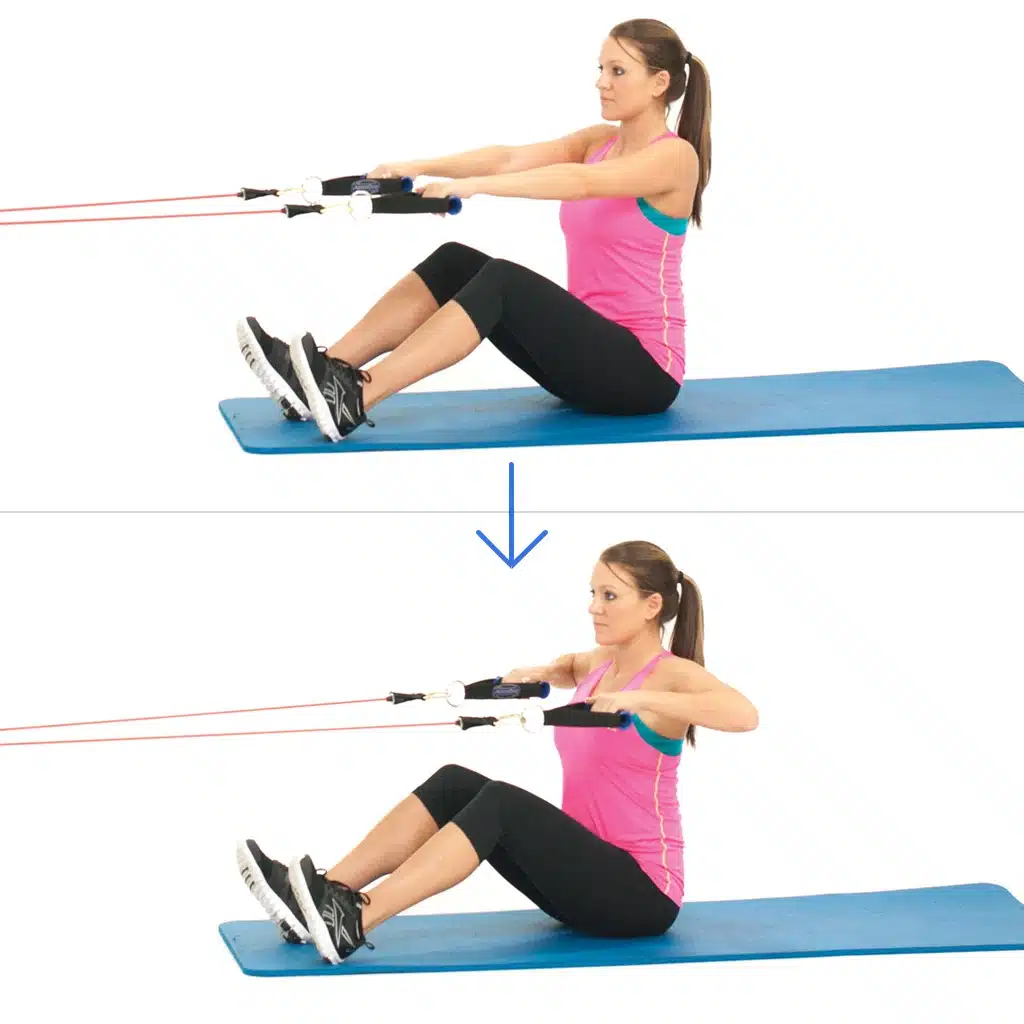
How To Do a Resistance Band Row:
- A resistance band should be fastened to a sturdy object at chest height.
- Hold both ends of the band.
- Stand tall with straight elbows.
- Pull the band towards you.
- Avoid shrugging your shoulders.
- Return to the starting position.
- Repeat 10-15 times.
Benefits
- Rhomboid strengthening
- Middle trapezius activation
- Improved upper back strength
- Improved shoulder stability
4. Prone Y Raise
The prone Y raise will strengthen your lower trapezius and improve your control during upward rotation.
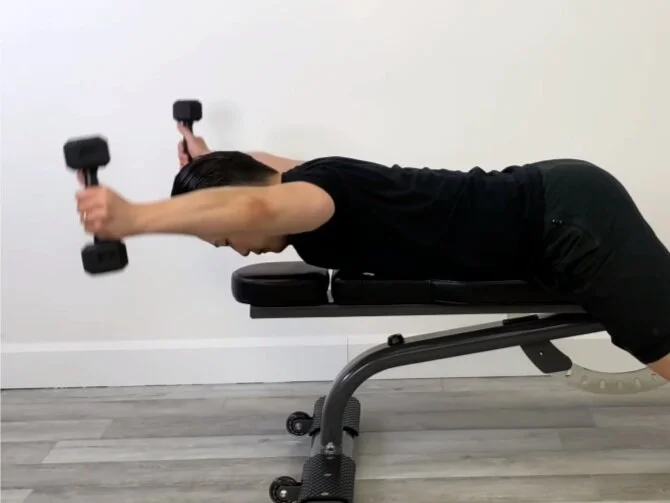
How To Do Prone Y Raise:
- Lie face down on an exercise mat.
- Raise your arms overhead to form a Y shape.
- Ensure your thumbs are facing upwards.
- Engage your core gently.
- Raise your arms slightly off the floor.
- Hold and slowly lower.
- Repeat 8-12 times.
Benefits
- Lower trapezius strengthening
- Improved scapula control
- Improved shoulder overhead movement
- Improved upper back endurance
5. Prone T Raise
The prone T raise will mainly strengthen your middle trapezius and rhomboids.
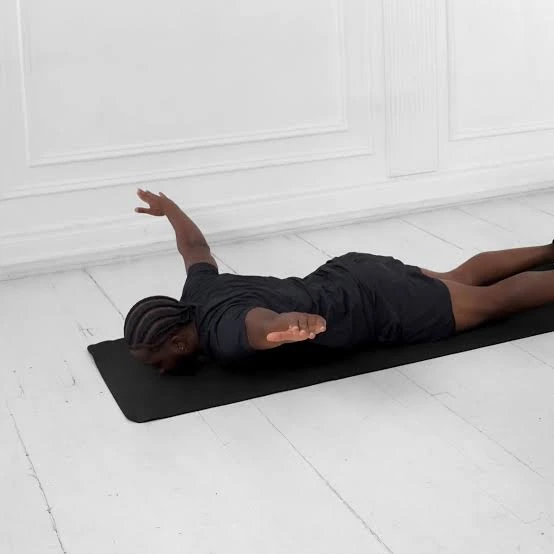
How To Do Prone T Raise:
- Lie face down on an exercise mat.
- Your arms are out to form a T shape.
- Ensure thumbs are facing upwards.
- Gently squeeze your scapulae together.
- Raise both arms slightly off the floor.
- Hold for 2-3 seconds.
- Slowly lower.
- Repeat 10-12 times.
Benefits
- Middle trapezius strengthening
- Improved scapular retraction
- Improved upper back strength
- Helps improve scapular coordination.
6. Scapular Wall Slides
Helps improve shoulder blade movement when raising your arms overhead.
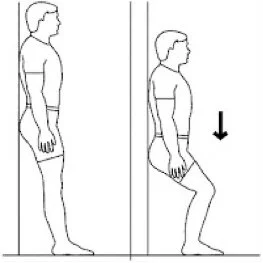
How to do:
- Stand with your back to the wall
- Forearms placed against the wall
- Elbows bent at a ~90-degree angle
- Tighten your stomach gently
- Move arms up the wall slowly
- Shoulder blades should move naturally
- No shrugging or arching of the low back
- Move back to start position slowly
- Repeat 10-12 times
Benefit:
- Improves scapular upward rotation
- Strengthens serratus anterior
- Activates trapezius muscles
- Improves overhead shoulder mobility
7. Serratus Anterior Punch
A specific exercise to improve scapular protraction and shoulder blade control.
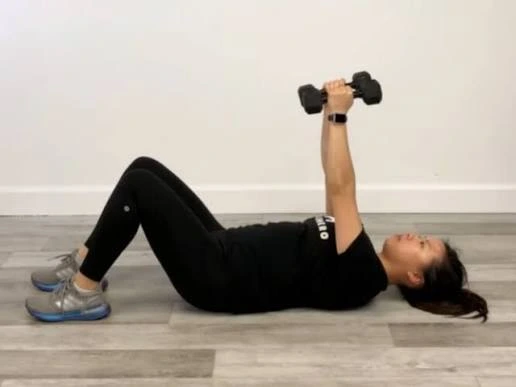
How to do:
- Lie flat on an exercise mat
- Take a light dumbbell in one hand
- Extend the arm upwards to the ceiling
- Elbow is straight
- Lift your shoulder blade so your arm is just a little higher. Hold for 2 seconds
- Lower the shoulder blade slowly
- Repeat 10-15 times on each side
Benefits
- Strengthens serratus anterior
- Improves scapular protraction
- Helps shoulder blade stability
- Helps improve arm control
8. Quadruped Scapular Push-Up
This exercise is done on all fours to help improve shoulder blade control.

How to do:
- Start in an all-fours position
- Hands should be directly below your shoulders
- Knees should be below your hips
- Neutral spine
- No bending of the elbows; move your chest slightly down and bring your shoulder blades together
- Push up through your hands to move your shoulder blades apart
- Elbows should remain straight
- Repeat 10-12 times
Benefits
- Strengthens serratus anterior
- Improves scapular movement
- Helps shoulder stability
- Improves upper body control
9. Resistance Band External Rotation
Helps strengthen the rotator cuff muscles. This will help improve shoulder stability.
Though it mainly targets the infraspinatus and teres minor muscles, it is great to incorporate into your programme to help stabilise your scapulae.

How to do:
- Stand tall and attach the resistance band at elbow height
- Hold the band in one hand
- Bend your elbow to 90 degrees
- Your elbow should be close to your body
- Rotate your forearm outwards slowly
- Your shoulder should be relaxed
- Return to the start position slowly
- Repeat 10-15 times on each side
Benefits
- Strengthens rotator cuff
- Improves shoulder control
- Helps shoulder joint stability
- Great to incorporate into scapular strengthening exercises
10. Wall Angel
This exercise is commonly used to help improve upper body awareness and shoulder mobility.

How to do:
- Stand with your back against the wall
- Feet should be slightly forward
- Head and upper back should be comfortably against the wall
- Lift arms into a goalpost position
- Move arms up slowly
- Only move within a comfortable range
- Return to start position
- Repeat 8-12 times
Benefits
- Improves shoulder mobility
- Encourages controlled scapular movement
- Improves posture muscles
- Improves upper body coordination
11. Resistance Band Pull-Apart
Helps strengthen upper back muscles. Improves control of scapular retraction.

How to do:
- Stand tall with feet shoulder-width apart
- Hold the resistance band in both hands
- Extend arms out in front of chest
- Elbows should be slightly bent
- Pull hands away from each other by extending arms
- Squeeze shoulder blades gently
- Return to start position slowly
- Repeat 12-15 times
Benefits
- Strengthens rhomboids
- Activates middle trapezius
- Improves upper back endurance
- Helps shoulder blade coordination
12. Bear Crawl Hold
This functional exercise helps improve shoulder stability and core control.

How to do:
- Get into an all-fours position
- Hands should be below your shoulders
- Knees should be below your hips
- Tighten your stomach
- Lift knees slightly off the floor
- Keep your back neutral
- Shoulder blades should be controlled, with no shrugging
- Hold in this position, breathing normally
- Hold for 10-20 seconds
Benefits
- Improves shoulder stability
- Strengthens serratus anterior
- Builds core strength
- Improves upper body endurance
13. Incline Push-Up Plus
The wall push-up plus is a step up to the incline push-up plus.
Provides extra resistance to help activate the serratus anterior.

How to do:
- Place hands on a stable surface such as a bench
- Extend legs behind you
- Body should be in a straight line
- Bend elbows and lower chest towards the bench slowly
- Push back up to the starting position
- When elbows are straight, push a little further to move your shoulder blades apart
- Controlled movement
- Repeat 8-12 times
Benefits
- Strengthens serratus anterior
- Improves shoulder stability
- Builds upper body strength
- Improves scapular protraction control
14. Prone W Raise
Helps strengthen muscles responsible for shoulder blade retraction and external rotation control.
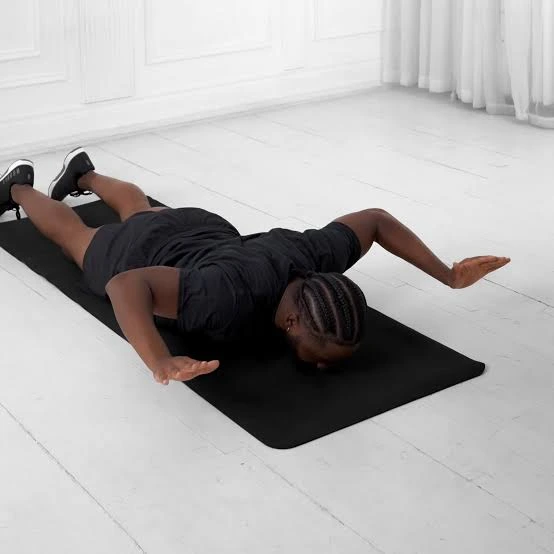
How to do:
- Lie prone on an exercise mat
- Make a “W” with your arms by bending your elbows.
- Palms should be facing down or thumbs facing up
- Gently squeeze shoulder blades together
- Lift elbows and hands slightly off the floor
- Hold for 2-3 seconds
- Lower arms slowly
- Repeat 8-12 times
Benefits
- Strengthens middle trapezius
- Activates lower trapezius
- Helps shoulder external rotation
- Improves scapular coordination
15. Scapular Retraction (Resistance Band)
This exercise helps improve controlled retraction of the shoulder blades with external resistance.

How to do:
- Attach the resistance band at chest height
- Hold the band in both hands
- Extend arms in front
- Elbows should be straight
- Move shoulder blades together slowly
- Do not bend elbows or shrug
- Hold for 2-3 seconds
- Return to start position
- Repeat 10-15 times
Benefits
- Strengthens rhomboids
- Improves scapular control
- Builds upper back endurance
- Helps improve shoulder mechanics
How often should you do scapular stability exercises?
Beginners
- 2-3 times per week.
- Complete 1-2 sets.
- Complete around 8-12 reps.
- Focus on controlled movement.
Intermediate
- 3 times per week.
- Complete 2-3 sets.
- Complete around 10-15 reps. Increase resistance.
Athletes
- Incorporate some scapular stability exercises into your overall upper body conditioning programme.
- Include strengthening and endurance exercises.
- Focus on quality of movement.
Those undergoing rehabilitation should follow recommendations from their physiotherapist.
Common mistakes to avoid during scapular stability exercises
To get the most out of these exercises, they should be done correctly.
Shoulder shrugging
- Many people will unconsciously shrug their shoulders up to their ears.
- However, there will naturally be some activation of your upper trapezius due to upward rotation.
Too much resistance
- Using a strong resistance band or dumbbell may cause difficulty controlling your scapulae.
- Start with light resistance and build up.
Too fast
- Moving too quickly can affect your control and coordination.
- Move slowly to ensure good control.
Lumbar arching
- Some people will arch their lower back during Wall Slides or overhead exercises.
- Ensure your back is in a neutral, comfortable position. Gently brace your stomach.
Pushing your scapulae together
- Not all scapular stability exercises involve pushing your scapulae together.
- For example, those targeting your serratus anterior will involve protracting your scapulae.
Pain
- If you begin to feel more pain whilst doing the exercise, it could make your symptoms worse.
- Stop or alter any movement that causes sharp pain, increased discomfort, or unusual symptoms.
Who can benefit from scapular stability exercises?
Exercises designed to stabilize the shoulder blades can improve scapular control and enhance overall upper-body stability.
Rounded shoulders
Those with rounded shoulders can benefit from exercises to strengthen their upper back, improve shoulder mobility, and control their scapulae.
Examples include;
- Resistance band rows.
- Prone T raises.
- Wall angels.
- Scapula retraction.
Office workers
- Those who sit for long periods of time at a desk may find their upper back stiff, their neck uncomfortable, and have less mobility.
- Scapular stability exercises can be incorporated into your regular movement programme.
Athletes
- Athletes who play overhead sports can benefit from improving strength, coordination and endurance in the shoulder.
Scapular dyskinesis
- Your physiotherapist may suggest some targeted strengthening and control exercises depending on your symptoms and examination.
Those recovering from shoulder injuries
- Some targeted scapular stability exercises may be used in your rehabilitation following certain injuries or surgery.
- They must be suitable for your stage of recovery and any medical restrictions.
Scapula Stability Exercises For Various Shoulder Issues
There are various ways you can alter the scapula exercises you perform depending on the issue you have with your shoulder.
1. Scapula Stability For Shoulder Impingement
If you are experiencing pain in your shoulder when performing overhead movements, then you may benefit from rehabilitation that focuses on shoulder impingement.
This could include;
- Wall slides
- serratus anterior punches,
- resistance band rows,
- wall push-up plus
2. Scapula Stability For Rounded Shoulders
If you have rounded shoulders, you may also be experiencing reduced upper back endurance.
Exercises that would help could include;
- Scapula retraction,
- resistance band pull-apart,
- prone T raises,
- wall angels
3. Scapula Stability For Shoulder Instability
Shoulder instability can cause issues with the tissues that support your shoulder joint.
Depending on the assessment, you could benefit from:
- Isometric shoulder exercises
- Resistance band external rotations
- Controlled scapula exercises
- Weight-bearing closed-chain exercises
Those who have recurrent dislocations or large instability issues should seek professional advice before performing these exercises.
4. Scapula Stability For Scapula Wing
- Scapula wing occurs when there is increased prominence at the medial border of your scapula.
- It can occur due to weakness, nerve damage, or muscle dysfunction.
- In some cases, you may benefit from serratus anterior punches and wall push-up plus exercises.
- However, if you are experiencing new or severe winging, you should seek medical advice to determine the cause.
Top Tips For Scapula Stability Exercises
- Ensure you have good posture.
- Try to keep your spine neutral.
- Move slowly and with control throughout each rep.
- Use an appropriate resistance band.
- Focus on moving your serratus anterior, rhomboids, and trapezius muscles.
- Avoid over-shrugging your shoulders.
- Be consistent with your exercises.
- Progress your exercises when you’re able to maintain good control.
- Include mobility movements to keep your shoulders and thoracic spine mobile.
- If you’re experiencing ongoing pain and weakness in your shoulder, then consult a physiotherapist
Precautions
- Whilst the exercises below are generally suitable for many individuals, there are some considerations to make.
- Avoid over-stretching your arms overhead.
- Use a light resistance band. Ensure you’re breathing with control.
- Avoid strengthening exercises after an acute injury until you’ve been assessed appropriately.
- If you have had surgery to your shoulder, then follow any post-op guidelines.
- If you are experiencing sudden severe shoulder pain, significant weakness, visible deformity, new numbness, or inability to lift your arm, then seek medical advice.
When To See A Physiotherapist
If you experience;
- Persistent shoulder pain.
- Difficulties lifting your arm.
- Weakness in your shoulder when pushing or pulling.
- Recurrent discomfort in your shoulder when exercising.
- History of shoulder dislocations.
- Your symptoms aren’t improving with the appropriate changes to activity.
- Then you should see a physiotherapist.
- They will be able to assess your shoulder blades, shoulder strength, joint mobility, muscle coordination, and your posture.
- They will be able to create an individualised rehabilitation programme based on their assessment.
Conclusion
Scapula stability exercises play an important role in keeping your shoulders moving well, improving your upper back strength and helping with scapula control. The scapula provides a stable base to allow your arms to move efficiently during everyday activities, exercise and sport.
Exercises such as scapula retraction, wall push-up plus, resistance band rows, prone Y raises, scapula wall slides and serratus anterior punches will help strengthen key stabilising muscles such as the serratus anterior, trapezius and rhomboids.
Doing them regularly will help improve stability, coordination, posture and upper body function. However, to get good results, you must ensure you are using the correct technique, appropriate resistance, and progressing gradually.
If you are struggling with persistent shoulder pain, weakness, or scapular winging, then consult a qualified physiotherapist. They will be able to provide an individualised assessment and exercises.
Remember to have strong and coordinated scapular muscles to promote healthy, stable, and efficient shoulder movement.
FAQs
How long will it take to improve my scapula stability?
This will depend on your muscle strength, coordination, symptoms, and how consistent you are with your exercises.
Some people will begin to notice increased awareness in their movement within a few weeks. However, it may take several weeks or longer to really see improvements in strength.
Can I do scapula stability exercises daily?
Some gentle mobility exercises can be done regularly if they are comfortable. However, strengthening exercises using resistance will require a recovery period.
Starting with 2-3 strengthening sessions weekly will be a good starting point for many healthy beginners.
What muscles are involved in scapula stability?
The main muscles involved are;
Serratus anterior, middle trapezius, lower trapezius, upper trapezius, rhomboid major, rhomboid minor
Are scapula stability exercises suitable for beginners?
Yes! Start with simple exercises such as scapula retraction, wall push-up plus, and wall slides. Book Workout
Start with light resistance and gradually progress as your mobility improves.
Do I need equipment to do scapula stability exercises?
No! You can complete many exercises such as wall push-up plus, scapula retraction, wall slides, and prone Y raises.
As your strength improves, you can include resistance bands and light dumbbells.
Can scapula stability help athletes?
Yes! It can help improve your scapula control, upper body strength, and coordination, which may help with your performance, especially if playing an overhead sport.
References
- Hinge Health. (2025, December 25). 7 Scapular stabilization exercises for strong shoulders. Hinge Health. https://www.hingehealth.com/resources/articles/scapular-stabilization-exercises/
- White, A. (2023, May 30). 5 Scapular stabilization exercises for strong shoulders. Healthline. https://www.healthline.com/health/fitness-exercise/scapular-stabilization-exercises
- Scapular stabilisation exercises. (n.d.). Cambridge University Hospitals. https://www.cuh.nhs.uk/patient-information/scapular-stabilisation-exercises/
- Dodson, J. T. (2026, August 6). 9 best scapular exercises to perform for shoulder impingement (and 4 alternates). Medbridge. https://www.medbridge.com/blog/the-nine-best-scapular-exercises-to-perform-for-shoulder-impingement-and-four-alternates