
Shoulder Pain Behind the Back: 14 Best Physiotherapy Exercises
Table of Contents
Introduction
Pain in the shoulder during internal rotation, extension, and adduction can make daily tasks difficult. This can include getting dressed, putting your bra on, tucking your shirt in, putting your hand in your back pocket, or scratching your back. For this movement to occur, good shoulder joint mobility and muscle mobility are required.
Pain in the anterior, lateral, or posterior aspect of the shoulder can develop if this movement is painful or restricted. This can develop gradually as a result of muscle tightness, repetitive movements, poor posture, or age-related changes. Alternatively, it can develop due to injury. Pain may also be due to frozen shoulder, rotator cuff issues, impingement, or arthritis.
Many patients with shoulder pain when reaching backwards can improve with appropriate treatment. Improving mobility in the shoulder joint, stretching, and strengthening exercises can help improve shoulder movement, muscle function, and reduce symptoms.
In this article, we will look at common causes of pain in the shoulder when reaching backwards, symptoms, treatment approaches, and physiotherapy exercises to improve shoulder movement and function.
What does shoulder pain when reaching backwards mean?
Pain during internal rotation (extension and adduction) of the shoulder joint.
Internal rotation of the shoulder joint, extension of the arm, and adduction of the arm must occur to reach backwards. Several muscles within the shoulder region are involved in assisting with this movement, including:
Rotator cuff muscles, shoulder joint capsule, deltoids, pectorals, and surrounding tissues.
Pain may occur when reaching backwards if one or more of these structures become irritated, tight, weak, or injured.
Symptoms may be mild and only occur at the end range of movement, or may cause significant difficulty moving the arm away from the waist.
shoulder movement
The shoulder joint is a ball-and-socket joint, meaning it has a large range of movement.
To reach backwards in the shoulder, three movements must occur:
- Internal rotation of the shoulder joint.
- Extension of the arm.
- Adduction of the arm.
To achieve these movements, mobility in the following muscles/structures is required:
- Subscapularis muscle
- Infraspinatus muscle
- Teres minor muscle
- Latissimus dorsi muscle
- Pectoralis major muscle
- Posterior shoulder joint capsule
- Deltoids
- Triceps brachii muscle
Pain may occur when reaching backwards if these structures become stiff, weak, or irritated.
Common symptoms of shoulder pain when reaching backwards
Depending on the cause of pain in your shoulder, you may experience a variety of symptoms. Some people may only experience pain during certain movements, whilst others may experience stiffness and discomfort during daily activities.
Common symptoms include:
- Pain when reaching backwards towards the lower back.
- Difficulty putting on a bra or tucking in shirts.
- Pain when getting dressed/undressed.
- Reduced movement in the shoulder.
- Limited internal rotation in the shoulder.
- Discomfort putting your hand in your back pockets.
- Pain when sleeping on the affected side.
- Weakness in the arm during lifting/rotation.
- Difficulties lifting arms overhead.
If you have significant weakness, a sudden reduction in movement, swelling, or pain as a result of an injury, seek medical attention.
Common causes of shoulder pain when reaching backwards
There are a number of potential causes of shoulder pain when reaching backwards. Common causes include irritation of the rotator cuff, stiffness in the shoulder, muscle tightness, and restricted joint movement.
Frozen shoulder (Adhesive Capsulitis)
It is caused by inflammation in the connective tissue surrounding the shoulder, causing thickening and tightening of the tissues.
This can lead to reduced range of movement in the shoulder, particularly external rotation, internal rotation, and elevation.
Common symptoms:
- Pain and stiffness in the shoulder.
- Pain when reaching backwards.
- Pain when getting dressed or putting on a bra.
- Worse pain at night.
- Reduced range of movement.
- Difficulty lifting the arm overhead.
Frozen shoulder generally develops gradually, and recovery may take months or longer. Gentle mobilisation and physiotherapy can help improve movement in the shoulder.
Those with diabetes or long-term immobility of the shoulder may be at higher risk of developing this condition.
Rotator Cuff Tendinopathy
The rotator cuff consists of 4 muscles and tendons which help stabilise and assist movement in the shoulder.
These muscles are:
- Supraspinatus muscle.
- Infraspinatus muscle.
- Teres Minor muscle.
- Subscapularis muscle.
Rotator cuff tendinopathy can occur when one or more tendons become irritated or overloaded. Repetitive overhead work, heavy lifting, sport, and age-related changes in the tendons can all contribute.
Pain may be felt in certain ranges of shoulder movement, such as reaching backwards.
Common symptoms:
- Pain when reaching backwards.
- Pain when lifting.
- Weakness with rotation of the shoulder.
- Pain when lying on that side.
- Difficulty completing daily tasks.
General treatment includes modifying activity, progressive strengthening, and appropriate mobilisation exercises in the shoulder.
Shoulder impingement (subacromial discomfort syndrome)
Impingement in the shoulder can occur when structures in the shoulder joint (such as the rotator cuff tendons and subacromial bursa) become irritated.
Common symptoms:
- Pain when reaching backwards.
- Weakness in the shoulder.
- Pain when lifting overhead.
- Trouble sleeping on that side.
Physiotherapy to strengthen the shoulder, improve motor control, and increase tolerance to daily activities can be useful.
Tightness or injury to the subscapularis muscle
It is located on the anterior aspect of the scapula and attaches to the upper arm bone.
The main function of this muscle is to provide internal rotation of the shoulder and helps to stabilise the joint.
Pain may occur during activities requiring internal rotation of the shoulder, such as reaching backwards, if the muscle or tendon becomes irritated.
Common symptoms:
- Pain during internal rotation.
- Weakness with internal rotation of the arm.
- Pain when reaching backwards in the waist.
- Difficulty with certain dressing tasks.
Issues with the subscapularis muscle may occur due to repetitive loading, sudden injury, or degenerative changes in the tendon.
Arthritis in the shoulder
Arthritis in the shoulder may make internal rotation and extension difficult in the shoulder, making it difficult to reach backwards.
Common symptoms:
- Deep pain in the shoulder joint.
- Stiffness after rest.
- Reduced range of movement.
- Pain with daily activities.
- Crepitus/clicking.
- Difficulty reaching backwards.
Treatment depends on the severity of the arthritis and may include physiotherapy, modifying activity, pain relief, and medical treatment.
Tightness in posterior shoulder joint capsule
The shoulder joint is surrounded by connective tissue (capsule) to stabilise the joint and control movement. Sometimes, the posterior capsule may become stiff or less mobile. As a result, certain movements in the shoulder may be limited, and joint mechanics may be affected.
Tightness in the posterior capsule is often discussed in people who carry out repetitive overhead activities (often athletes).
Common symptoms:
- Reduced rotation in the shoulder.
- Pain in certain reaching movements.
- Reduced mobility in the shoulder.
- Discomfort with sports.
Gentle mobilisations and stretching may improve mobility in the shoulder if posterior restriction is present.
Biceps Tendinopathy
This tendon can become irritated with repeated pulling, lifting, and overhead activities.
Whilst pain tends to occur in the anterior aspect of the shoulder with biceps tendinopathy, some people may experience discomfort with combined movements in the shoulder, including reaching backwards.
Common symptoms:
- Tenderness in the proximal part of the arm.
- Pain with lifting.
- Pain with repetitive movements of the arm.
- Difficulty completing reaching movements.
A Physiotherapist can assess if the biceps tendon is contributing to your symptoms.
Muscle imbalance/poor posture in the shoulder
Poor posture and muscle imbalances in the shoulder may cause altered function in the shoulder.
Sitting for long periods of time, excessive computer use, and repetitive forward reaching movements can cause rounded shoulders.
Tightness in the chest muscles and reduced strength/co-ordination in the scapular muscles may affect shoulder function.
Common symptoms:
- Rounded shoulders.
- Tightness in the chest.
- Stiffness in the upper back.
- Pain with reaching movements.
- Reduced range of movement in the shoulder.
- Tension in the neck and upper back.
Improving mobility in the thorax, strengthening the scapular muscles and ensuring comfortable postures may help improve shoulder function.
Risk factors
Certain factors may increase your risk of experiencing pain in the shoulder when reaching backwards.
- Age – Changes in the shoulder tendon and joint structures as we get older may increase the risk of shoulder issues.
- Repetitive movements – Repetitive overhead, lifting, and throwing movements may overload structures in the shoulder.
- Incorrect exercise form – Lifting incorrectly may put excessive pressure on the shoulder.
- Long periods of sitting – Sitting for long periods of time may reduce movement and cause stiffness in the upper body.
- Previous shoulder injuries – Previous injury or surgery may affect shoulder movement and strength.
- Lack of physical activity – Reduced movement in the shoulder may contribute to stiffness.
- Diabetes – People with diabetes may be at increased risk of developing frozen shoulder.
- Over-training – If you increase the intensity or amount of exercise too quickly, it may cause irritation in the shoulder tendons.
Investigations
To make the correct diagnosis, a number of investigations may be performed by either the Doctor or Physiotherapist.
These investigations include:
1. Medical History
A medical history may be taken in order to get more information about your symptoms, in order to make a differential diagnosis.
- When did the pain begin?
- Has it started suddenly or gradually?
- Does the pain increase with movements behind your back?
- Does the pain occur at night?
- Are you finding it difficult to lift your arm?
2. Physical Examination
During the examination, the practitioner may perform the following tests:
- Assess range of movement in the shoulder joint
- Assess internal + external rotation
- Assess full extension of the shoulder
- Assess strength of rotator cuff muscles
- Assess movement of the scapula
- Test for tenderness
- Assess movement in the neck and upper back
A comparison between the painful shoulder and the non-painful shoulder may be made to look for asymmetries in strength and flexibility.
3. Imaging
Depending on how severe the injury is, how long the pain has been present, and whether arthritis or another condition is suspected, imaging may be required.
- X-ray: To look for bony changes, fractures, and arthritis.
- Ultrasound: To look at the rotator cuff tendons and some soft tissue issues.
- MRI: To get a very detailed image of the tendons, muscles, cartilage, and soft tissues in the shoulder.
Whether imaging is performed will depend upon a patient’s findings from their assessment and symptoms.
Exercises for Shoulder Pain with Movement Behind the Back
Physiotherapy exercises can be beneficial for reducing stiffness, increasing movement in the shoulder joint, strengthening the supporting musculature, and returning to normal movement patterns.
Exercises
Please start these exercises gradually. Do not force your arm into a position behind your back, or push through sharp pain. If you have had an acute injury, significant weakness, or severe stiffness in the shoulder recently, please seek assessment before starting these exercises.
1. Pendulum Exercise
It is often performed in early phases of rehabilitation.
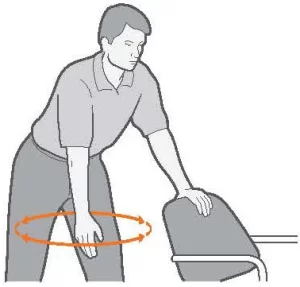
Instructions:
- Stand next to a sturdy surface (table/ chair).
- Place your unaffected arm on the surface.
- Lean forward slightly so that you are in a comfortable position.
- Allow the affected arm to hang down towards the floor.
- Make small circular movements using your body.
- Move in both clockwise and counter-clockwise directions.
- Ensure the shoulder remains relaxed.
- Reps: 10 – 15 reps in each direction.
- Sets: 2 sets.
Benefits:
- Gentle movement of the shoulder joint.
- Reduces stiffness.
- Maintains joint movement.
- Encourages movement in early phases of rehabilitation.
2. Towel-Assisted Internal Rotation
This exercise gently moves the shoulder joint into internal rotation. This is important for performing movements behind the back.
By using a towel, the opposite arm can be used to assist movement without straining the affected shoulder.
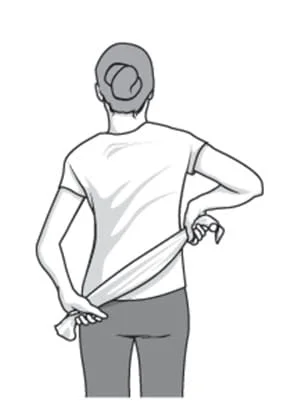
Instructions:
- Maintain an erect posture while standing in a comfortable position.
- Hold a small towel in one hand behind your back.
- Using your affected hand, hold the bottom of the towel.
- Gently move your top hand up.
- As you move your top hand up, allow your affected hand to rise slightly behind your back.
- Hold in this position and relax.
- Reps: 5-10 reps.
- Sets: 2 sets.
- Hold: 5-10 seconds.
Benefits:
- Increases internal rotation in the shoulder.
- Helps improve movement behind the back.
- Gentle stretching of the shoulder joint.
- May help with daily activities such as getting dressed.
Do not perform this exercise too aggressively, as it can cause increased irritation in the shoulder. Avoid pulling the towel too hard or moving through pain. If sharp pain occurs, do not perform this exercise.
3. Cross-body stretch
This exercise stretches the posterior muscles and tissues of the shoulder joint.
It may be beneficial if tightness in the posterior shoulder is causing limited movement.
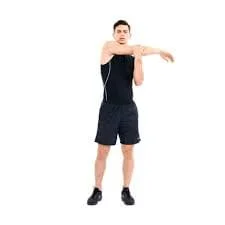
Instructions:
- Stand or sit in an upright posture.
- Allow both shoulders to relax.
- Bring your affected arm across your chest.
- Use your opposite hand to support the affected arm just below the elbow.
- Gently pull the arm across your chest.
- Keep the shoulder relaxed. Avoid twisting your trunk.
- Stop once you have reached a comfortable stretch behind your shoulder. Hold.
- Slowly return to the starting position.
- Reps: 3-5 reps.
- Sets: 2 sets.
- Hold: 15-20 seconds.
Benefits:
- Improves flexibility in the posterior shoulder.
- Helps to reduce tightness.
- Improves movement in the shoulder.
4. Wall Walking
It encourages elevation of the arm.
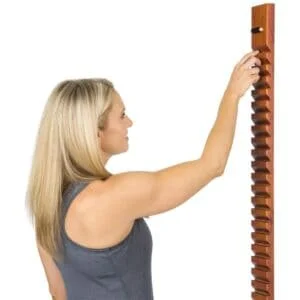
Instructions:
- Stand in front of a wall.
- Slowly move your fingers up the wall, allowing the arm to elevate.
- Keep your shoulder relaxed and avoid shrugging.
- Stop at a comfortable height.
- Hold for a few seconds.
- Reps: 8-10 reps.
- Sets: 2 sets.
Benefits:
- Improves movement in the shoulder joint.
- Encourages controlled elevation of the arm.
- Improves joint movement.
- Helps with reaching movements in daily activities.
5. External Rotation with Resistance Band
Strengthening the external rotators can help improve stability and control in the shoulder joint.
Mainly strengthens the infraspinatus and teres minor muscles.

Instructions:
- Secure a resistance band to something sturdy at shoulder height.
- Stand to one side of the anchor.
- Hold onto the band in the hand furthest away from the anchor.
- Bend your elbow to about 90 degrees.
- Keep your elbow close to your body.
- Rotate your forearm externally.
- Avoid rotating your torso.
- Move back to the starting position under control.
- Reps: 10-12 reps.
- Sets: 2-3 sets.
Benefits:
- Strengthens external rotator muscles.
- Increases stability in the shoulder.
- Encourages controlled movement in the shoulder.
- Improves balance within the rotator cuff.
6. Internal Rotation with Resistance Band
This exercise helps to strengthen internal rotator muscles, including the subscapularis.
Improving internal rotation strength may help improve stability in the shoulder during functional movement.

Instructions:
- Secure the resistance band to something sturdy at shoulder height.
- Stand to one side of the anchor. Ensure that the affected arm is closest to the anchor.
- Take hold of the band with the affected hand.
- Bend your elbow to approx. 90 degrees.
- Keep your elbow close to the body.
- Gently move your forearm into internal rotation, across your abdomen.
- Avoid rotating your torso.
- Slowly return to the starting position.
- Reps: 10-12 reps.
- Sets: 2 sets.
Benefits:
- Strengthens internal rotator muscles.
- Improves muscle coordination in the shoulder.
- Improves stability in the shoulder.
- Improves tolerance to activities in daily life.
This exercise should be done with a very light resistance. Do not perform this exercise if it causes shoulder pain.
7. Scapular Retraction
This exercise helps to strengthen the muscles that control movement of the scapula (middle trapezius and rhomboids).
Good scapular control can help improve coordination in the shoulder.
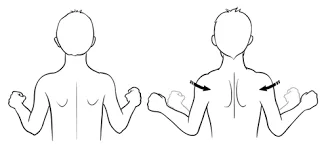
Instructions:
- Stand or sit in a comfortable position.
- Allow your arms to hang by your sides in a relaxed position.
- Gently squeeze your shoulder blades together.
- Avoid lifting them towards your ears.
- Hold.
- Release and return to the starting position.
- Reps: 10-15 reps.
- Sets: 2-3 sets.
- Hold: 3-5 seconds.
Benefits:
- Strengthens scapular muscles.
- Improves control of the scapula.
- Improves posture in the upper body.
- Encourages improved coordination in the shoulder.
8. Wall push-up plus
Other Benefits
Improves scapulo-humeral coordination.
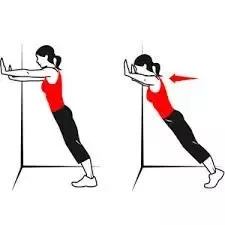
Instructions:
- Stand facing a wall.
- Place your hands on the wall at shoulder height.
- Leave a small gap between your feet and the wall.
- Gently lower your elbows so that the chest moves closer to the wall.
- Push with your hands and extend the elbows.
- When the elbows are fully extended, gently push your upper back away from the wall.
- Move your scapulae forward around your ribs.
- Return to a comfortable position.
- Reps: 10-12
- Sets: 2
Benefits:
- Strengthens the serratus anterior.
- Improves the stability of the scapula.
- Improves coordination of arm movement.
- Builds upper body strength.
9. Doorway stretch
Pectoralis tightness can limit shoulder movement. This stretch will gently help to relieve this tightness.
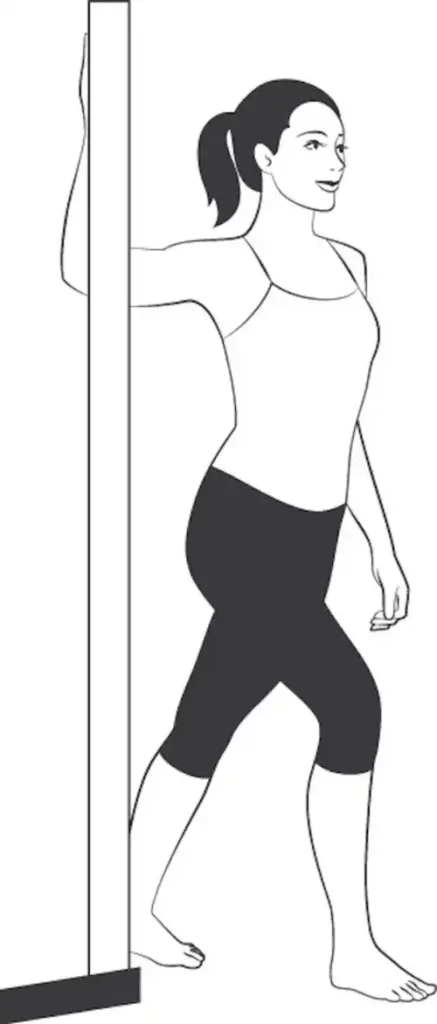
Instructions:
- Stand in an open doorway.
- Place your forearms against the frame of the door.
- Ensure that your elbows are at shoulder height (or slightly below).
- Take 1 foot forward.
- Gently lean forward so that you feel a stretch in your chest.
- Keep your neck relaxed.
- Avoid arching your lower back.
- Hold and then ease out of the stretch.
- Reps: 3
- Sets: 2
- Hold: 15-20seconds
Benefits:
- Increases flexibility in the muscles of the chest.
- Reduces tightness in the pectoralis muscles.
- Improves comfortable positioning of the shoulder.
- Improves upper body mobility.
10. Thoracic extension using a chair
Good movement in the thoracic spine is important for normal shoulder movement.
Limited movement in the upper back may cause discomfort with raising and positioning of arms.
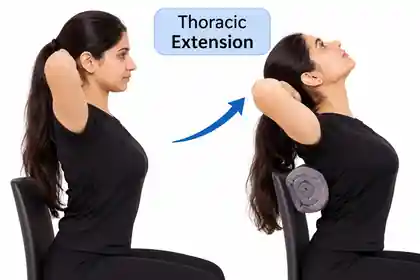
Instructions:
- Take a seat in a sturdy chair with a comfortable back.
- Place your hands behind your head if comfortable.
- Place your feet flat on the floor.
- Gently arch your upper back and rest it against the back of the chair.
- Relax your lower back.
- Do not strain to push your neck backwards.
- Gently return to the starting position.
- Reps: 8-10
- Sets: 2
Benefits:
- Improves upper back mobility.
- Encourages good movement in the trunk.
- Improves comfortable raising of your shoulders.
- Helps reduce stiffness in the upper back.
11. Shoulder flexion with stick
This exercise allows movement at the shoulder with assistance from a stick/rod.
It can help maintain shoulder mobility in those who may be uncomfortable with independent movements of their arm.
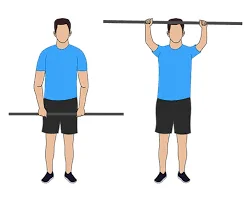
Instructions:
- Lie flat on a comfortable surface.
- Hold a light rod with both hands.
- Ensure that your arms are straight but relaxed.
- Support the affected arm with the unaffected arm.
- Slowly raise both arms over your head to a comfortable position.
- Avoid significant pain.
- Ease arms back down to the starting position.
- Reps: 8-10
- Sets: 2
Benefits:
- Improves shoulder flexion.
- Improves overall shoulder movement.
- Encourages controlled movements.
- Helps to maintain range of movement.
12. Isometric external rotation
This exercise strengthens the rotator cuff muscles in an isometric way. It can be a good starting exercise if dynamic shoulder movement causes pain.

Instructions:
- Stand with your side facing the wall.
- Bend the affected arm to 90 degrees.
- Ensure that the elbow is close to the body.
- Place the back of your affected hand against the wall.
- Gently push outwards.
- Do not allow movement in the arm or shoulder.
- Hold.
- Slowly release.
- Reps: 8-10
- Sets: 2
- Hold: 5 seconds
Benefits:
- Activates external rotator muscles.
- Improves muscle control in the shoulder.
- Develops strength in the shoulder with minimal movement.
- Improves shoulder stability.
13. Isometric Internal Rotation
This exercise activates internal rotator muscles with minimal movement of the shoulder.
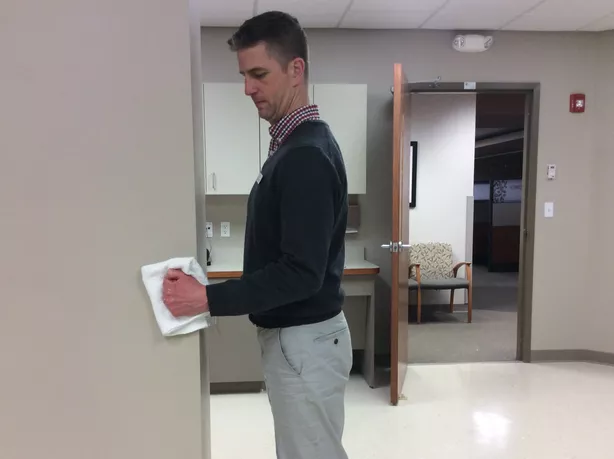
Instructions:
- Stand next to a wall.
- Bend the affected arm to 90 degrees.
- Ensure the elbow is close to the side.
- Place the palm of the affected hand against the wall (or a firm cushion).
- Gently push the palm inwards.
- Do not allow movement in the arm.
- Hold.
- Release slowly.
- Reps: 8-10
- Sets: 2
- Hold: 5 seconds
Benefits:
- Activates subscapularis and other internal rotator muscles.
- Improves muscle coordination.
- Improves shoulder stability.
- Encourages controlled shoulder strength.
14. Seated retraction with external rotation
This exercise helps to strengthen the muscles around the shoulder joint by combining scapular retraction with external rotation.

Instructions:
- Take a chair and sit upright.
- Ensure that your elbows are bent and close to your sides.
- Grasp a light resistance band with both hands.
- Gently retract your scapulae.
- Move your hands outwards against resistance.
- Ensure that your elbows stay close to your body.
- Avoid shrugging your shoulders.
- Return to the starting position slowly.
- Reps: 10-12
- Sets: 2
Benefits:
- Strengthens external rotator muscles.
- Improves scapular control.
- Improves shoulder stability.
- Encourages coordinated upper body movement.
Physiotherapy to relieve Shoulder Pain When Reaching behind
Physiotherapy is very important in helping to relieve shoulder pain and restore normal function in the shoulder. The treatment will depend on the cause of pain, severity of pain, and range of movement.
A Physiotherapist may suggest:
Manual therapy
Manual therapy can be performed by a trained Physiotherapist to improve joint movement and alleviate pain.
This can include:
- Gentle mobilisation of the shoulder joint.
- Soft tissue massage.
- Muscle relaxation.
- Appropriate mobilisation of the shoulder capsule.
- Mobilisation of the thoracic spine.
Manual therapy should be performed based on the patient’s condition. It should not cause significant pain.
Therapeutic exercised
Depending on your condition, your Physiotherapist may provide:
- Internal rotation exercises.
- External rotation exercises.
- Rotator cuff strengthening.
- Scapular stabilisation exercises.
- Shoulder mobility exercises.
- Gentle stretching exercises.
Gradual strengthening can allow you to complete functional tasks easily, including dressing, lifting, and reaching.
Heat therapy
- Heat therapy may help relieve stiffness in muscles and make gentle movements more comfortable.
- Place a hot pack (wrapped in a towel) onto the affected shoulder.
- Do not overheat. If there is swelling or decreased sensitivity in the area, avoid overheating.
Cold therapy
- Cold therapy may help to relieve pain temporarily after irritating the shoulder.
- Place a cold pack (wrapped in a towel) onto the area for 10-15 minutes.
- Never place directly on skin.
Modification of activity
Modifying activities that cause pain may reduce irritation in the shoulder.
Avoid:
- Excessive reaching behind you.
- Heavy lifting above your head.
- Repetitive movements causing pain.
- Lifting heavy items with only 1 hand.
Ensure that regularly used items in the house are easy to reach. It is generally not advisable to completely limit movement of the shoulder unless a health professional suggests so.
Everyday activity modifications
Making small changes in everyday activities may reduce unnecessary strain on your shoulder.
Dressing
Wearing tight clothes or reaching behind you may increase discomfort.
Modify as follows:
- Wear loose clothing.
- Insert the affected arm into the sleeve first.
- Avoid forcefully pulling the affected arm backwards.
- Wear clothes that open in the front if possible.
Sleeping
Lying on the painful shoulder may increase discomfort.
Try:
- Sleep on the other side.
- Place a pillow under the affected arm.
- Avoid positions that cause the shoulder to be in extension.
Working on computers
Prolonged computer work may cause stiffness and discomfort in the upper body.
To reduce discomfort, try:
- Support your forearms.
- Ensure that your shoulders are relaxed.
- Take regular short breaks to move.
Exercise
If you regularly exercise, modify exercises to avoid reproducing pain.
You may need to modify:
- Heavy bench press.
- Deep pec fly.
- Behind-the-head press.
- Heavy lifts above the head.
- Painful dips.
- Aggressive stretching of the shoulder.
Once the shoulder can tolerate the movements, you can gradually reintroduce these exercises.
Things to avoid
Some activities can cause increased irritation in the shoulder, and so should be avoided to allow quicker healing.
Avoid:
- Aggressive internal rotation. Do not aggressively move your hand upwards behind you.
- Heavy lifting. Avoid causing significant discomfort in the shoulder.
- Painful stretching. Stretching should only cause mild tension.
- Excessive lifting above the head. If repetitive lifting above the head is causing symptoms, reduce it temporarily.
- Lying on the painful shoulder.
- Avoid complete immobility. If not advised by a healthcare professional, gently move the shoulder within a comfortable range.
- Weakness. If you notice new or worsening weakness in the shoulder, you should seek medical advice.
- Do not do all exercises.
When to seek professional advice?
How to Prevent Shoulder Pain When Reaching Around Your Back
Maintain good shoulder mobility, strengthen muscles, and avoid increasing the intensity of movement.
It is advisable to seek professional help if shoulder pain:
- Lasts for 2 weeks or more
- Prevents reaching around your back
- Worsens gradually; causes pain at night
- Restricts movement significantly
- Causes weakness when lifting/rotating
- Interferes with dressing, showering, or working
- Seek urgent medical attention
If shoulder pain is:
- Sudden and very severe
- Preventing arm movement
- Results in a noticeable deformity or severe swelling
- Results in persistent tingling/numbness
- Results in your arm feeling abnormally cold or numb
- Followed by a major fall or accident
- Along with chest pain, shortness of breath, sweating, or pain radiating to the jaw.
- These symptoms may suggest something more serious. Therefore, it is not advised to complete self-managed exercises.
Tips to help reduce shoulder pain when reaching around your back
1. Maintain Shoulder Mobility
Complete regular, comfortable exercises for shoulder movement in various planes of movement.
This may include:
- Pendulum movements
- Wall walking
- Rotations
- Cross-body stretches
- Thoracic mobility
- Avoid causing pain.
2. Strengthen Rotator Cuff Muscles
To support movements in daily life.
Appropriate exercises to complete may include:
- External rotators (resistance bands)
- Internal rotators (resistance bands)
- Isometric rotations
- Light stabilisation
3. Upper back mobility
- Improving upper back mobility can improve coordinated shoulder movement.
- Exercises to improve this may include thoracic extension and gentle rotations.
4. Avoid Sudden Intensities of Exercise
- Avoid increasing the weight, number of repetitions, or duration of shoulder exercises suddenly.
- Gradually increase the intensity of exercises, and ensure adequate rest.
5. Ensure Comfortable Positions
- Try to change your posture regularly instead of remaining seated in one position for extended periods.
- Keep shoulders relaxed. Take regular movement breaks when working on a computer.
6. Warm-up
A gentle warm-up will help prepare shoulder muscles.
This can include:
- Circles
- Scapula squeezes
- Gentle swings
- Resistance band exercises (light)
7. Avoid Repetitive Painful Movements
- If repeating certain movements causes pain in your shoulder, try to alter the movement.
Conclusion
Pain in the shoulder when reaching around your back can be caused by many issues. The most common are frozen shoulder, rotator cuff tendinopathy, impingement, arthritis, muscle tightness, and limited joint mobility. It can be difficult to perform daily tasks such as dressing, putting on a bra, reaching into back pockets, and pulling on shirts.
Physiotherapy can be very helpful in improving shoulder movement, strengthening the rotator cuff, and returning the shoulder to normal function. Appropriate exercises to complete may include pendulums, internal rotation stretches using a towel, cross-body stretches, wall walking, resistance band rotations, and scapular stabilisations. These will help to improve mobility and strength.
However, exercises should be increased gradually depending on symptoms. Avoid forceful stretching and heavy movements that irritate. If shoulder pain is persistent, movement is becoming very limited and/or significant weakness is occurring, seek advice from a doctor or experienced physiotherapist to receive an accurate diagnosis and a patient-specific management plan.
With appropriate management, gradual strengthening and regular rehabilitation, many people can improve their shoulder mobility and complete daily tasks comfortably.
FAQs
Why am I getting shoulder pain when reaching around my back?
Shoulder pain when reaching around your back can be caused by many issues. These may include rotator cuff tendinopathy, frozen shoulder, impingement, arthritis, muscle tightness, or reduced joint mobility.
Reaching around your back involves internal rotation, extension, and adduction. If there is an issue within any of these movements, discomfort may occur.
Is this a sign of frozen shoulder?
This can be a symptom of frozen shoulder; however, it does not necessarily mean that you have frozen shoulder.
Typically, frozen shoulder will cause painful and stiff movement across multiple ranges in the shoulder. This includes internal/external rotation and raising of the arm.
What is the best exercise for shoulder pain when reaching around my back?
Many people can benefit from gentle pendulum movements, wall walking, cross-body stretches, and strengthening of rotator cuff muscles.
In some people, internal rotation stretches using a towel may be beneficial. However, do not force this movement, as it may worsen pain in your irritated shoulder.
Can problems in the rotator cuff cause pain in the back?
Yes. Reaching around your back involves coordinated movements of the shoulder muscles. As such, problems with the rotator cuff can lead to pain.
Individuals with rotator cuff tendinopathy or tears may experience pain, weakness, and difficulty completing daily tasks.
How can I improve internal rotation?
Improving internal rotation through mobility, stretching, and strengthening exercises can be useful.
If you have issues with internal rotation, a physiotherapist may recommend gentle stretching of internal rotation using a towel, controlled internal rotations, and strengthening of the rotator cuff.
Begin at a comfortable range and do not cause forceful movements.
Should I stretch my shoulder?
Gentle stretching may be beneficial for reducing stiffness and pain.
However, avoid aggressive stretching and movements that cause sharp pain.
If your shoulder is particularly irritated, complete only comfortable movements. Seek professional advice before increasing movements.
Can poor posture cause shoulder pain when moving backwards?
Poor posture may lead to altered scapular movement and stiffness in the upper body. However, shoulder pain may also be due to other issues, such as problems with the rotator cuff, frozen shoulder, arthritis, or other issues.
References
- Cronkleton, E. (2026, October 14). Top 10 Exercises to Relieve Shoulder Pain and Tightness. Healthline. https://www.healthline.com/health/shoulder-pain-exercises
- COVID rehab. (2026, May 21). [Video]. Resolve360 No.1 Online Physiotherapy Clinic. https://resolve360.app/usa/10-best-shoulder-physical-therapy-exercises-for-fast-recovery/
- OCS, S. S. P. D. (2026, August 26). 8 Best Exercises for Shoulder Pain: A PT’s Guide. Joint Ventures Physical Therapy. https://www.jointventurespt.com/blog/best-exercises-for-shoulder-pain/
- Christian. (2024, February 20). 14 exercises for upper back pain. Injurymap. https://injurymap.com/articles/upper-back-pain-exercises/