
Morning Neck Stiffness: Causes, Treatment and Prevention
Table of Contents
Introduction
Waking up with neck discomfort or stiffness is a problem many people experience. It may cause stiffness or tightness in the neck and difficulty moving the neck from side to side. In some people, pain may be mild and settle quickly after a few minutes. In others, however, it can be a persistent symptom throughout the day and may impact daily activities, driving, exercise, and sleep.
Neck pain on waking can be caused by sleeping in a poor position, using an inappropriate pillow, poor posture in sleep, muscular strain, excessive screen use, or cervical spine issues. As we sleep, the neck is in a fairly static position. If there is poor support for the head/neck in sleep, excessive strain can be placed on the muscles, joints, and ligaments in the neck.
Daily factors
Prolonged forward head posture (due to using a phone), sitting at a computer, rounded shoulder posture, and poor posture in general can all cause increased strain on neck muscles. These symptoms may be felt upon waking.
In most cases, neck pain on waking can be due to muscular strain/stiffness. Gentle stretches, heat, correct pillows, improved posture, and physiotherapy can all help relieve symptoms. However, persistent and severe neck pain should be assessed by a health care professional to find out any underlying conditions.
Knowing what is causing neck pain on waking can help us treat it effectively. This article will explain why neck pain occurs on waking, common symptoms, potential medical conditions, effective self-treatment, physiotherapy exercises, treatment options, and how to prevent neck pain on waking.
Neck pain on waking
Overview of the neck:
The neck, or cervical spine, contains 7 vertebrae. Between each vertebra are intervertebral discs, joints, ligaments, muscles, and nerves. These structures allow us to support the weight of our head and flex, rotate, and extend the neck.
If these structures are put under excessive pressure or irritation, pain and stiffness may occur.
Neck pain on waking may be felt in different areas such as:
- Across the back of the neck.
- Right or left side of the neck.
- Trapezius muscle (upper).
- Between the neck and shoulder.
- Base of the skull.
- Upper back and scapular area.
In some people, pain may only occur with movement of the neck. For others, it can be persistent stiffness on waking.
Pain may ease following a warm shower or gentle movement. However, if neck pain is recurrent on waking, it would be worth reviewing your sleeping setup, daily postures, and the health of your cervical spine.
Why is my neck painful on waking?
There are many potential causes of neck pain on waking.
Common causes include:
1. Sleeping in a poor position
If the head is rotated too far to one side or in a forwards/ backwards direction in sleep, excessive strain can be placed on the muscles and joints in the neck.
For example, if the head is rotated to one side for long periods of time, rotational strain may be placed on the neck. This may cause increased tension within the muscles and soft tissues.
If the head is in an excessively raised position or is falling backwards, it may cause abnormal alignment of the cervical spine.
Common symptoms include:
- Neck stiffness on waking.
- Neck pain with movement.
- Unilateral neck tightness.
- Discomfort in upper shoulders.
- Improvement with gentle movement.
Treatment:
Avoid positions that cause the head to be rotated or tipped forwards/ backwards for long periods of time.
2. Incorrect pillow
If the pillow is too soft, then adequate support may not be given throughout the night.
If the pillow is very hard/thick, uncomfortable pressure may be placed around the neck.
Common symptoms include:
- Neck stiffness on waking.
- Pain in one side of the neck.
- Frequent position changes in sleep.
- Headaches due to neck tightness.
Treatment:
Select a pillow with a suitable curve to support the neck, without tipping the head excessively forward or backwards.
The height of your pillow will depend on what position you sleep in, shoulder width, body type, and the firmness of your mattress.
A comfortable pillow should:
- Support the head and neck.
- Align the spine in a neutral position.
- Do not raise the neck too high.
- Provide even support throughout the night.
Whilst an ‘orthopaedic’ pillow may be marketed as being a good option, a suitable size of pillow which gives good alignment may be more important.
3. Sleeping on the stomach
Sleeping on your stomach can increase the risk of neck pain on waking.
To breathe comfortably, you typically must turn your head to one side. As a result, the cervical spine may be rotated for long periods of time.
After several hours in this position, increased tension may develop in the muscles and tissues of the neck.
Depending on pillow height, sleeping on your stomach may cause excessive hyperextension/rotation in the neck.
Common symptoms include:
- Pain in one side of the neck.
- Reduced rotation of the neck on waking.
- Tightness in the upper trapezius.
- Pain in the shoulder area.
- Persistent stiffness in the morning.
Treatment:
If you sleep on your back, select a pillow to support the neck without causing the chin to be pulled towards the chest.
Avoid maintaining a sleeping posture that causes discomfort or puts unnecessary strain on your body. Make gradual changes to allow your body to adjust.
4. Muscular strain
Neck pain on waking may be caused by muscular strain.
These include the upper trapezius, levator scapulae, sternocleidomastoid, and deep neck muscles.
If these muscles become strained, irritated, or excessively tense, discomfort and reduced mobility may occur.
Muscles may become tense due to:
- Poor sleeping posture
- Long periods of computer use
- Excessive mobile phone use
- Repetitive neck movements
- Heavy lifting
- Suddenly moving
- Stress and guarding
Sometimes muscular irritation may occur during the day. Symptoms may not be noticed until several hours of sleep have occurred.
Treatment:
Gentle neck movements, applying warmth, resting, and physiotherapy may help reduce muscle tension.
Do not forcefully stretch the neck. If you have severe pain, avoid forceful movements.
5. Poor Posture
Poor posture during the day can cause neck pain on waking.
Typically, sitting with a forward head posture for prolonged periods of time can cause increased strain in the neck muscles.
Common causes of poor posture include:
- Using a laptop too low
- Looking down at mobile phones
- Prolonged sitting
- Reading with a forward head posture.
- Watching TV with a turned head.
- Lack of good lumbar support whilst working.
Treatment:
Try to sit in a comfortable upright position.
Position your computer screen at eye level, ensure good support for the lumbar spine, relaxed shoulders, and regularly stretch.
Making changes to your posture throughout the day may help reduce repetitive strain causing neck discomfort on waking.
6. Forward head posture and rounded shoulders
Rounded shoulders position the shoulders forward and medially.
As a result of these postures, increased load may be placed on the muscles in the neck and upper back.
Some muscles may become overactive and tight, whereas other muscles may be weak and fatigued.
Muscles commonly affected include:
- Upper trapezius
- Levator scapulae
- Pectoralis major
- Pectoralis minor
- Deep neck flexors
- Middle trapezius
- Lower trapezius
- Rhomboids
Treatment:
Physiotherapy may include:
- Chin tucks
- Scapula retraction
- Pectoral stretches
- Thoracic extension
- Strengthening of deep neck flexors
- Strengthening of upper back muscles
Try to avoid being in a stiff posture throughout the day. Try to develop good comfortable movement patterns and increase muscular endurance.
7. Cervical Spondylosis
It may cause changes to the intervertebral discs, joints, vertebrae, and surrounding tissue.
Within the cervical spine, the discs may gradually dehydrate and reduce in height. Bone spurs and joint changes may also occur.
These changes are common but may not cause symptoms.
However, some people may experience neck pain, stiffness, reduced movement, and pain radiating into the shoulder.
Neck stiffness may be more prominent on waking in those with irritated joints or degenerative changes in the cervical spine.
Common symptoms include:
- Neck pain and stiffness
- Reduced rotation in the neck
- Shoulder discomfort
- Neck-related headaches.
- Pain worsened by certain movements.
- Occasionally, there may be tingling or weakness if nerves are affected.
Treatment:
Treatment of cervical spondylosis will depend on the severity of symptoms and whether any nerve structures are affected.
Treatment may include:
- Physiotherapy.
- Gentle range of movement exercises in the neck.
- Strengthening of the neck and upper back.
- Posture modifications.
- Pain medication.
- Medical assessment if neurological symptoms are present.
- Surgery is not required in most people with simple cervical spondylosis.
8. Cervical Disc Issues
Intervertebral discs may occur within the cervical spine. These cushion the vertebrae.
They help reduce mechanical forces in the spine and allow smooth movement in the neck.
Sometimes a disc may become bulged or ruptured within the cervical spine.
As a result, symptoms may occur outside of the neck.
Common symptoms include:
- Neck pain
- Pain radiating into the shoulder/arm.
- Tingling in the fingers.
- Numbness in the hand.
- Weakness in the muscles.
- Burning/shooting pains.
- Neck pain may be felt on waking if the sensitive structures within the neck are irritated in certain positions in sleep.
Treatment:
- If neck pain is persistent and symptoms are occurring in the arm, it should be assessed by a health care professional.
- Depending on findings, treatment may include;
- Modifying activity.
- Physiotherapy.
- Gentle range of movement exercises.
- Strengthening exercises.
- Prescribed/ recommended medication.
- Further investigations if clinically indicated.
- If there are suspected disc or nerve issues in the neck, avoid forceful stretching and manipulation.
9. Cervical Radiculopathy
This may occur due to a bulging disc, degeneration, or compression of the exit foramen of the nerves.
Unlike muscular neck pain, symptoms may occur in the arm and hand.
Common symptoms include:
- Neck pain.
- Shoulder pain.
- Radiating pain into the arm.
- Tingling.
- Reduced grip strength.
- Muscle weakness.
- Depending on the position of the neck, symptoms may change.
Treatment:
Treatment should be based on an appropriate neurological and musculoskeletal assessment.
Physiotherapy may include specific neck and shoulder exercises. If appropriate, nerve gliding techniques may be included. Postural advice may be provided.
If progressive weakness or significant neurological symptoms occur, a prompt medical assessment is required.
10. Stress
Stress can cause muscular tension in the neck and shoulders.
During times of stress, people may unconsciously tense the muscles in their shoulders and neck.
This can cause fatigue in muscles, headaches, and discomfort.
Stress can also cause poor quality of sleep.
Common symptoms include:
- Bilaterally tight shoulders.
- Neck discomfort in stressful times.
- Tensed jaw.
- Tension headaches.
- Poor quality of sleep.
- Difficulty relaxing neck muscles.
Treatment:
- Try to implement relaxation techniques into your daily routine.
- Relaxation techniques may include:
- Slow breathing
- Light exercise
- Relaxation exercises
- Regular exercise.
- Consistent sleep routine.
- Gentle shoulder and neck movement.
If you are experiencing ongoing anxiety or sleep difficulties, consider speaking to a suitable healthcare professional.
Symptoms
Depending on the cause of neck pain, symptoms may vary. Common symptoms include:
- Neck pain on rotation (to the left or right)
- Muscle tightness
- Headaches
- Shoulder pain
- Reduced neck range of movement
- Tenderness
- Pain radiating to arm/forearm/hand
- Numbness and/or tingling
- Muscle spasm
- Stiffness
Understanding the symptoms, severity, and duration that you are experiencing can help a healthcare professional understand what may be causing your neck pain.
Diagnosis
If you are experiencing severe, regular, ongoing, or accompanying symptoms, it may be important to get a correct diagnosis.
A doctor or Physiotherapist may examine the neck, shoulders, posture, range of movement, and nervous system.
1. Case study
Your healthcare professional may ask you questions such as:
- When did the pain start?
- Is it affecting one side of your neck?
- Does it radiate to the shoulder/arms?
- What is your usual sleeping position?
- What kind of pillow do you use?
- What is your posture whilst working during the day?
- Have you had an injury?
- Are there any numbness or weakness symptoms?
This helps identify potential contributing factors.
2. Physical examination
- Cervical range of movement.
- Tenderness in muscles.
- Muscle strength in the neck.
- Range of movement in the upper back.
3. Neurological examination
If there are symptoms suggesting nerve involvement, the following may be performed:
- Strength of arms and hands.
- Sensitivity.
- Reflexes.
- Coordination.
- Gait and balance, if appropriate.
4. Investigations
Investigations are typically not required for simple neck pain.
However, investigations may be required if significant injuries, nerve issues, or other clinical reasons are suspected.
Investigations may include:
- X-ray.
- MRI.
- CT scan.
If nerve compression, spinal cord involvement, or specific soft tissue issues are suspected, an MRI may be useful.
Keep in mind that, although aging can cause changes in the cervical spine on an X-ray or MRI, these changes do not necessarily indicate that they are causing your pain.
Always consider symptoms and physical examination when interpreting investigation results.
Management of neck pain upon waking
Depending on the cause, symptom severity, and whether the pain comes from muscles, joints, nerves, or a medical issue, management may vary.
In cases of mild morning neck pain, simple management will often suffice. Management aims to reduce symptoms, increase the comfortable range of movement in the neck, improve muscle function, and avoid further irritation.
1. Heat
- Soak a clean towel in warm water.
- Ensure excess water has been removed.
- Place it on the affected area of your neck.
- Leave for 15-20 minutes.
- Repeat as required if helpful.
Benefits
- Relieves muscle tightness.
- Eases discomfort.
- May reduce stiffness.
- Makes gentle movements easier.
- Do not overheat.
- Do not fall asleep with a heating pad over your neck.
2. Cold
If you are experiencing neck pain due to recent strain or local pain, applying cold may be useful.
Steps to apply cold:
- Gently place it over the painful area.
- Leave for 10-15 minutes.
Depending on what is most helpful to you, you can either apply cold or heat. Do not feel pressured to use a particular method if the other is more comfortable.
3. Adjust sleep position
Changing sleep position can help reduce undue stress in the cervical spine.
To maintain a comfortable position in the neck, head, and top of the body:
Sleeping on your back
- Lie flat on your back.
- Ensure that your head is held neutrally.
- Avoid using a pillow that causes your chin to tuck into your chest.
- If required, place a small pillow under your knees to give greater overall comfort.
Sleeping on your side
- Lie on your side.
- Use a pillow to fill the gap between your head and shoulder.
- Ensure that your shoulders are relaxed.
4. Choose an appropriate pillow
Choosing an appropriate pillow can help reduce recurrent neck pain on waking.
Ensure that the pillow allows for a comfortable position.
Consider the following:
- Height: Depending on sleep position and shoulder width.
- Softness: Choose a comfortable pillow, so the head sits comfortably without sagging too much.
- Material: Memory foam, latex, and other supportive materials may be appropriate, depending on comfort.
- Shape: Whilst some cervical-shaped pillows provide extra support in the neck, they are not necessary for all. Consider this based on your individual requirements.
If your pillow is squashed, lumpy, or no longer provides adequate support, replace.
5. Gentle neck movements
- Gentle neck movements can help alleviate stiffness.
- If you are experiencing mild muscular pain in your neck on waking, be careful with aggressive stretching.
- Instead, perform gentle movements within your comfortable range of movement.
- Move your head from left to right gently.
- Move your head up and down gently.
- Make small circular movements with your head.
- Relax your shoulders.
- Move your scapula forwards and backwards.
- Perform 5-10 gentle movements.
If any movement causes severe pain, dizziness, increased headaches, or pain radiating to the arm, stop.
6. Good posture during the day
In addition to considering your sleep position, your posture during the day may be affecting the stress on your neck muscles and joints.
To improve posture in daily life:
- Position your computer screen at eye level.
- Sit with good back support.
- Keep shoulders relaxed.
- Take regular breaks from sitting.
- Vary your posture throughout the working day.
- It is not necessary to maintain a fixed posture; it is more important to regularly move and be in a comfortable position.
7. Medication
In some cases, taking over-the-counter pain relief can help. Common medications include:
- Paracetamol.
- Ibuprofen.
- Anti-inflammatory cream.
Not everyone may be suitable for medication.
Ibuprofen and other anti-inflammatories may not be suitable for people with certain stomach, kidney, heart, or bleeding issues.
They may also interact with other medications. Paracetamol may also require care in people with liver disease, and if taken with other medications containing paracetamol.
If unsure what medication is suitable, consult a Doctor or Pharmacist.
Do not take medication for long periods of time without medical advice.
8. Physiotherapy
If you are experiencing regular morning neck pain, reduced range of movement, muscle weakness or postural issues, physiotherapy may be useful.
Once symptoms have been assessed, a Physiotherapist will create a personal rehabilitation plan.
Depending on the problem, treatments may include:
- Neck range of movement exercises.
- Strengthening exercises for muscles in the neck.
- Scapula stabilisation exercises.
- Strengthening exercises for upper back muscles.
- Postural advice.
- Gentle soft tissue treatment.
- Changing activity.
- Exercises to carry out at home.
Treatment aims to improve the function of the neck and reduce factors causing repeated discomfort.
Some people may find manual therapy and/or massage helpful in reducing symptoms. However, management shouldn’t solely rely on passive treatment.
9. Gentle massage
Gentle massage may help with reducing muscular tension in the neck and shoulders.
It can be particularly useful if tightness in the upper trapezius and/or shoulders is causing discomfort.
Gentle self-massage:
- Sitting comfortably, relax your shoulders.
- Using your fingertips, massage gently around the upper shoulder area.
- Apply light pressure.
- Move slowly across affected areas.
- If comfortable, continue for several minutes.
- Avoid applying pressure directly over the vertebrae in the neck, and avoid applying firm pressure in anterior or lateral areas of the neck.
Do not perform massage in areas with significant trauma, or if serious symptoms are present.
Exercises for neck pain
These neck exercises can help improve range of motion, strengthen muscles, and alleviate symptoms caused by poor posture.
Consider why you are experiencing neck pain and choose appropriate exercises.
These exercises would generally be suitable for mild muscular stiffness. Depending on the cause of your neck pain, these exercises may not be suitable.
Perform these exercises gently to avoid causing pain
1. Chin Tucks
This exercise will help activate deeper muscles in the front of your neck and provide better control in the positioning of your head.
This can help support the cervical spine.
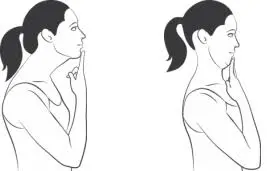
Instructions:
- Sit up straight in a comfortable seat.
- Drop your shoulders.
- Look straight ahead.
- Tuck your chin in. Don’t tuck your chin down.
- Try to form a double chin.
- Hold this position for 3-5 seconds.
- Return gently to the starting position.
- Repeat 8-10 times.
Benefit
- Improved muscle control in the neck.
- Strengthens deep neck flexors.
- Can improve forward head posture.
- Helps improve neck movement.
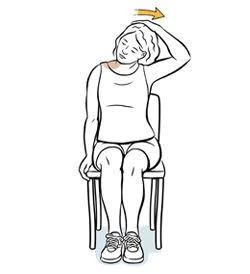
2. Lateral Neck Stretch
- This movement provides a mild stretch to the muscles running along either side of the neck.
- It may help ease tightness and muscular tension in the upper trapezius region.
Instructions:
- Sit upright. Drop your shoulders.
- Look straight ahead.
- Slowly tilt your head to the right, bringing your right ear closer to your shoulder without raising it.
- Ensure that your shoulder doesn’t lift.
- Hold this position for 15-20 seconds.
- Return to start.
- Repeat on the opposite side.
- Repeat 2-3 times on each side.
Benefit
- Improves neck mobility.
- Reduces muscle tension.
- Encourages comfortable lateral movement in the neck.
- May reduce upper shoulder tension.
- Don’t pull your head down with force.
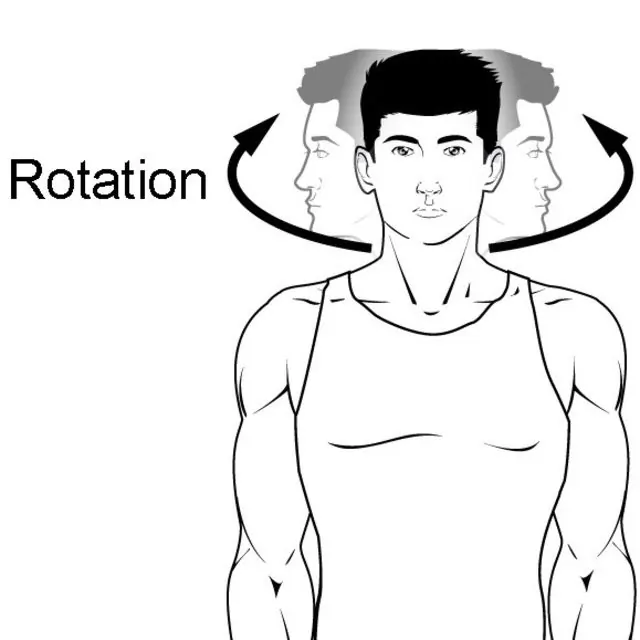
3. Neck rotation
Rotating your neck can help improve comfortable neck movement.
This can be very useful if you’re experiencing mild stiffness after sleep.
Instructions:
- Sit up straight.
- Drop your shoulders.
- Rotate your head to the right.
- Move only as far as is comfortable.
- Return to centre.
- Rotate your head to the left.
- Return to the start position.
- Repeat 8-10 times on each side.
Benefits
- Improves rotation of the neck.
- Helps maintain neck mobility.
- Reduces stiffness caused by reduced movement.
- Improves functional head movement.
- Don’t rotate your neck too quickly or too far.
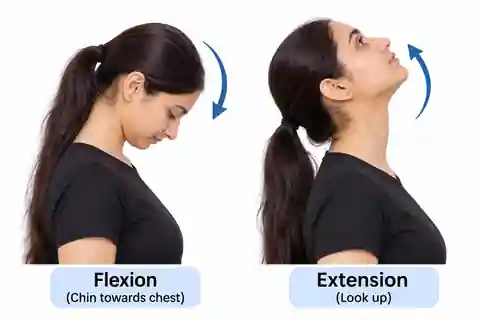
4. Cervical Flexion and Extension Exercise
Moving your head forwards and backwards gently can help maintain neck mobility.
Instructions:
- Sit up straight with good back support.
- Gently move your chin to your chest.
- Move only as far as comfortable.
- Return to neutral.
- Gently move your eyes upwards (without forcing your neck backwards).
- Return to the starting position.
- Repeat 5-8 times in each direction.
Benefits:
- Improves neck mobility.
- Reduces stiffness.
- Encourages controlled movement in the neck.
- Maintains functional range of movement.
- Do not hyperextend your neck (particularly if it causes dizziness, pain in the arms, or pins and needles).
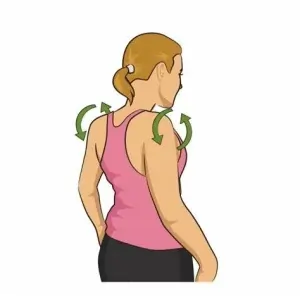
5. Shoulder Rolls
Performing shoulder circles may enhance shoulder mobility while helping relieve tightness around the neck and upper shoulder muscles.
Instructions:
- Stand or sit in a comfortable position.
- Lift both shoulders upward, bringing them closer to your ears.
- Move your shoulders backwards.
- Gently move your shoulders down.
- Return to the starting position.
- Repeat in a smooth motion.
- Repeat 10-15 times.
Benefits:
- Improves shoulder mobility.
- Reduces tension in the upper trapezius muscles.
- Encourages movement in the shoulder girdle.
- Reduces stiffness after long periods of sitting.
6. Seated Scapular Retraction Exercise
This exercise involves gently squeezing your shoulder blades together.
It will activate musculature that controls your scapula, including the middle trapezius and rhomboids.
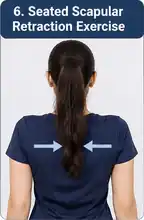
Instructions:
- Stand or sit in an upright position.
- Gently squeeze your shoulder blades together.
- Avoid shrugging your shoulders.
- Hold for 3-5 seconds.
- Gently return to the starting position.
- Repeat 10-12 times.
Benefits:
- Strengthens muscles that stabilise the scapula.
- Improves control of the scapula.
- Supports posture in the upper back.
- May reduce excessive loading of neck musculature.
7. Seated Levator Scapulae Stretch
The levator scapulae extends from the upper cervical vertebrae to its attachment along the shoulder blade (scapula).
If tightness occurs in this muscle, it can cause discomfort in the upper back and side of the neck.
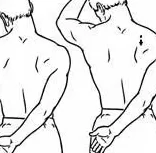
Instructions:
- Sit up straight.
- Drop your shoulders.
- Turn your head roughly 45 degrees to one side.
- Gently move your eyes down towards your armpit.
- Stop once you feel a gentle stretch in your upper back and sides of your neck.
- Hold for 15-20 seconds.
- Return to the start.
- Repeat on the other side.
- Repeat 2-3 times on each side.
Benefits:
- Improves flexibility.
- Reduces muscle tension.
- Improves neck comfort.
- Targets muscles in the levator scapulae.
- Don’t pull your head down with force.
8. Doorway chest stretch
Stretching the pectoralis muscles can be useful to reduce tightness in the muscles caused by extended forward positioning of the shoulders.
Improving flexibility in this area can help make standing upright more comfortable.
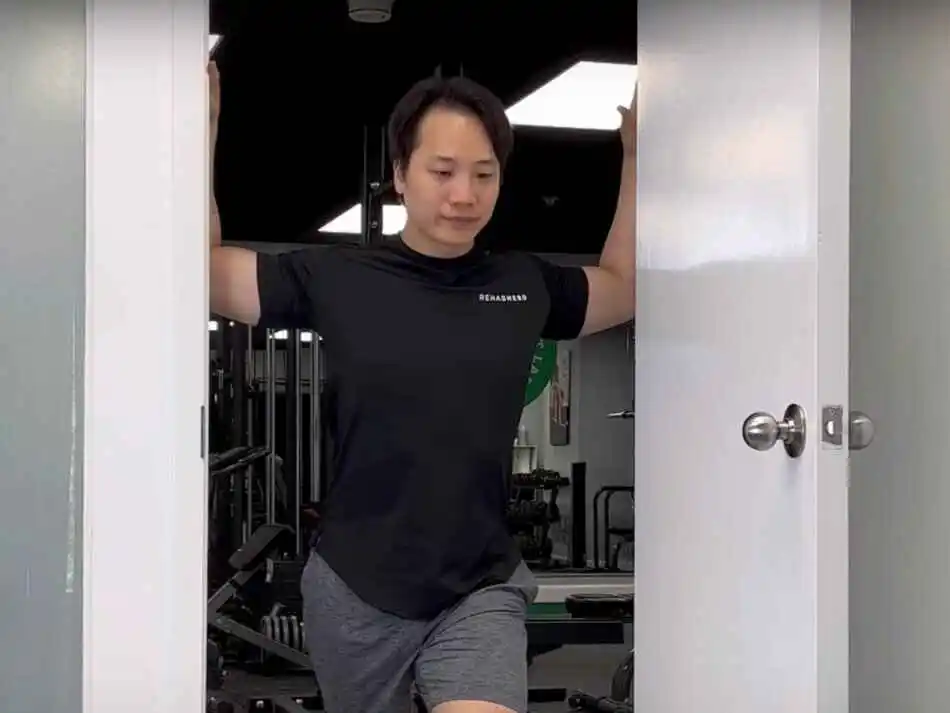
Instructions:
- Stand in a doorway.
- Place your forearms in the doorway.
- Ensure your elbows are at shoulder height, or just below.
- Slowly step forward.
- Allow your chest to gently move forward.
- Stop once you feel a comfortable stretch in your chest.
- Hold for 20-30 seconds.
- Return to the start position.
- Repeat 2-3 times.
Benefits:
- Improves chest flexibility.
- Reduces tightness in the pectoralis muscles.
- Helps make shoulder positions more comfortable.
- Complements strengthening in the upper back.
9. Seated Thoracic Extension Exercise
Thoracic extension exercises help improve movement in the mid and upper back.
This can reduce excessive compensation in the neck during certain movements.
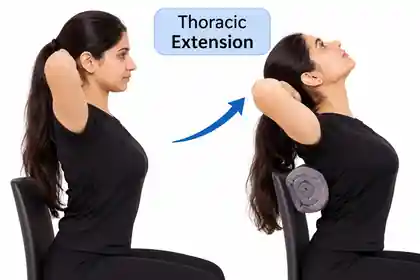
Instructions:
- Sit in a sturdy chair with good back support.
- Keep your lower back comfortable.
- Gently arch your upper back over the back of the chair.
- Be gentle with this movement.
- Return to the starting position.
- Repeat 8-10 times.
Benefits:
- Improves upper back movement.
- Encourages comfortable spinal movement.
- Improves upper body positioning.
- Complements neck rehabilitation.
- Be gentle with this movement. Don’t push your head.
10. Isometric Strengthening
These isometric exercises will strengthen musculature in the neck but do not require large movement of the neck.
These exercises can be performed once pain is well controlled, and depending on the cause of your neck pain.

Instructions:
- Sit upright.
- Gently push your forehead into your hand.
- Ensure that your head does not move.
- Hold for 3-5 seconds.
- Gently return to the starting position.
- Repeat this exercise with your hand on the posterior and lateral aspects of your head.
- Repeat 5-8 times in each direction.
Benefits:
- Improves muscle activation in the neck.
- Provides stability to the cervical spine.
- Improves muscle endurance.
- Improves control of movement in the neck.
- Be gentle with resistance. Don’t apply maximal force.
Important notes to consider during exercises
If you are experiencing severe unexplained neck pain, have had significant trauma recently, worsening weakness in your arms, or any red flags, please seek medical advice first. If at any time during exercise symptoms are made worse, stop exercising.
When to see a doctor?
Seek urgent medical attention if:
- Severe pain in the neck after a major fall or accident.
- High temperature, very stiff neck, and headache.
- Sudden weakness in arms/legs.
- Difficulty walking and balancing.
- New bladder/bowel problems.
- Sudden difficulty with coordination.
- Neck pain and chest pain, difficulty breathing, and/or other symptoms of a heart attack.
See a healthcare professional if:
- Numbness and tingling in your arms/hands persist.
- Progressive weakness.
- Very severe or worsening pain.
- Interfering with sleep.
- Unintentional weight loss.
- Neck pain and feeling unwell.
- History of cancer, major immunosuppression, or other significant health condition in combination with new neck pain.
If neck pain isn’t settling after a few weeks of self-management or is significantly impacting daily life, it would be a good idea to get an assessment.
Common causes of neck pain on waking
Neck pain on waking is very common. It can be caused by poor sleeping posture, incorrect pillow height, muscle tension, and/or prolonged postures during sleep. Poor posture during the day and joint issues in the cervical region may also make this pain worse.
Applying gentle movement, choosing a correct pillow, applying heat, and correcting posture may reduce mild pain.
Sleep in a neutral position
- Avoid sleeping with your head in extreme positions (extending, rotating, or protracting).
Pillow
- Ensure a pillow supports the neck in a neutral position.
- Consider the position you sleep in, the width of your shoulders, and the firmness of your mattress.
- If your pillow is compressed or uneven, replace it.
Avoid sleeping on your front
- You will generally be able to get into a more neutral position in these positions.
Breaks
- Stand up, and try to take a short walk.
- Gentle movements at the shoulders, changing your position, and avoiding leaning forwards in the chest may all help.
- Regular movement will reduce prolonged loading of muscles.
Strengthen the muscles in the neck and upper back
- Consider adding the following exercises to your routine:
- Chin Tucks
- Scapula Retractions
- Resistance Rowing
- Gentle Isometric Cervical Exercises
- Thoracic Extension Exercises
- Shoulder Stabilisation Exercises
- Start with easy levels of resistance and gradually progress.
Sleep Routine
- Maintaining good sleep hygiene can help with overall recovery.
- Try to do the following:
- Go to bed at the same time every night.
- Get enough sleep.
- Create a comfortable environment in your room.
- Create a calming evening routine.
- Poor sleep can lead to increased sensitivity to pain and difficulties in managing existing pain.
Managing Stress
- Stress can cause increased muscle tension and can affect sleep.
- Try to do relaxing activities in order to reduce stress. This could include: going for a walk, taking deep breaths, meditation, or gentle yoga.
Be Active
- Being active regularly will help maintain strong muscles and joints, and good overall health.
- Suitable activities could include:
- Walking
- Swimming
- Gentle Yoga
- Strength Training
- Low-impact aerobics
- Pick suitable activities for your level of fitness and medical conditions.
Ergonomic workstation
- Creating an ergonomic workstation will help to reduce strain on the neck.
- Consider:
- Positioning the screen directly in front of you
- Positioning the screen so that it is approximately level with your eyes.
- Ensure that your chair has good back support
- Ensure that your feet are supported.
- Ensure the keyboard is not too far from you.
- With good ergonomics, you should be able to move between different positions comfortably.
Avoid carrying heavy bags on one shoulder
- This may cause increased loading on the muscles in the neck and shoulder.
- Use a bag with 2 comfortable straps, or distribute the weight more evenly.
- Try to keep the weight of your bag as light as possible.
Conculsion
Neck pain on waking can be uncomfortable and impact daily life. It can be caused by sleeping in an awkward position, using an incorrect pillow, sleeping on the stomach, muscle tension, forward head posture, extended periods in front of screens, and age-related changes to the cervical spine.
In many patients, mild neck pain on waking can be improved by simple lifestyle adaptations. Ensuring a comfortable posture during sleep, using a supportive pillow, applying heat or cold, making gentle neck movements, and improving posture during the day can all help reduce pain.
Exercises from physiotherapy, such as chin tucks, rotations, shoulder rolls, retraction of the shoulder blades, and thoracic extension, can help improve range of movement and strengthen supporting muscles in the neck.
However, it is important to consider the cause of the pain. If pain is persistent, radiates down the arm, is accompanied by numbness, progressive weakness, severe headache, fever, or occurred as a result of an injury, appropriate medical assessment is required.
A good strategy would be to ensure you have a healthy sleeping routine, regular exercise, appropriate Physiotherapy exercises, and good posture during the day. This can help maintain good health in the cervical spine and reduce neck pain on waking in the future.
FAQs
Why am I getting neck pain in the mornings?
Neck pain on waking may occur in poor sleeping positions, or due to an inappropriate pillow, tight muscles, or sustained neck postures. Poor posture throughout the day and joint issues in the neck may also contribute.
Mild symptoms may improve with gentle movement, an appropriate pillow, applying heat, and improving posture.
Can I get neck pain from using a pillow?
If the pillow is too high/low, or doesn’t provide enough support, it may put stress on your neck.
Use a pillow that provides support to your head and neck in a comfortable position in line with your spine.
Which Sleeping Posture Is Most Suitable for Relieving Neck Pain?
Sleeping on your back or side is generally a good position.
If sleeping on your side, make sure to use a pillow to fill the gap between your shoulder and head.
If sleeping on your back, ensure that the pillow provides neck support but does not push your head forward.
Is Waking Up With Neck Stiffness a Common Experience?
Mild stiffness in your neck can occur if you have been in an uncomfortable position or sustained position in your sleep.
In many cases, gentle movement will help relieve this.
However, if you frequently experience severe or persistent stiffness in your neck on waking, you should see a health care professional.
Should I use hot or cold treatment for neck pain when I wake up?
Either can be useful depending on the cause and preference.
Hot treatments can be very relieving for tight and stiff muscles. Cold treatments may help provide temporary relief if you have recently strained your neck.
Ensure that you take care with the skin and do not apply excessive heat/ cold.
Can cervical spondylosis cause neck pain in the mornings?
Cervical spondylosis can cause neck pain, stiffness and limited movement. Some people find that their stiffness gets worse following inactivity such as sleep.
However, neck pain on waking does not necessarily mean that you have cervical spondylosis.
References
- Professional, C. C. M. (2026a, March 19). Stiff neck. Cleveland Clinic. https://my.clevelandclinic.org/health/symptoms/24477-stiff-neck
- The Healthline Editorial Team. (2026b, October 22). What causes neck pain after waking up and how to treat it. Healthline. https://www.healthline.com/health/neck-pain/waking-up-with-neck-pain
- Capsley. (2026, May 3). Neck Pain After Waking Up: Causes, Treatment & Prevention Guide. Alleviate Pain Clinic. https://alleviatepainclinic.com/blog/neck-pain-after-waking-up-causes-prevention/
- Admin. (2026, January 27). Stiff Neck explained: Causes, treatment, and prevention. ZenPlus. https://zenplus.in/stiff-neck-explained-causes-treatment-and-prevention/