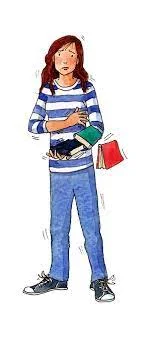

Shoulder Pain While Sleeping: Causes and Physiotherapy
Table of Contents
Introduction
An aching shoulder can affect a wide range of people. People can suffer from pain on the left and/or right sides of the body depending on which shoulder they predominantly sleep on. The pain can manifest itself in a number of ways, for example, as aching, stabbing, burning, stiff and/or tender sensations.
Whilst sleeping on one side is generally a favoured sleeping position for many people, those who already suffer from a shoulder issue – for example, an irritated, damaged and/or inflamed shoulder, or someone with a musculoskeletal disorder – can place further strain upon the shoulder region. This can in turn exacerbate their symptoms and affect their sleep.
Common reasons for aching shoulders when sleeping on one side include rotator cuff tendinitis. Other causes may include shoulder bursitis, rotator cuff tendinopathy, shoulder impingement, frozen shoulder, arthritis, biceps tendinitis and cervical-related nerve issues.
Poor sleeping positions, unsuitable pillow use, and occupations and hobbies that involve regular overhead work such as weight-lifting, swimming and tennis can also lead to shoulder pain. People frequently report shoulder pain at night if they undertake these types of work.
Whilst simple changes to sleeping positions can sometimes alleviate transient shoulder pain, it is important not to disregard continual or intensifying shoulder pain. Establishing the root cause of the problem will enable suitable treatment to be administered and aid prevention of a long-term issue.
Physios can work to increase a patient’s shoulder joint range of movement, strengthen relevant muscles, and retrain movement. They can also work to minimise undue strain on the shoulder.
Within this article, I discuss reasons for, and common causes of, side sleeping-related shoulder pain, as well as related symptoms. I also cover diagnostic, physiotherapy and self-help techniques, sleeping adaptations and preventative advice. I then provide information about exercises that may be beneficial for improving shoulder wellbeing.
Why does my shoulder ache when I sleep on one side?
As previously mentioned, the shoulder is very mobile and enables the arm to move forwards, backwards, laterally and overhead. This is achieved through the combined function of bone, muscle, tendon and ligament components.
The shoulder comprises three key bones:
- Scapula – the shoulder blade, to which several key muscles are attached.
- Clavicle – the collarbone, which links the shoulder blade area to the breastbone.
- Alongside these bones, there are a number of key soft tissues which are also integral in shoulder function.
Rotator cuff muscles
There are 4 rotator cuff muscles:
- Supraspinatus
- Infraspinatus
- Teres minor
- Subscapularis
Subacromial bursa
This is a small sac which contains fluid and works to minimise the rubbing of the rotator cuff tendons against other shoulder components. Should this bursal tissue become irritated and/or inflamed, it can result in shoulder pain, often in relation to particular shoulder movements and sleeping positions.
Shoulder joint capsule
In some conditions, including frozen shoulder, the capsule can become both inflexible and thickened.
Biceps tendon
Likewise, irritation to this tendon can result in front shoulder pain.
Why does my shoulder hurt when I sleep on my side?
Lying on your shoulder will cause body weight to exert pressure on that area. Should the shoulder tissues be susceptible to pain, this can heighten a person’s sensation of discomfort.
Further strain may additionally be placed upon the shoulder if, for example, the arm is tucked under the body, raised above the head, or is in an unnatural position in front of the chest.
Throughout sleep, the shoulder tends to remain in a largely static position. Unlike when people are awake and so are often able to frequently alter their posture in order to ease strain on their body, people may not shift their sleeping position sufficiently to allow this to occur.
Consequently, even a small shoulder issue can become more prominent at night.
Common causes of shoulder pain associated with side sleeping
Below are some of the most common causes of side sleeping-related shoulder pain.
Rotator Cuff Tendinopathy
The rotator cuff muscles are key in providing shoulder joint stability and in controlling arm movement.
Such issues can arise due to regular overhead work, over-exercising, age-related tendon alterations, and/or insufficient rest periods following exercise.
Applying pressure to the painful shoulder during side sleeping can heighten the pain associated with this condition.
Typical symptoms are:
- Pain when attempting to reach behind.
- Weakness when lifting items.
- Aching when lowering the arm following elevation.
Initially, those with rotator cuff tendinopathy may only suffer from slight pain when carrying out work or daily tasks. Nevertheless, if the issue persists, then nocturnal shoulder pain and mobility issues may become more prominent.
Shoulder Bursitis
Shoulder bursitis is when the bursa in the shoulder area is irritated and/or inflamed. As previously outlined, the subacromial bursa serves to minimise rubbing of the rotator cuff tendons against the acromion section of the shoulder blade.
Pressure on the shoulder while sleeping on it can heighten pain from an irritated bursa.
Typical symptoms include:
- Tenderness of the affected area.
- Discomfort when elevating the arm.
- Pain during overhead work.
- Difficulty in sleeping on the affected shoulder.
- Stiffness following extended periods of time in one position.
Shoulder bursitis can co-exist with other shoulder-related pain (for instance, that associated with the rotator cuff) and can also occur subsequent to undertaking regular work, experiencing direct pressure to the shoulder, and/or suffering certain types of shoulder injury.
Shoulder Impingement Syndrome
Generally, shoulder impingement syndrome is used to denote pain caused by irritation to the shoulder’s rotator cuff and surrounding tissues. This is frequently linked to overhead work, altered tendon health, and heightened sensitivity of the shoulder region.
Specific shoulder movements can cause pain in irritated tissues. Similarly, sleeping on a painful shoulder can apply added pressure and so exacerbate symptoms.
Typical symptoms comprise:
- Discomfort when laterally elevating the arm.
- Pain experienced during overhead work.
- Pain on the front and/or outer part of the shoulder.
- Weakness when lifting things.
- Nocturnal shoulder pain.
- Difficulties in hair-combing and/or overhead work.
Frozen Shoulder (Adhesive Capsulitis)
Known medically as adhesive capsulitis, frozen shoulder is a condition that causes painful and gradually worsening joint stiffness. It occurs when the shoulder joint capsule becomes thickened and inflexible, and so hampers shoulder mobility.
Typically, frozen shoulder progresses through a number of stages and tends to develop over time.
Stages of frozen shoulder:
- Freezing stage – Shoulder pain gradually escalates, especially at night.
- Frozen stage – Although pain may become less pronounced, joint stiffness and mobility issues are more evident.
- Thawing stage – Shoulder joint mobility begins to improve as stiffness lessens.
Typical symptoms are:
- Pain when sleeping on the affected shoulder.
- Difficulties in reaching overhead.
- Problems in reaching behind.
- Reduced ability to externally rotate the shoulder.
- Morning stiffness.
- Pain upon altering sleeping positions.
Those with diabetes and/or other specific medical conditions are more prone to developing frozen shoulder.
Shoulder Osteoarthritis
Shoulder osteoarthritis is a degenerative joint disorder. It is characterised by the slow breakdown of the cartilage, which typically acts as a ‘shock absorber’ for the joint. As the cartilage thins, bones can rub together more readily. This can in turn lead to pain, stiffness and impaired joint mobility.
Whilst age is a key contributory factor to shoulder arthritis, prior shoulder injury and other joint disorders can also play a role.
Common symptoms include:
- Deep shoulder joint pain.
- Pain when sleeping on the affected shoulder.
- Stiffness following periods of non-use.
- Issues in arm rotation.
- Altered shoulder joint mobility.
- Crepitus (popping/clicking) sounds.
Biceps Tendinitis
Regular work that involves lifting, pulling, throwing, and/or overhead work can all potentially lead to tendon irritation.
Again, pressure can be applied to a person’s shoulder when sleeping on it.
Typical symptoms are:
- Front shoulder pain.
- Tenderness in the upper arm region.
- Aching when lifting items.
- Discomfort during overhead work.
- Pain when reaching behind.
Cervical radiculopathy
Whilst many shoulder issues do arise from within the shoulder joint, sometimes the problem can stem from the cervical (neck) region. Nerves in the neck can become inflamed or become under pressure, and this can in turn cause pain to radiate to the shoulder and shoulder blade and also to the arm.
Such a condition is classed as cervical radiculopathy. It is caused by nerves within the cervical region becoming inflamed or under pressure and so has an effect upon the area that the nerve is responsible for.
Typical causes may include:
- Cervical disc protrusion (also known as a slipped disc).
- Compression of the neural foramina (the points at which nerves leave the spinal column).
- Degeneration of the cervical region.
- Depending on which nerve is involved, individuals may suffer from:
- Neck pain and/or inflexibility.
- Shoulder blade pain.
- Arm pain.
- Arm and/or hand weakness.
- Fluctuating or differing symptoms depending on neck position.
Where these symptoms are being experienced, a physiotherapist should examine the shoulder and also the neck so that they can establish what is causing someone’s pain and then devise suitable treatment.
Muscle Overstretch/overuse
This refers to muscles in the shoulder area being either overstretched or overused. Muscles that can be affected include the deltoids, trapezius, and pectorals.
- Muscles can be overstretched or overused for several reasons, such as:
- Lifting something heavier than is advisable.
- Incorrect form being used on gym equipment.
- Continually carrying out the same shoulder movement.
- Sports injuries.
- Sleeping in an unsuitable or uncomfortable manner.
Typical signs and symptoms of over-stretching or over-use include: pain, muscle soreness, and inflexibility. People can also struggle to move their shoulder(s) as this may be painful.
Generally, light overstretches will respond well to alterations in activity, progressive muscle strengthening, and a good rehabilitation programme. However, resuming heavy lifting and/or vigorous exercise too soon can hinder the recovery process.
History of Shoulder Injury or Surgery
Individuals who have had shoulder dislocations, broken bones, tendon damage and/or surgery often report that they can suffer from shoulder pain, particularly during the healing and recovery phase.
Following shoulder surgery, there can often be some nocturnal shoulder pain as the body heals and mobility is slowly restored. Altered shoulder function can therefore play a part in someone experiencing shoulder pain.
Whilst everyone recovers from shoulder surgery or injury in their own way, rehabilitation should be carried out in accordance with the advice given by the operating surgeon.
It should also be recognised that although rehabilitation exercises may be appropriate for an individual with a light muscle over-stretch, they may not be suitable for those who have undergone rotator cuff or shoulder replacement surgery. Appropriate rehabilitation is key in ensuring that the healing tissue is not compromised and so that a safe recovery can take place.
Why Does Shoulder Pain Often Intensify at Night?
Many individuals wonder why they are generally able to manage their shoulder pain during the daytime, yet suffer from it as soon as they get into bed.
In many instances, there is no single reason for this. Factors including sleeping position, pressure, lack of movement, and the nature of an individual’s shoulder issue can all play a role in intensifying someone’s shoulder pain at night.
Below are some typical causes.
Pressure upon the Shoulder
Whilst sleeping on one’s side, an individual’s body weight will partially press against the shoulder that is in contact with the bed. This can cause additional irritation to the shoulder joint region, particularly if this area is already tender.
Various elements of the shoulder can be adversely affected by pressure and include:
- Rotator cuff tendons.
- Subacromial bursa.
- Deltoid muscle.
- Shoulder joint capsule.
If any of these are already swollen or damaged, applying pressure to the relevant shoulder can exacerbate a person’s shoulder pain. Consequently, some individuals have difficulty sleeping on their regular side and often shift their position throughout the night.
Lack of Movement
Whilst awake, people automatically move their shoulders as they dress, walk, work, and cook, for instance. However, during sleep, shoulders are often still for extended periods of time.
Remaining in one position for lengthy durations can lead to inflexibility and can therefore cause people to suffer from discomfort. This is particularly likely to occur for those suffering from a frozen shoulder or joint, as well as individuals with other movement-limiting conditions.
Hence, it can sometimes happen that people wake up with a stiff and/or painful shoulder, despite having been reasonably comfortable in bed.
Unsuitable Sleeping Position
Sleeping style can influence shoulder pain.
For example, if a person sleeps with their arm underneath their body, if they continually elevate their arm above their head, or if their shoulders excessively protrude, undue pressure can be placed upon the shoulder region.
Such sleeping styles can therefore heighten pressure on the shoulder and further worsen an individual’s shoulder issue.
Choosing a more suitable sleeping position and using appropriately supportive pillows can potentially assist in alleviating shoulder pain.
Altered Pain Awareness
As previously mentioned, another reason why shoulder pain can seem more severe at night is that there are typically fewer distractions.
During the day, people are generally preoccupied with work, home-related matters, and social interaction. Consequently, they may not be as cognisant of slight shoulder pains.
Nevertheless, at night there are often fewer distractions and so people may become more conscious of their shoulder pain.
Poor sleep can also heighten an individual’s awareness of pain. Unfortunately, this can lead to a somewhat exasperating situation whereby a person’s shoulder pain interferes with their sleep, and then their poor sleep quality in turn intensifies their shoulder pain.
Best Sleeping Positions for Shoulder Pain
Sleeping position can play an important role in the treatment of night shoulder pain. The aim is to relieve shoulder pressure and ensure a comfortable positioning of the arm.
1. Sleeping on the Back Position
For some people suffering from shoulder pain, it can be helpful to sleep on the back.
How to do this:
- Lying comfortably on the back.
- Ensuring good neck support with a suitable pillow.
- Putting a pillow or a folded towel under the affected arm.
- Having a comfortable position of the shoulder.Avoiding putting the arm overhead.
Benefits:
- Reduction of pressure on the affected shoulder.
- Ensuring good support of the shoulder.
- Ensuring a comfortable shoulder position.
2. Unaffected Side Sleeping Position
How to do this:
- Sleep on the non-affected side.
- Have a pillow placed in front of your chest.
- Place the painful arm on the pillow.
- Avoid having an unsupported painful shoulder.
It may also help to alleviate shoulder pain.
3. Holding a Pillow to Sleep
How to do this:
- Lie on your non-painful side.
- Insert a pillow between your arms.
- Rest your painful arm on the pillow.
- Relax your shoulder.
- And do not excessively flex or extend your arm.
- This can be especially beneficial for those suffering from rotator cuff problems.
4. Unfavourable Sleep Positions
Avoid sleeping in any of the following positions if they worsen symptoms:
- Lying on your painful shoulder.
- Putting your arm under your head.
- Lying with your arm above your head.
- Leaving your painful arm to dangle.
- Sleeping in a position that causes pins and needles.
Whilst there is no universally ideal way to sleep, individuals should endeavour to sleep in the most suitable way for them to minimise their symptoms and to sleep well.
Physiotherapy Examination for Nocturnal Shoulder Pain
Physiotherapy can be used effectively to investigate the reason(s) for nocturnal shoulder pain.
Physiotherapists examine the shoulder, neck and related musculature and analyse functional movement.
- History Taking
A physiotherapist may enquire about:
- When the patient first experienced shoulder pain.
- Whether the problem is affecting one or both shoulders.
- Whether the patient’s pain is made worse at night.
- What sleep position is uncomfortable.
- Whether there is a history of trauma.
- Whether there is increased pain when the patient elevates their arm.
- Whether the patient suffers from neck pain or pins and needles.
- Whether shoulder pain affects gym attendance or everyday function.
2. Examination for Pain
Patients can score their shoulder pain on a numerical pain scale.
For instance:
- 0 – no pain
- 1-3 – slight pain
- 4-6 – moderate pain
- 7-10 – severe pain
Physiotherapists will also analyse the length and regularity of the patient’s pain as well as factors that exacerbate it.
3. Examination for Movement
Physiotherapists assess shoulder flexion, extension, abduction, adduction, internal and external rotation.
Limited movement can be indicative of a frozen shoulder, joint stiffness and/or other shoulder issues.
4. Examination for Muscular Strength
Physiotherapists can analyse the strength of a range of muscles including:
- Rotator cuff
- Deltoid
- Trapezius
- Serratus anterior
- Rhomboids
- Other scapular supporting muscles.
5. Clinical Tests
Physiotherapists and/or doctors will sometimes conduct particular clinical tests depending on a patient’s symptoms.
Such tests can involve:
- Hawkins-Kennedy
- Neer impingement
- Empty Can
- External Rotation Resistance
- Drop Arm
- Speed’s
However, no one clinical test will consistently and accurately detect all potential shoulder problems. Results should therefore be analysed in conjunction with the patient’s history and comprehensive physical examination.
6. Diagnostic Imaging
Not all people requiring investigation for shoulder pain will require diagnostic imaging.
A doctor may advise patients to have:
- X-rays to investigate bone and joint status.
- Ultrasound to examine rotator cuff and bursal structures.
- MRI to thoroughly analyse soft tissues.
Whether or not a patient requires diagnostic imaging is based on an analysis of their presenting symptoms, physical examination, history of trauma, and results from initial treatment.
Physiotherapy Interventions for Nocturnal Shoulder Pain
Physiotherapy can be used to decrease pain and to enhance range of movement. It can also strengthen muscles and enable patients to resume usual functions.
Physiotherapy intervention will be influenced by a patient’s diagnosis and the severity of their symptoms.
1 Activity Advice
Initially, patients are often advised about which activities may exacerbate their shoulder pain and how these can be altered.
These may include:
- Overhead weight carrying.
- Activities involving painful shoulder movement.
- Sleeping on a painful shoulder.
- Bench pressing with heavy weights.
- Activities relating to repetitive throwing.
- Generally, total restriction of activity is not advised for patients with straightforward shoulder complaints, unless medically necessary.
- Good quality movement is typically encouraged to avoid undue stiffness.
2 Cold Therapy
Cold can be applied to ease shoulder pain after sudden trauma or following undertaking activities that are uncomfortable for the shoulder.
Application guidance:
- Leave on for around 10-15 minutes.
- Periodically check the skin.
- Discontinue application if there is excessive local anaesthetic effect, heat sensation, or skin irritation.
- Never apply ice to bare skin.
3 Heat Therapy
Heat can be used to help to loosen muscles and may be of benefit to some people in alleviating chronic shoulder stiffness-related symptoms.
Application guidance:
- Cover the area with a warm (but not hot) towel or heating pad.
- Leave on for around 10-15 minutes.
- Also avoid using heat on an acutely hot and/or swollen area unless specifically advised to do so by a health care professional.
4 Exercise
It can involve:
- Passive movements.
- Rotator cuff strengthening.
- Scapular stabilisation.
- Postural work.
- Functional re-training.
Exercises should be chosen according to the patient’s diagnosis.
5 Hands-on Therapy
Where appropriate, physiotherapists can conduct hands-on therapy to enhance shoulder function and to ease symptoms.
This may consist of:
- Joint mobilisation.
- Soft tissue manipulation.
- Muscle relaxation.
- Assisted movement.
Typically, hands-on therapy is carried out alongside rather than in substitution for active exercise.
6 Postural Intervention
Poor posture can be a contributory factor in some people’s shoulder and neck symptoms.
Physiotherapy can work to correct:
- Forward head posture.
- Shoulder rounding.
- Thoracic stiffness.
- Inadequate scapular control.
- Long periods spent in fixed postures at work.
Postural re-training should seek to encourage good, sustainable movement rather than enforcing a single, unchanging shoulder posture all day.
7 Electrotherapy
Some physiotherapy practices offer electro-physical modalities including:
- TENS
- Interferential therapy (IFT)
- Therapeutic ultrasound.
Whilst these may offer temporary symptomatic benefit in selected patients, research findings regarding their efficacy differ. They should not be used as an alternative to suitable exercise-oriented physiotherapy re-training.
Physiotherapy exercises
A number of physiotherapy exercises can be beneficial to aid someone’s shoulder function and encourage muscle development.
Commence with mild exercises and cease if they lead to acute or severe pain, or cause your symptoms to worsen. Also, halt if you experience any anaesthesia or great discomfort.
Pendulum exercise
Pendulum exercise is an easy exercise which is often carried out in the initial stages of physiotherapy for shoulders.
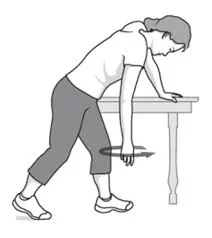
Instructions:
- Stand next to a table or chair.
- Lean forwards.
- Support yourself using your unaffected arm.
- Let your affected arm hang freely.
- Then, shift your body and encourage slight movement in your arm.
- Move forwards and backwards.
- Then move from side to side.
- Further, if able, move your arm in a small circular motion.
- Number of repetitions: 10-15 in each direction.
Advantages:
- Promotes mild shoulder movement.
- Minimises immobility.
- Aids good shoulder movement.
- Do not add weight to this exercise unless advised to do so by a professional.
Scapula squeeze
This exercise promotes the development of muscles which control the scapula.

Instructions:
- Sit or stand comfortably.
- Allow your arms to drape naturally.
- Gently draw your scapulae together.
- Do not shrug your shoulders.
- Maintain this for 5 seconds.
- Then ease into relaxation.
- Number of repetitions: 10-15.
Advantages:
- Enhances scapula muscle function.
- Contributes to good scapula control.
- Assists correct upper body posture.
Wall walk
Wall walking can be beneficial in encouraging shoulder elevation.
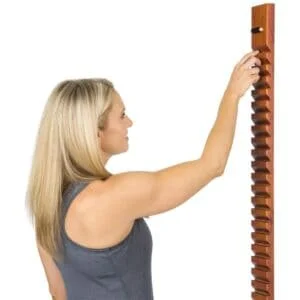
Instructions:
- Stand facing a wall.
- Rest your affected hand’s fingers against the wall.
- Carefully move your fingers up the wall.
- Cease when experiencing moderate pain.
- Hold for 3-5 seconds.
- Then gradually lower your arm.
- Number of repetitions: 8-10.
Advantages:
- Aids shoulder elevation.
- Promotes progressive movement.
- May assist in re-establishing shoulder overhead function.
Table slide
Table sliding can be helpful in promoting mild shoulder flexion.

Instructions:
- Sit in front of a table.
- Rest your affected hand on a towel.
- Carefully move your hand forward.
- Slightly lean your upper body forward.
- Only move within a comfortable degree of movement.
- Then return to your original position.
- Number of repetitions: 10-12.
Advantages:
- Enhances shoulder movement.
- Encourages regulated movement.
- Can help to minimise excessive muscle protection.
External rotation (with resistance band)
This exercise focuses on the external rotator muscles of the shoulder.

Instructions:
- Sit or stand in a comfortable position.
- Insert a small towel between your elbow and body.
- Grasp a light resistance band.
- Externally rotate your forearm.
- Keep your elbow near your body.
- Then carefully return to your original position.
- Number of repetitions: 8-12, for 1-2 sets (initially).
Advantages:
- Develops external rotator muscles.
- Adds to shoulder stability.
- Assists with functional arm function.
- Initially use a lightly resistant band.
Internal rotation (with resistance band)
This exercise is aimed at the internal rotator muscles.

Instructions:
- Fix a resistance band to a point at elbow height.
- Stand with your back to this.
- Hold the resistance band in your affected hand.
- Gradually draw your forearm towards your abdomen.
- Again, keep your elbow near your body.
- Then, carefully return to your initial position.
- Number of repetitions: 8-12, for 1-2 sets.
Advantages:
- Builds shoulder muscle function.
- Promotes good muscle co-ordination.
- Contributes to shoulder stability.
Isometric external rotation of the shoulder
Isometric exercises allow muscles to be developed without great joint movement.

Instructions:
- Place your afflicted side next to a wall while you stand.
- Make sure your elbow is at a straight angle once more.
- Place your hand’s back against the wall.
- Then, exert mild outward force on the wall, but do not move your arm.
- Maintain this for 5 seconds.
- Then, ease into relaxation.
- Number of repetitions: 8-10.
Advantages:
- Stimulates the rotator cuff muscles.
- Allows regulated muscle development to occur.
- Can also be beneficial if movement is painful.
- Apply mild force only.
Isometric internal rotation of the shoulder
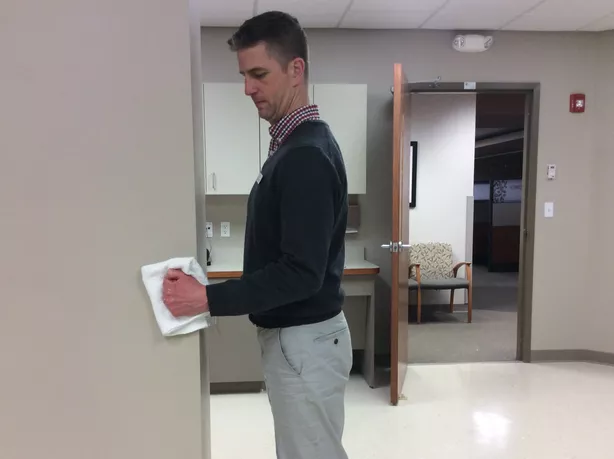
Instructions:
- Place your afflicted arm next to a wall or door frame while you stand.
- Make sure your elbow is at a straight angle once more.
- Rest your palm against the wall.
- Next, give the wall a slight inward force.
- Do not move your arm.
- Maintain this for 5 seconds.
- Then, ease into relaxation.
- Number of repetitions: 8-10.
Advantages:
- Develops the internal rotator muscles.
- Enhances shoulder muscle function.
- Can contribute to good joint control.
Cross-Body Shoulder Stretch
This exercise is designed to stretch the muscles and soft tissue at the rear of someone’s shoulder.
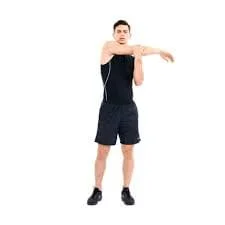
Instructions:
- Sit or stand in a comfortable position.
- Cross your affected arm over your chest.
- Verify that your feet are on the floor.
- Gently pull your arm across your body.
- Cease when experiencing a mild stretch.
- Hold for 15-20 seconds.
- Number of repetitions: 2-3.
Advantages:
- Increases posterior shoulder flexibility.
- May assist in alleviating stiffness.
- Contributes to good shoulder movement.
- Omit this exercise if it causes acute pain or aggravates your symptoms.
Doorway chest stretch
Sometimes people can find that their chest muscles are tight, which can affect their shoulder movement.
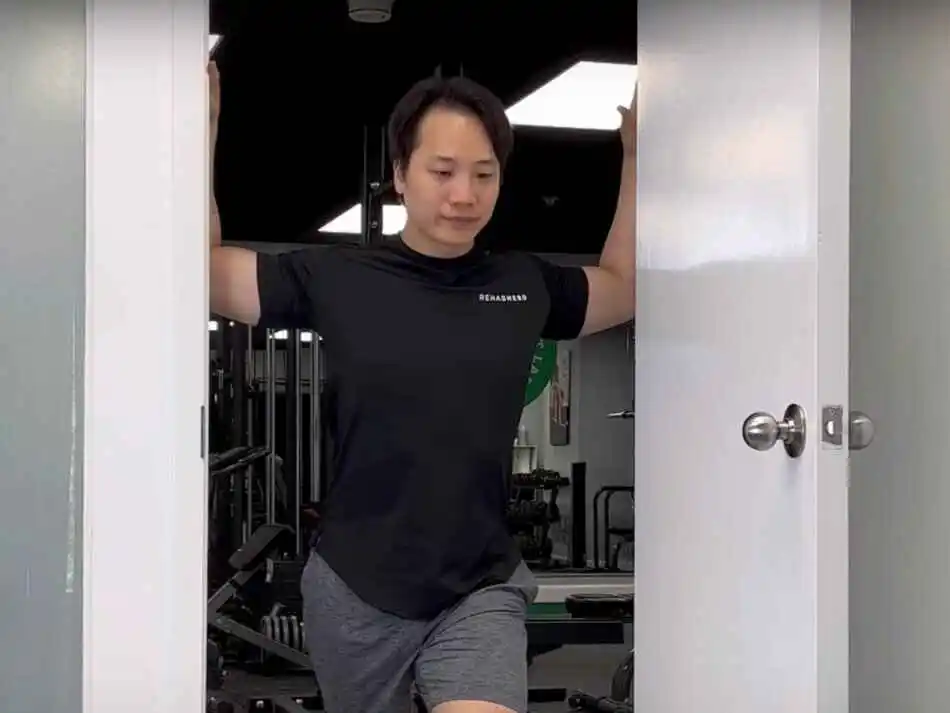
Instructions:
- Stand so that you face a doorway.
- Rest your forearms on the door frame.
- Initially, ensure that your elbows are slightly below shoulder height.
- Move forward a little.
- After that, your chest should feel slightly stretched.
- Continue to hold this for 15-20 seconds.
- Carefully move back to your initial position.
- Repeat: 2-3 times.
Benefits:
- Improves chest movement.
- Promotes good shoulder alignment.
- Assists upper body movement.
Thoracic extension over chair
Exercises can be used to assist those who suffer from middle back stiffness.
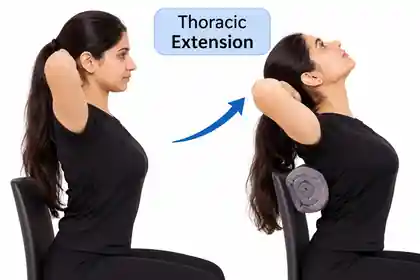
Instructions:
- Sit on a sturdy chair.
- Cross your hands over your chest.
- Place the second hand across your upper arm.
- Carefully arch your upper back over the chair back.
- Do not over-arch your neck.
- Slowly move back to your original position.
Repeat: 8-10 times.
Benefits:
- Enhances upper back movement.
- Promotes good shoulder movement.
- Alleviates stiffness which can result from long periods of sitting.
Wall push-up
Wall push-ups can be used to strengthen the shoulder and upper body muscles.
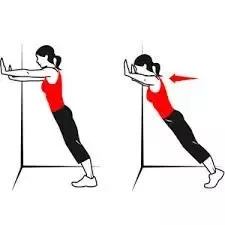
Instructions:
- Face a wall.
- Place your hands at an appropriate height on the wall.
- Maintain good posture.
- Slowly move your elbows inwards.
- Allow your chest to move in towards the wall.
- Then carefully move away from the wall, returning to your original position.
Repeat: 8-12 times.
Benefits:
- Strengthens muscles that support the shoulder.
- Enhances upper body control.
- Builds practical pushing strength.
- Ensure that you work within a comfortable level and do not overexert yourself.
Good sleeping positions
Altering your sleeping posture can be a simple way of reducing strain on a sore shoulder.
Depending on which shoulder is affected and the nature of the problem, there are various good sleeping postures.
Sleeping on your back
Sleeping in this position may assist in limiting the amount of pressure on each shoulder.
Tips:
- Sleep in a good posture.
- Insert a small pillow under the affected arm.
- Allow your shoulders to be relaxed.
- Make sure that your arms do not hang behind you or above your head.
- Providing good support for your arm can aid good posture and reduce shoulder strain.
Sleeping on the opposite side
If your right shoulder is sore, then attempt to sleep on your left side (and the reverse if your left shoulder is sore).
Tips:
- Sleep on the unaffected side.
- Insert a suitable pillow in front of your body.
- Position your affected arm on top of the pillow.
- Hold your affected shoulder slightly forward, but make sure that it does not twist too far.
- Also, do not allow your affected arm to be under your body.
- This will help to prevent the painful shoulder from being directly pressed upon.
Extra pillow support
Positioning of pillows can have a large impact on a person’s nighttime shoulder comfort.
An extra pillow can also be used to effectively support your affected arm and stop it becoming awkwardly positioned.
Select a pillow that supports your neck and does not force your shoulder forwards and/or upwards too much.
Semi-reclining sleeping position
Some individuals find that sleeping in a semi-reclining position is more comfortable.
This can either be achieved by using a reclining bed or by adding suitable pillows to facilitate this.
Such a position may be especially beneficial where sleeping flat exacerbates an individual’s shoulder pain.
It is essential that your neck and back continue to be well supported.
Home treatments for nocturnal shoulder pain
As well as physiotherapy, there are a number of further self-treatment options which can aid mild shoulder pain.
Ice
Applying ice can be an effective method of alleviating shoulder pain and is often used successfully after physical exertion where the shoulder becomes sore.
To do this:
- Put this over the sore shoulder.
- Leave in place for around 10-20 minutes.
- Take away the pack and allow your skin to return to normal temperature.
- Never apply ice directly to your skin.
Heat
Heat can sometimes be beneficial at relieving muscle tightness and so help to ease shoulder pain.
To do this:
- Leave in place for around 15-20 minutes.
- Continually check the temperature of your skin.
- Do not apply heat to an acutely inflamed and/or hot area without first seeking professional guidance.
Avoid sleeping on your Painful Shoulder
If sleeping on a particular side tends to aggravate your shoulder pain, then for a period try not to sleep in that position.
Attempt to sleep either on your back or on the opposite side, again ensuring good support for your arm.
Promote gentle shoulder movement
Unless told otherwise by a healthcare professional, it is generally advisable not to restrict a shoulder’s movement for prolonged periods of time.
Simple, yet comfortable, movement can assist in preserving range of motion and avoiding stiffness.
Alter behaviour
Limit participation in activities that greatly worsen shoulder pain.
For instance:
- Take breaks from computer usage.
- Avoid carrying heavy items on your painful shoulder.
- Adapt physically demanding gym workouts.
- And do not abruptly intensify exercise regimens.
Ensure a good working environment
Those who regularly work at computers should ensure that their working environment is set up appropriately.
Ensure that the computer screen is at an ideal eye level, and that the keyboard is within easy reaching distance. Forearms should ideally be supported.
Regularly interrupt activity to move around.
Establish good sleeping habits
Strive for good regular sleeping times, and endeavour to limit pre-sleep screen use. Additionally, ensure that your sleeping area is pleasant and conducive to good quality sleep.
Medical interventions for shoulder pain
Medical intervention will vary depending on the nature and extent of a person’s shoulder issue.
A healthcare professional may suggest one or more of the following treatments:
Medication for pain relief
A doctor may prescribe suitable medication to help alleviate a person’s shoulder pain and enable them to continue with everyday tasks.
However, some medication may not be appropriate for those who suffer from, for example, gastrointestinal, kidney or heart-related issues and/or other health conditions.
Always seek advice from a healthcare professional or pharmacist regarding medication.
Anti-Inflammatory Medication
Non-steroidal anti-inflammatory drugs (NSAIDs) may be advised in specific situations to assist with pain and inflammation.
Again, these types of drugs should only be taken as directed, as they can have side effects.
Depending on the shoulder issue, a doctor may decide that administering a corticosteroid injection could offer short-term pain relief.
This is based on a person’s diagnosis, prior treatment, and relevant risk factors.
Corticosteroid injections are not a substitute for suitable reconditioning.
Surgery
For the majority of people, surgical intervention is not required for shoulder pain resulting from sleep posture.
Nevertheless, surgery may be suggested for particular instances of major physical shoulder damage, specific rotator cuff damage and/or extensive joint damage. Surgery may also be explored where suitable non-surgical treatment has not been successful.
Such a decision should only be reached following thorough professional evaluation.
When should I see a Doctor/Physio?
Whilst not all shoulder pains require immediate medical intervention, it is advisable that you investigate why you are experiencing shoulder pain.
Please seek medical advice if:
- You are unable to sleep due to shoulder pain.
- The shoulder pain has lasted for more than 1 – 2 weeks and has not improved.
- You are unable to lift your arm.
- Shoulder stiffness is affecting your day-to-day life.
- There is weakness in the arm.
- Pain is felt at rest and also when moving.
- Despite altering your sleeping position, shoulder pain continues.
- Your symptoms are gradually increasing in severity.
- You have previously sustained a shoulder injury.
Urgent medical advice should be sought if:
- Severe shoulder pain is experienced.
- Following injury, there is an inability to move the arm.
- There is obvious abnormality or marked inflammation of the shoulder.
- Persistent tingling or lack of feeling is experienced.
- The shoulder is inflamed (red) and/or you have a temperature.
- Arm weakness is newly developed or is increasing in severity.
Note: Should you also feel chest tightness or pain, in addition to shoulder pain and/or experience breathing difficulties, cold sweats, sickness or dizziness, then this could point towards a cardiac issue and not a shoulder problem. Please seek emergency medical advice.
Preventing nighttime shoulder pain
Various strategies can be adopted to minimise re-application of pressure to the shoulder and enhance shoulder function.
1. Adopt good sleep habits
- Do not sleep on the painful shoulder.
- Support your arms and adopt good shoulder posture using pillows.
2 Select suitable
- Too high or too low pillows can lead to poor neck alignment and so cause discomfort.
- The pillow should enable proper alignment of the head and neck.
3. Build shoulder muscle strength
- Appropriately conducted muscle strengthening exercises can enhance the function of the rotator cuff and scapular muscles.
- Physiotherapists can advise on suitable strengthening exercises according to your level of strength and mobility.
4. Limit overhead actions
- Frequent overhead actions can place further strain upon the delicate shoulder area.
- Ensure that the level of exercise undertaken is incrementally increased and that there is adequate recovery time between strenuous activities.
5. Observe good body posture
- Sit comfortably and frequently break standing or sitting periods if working at a desk.
6 Warm up
- Correctly warming up enables the shoulder muscles and joints to prepare for physical exertion.
- Initially carry out light activity and then build up the intensity of the exercise undertaken.
7. Refrain from abrupt heavy lifting
- Lifting heavy items abruptly can be problematic, especially if the shoulder is unaccustomed to doing so.
- Lift correctly and ensure that heavy items are held near to the body.
8. Lead a healthy lifestyle
- Good general musculoskeletal health can be promoted through undertaking regular exercise, having a good diet and obtaining enough sleep. Furthermore, good recovery from exercise is important.
Conclusion
Unilateral sleep-related shoulder pain is a frequent issue and can affect both sleep and daily function. It can stem from pressure on the shoulder, poor sleeping alignment, and/or overuse of the shoulder. Further, it can also arise as a consequence of many different health issues. These include rotator cuff tendinopathy, shoulder bursitis, impingement syndrome, frozen shoulder, and arthritis.
Sleeping on an inflamed shoulder can further add pressure to the area and aggravate a person’s shoulder pain at night. Utilizing a suitable pillow and providing support for the affected arm can all potentially assist in alleviating shoulder pain. In addition, sleeping in a more favourable position can also be beneficial.
Gradual mobilization together with rotator cuff and scapular muscle re-strengthening, together with postural and activity adaptation, can all be effectively used within a planned physiotherapy programme to aid shoulder function and facilitate healing.
Nevertheless, the most suitable treatment will depend on the root cause of an individual’s shoulder pain. Do not undertake exercises that are painful and never disregard continuing night-time shoulder pain. Should your shoulder pain persist, affect your arm movement and/or continue to disturb your sleep, then it is recommended that you discuss your situation with a suitable healthcare professional so that they can appropriately assess your issue.
To summarise, by optimising sleeping alignment, minimising undue shoulder pressure and ensuring good mobility, alongside undertaking a physiotherapy programme that is tailored to a person’s condition, shoulder pain can effectively be managed, and sleep quality can be enhanced.
FAQs
Can frozen shoulder result in shoulder pain?
Yes. The initial, painful phase of frozen shoulder can in particular lead to considerable night-time shoulder pain. Alongside this, frozen shoulder can also result in gradually increasing joint stiffness and restricted arm movement.
Is shoulder ache caused by my pillow?
Whilst an inappropriate pillow can lead to poor neck and upper body alignment, which in turn can lead to shoulder pain, there are often other reasons for someone to experience shoulder pain. Again, it is important to consider other potential causes such as rotator cuff and/or bursitis-related issues.
Should I sleep on my painful shoulder?
Experiment with alternative sleep positions and seek one that is more comfortable. This should be done until your symptoms subside.
Generally speaking, sleeping on a sore shoulder might make it worse.
For those with shoulder pain, what is the ideal sleeping position?
You can reduce strain on your sore shoulder by sleeping on your back or on the side away from it
Does sleeping with a damaged rotator cuff cause shoulder pain?
Whilst it is true that shoulder pain can arise from a torn rotator cuff, other conditions can also cause comparable symptoms. These include bursitis, tendinopathy, shoulder impingement, frozen shoulder and arthritis.
Investigation is required to determine why someone is experiencing shoulder pain.
Why is it only at night that my shoulder hurts?
Long periods of time in one position, together with targeted pressure on inflamed structures and limited nocturnal movement, can all contribute to people feeling their shoulder pain at night. Nighttime shoulder pain is also frequently associated with some of these conditions.
Why do I get shoulder pain?
Weight can put pressure on the muscles, ligaments, and soft tissues around the shoulder. People with rotator cuff tendinopathy, bursitis, shoulder impingement, and/or frozen shoulder can all be more prone to experiencing shoulder pain under pressure.
Referances
- Hinge Health. (2022, October 24). Shoulder Pain at Night: Causes, Treatment, Exercises. Hinge Health. https://www.hingehealth.com/resources/articles/shoulder-pain-at-night/
- Spine, R. O. & (2026, June 1). Night-Time shoulder pain: Causes & what to do about it. Restore Orthopedics & Spine Center. https://www.restoreorthopedics.com/blog/night-time-shoulder-pain-and-what-to-do-about-it
- Google Search. (n.d.). https://www.google.com/search?q=Shoulder+Pain+While+Sleeping%3A+Causes+and+Physiotherapy&rlz=1C1YTUH_enIN980IN980&oq=Shoulder+Pain+While+Sleeping%3A+Causes+and+Physiotherapy&aqs=chrome..69i57j69i61.3042j0j15&sourceid=chrome&ie=UTF-8
- Lindsey. (2026, June 23). 10 Effective exercises for shoulder pain from sleeping. Academy Orthopedics. https://academyorthopedic.com/insights/shoulder-pain-from-sleeping/