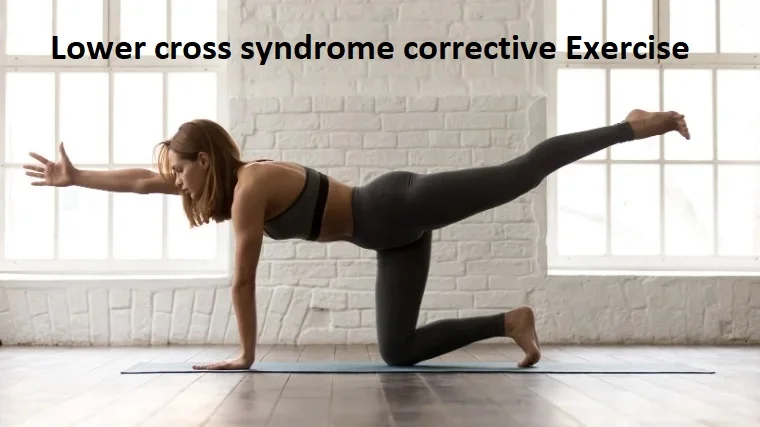
6 Top Home Exercises to Correct Lower Crossed Syndrome
Table of Contents
Introduction
Although many of us spend our days sitting down, we weren’t designed to do so. As was covered in a previous blog article, this can result in Upper Cross Syndrome, which affects the upper body and can cause pain in the neck, shoulders, chest, and upper back.
Lower Cross Syndrome, which affects your lower body and typically results in lower back pain, can also be caused by it. Fortunately, most people may overcome this problem with the correct Lower Cross Syndrome yoga practices.
Every person in the contemporary period leads a hectic existence that puts stress on their bodies, which is inevitable by human nature. Over time, this tension builds up to the point where it mostly manifests as lower back pain.
Low back pain that has no recognized etiology is referred to as non-specific low back pain. It accounts for 90% to 95% of LBP cases, while myofascial pain syndrome (MPS) is linked to 85% of back pain.
Lower Cross Syndrome: What Is It?
An imbalance in the strength of the muscles around the pelvis is the hallmark of Lower Cross Syndrome (LCS). While some muscles are too weak, others are overly tight. Your posture and mobility may be impacted by this specific pattern of lower body muscle imbalances, which frequently causes pain or pain. Your everyday life may be adversely affected by Lower Cross Syndrome, or it may just be a little annoyance.
Lower Cross Syndrome: What Causes It?
Technically speaking, Lower Cross Syndrome is caused by the gradual weakening and underuse of some muscle groups and the overuse or shortening of others.
- A sedentary way of living
- Extended periods of sitting
- Bad posture
- Inappropriate lifting
- Overweight
- Older
- Pregnant
Long stretches of sitting are often a common denominator. Our brains get messages to adjust when we sit for extended periods of time. Both our lower back muscles and hip flexors become short and tight. Our glutes and abdominal muscles weaken together.
The figure above illustrates how the tight, shortened muscles cause the muscles across from them to weaken; this is why the condition is known as lower cross syndrome.
This turns into a serious problem over time. The overarched lower back can lead to disk problems and back pain. Our hip joints may eventually deteriorate due to the persistently shortened hip flexors.
In Lower Crossed Syndrome, which muscles are overactive?
As was already noted, the overactivity of several muscles is a characteristic of Lower Crossed Syndrome. Muscles become tight and shortened as a result of this overactivity. Interestingly, these muscles frequently consist of:
- Hip flexors: Tensor fascia latae, Rectus femoris, and Iliopsoas
- Hip adductor muscles: groin and inside thigh
- Thoracolumbar extensors: Latissimus dorsi, Quadratus lumborum, Multifidus, and Erector spinae
In order to compensate for other weaker muscles in the body, these muscles frequently become hyperactive. An anterior pelvic tilt and an excessive lumbar curvature may result from these muscles’ stiffness.
Which Lower Cross Syndrome Muscles Are Weak?
Lower Cross Syndrome causes certain muscles to be hyperactive, but it also contributes to the weakening, lengthening, and underactivity of other muscles. Among these weaker muscles are:
- The rectus abdominis, transversus abdominis, obliquus externus abdominis, and obliquus internus abdominis are the trunk muscles.
- The internal oblique and transverse abdominis are the core muscles of the abdomen.
Lower Cross Syndrome exacerbates abnormal posture patterns by weakening this group of muscles due to inadequate activation and underuse.
Symptoms of Lower Cross Syndrome
Back pain is the primary sign of Lower Cross Syndrome. However, some people may have additional symptoms of Lower Cross Syndrome, such as:
- Hip and lower back pain or stiffness
- Taut back and hamstring muscles
- Fatigue and weakness, especially in the abdomen and gluteal areas
- Having trouble standing up straight or standing for long periods of time
- Alterations in stride, such as a little waddling or shuffle-like walk
- Alterations in posture that include an anterior pelvic tilt and an excessive lumbar curvature (which may seem as a projecting buttock or abdomen)
A diagnosis of Lower Crossed Syndrome is not always supported by the existence of these symptoms. Before beginning any Lower Crossed Syndrome yoga practices, you (or your client) should always be assessed by a medical expert for a suitable assessment and treatment plan.
How Lower Crossed Syndrome Can Be Fixed
In a perfect world, we would just quit sitting all the time! However, the ability to sit for extended periods of time may be required in the real world.
Fortunately, a combination of stretches and lifestyle modifications can help improve and, in many cases, resolve Lower Cross Syndrome:
- Reduce how much you sit. While many of us must work at a desk, you may consider utilizing a standing desk, taking more breaks, and getting more exercise after work.
- Make your posture better. Develop the habit of standing, sitting, and exercising with optimal posture by learning how to align your body.
- Become more ergonomic. Be mindful of your workstation or desk. Think about ergonomic equipment such as supportive seats and workstations that can be adjusted.
- Perform focused stretches and exercises. To fight Lower Cross Syndrome, extend tight, shortened muscles and strengthen weak ones.
- Become active. Include low-impact workouts in your regimen, such as yoga. These exercises can help you lose weight and become less sedentary while also improving your body’s flexibility, stability, and balance.
- Keep your weight in check. Excess weight may be lost with regular exercise, a nutritious diet, and good habits, which will ease the strain on the lumbar spine.
Recognize that every person will heal in a different way. Remember that what works for one individual might not work for you (or your client) if you’re wondering how to treat Lower Crossed Syndrome. The ability to customize yoga is one of its advantages for those with Lower Crossed Syndrome.
Corrective Exercises for Lower Crossed Syndrome
1. Squat
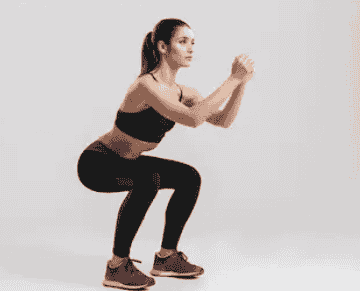
A lady doing squats, or Malasana, as part of her Lower Crossed Syndrome yoga practice
Malasana, commonly called the Squat posture, is an excellent yoga posture to begin with if you have Lower Crossed Syndrome. When done correctly, this position may stretch the hip and groin flexors and strengthen the gluteal muscles.
- With your feet slightly wider than hip-width apart, take a tall stance. Toes should be angled outward.
- As you release your breath, squat as low as it feels comfortable. Your hips must be at or below knee level.
- You can either clasp your arms together in front of your heart or hold them straight out in front of you. Maintain a long spine and an elevated chest. Work the muscles in your core.
- Raise your body to a standing position as you take a breath.
- Do this six to ten times.
2. Plank Pose
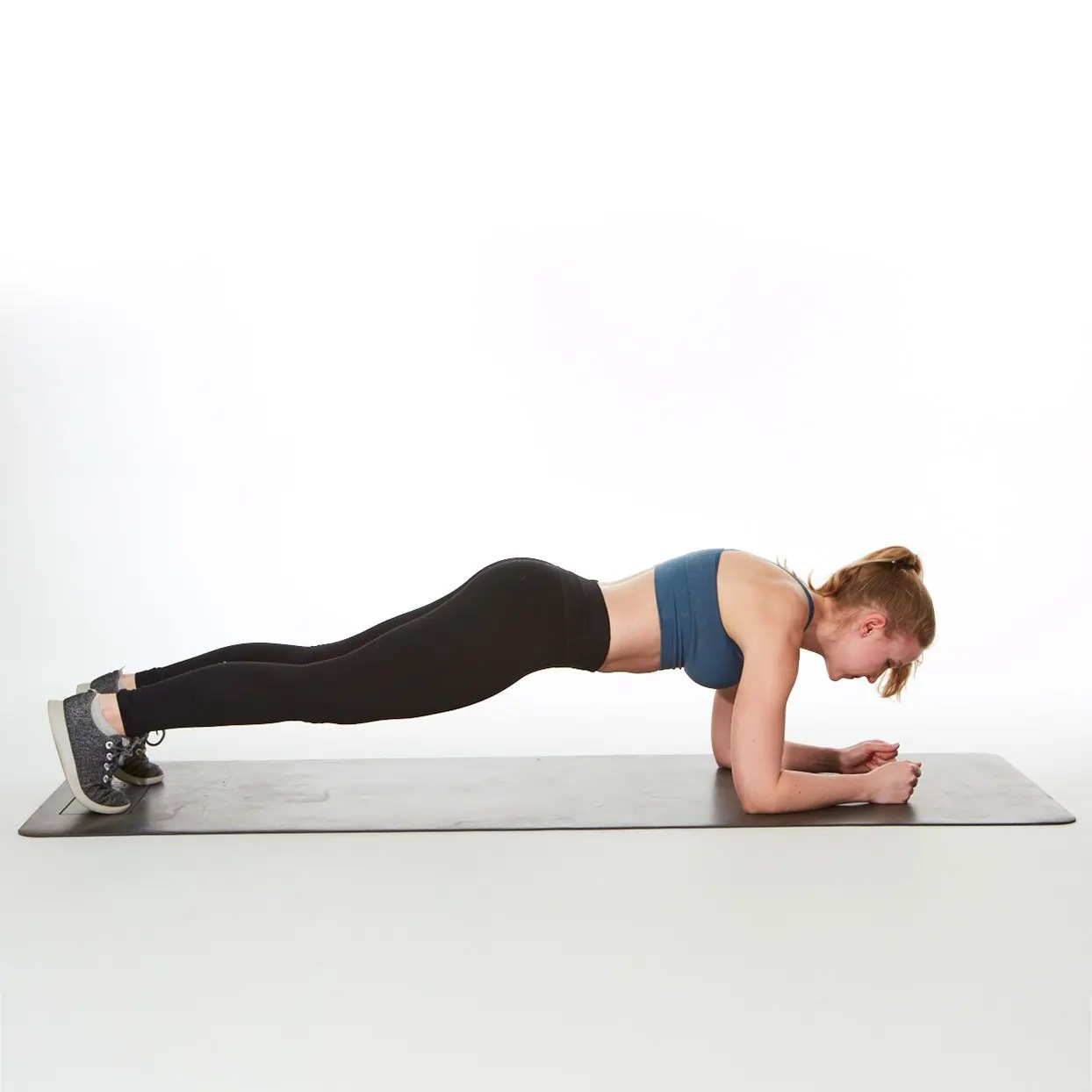
A full-body workout that works several muscle groups simultaneously is this form of Plank Pose. In particular, it helps strengthen the internal obliques, external abs (rectus abdominis), and deep core muscles (transverse abdominis), all of which are frequently weak in individuals with Lower Cross Syndrome. Strength, endurance, and postural stability—all essential for controlling and treating LCS—can be enhanced by this stance.
- With your palms flat on the mat underneath you and your arms beneath your shoulders, lie on your stomach.
- Raise your body so that your shoulders are exactly above your elbows and you are resting on your forearms.
- Lift your navel toward your spine while maintaining a straight back and using your core muscles.
- Drop to rest on your stomach after holding till you are exhausted.
3. Bending Knees in a Half Locust Pose

A guy performing a yoga practice for lower cross syndrome called Half Locust practice with Bending Knees.
Prone and back-bending, Locust Pose is a great way to strengthen your back. It specifically targets the erector spinae and multifidus muscles, which are responsible for maintaining an upright posture. The hip flexors, which might be excessively tight in those with Lower Cross Syndrome, are also stretched by the position. The Half Locust Pose works the muscles in your thighs, glutes, and lower back by lifting and bending one leg at a time.
- With your arms by your sides and your legs outstretched, lie flat on your stomach.
- Holding your right leg straight, raise it behind you as you take a breath.
- With your foot toward the ceiling, bend your right knee at a right angle as you release the breath.
- Extend your right leg to make it straight while you take another breath.
- Release your right leg and place it back on the mat as you exhale once again.
- Repeat three to six times on each side, switching between the left and right.
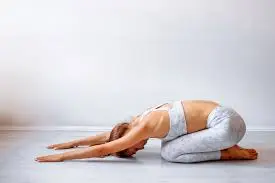
Child’s pose is a calming position that releases tension in the neck and lower back while providing a little stretch to the hips, thighs, and ankles. Lower Cross Syndrome-related tension and stiffness can be effectively relieved with this position.
- With your big toes pointing inward and in contact with one another, kneel on your mat.
- Keep your knees as close together as is comfortable, or as far apart as your hips.
- As you release the breath, place your arms out in front of you, palms down on the mat, and lower your torso between your thighs.
- Gently lower your hips toward your heels while bringing your forehead to the mat.
- Hold for six breaths.
5. Runner’s Lunge
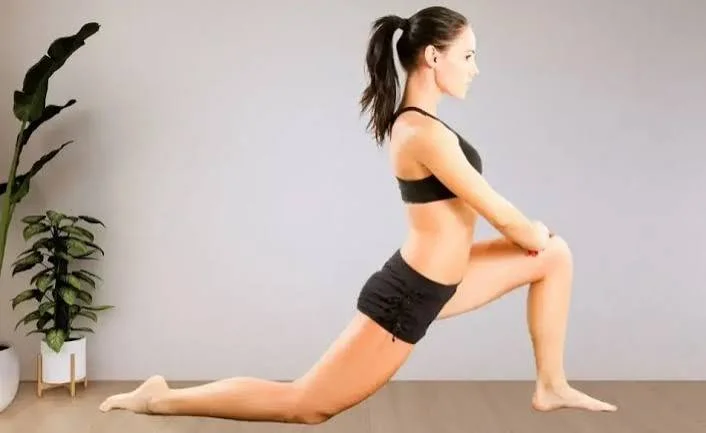
A man demonstrating how to use yoga positions like the Runner’s Lunge to treat lower crossed syndrome
You may stretch the hip flexors, especially the psoas, which are often stiff in people with Lower Cross Syndrome, by using Runner’s Lunge in your yoga sequence for Lower Cross Syndrome after resting in Child’s Pose. Additionally, the position improves lower body stability by strengthening the gluteal muscles.
- Get down on your hands and knees.
- Put one foot in front of your hands. This foot should form a 90-degree angle just beneath your knee.
- Extend your back leg behind you by sliding it.
- You can place your hand on the front leg’s thigh or keep your fingertips on the mat. Your quadriceps should feel stretched.
- Repeat on the opposite side after holding for six to ten breaths.
6. Head-to-Knee Pose
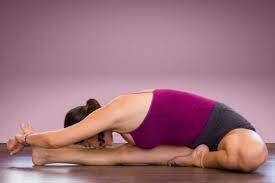
Another excellent yoga practice for Lower Cross Syndrome is Head-to-Knee practice, which involves bending forward while seated. It allows for a deep stretch in the lower back, hamstrings, and hips—areas where tension frequently builds up. It helps isolate these muscles for a greater stretch by concentrating on one side of the body at a time.
- With your legs out in front of you, take a seat on your mat.
- Place the sole of your foot against the inner thigh of the extended leg while bending one knee to the side.
- Lengthen your spine by raising your arms over your head as you inhale.
- Bend forward from your waist over the straight leg as you release the breath, using your hands to grasp your foot, ankle, or leg.
- Repeat on the opposite side after holding for six to ten breaths.
LCS-related spinal pathologies
Disk Herniation
The fibrous annulus, or outer part, of the intervertebral disk ruptures in lumbar disk herniation, which then causes the nucleus pulposus, the soft, gel-like inner part of the disk that serves as a shock absorber and stabilizes the spine, to herniate.
The spinal nerve and Cauda Equina are compressed when the nucleus pulposus protrudes from the disk, causing an inflammatory reaction in the affected region. Age and trauma are the most prevalent causes of lumbar disk herniations. A herniated disk is more likely to occur in an athlete with lower crossed syndrome who lifts weights.
A person with muscular imbalance and lordosis, which compresses the lumbar spine and disks, is more susceptible to disk injury and herniation when they suddenly raise weight. In connection with Lower Crossed Syndrome, the muscular imbalance puts strain on the intervertebral disks and spine. Excessive lumbar lordosis is caused by weak abdominal muscles and tight hip flexor muscles.
The lumbar disk experiences growing pressure due to the lower back’s curvature and its load-bearing role. Exercise for lower back crossing syndrome can help lessen the strain on the lumbar spine’s disks in particular.
Sciatica
Sciatica is characterized by pain that travels down the sciatic nerve from the buttocks. The pain may radiate down the center of the lower buttock and manifest as either acute or agonizing aches. When the L5 nerve root is compressed, this pain may then extend over the thigh; when the S1 nerve root is crushed, it may radiate along the posterior side.
Sciatica typically manifests unilaterally. Lower back pain sometimes coexists with sciatica when disk herniation, spondylolisthesis, and lumbar stenosis are present or have occurred. A frequent presentation of the upper sacroiliac joint is pain in the vicinity of the L5-S1.
Degenerative Spondylolisthesis
Facet joints may become displaced due to degradation of the vertebral disks in spondylolisthesis, a degenerative disorder of the spine. This is a typical problem in adults where the disks have dried up and worn down due to aging. It may result in tingling, pain, or numbness down the leg by pinching the different nerves that go down the spine.
One pertinent trigger for this illness is the lower cross syndrome. While the weakening abdominal muscles provide little assistance for the stabilization of the spine, the beginning of increased lumbar lordosis through tense extensor muscles and hip flexors may compress the already deteriorated discs.
This weakens the integrity of the trunk and makes it possible for the neurological system to be compromised by facet movement. In order to enhance quality of life and lessen the emergence of additional lower back problems, LCS treatment will lengthen the patient’s vertebral column and delay the onset of spondylolisthesis.
Yoga’s Advantages for Lower Cross Syndrome
A tradition of meditation gave rise to yoga. When you meditate all day, guess what you do? You guessed it: have a seat! This indicates that the yoga tradition has tried-and-true methods for keeping sitting from becoming an issue.
Think about the following advantages of yoga for Lower Cross Syndrome:
- Take a customized, all-encompassing strategy. Beyond merely yoga positions, or asanas, yoga also includes pranayama, or breathing exercises, meditation, and other practices. Additionally, it improves mental, emotional, and spiritual well-being in addition to physical health. Because of this, it tends to be more holistic than Western treatment and may be customized for each individual, particularly when using yoga.
- Strengthen your weak muscles. Your core and glutes may be strengthened, and Lower Cross Syndrome can be prevented with a variety of yoga positions.
- Tight muscles should be stretched. Similar to this, there are several yoga positions for Lower Cross Syndrome that extend and stretch the tense muscles in your lower back and hips. Your flexibility may improve as a result, supporting proper posture. Breathing exercises, or pranayama, can also assist in altering your nervous system’s reaction, making it simpler to stretch tense muscles.
- Boost your posture. You may become more conscious of your body’s posture, motion, and balance by regularly engaging in yoga poses, pranayama, and meditation. A lot of yoga positions also teach you how to align your body properly. Together, you are able to identify and correct improper alignment, which helps you improve your posture. Yoga’s longer, slower poses can also moisten and remodel your fascial structure, making it simpler to maintain proper posture.
- Encourage the modification of habits. Yoga may assist you in regulating and creating new patterns, both of which are beneficial for changing habits. This can assist people with LCS in adhering to healthier dietary choices, maintaining improved posture, and persisting in an exercise regimen.
- Boost your activities. Lower Cross Syndrome is readily caused by a sedentary lifestyle. Yoga not only helps you target the muscle areas impacted by LCS, but it also keeps you moving and active, which can help fight Lower Cross Syndrome in general.
- Reduce your weight. Lower Cross Syndrome can be exacerbated by obesity, which puts additional strain on the lumbar spine. There are several ways that yoga might aid in weight reduction, including encouraging behavior modification, enhancing awareness, boosting mobility, and lowering stress.
- Decrease worry and tension. Muscle tightness, a prominent symptom of LCS, can be further relieved by the relaxing and stress-relieving effects of several yoga postures.
FAQs
What is the causes of lower crossed syndrome?
Long periods of sitting and a sedentary lifestyle are the main causes of lower crossed syndrome, which results in a certain pattern of muscle imbalance and poor pelvic position.
A locked lower back: what causes it?
Your nervous system contracts your back muscles to protect an irritable joint, disk, or strained tissue in a locked-up lower back, which is often a protective muscular spasm.
According to the NASM, what are the main characteristics of Lower Crossed Syndrome?
An anterior pelvic tilt, an arched lower back (increased lumbar lordosis), and certain muscular imbalances are the hallmarks of lower crossed syndrome (LCS), a postural distortion condition, according to the National Academy of Sports Medicine (NASM).
Could you provide me with a PDF with lower crossed syndrome exercises?
The Upper and Lower Crossed Syndromes PDF contains clinical practice and instructions for organized remedial motions.
Tight hip flexors and lower back muscles combine with weak glutes and abs to cause lower crossed syndrome (LCS). Your posture is altered by this imbalance, which tilts your pelvis forward. Stretching tight spots and activating dormant muscles are necessary to fix it.
What is the cause of lower crossed syndrome?
Long periods of sitting and a sedentary lifestyle are the main causes of lower crossed syndrome, which results in a certain pattern of muscle imbalance and poor pelvic position.
How is cross syndrome treated?
To improve posture and reduce pain, upper crossed syndrome (UCS), also known as cross-body or crossed syndrome, is treated by strengthening weak, underactive muscles and stretching tight, hyperactive ones.
References
- Passalacqua, B. (2024, June 14). Lower Cross Syndrome yoga: Exercises, causes, and treatment. Breathing Deeply. https://breathingdeeply.com/yoga-therapy-for-sitting-on-our-butts-all-day/
- Airrosti. (2026, August 31). 3 Lower cross syndrome exercises for pain relief. AIRROSTI. https://www.airrosti.com/blog/3-exercises-for-lower-cross-syndrome/
- Cherry, H. (2026a, July 24). Lower Crossed Syndrome: A trainer’s assessment and Correction guide. National Academy of Sports Medicine. https://www.nasm.org/resource-center/blog/recovery/lower-crossed-syndrome?srsltid=AU7gw4U6mJrPKCF4DglR4gn-jpxaP-vuGFVW9EOnuzoMuets76v-tK0m