Best Exercises for Rounded Shoulders to Improve Posture
Table of Contents
Introduction
A frequent postural issue is rounded shoulders, when the shoulders slide forward rather than remaining in their normal, aligned posture. Prolonged sitting, bad posture, frequent cell phone usage, and a protracted desk job are common causes of this illness. Round shoulders can eventually lead to neck pain, stiffness in the upper back, tightness in the muscles, and decreased shoulder mobility.
By relaxing tense chest muscles and strengthening the upper back and shoulder blade muscles, rounded shoulder exercises can aid with posture. Chest stretches, wall angels, scapular squeezes, chin tucks, and thoracic extension movements are all beneficial workouts. Regular practice of these exercises, together with good sitting and standing posture, may assist in enhancing upper body flexibility and shoulder alignment.
Start out gently, pay attention to proper form, and complete each exercise within a comfortable range of motion. See a licensed physiotherapist for a suitable evaluation and customized exercise regimen if you have ongoing pain, numbness, or weakness.
Rounded Shoulder Exercises’ Advantages
Regularly engaging in the right exercises can help enhance upper-body strength, decrease muscle stiffness, improve shoulder alignment, and promote flexibility. These movements also encourage better posture awareness during everyday activities, such as driving, studying, browsing on your phone, or working at a desk.
Exercise should be combined with healthy daily routines for optimal outcomes. Throughout the day, keep your shoulders relaxed rather than pushing them backward, take frequent movement breaks, and maintain your computer screen at a comfortable height.
Who Can Take Advantage Of These Exercises?
Office workers, students, those who use smartphones for extended periods of time, and anyone who maintains a forward-leaning posture throughout everyday tasks may all benefit from rounded shoulder exercises. Before moving on to resistance-based training, beginners might begin with easy shoulder blade exercises and moderate stretches.
Important: Exercises might not fully address every structural or medical issue, and rounded shoulders might have a variety of causes. Avoid painful motions and consult a physiotherapist if you have weakness, tingling, numbness, or chronic neck or shoulder pain.
You may strive toward better shoulder alignment, more mobility, and more comfortable movement with regular practice, appropriate exercise technique, and better everyday posture habits.
What Are Rounded Shoulders?
Consider how your shoulders look while you are simply sitting or standing.
If you have rounded shoulders, your shoulders are resting more forward than they should be for proper posture.
In actuality, rounded shoulders are more related to the location of your shoulder blades on your back (on your rib cage) than to the curvature of your spine. The scapula, or shoulder blade, is a bone that essentially “floats” on your back.
It has no joint that connects it directly to your spine. Rather, a variety of muscles and two tiny joints at the ends of your collarbone hold it in place. The shoulder blade can rest in a variety of locations since it is supported by muscles.
Occasionally, it ends up rounded. Often, rounded shoulders are simply a component of your overall posture. Even worse, they might teach your body’s muscles that slouching forward is normal.
Common Causes Of Rounded Shoulders:
- Reading or texting on the cell phone (with head down).
- Excessive overhead activities
- Sleeping with poor posture.
- Excessive weight training (particularly of the chest).
- Shoulder dysfunctions or injuries.
- Breastfeeding.
- Cycling in poor posture.
- Carrying heavy backpacks.
What Might Rounded Shoulders Mean?
Usually, a variety of events occur over time.
Your body’s composition, the habits you develop, and even your surroundings all influence your posture.
Let’s examine it.
1. Your Way of Life
Your everyday routines are a major factor. Your shoulders may fall forward due to daily activities. These include items such as:
- Spending a lot of time staring down at your smartphone
- Spending a lot of time sitting
- Traveling great distances in a car
- Bending repeatedly
- Carrying bulky items all day
These exercises cause you to gaze both ahead and down. These muscles don’t function properly while you remain in these hunched positions. Many of these tasks are required of mothers, as you may have seen. It is a prevalent problem among main caregivers, which is where the term “mom shoulders” originates.
2. Imbalanced Muscles
Muscle imbalance is another major factor. Some muscles become too weak, while others become overly taut.
Simultaneously, the muscles in your upper back that support your shoulder blades may weaken.
Among these muscles are your:
- Anterior serratus
- Rhomboids
- Trapezius (traps)
This is a result of the back’s insufficient strength to pull them in the other direction. This weakness is often associated with upper crossed syndrome, a postural imbalance characterized by tightness in the neck, shoulder, and chest muscles.
3. Ergonomics
Your surroundings may also have an impact. For instance, automobile seats may occasionally be designed to push or even compel you to adopt a rounded shoulder position. Many years ago, this wasn’t as typical.
Additionally, you could notice that your shoulders round if you utilize an older chair while working at a desk. Antique desk chairs are not ergonomically constructed, in contrast to modern desk chairs.As fashionable as it may be, think about purchasing a more recent model.
4. Self-Respect
Occasionally, our perceptions of ourselves or how we believe others see us might cause us to become self-conscious. For instance, adolescent females going through puberty may round their shoulders in an attempt to conceal their growing bodies.
In an attempt to blend in, someone who is taller than their companions may slouch. If you’re worried that standing too straight would make you appear haughty, you may even unconsciously curve your shoulders.
5. Forward head posture
Additionally, a forward head position is frequently accompanied by rounded shoulders. This indicates that your head is positioned too far forward on your neck. Your neck bends forward along with your upper back, causing you to gaze down.
Your body changes so that you can view what’s in front of you: your upper back remains bent forward while your chin is tilted up. These issues with the neck and upper back lead to a vicious cycle in which one feeds on the other.
Muscle Imbalance Causes Rounded Shoulders
Muscles that are tight and shortened include:
- Pectoralis major and minor (Chest muscles)
- Latissimus dorsi (Low and mid back)
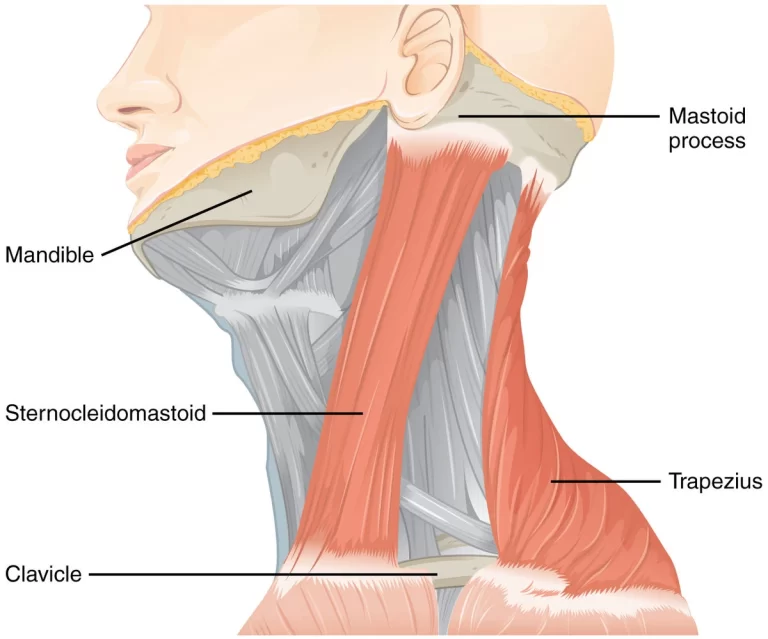
- Sternocleidomastoid Muscle
- Upper trapezius (Neck and upper back)
Muscles that become overstretched and are weak:
- Lower and mid trapezius (mid back)
- Serratus anterior (Side of ribs)
- Rhomboids (Back muscles)
- Rotator Cuff (Muscles around the shoulder blade)
Best exercise for rounded shoulders
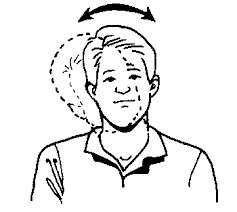
1. Lateral neck flexion
How to do it:
- With your shoulders down and back straight ahead, either stand or sit seated in a chair.
- To increase the right side of your neck, carefully move your left ear toward your left shoulder.
- On the opposite side, repeat.
- After completing one to two sets on each side, hold for 15 to 30 seconds.
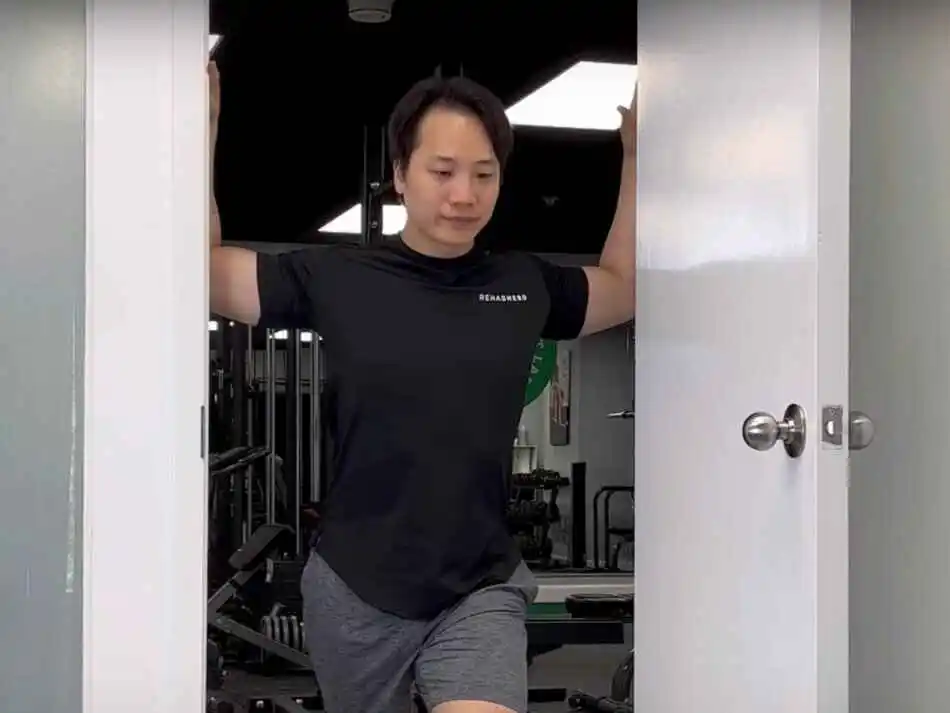
2. Chest Doorway Stretch
Your chest and abdomen, which are very tense when you sit, can be released with the doorway stretch.
How to do it:
- Ensure your elbows and hands align with a doorframe.
- Gently go through the door until you experience a stretch.
- Hold this end position for approximately fifteen to twenty seconds before going to the starting position.
- Repeat this stretch three times.
3. Wall slides
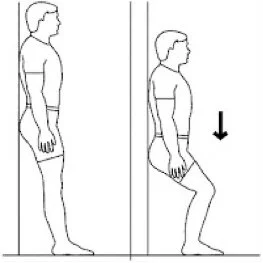
How to do it:
- Walk your feet out approximately 12 inches from the wall while standing with your back to it, making an effort to maintain your buttocks and upper back in touch with the wall.
- Draw the stomach nearer to the wall to prevent having an abnormally arched low back.
- Try bending your elbows to a 90-degree angle so that your hands are pointing up while pressing your forearms on the wall (this may be a painful posture when you first start doing this exercise).
- Carefully move your arms up and down the wall.
4. Thoracic spine foam rolling
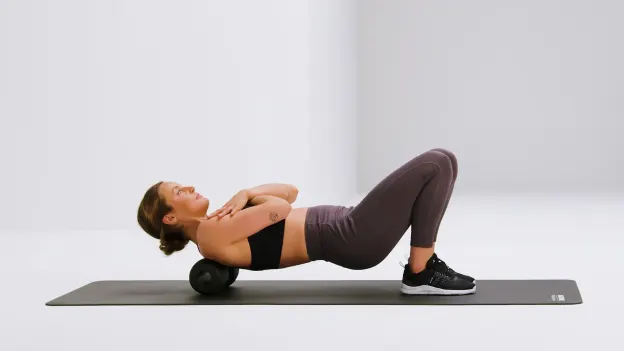
How to do it:
- Lie on your back with your hands behind your head, and place a foam roller behind your upper back.
- Roll up and down progressively, starting at your mid-back and working your way up to the top of your shoulders.
- Maintaining your core hard and roll with your legs.
- Don’t rush; roll slowly and softly.
5. Band pull-apart

How to do it:
- Start standing with proper posture.
- Straighten your elbows and raise your arms in front of you whilst holding a resistance band with both hands; how much resistance you use will depend on your strength level.
- Slowly stretch your arms behind your body while keeping your elbows locked. The muscles that are between your shoulder blades should contract or compress.
- Walk outdoors only as far as you feel safe and comfortable. Although some heat in the muscles is OK, neck or arm pain is not.
- Don’t shrug your shoulders at your ears.
- Repeat 2×10, then slowly raise it to 3×10.
How Do Rounded Shoulders Feel?
The term “rounded shoulders” alone contains the most evident indicator of rounded shoulders.
However, how else can you determine whether your shoulders are rounded?
Other indicators might be:
- Shoulder pain
- Upper back pain
- Neck pain
- Stiffness or tightness
- Reduced lung capacity
Round shoulders might worsen with time if treatment is not received.
How Can a Physical Therapist Help Correct Rounded Shoulders?
Seeing a physical therapist might help if you believe your shoulders are rounded. The objective is to determine whether you have rounded shoulders and what may be causing them. They may just see your comfortable posture.
Even when they attempt to stand upright, someone with rounded shoulders may appear to be slouching. Your hands, which should face your body with your thumbs pointing forward in proper posture, may also be examined by your physical therapist. Your hands may face behind you with your thumbs pointing at one another if your shoulders are rounded. They may also do further testing.
Your physical therapist will develop a strategy tailored to your individual needs if it turns out that you actually have rounded shoulders. Fortunately, rounded shoulders are usually correctable. Furthermore, it goes beyond simply “sitting up straight.”That does not correct the rounded shoulders, but it does improve your spine.
You must adjust the way your shoulder blades rest on your back in order to properly fix it. Your physical therapist can demonstrate how to gently squeeze the lower portion of your shoulder blades together while rolling your shoulders up, back, and down.
This facilitates the movement of your shoulder blades from the sides of your back to a flat position on your ribs, where the right muscles can support them. Stretching, strengthening, and brain retraining are the procedures involved in correcting rounded shoulders. A customized strategy will be made by your physical therapist.
They can assist in the following ways:
1. By recommending Stretching Activities
Stretching is essential for releasing tense muscles. This is particularly true if your shoulders are being pulled forward by your chest muscles.
Your physical therapist may suggest the following stretches:
- Lateral neck flexion stretch
- Chest doorway stretch
- Reverse shoulder stretch
- T stretch
- Wall stretch
- And others
2. By Suggesting Strengthening Activities
Stretching is just half the fight. Additionally, you should strengthen the weak muscles surrounding your shoulder blades and in your upper back. These are the muscles that support the proper alignment of your shoulders.
Exercises such as these may be recommended by your physical therapist:
- Prone I, T, Y
- Shoulder blade squeezes
- Band pull-apart
- Scapular wall slides
- Planks
- And others
3. By Assisting You in Correcting Additional Posture Issues
Your physical therapist will examine more than just your shoulders. They examine your whole posture. To properly correct your rounded shoulders and ensure that they don’t recur, it’s critical to address all related issues.
They will also assist you in fixing these other areas. For instance, they may demonstrate stretches with a long foam roller if you have kyphosis or excessive forward bending of the upper back.
You can extend your arms while lying lengthwise on the roller with your head resting on it. Alternatively, you may gradually arch your upper back over it while lying on it sideways. They will also assist you if you have that forward head posture with your chin tilted up.
A chin tuck is a popular workout. Whether you have a thin pillow or not, you lie on your back. Try to create a double chin by softly tucking your chin down toward your neck while keeping the back of your head on the surface. Repeat after holding this for a short while.
As you gain strength, you might perform this while keeping your chin tucked in and raising your head slightly off the surface.
It is simpler for your shoulders to remain in the proper position when these other places are fixed, which also helps break the cycle of poor posture.
Should I stay away from specific activities if my shoulders are rounded?
Certain exercises don’t have to be skipped as long as you’re not in pain. entails stretching and strengthening, however.
The most frequent reason for bent or rounded shoulders is a muscle imbalance between the chest and shoulder/upper back region.
He suggested that to correct the imbalance, stretching and strengthening should target both the upper back and the chest, not just one. When working out, make sure your spine is straight and you are not stooped over.
Conclusion
Round shoulder motions can help improve posture, strengthen the shoulder and upper back muscles, and stretch tense chest muscles. Exercises like wall angels, chest doorway stretches, scapular squeezes, chin tucks, and resistance band rows help improve upper-body alignment and increase shoulder mobility when performed regularly and correctly.
For long-term effects, keeping proper posture when working, sitting, standing, and using mobile devices is just as important as exercising. Muscle stiffness and postural tension can also be lessened by taking regular mobility breaks and avoiding extended amounts of time in one position.
The secret to improved posture is consistency. As your strength and range of motion develop, progressively increase the difficulty of your workouts. Avoid painful motions. See a licensed physiotherapist for individualized advice if rounded shoulders are accompanied by ongoing neck pain, shoulder pain, numbness, or weakness.
FAQs
Is it possible to correct rounded shoulders with exercise?
With a focused regimen of stretches and strengthening exercises, it is possible to correct rounded shoulders.
Muscle imbalances generate rounded shoulders because your shoulders are pulled forward by tight chest muscles and backward by weak upper back and shoulder blade muscles. Stretching the front and strengthening the rear are both necessary to fix this.
Are rounded shoulders a permanent feature?
No, rounded shoulders don’t last forever. The majority of instances are caused by lifestyle choices that result in muscular imbalances rather than long-term bone abnormalities, such as driving, spending a lot of time at a desk, or staring down at phones.
Do exercises by themselves correct rounded shoulders?
No, in order to maintain the new position, you must also strengthen your upper back and scapular stabilizers (such as the rhomboids and lower traps) in addition to stretching your tense chest muscles.
How long will it take to correct rounded shoulders?
While comprehensive and long-lasting structural repair usually takes 3 to 6 months, rounded shoulders can be seen after 8 to 16 weeks of regular daily exercise and posture awareness.
When is the most effective time to see a physical therapist?
If your shoulder posture does not improve after a few months of regular exercise, or if you have tingling, numbness, or severe pain, see a doctor or physiotherapist.
What is the best sleeping position for those with rounded shoulders?
The best sleeping position for rounded shoulders is to lie on your back with your arms by your sides. This position maintains your chest open, allows gravity to distribute your weight evenly, and protects your shoulders from slumping forward.
References
- Therapy, C. P. (2025, May 30). Physical therapy for rounded shoulders (“Mom posture”). Capitol Physical Therapy. https://capitolptdc.com/physical-therapy-for-rounded-shoulders-mom-posture/
- McQuilkie, S., DC, & McQuilkie, S., DC. (2024, November 21). How to fix rounded shoulders posture – 5 Effective exercises. Back Intelligence (Creators of PostureFlow App). https://backintelligence.com/how-to-fix-rounded-shoulders-with-exercises/
- Lindberg, S. (2026b, October 14). 6 exercises for rounded shoulders. Healthline. https://www.healthline.com/health/rounded-shoulders-exercises#band-pull-apart