Top Home Exercises for Forward Head Posture
Table of Contents
Introduction
Forward head posture occurs when your ears are positioned in front of your body’s vertical midline. Your ears align with your shoulders and midline when you have a normal or neutral head position.
FHP can cause stiffness, neck pain, and an uneven gait, among other negative effects. It is also commonly associated with rounded shoulders, or kyphosis.
The good news is that you can typically correct it by performing strengthening and stretching activities and paying attention to proper posture, which reduces adverse effects and improves posture.
FHP is often referred to as “text neck” or “nerd neck” because it results from extended bending toward a computer screen or hunching over a laptop or cell phone. It is also connected to the deterioration of muscle strength caused by age.
Between 66% and 90% of people have forward head posture, also known as forward neck posture, which is a very common postural abnormality.
In addition to making one appear unpleasant, this posture can result in tension-type headaches, neck and upper back pain, and other symptoms (more on these below).
Fortunately, you may begin improving your posture with a few easy exercises, posture awareness, and workstation adjustments.
Forward Head Posture Video
How can you determine whether your head position is forward?
It’s easy; just take a quick test.
- Place your heels shoulder-width apart and stand with your back to a wall.
- As you press your buttocks against the wall, make sure your shoulder blades are in contact with it.
Squeezing your shoulder blades together might help you attain a more neutral posture by aligning your shoulders with the wall.
- Check that the back of your head contacts the wall.
- If not, you should do your best to modify your forward head position.
Forward Head/Neck Posture: What Is It?
Forward head posture, also known as Scholar’s Neck, Text Neck, Wearsie Neck, or Reading Neck, is a position in which the head seems to be in front of the body.
In technical terms, forward head posture is defined as the skull pushing forward over the atlas, the first vertebra in the neck, by more than an inch.
What is the issue with this position, then? A lot, and it’s rather intricate.
Not only does forward head posture impact the neck and shoulders, but it also changes your body’s center of gravity, which impacts your torso and all of your joints.
Your body adjusts its balance control systems in an attempt to adjust to these positional changes, which actually makes it harder for you to maintain your balance while participating in various activities throughout the day and raises your risk of injury.
Causes
FHP is frequently caused by slouching at your workstation to stare at a computer screen for extended periods of time or hunching over an electronic gadget.
Physical therapy, manual therapy, and certain stretching and strengthening exercises can help your head and neck return to normal alignment and alleviate negative effects.
- Poor posture
- Weakness of your neck muscles
- Previous neck strains or sprains
- Sleeping with your head supported up on pillows
- Often dozing off on a couch with your head resting on the armrest
- Extended computer use
- Extended cellphone use
- Prolonged driving
- Incorrect breathing habits
- Carrying heavy backpacks
- Participating in sports requiring the dominant use of one side of the body, such as baseball, tennis, hockey, golf, and others
- Some occupations—such as hair stylists, massage therapists, writers, computer programmers, painters, etc.—are especially vulnerable because of the repeated motions of their bodies.
Important Realization:
Forward head posture affects how the joints, disks, and deep stabilizing muscles in your neck and upper back distribute stress; this is more than simply a “muscle problem.”
The deep neck flexors and mid-back stabilizers cease to function as the head moves forward and the upper back stiffens, forcing the smaller surface muscles to work harder.
Your head is propelled forward by any rounding or stiffness in the thoracic spine (mid-back), which serves as the foundation for your neck. Because of this, the most effective forward head posture exercises target not just the neck but also the shoulder blade and mid-back muscles that maintain your head’s equilibrium over your shoulders.
Symptoms:
- Jobs that call for you to lean forward, like sewing
- Carrying a heavy backpack
- Long-term poor posture, like slouching
- Falling asleep with your head up too high, or reading in bed
- Injuries, like whiplash
- Accommodation to pain
- Upper back muscle weakness
- Diseases like arthritis and bone degeneration
- Congenital malformations
Side effects
The muscles in your neck, shoulders, and upper back that support your head may alter as a result of FHP.
Misaligned posture can cause these muscles and connective tissue to become overworked. Muscle strength and length are altered as a result. The muscles at the rear of your neck lengthen and tighten, while the muscles at the front of your neck become weaker and shorter.
The tendons, ligaments, and nerves connected to those muscles are also impacted by FHP.
Among the possible side effects are:
- Chronic neck pain
- Tense muscles of the neck
- Reduced neck range of motion
- Headaches
- Back pain
- Temporomandibular joint pain in the jaw
- Numbness and tingling
- Diminished control over balance
- Spasms of muscles
- Disc issues, such as herniated discs
Muscles Involved in Forward Head Posture:
Forward head posture is caused by an imbalance in the muscles of the neck, shoulders, and upper back.
Weakened muscles include:
- Longus colli (Front part of neck)
- Longus capitis (Front part of neck)
- Infrahyoid and suprahyoid (Front part of neck)
- Rhomboids (Upper back muscles)
- Serratus anterior, which connects the shoulder blade to the side of the ribcage
- Posterior rotator cuff (The back portion of the shoulder)
- Lower trapezius (Mid-back)
Tightened muscles include:
- Suboccipitals (Base of the skull)
- Sternocleidomastoid (Side and front of neck)
- Upper trapezius (Upper back)
- Pectoralis minor and major (Chest muscles)
- Levator scapulae (Neck down to shoulder blade)
- Subscapularis (Shoulder blade area)
- Latissimus dorsi (Mid to Lower back)
Simple exercises that strengthen and stretch the muscles in the shoulders, neck, and back can help with this posture.
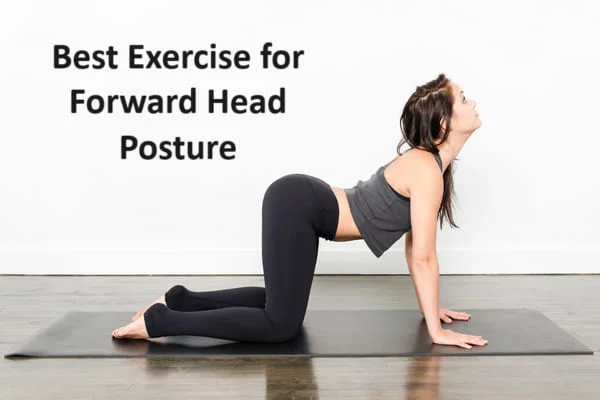
5 Forward Head Posture Exercises
You may correct this abnormal posture by stretching and strengthening the muscles involved in the forward head position, as well as by practicing good posture while carrying out your everyday tasks.
- Chin Tucks Exercise
The deep cervical muscles, which are found in the front of your neck, will be activated and strengthened by this exercise.
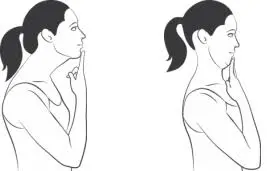
- Place two fingers on your chin’s base.
- Gently tuck your chin in
- Pull your head back.
- Keep your fingers tucked into your chin.
- Maintain the ending position for three to five seconds.
- Relax your neck.
- Two or three sets of 10 repetitions should be your goal.
You should feel as though the back of your neck is “pulling up” or stretching, and there should be packing in front of your neck.
2. Neck Flexion (Suboccipital Stretch)
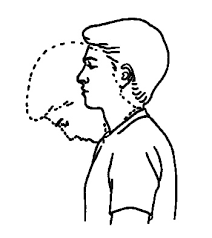
Your neck’s back muscles, especially the suboccipital muscles, will be stretched as a result.
- First, tuck your chin in using two fingers on one hand.
- As you bring your head closer to your chest, gently press down with your other hand on the back of your head.
- Hold the position for 20 to 30 seconds.
- Do this stretch three times.
As you perform this stretch, keep your chin tucked.
3. Chest Stretch – At A Wall (Do Both Sides)
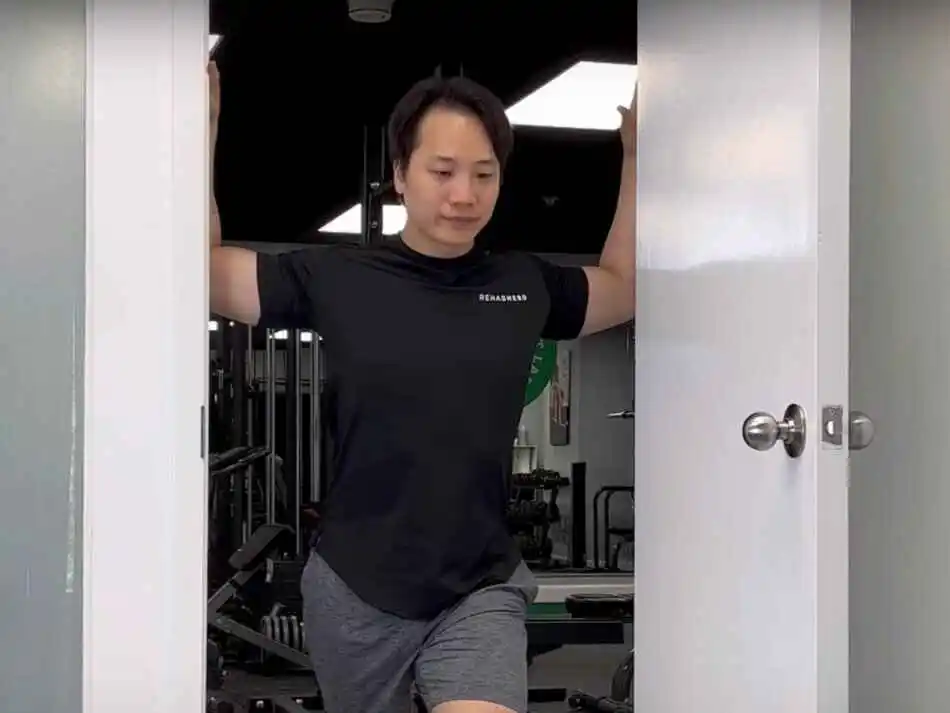
This will force the neck into an awkward posture and stretch out the sometimes constricted chest region. You may strengthen your posture and reduce some of the pain by releasing the pecs.
- As you get closer to a wall, extend one arm back and place the palm on the wall.
- Do not arch your back; instead, pull in your stomach.
- Bend forward now, a little away from the outstretched arm.
- Your chest should feel stretched.
- Hold for thirty seconds.
- Continue on the opposite side.
Stretch your chest as well as your shoulders. Adjust the position’s angle to target the muscles in your chest.
4. Thoracic Spine Foam Rolling
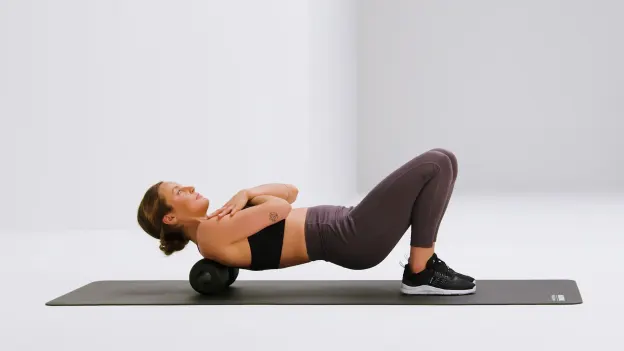
This is an excellent method for relieving tightness in the upper back
- Lie on your back with your hands behind your head and place a foam roller beneath your upper back.
- Roll softly up and down, starting at your mid-back and working your way up to the top of your shoulders.
- Maintain a strong core while rolling with your legs.
- Roll slowly and gracefully; don’t rush.
5. Upper Trapezius Stretch
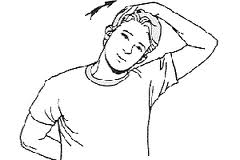
- To start, either get up or sit down.
- Put one hand on the opposite side of your head and tuck the other behind your back.
- Now bring your head down to your shoulder.
- Press your head down softly with your hand on top for a deeper stretch.
- Continue each side for 20 to 30 seconds.
6. SCM Stretch (Sternocleidomastoid Stretch)
Why it’s important: Your head is pulled forward and downward by the SCM, which significantly increases FHP. Restoring good shoulder-head balance is facilitated by stretching it.
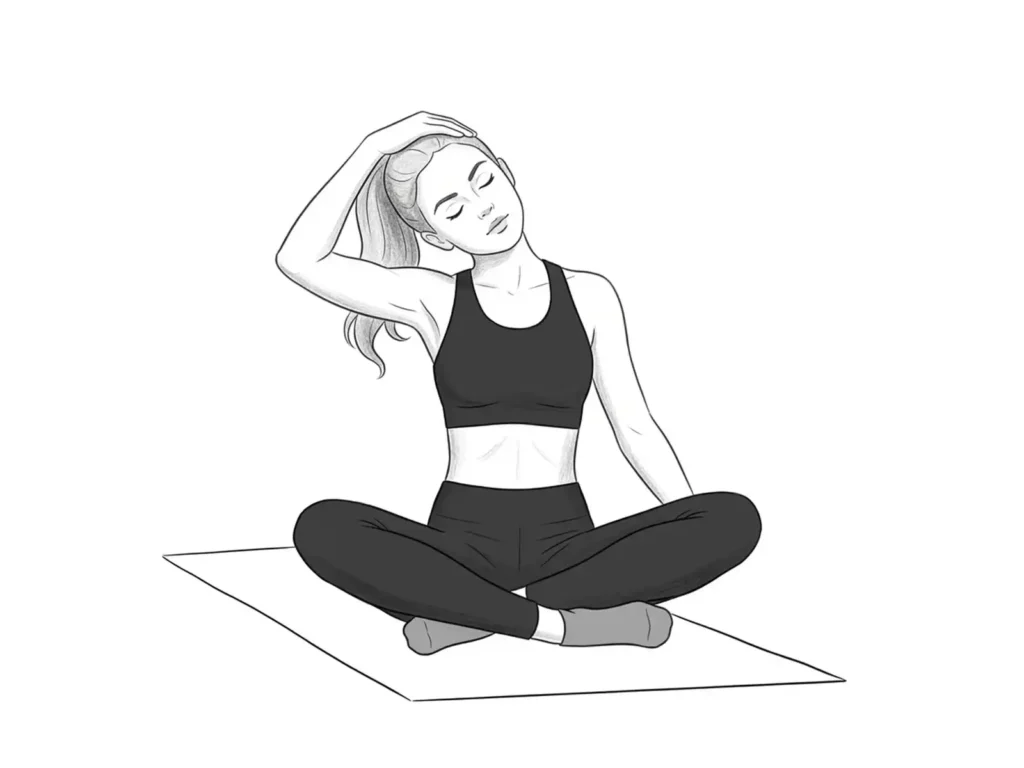
- To extend your right SCM, take a tall seat with your right hand beneath your leg.
- Turn your head to face the ceiling after tilting it to the left. Please watch our SCM stretching video below for a clearer picture of this.
- Both the front and side of your neck should feel stretched out.
- For 20 to 30 seconds, hold this posture.
- Do 2-3 times on each side.
- Stretching lightly to moderately is sufficient; avoid pushing yourself into excruciating agony.
- See our SCM Stretch Exercise instructions for a video presentation and more specific hints.
Common Mistakes to Avoid
- During neck retraction, tilt your chin forward (or downward) rather than straight back. Keep in mind: double chins!
- Straining or extending your neck too much. It will take time to make changes, so start out slowly and softly and work your way up.
- Rushing through motions rather than doing calm, deliberate repetitions. There is no haste; therefore, this is a surefire way to get hurt.
- Ignoring intense pain: If this occurs, stop right away and think about adjustments or different workouts.
Extra Tips for Success
- When you begin any new stretch or activity, you should anticipate some slight stiffness initially.
- Every time, consistency triumphs over intensity. Aim for a few minutes each day, regularly, especially as we become older.
- For feedback, use a mirror, a picture or video from your phone, or ask a buddy to view it.
- Micro-breaks from screen time should be taken every 30 to 45 minutes, and screens should ideally be near eye level (for computers or even phones).
- Your bad posture didn’t appear overnight, so have patience. The transformation will take time. But you’ll succeed if you’re persistent.
- Don’t undervalue the impact that a few minutes a day may have; little adjustments add up. Continue.
Other Beneficial Exercises for Forward Head Posture
Apart from SCM stretches, wall angels, and chin tucks, there are a number of additional effective exercises that can assist in improving forward head posture. In future posts, we’ll go into further detail on these:
Titanic Exercise: This is a great technique to strengthen your upper back’s postural muscles and expand your chest. It’s also very beneficial for swayback posture.
Cervical Retraction with Extension: This technique, especially for those who have lost their natural neck or cervical curve, builds on the chin tuck by teaching appropriate head and neck movement.
Neck and Scapular Retraction (Prone Position): Excellent for engaging the mid-back muscles that support the alignment of your head and shoulders.
Pectoral/Chest Stretch: The head is frequently propelled forward by tense chest muscles, which can be stretched to improve balance
Posture alignment
In addition to reducing pain, better posture increases flexibility and strength.
Knowing what excellent posture is for sitting, walking, and standing is a wonderful place to start.
Maintaining proper posture is particularly crucial if you spend a lot of time at a desk using a computer. To maintain proper posture while working:
- Make use of a chair that provides back support.
- Make sure your hands and wrists are not strained when you position your keyboard.
- Maintain a level posture.
- Place your screen at eye level,
- Use a mouse that doesn’t put undue strain on your wrists.
Both awareness and practice are necessary for proper posture. If your normal posture is slouching, try to improve it with exercise and healthy habits. To avoid leaning over your phone or other screen, for instance, place it at eye level.
How to measure your posture
This little test will give you an idea of what proper posture looks like:
- Your head, shoulders, hips, and feet should all be in contact with the wall as you stand against it.
- Now raise and lower your arms ten times against the wall.
- When you finish your workout, your body should be in the proper alignment.
When Exercise Isn’t Enough
Stretches and exercises are excellent for gradually retraining and stretching muscles. However, outcomes might be difficult and frequently plateau sooner than you’d want if your spine’s joints have been compressed and locked for months or years.
Your spinal mobility can be restored with chiropractic adjustments, which can also improve the effectiveness and efficiency of your stretches and workouts.
You may also find our guides on neck pain treatment in Toronto and posture correction in Toronto useful for learning how we evaluate and address these patterns in the clinic if your forward head posture is associated with recurrent neck discomfort.
When to consult a physician
FHP can have unpleasant side effects, such as making it difficult for you to do everyday tasks. Seeing a doctor for a diagnosis and examination is a smart idea if you’re in pain. Sometimes your FHP is caused by an underlying problem, such as a bone malformation.
Medication to ease pain or calm your muscles may be prescribed by the doctor. Additionally, they may recommend occupational or physical therapy.
With physical treatment and recommended exercises to improve your forward posture, a chiropractor can help.
Conclusion
Nowadays, a lot of individuals have forward head posture because they hunch over smartphones and other devices for extended periods of time.
FHP can cause pain and other adverse consequences in addition to upsetting your body’s natural alignment.
Pain can be relieved, and good posture can be restored with exercise and stretching.
In order to correct FHP, you must be mindful of your posture and continue to stretch and perform certain exercises throughout the day.
FAQs
Can headaches or other symptoms be caused by a forward head posture?
Indeed. Tension headaches, neck pain, and even pain in the shoulders or upper back can be caused by a forward head position, which puts more strain on the joints and muscles near the base of the skull. In certain instances, it could also be a factor in burning between the shoulder blades or jaw tightness.
How much time should I devote to these workouts each day?
Hours are not necessary; most individuals can get by with five to ten minutes spread out throughout the course of the day. Doing a lengthy routine once in a while is significantly less helpful than short, regular sessions (such as two to three minutes many times a day).
Can I perform these workouts if I have a disc issue or arthritis?
Yes, most of the time, but proceed with extreme caution. Always stay within tolerable ranges of motion and avoid severe pain. It’s always a good idea to see a chiropractor first if you experience any shooting pain, numbness, or tingling down your arms or hands, or if you just want to be sure.
For forward head posture, when should I think about visiting a Toronto chiropractor?
It’s essential to consult a specialist if symptoms extend beyond stiffness, such as arm pain, numbness, or tingling, or if your posture isn’t getting better despite constant effort. To determine the underlying problem and provide you with targeted therapy and exercises, schedule an evaluation at our clinic.
Do I require any special equipment?
No. All you’ll need is a wall and some floor space. Ideal for performing these exercises for forward head posture at home. A mirror is not necessary, but it can be helpful.
When can I expect to get results?
Although many patients report feeling less tense in a matter of weeks, long-term improvement usually takes many months of persistent work. You’re worth it, so persevere!
References
- Hecht, M. (2020, July 24). How to fix a forward head posture. Healthline. https://www.healthline.com/health/bone-health/forward-head-posture#takeaway
- McQuilkie, S., DC, & McQuilkie, S., DC. (2024, November 21). How to fix forward head posture – 5 exercises. Back Intelligence (Creators of PostureFlow App). https://backintelligence.com/how-to-fix-forward-head-posture/
- Bot verification. (n.d.). https://transformchiropractic.com/forward-head-posture-exercises-toronto/