7 Best Chair Stretches for Long Sitting Hours
Table of Contents
Introduction
You’ve likely heard that excessive sitting is unhealthy. It can raise your chances of diabetes, heart disease, obesity, and pain, according to research. But sometimes it’s impossible to avoid spending a lot of time inactive, particularly if you work at a desk, have a lengthy commute, travel frequently, or are recovering from an illness or injury.
Our bodies tense up when we stand or sit still for extended periods of time. Aches and pain result from tight joints and muscles, particularly in the hips and back. Chronic pain and musculoskeletal issues can be worsened by excessive sitting.
These sitting exercises are easy to follow and mild if you haven’t worked out in a long time. Consult your general practitioner or another healthcare provider if you’re unsure if they’re right for you.
Select a sturdy, stable chair without wheels for these exercises.
You should be able to sit with your knees bent at right angles and your feet flat on the ground. Avoid seats with arms since they will limit your range of motion.
Keep some water on hand and wear properly and loosely.
Gradually increase the number of rounds of each exercise over time while increasing up gradually.
Try to include these exercises with the other routines in this series and perform them at least twice a week:
- Flexibility exercises
- Balance exercises
- Strength exercises
Exercises for Stretching While at a Desk
Your posture has probably gone awry if you’re like most people who spend a lot of time sitting. Do not be concerned! Spend a few minutes correcting your posture before starting any stretches. Start by using these simple suggestions:
- Slide back into your seat completely. The seat back of the chair should support your lower back.
- With your knees just above your ankles, place both feet flat on the ground.
- Lift your seat till your hips are just a little bit higher than your knees.
- The elbows should be at a comfortable 90-degree angle on the chair’s armrests.
- The computer screen should be at eye level; it should not be angled up or down.
Are you comfortable? At first, it could seem weird to sit in this manner. You’ll notice that sitting in this manner starts to seem more natural after a little practice.
Now that your posture has been corrected, you may sit at your desk and do these seven simple stretching exercises.
Shoulders and chest stretching

If you find yourself slouching forward while working, one of the best stretches is to extend your shoulders and chest. This stretch helps to expand the chest by focusing on the pectoral muscles.
How to: Put your arms behind your back and intertwine your fingers. Start raising your arms until your chest feels stretched. After 15 to 30 seconds of holding this stretch, let go.
Neck Stretching

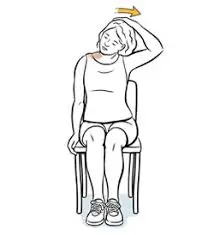
When working at a desk, many individuals tilt their heads forward in the direction of their computers. The neck becomes more tense as a result. Stretching your neck might be beneficial if you frequently have headaches or tightness in your upper back.
How to: Reach down with your right arm and grasp the chair’s side. Feel a slight stretch along the side of your neck as you tilt your head to the left. Repeat on the opposite side after holding this stretch for 15 to 30 seconds.
Spine Twist
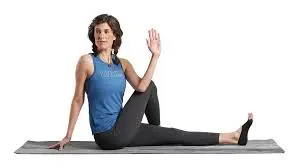
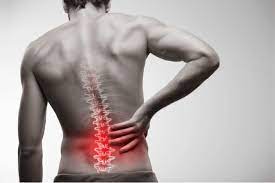
Your back can be severely strained by slouching or sliding your hips forward on your chair. Resetting your posture and releasing tension across your entire back may be accomplished with a spinal twist.
How to: Contract your abs and start rotating your upper body to the right while keeping your feet flat on the ground. Put the outside of your right knee with your left hand. To deepen the stretch, place your right hand on the seatback or armrest. Twist only as much as is comfortable for you. A little rotation can have a significant impact. Repeat on the opposite side after holding this stretch for 15 to 30 seconds.
Back Extension
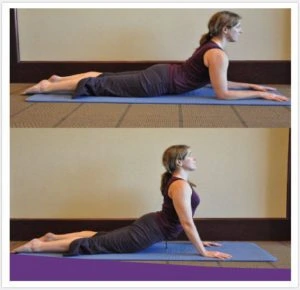
Sitting slumped forward or leaning backward can be quite taxing on your back. You may release tension by expanding your shoulders and chest with a sitting back extension.
How to: With your back securely resting on the backrest, recline in your chair. Put your hands behind your neck. Over your backrest, lean back. Maintain your elbows wide until your chest and back start to gently expand. For ten to fifteen seconds, hold this stretch.
Hips stretching
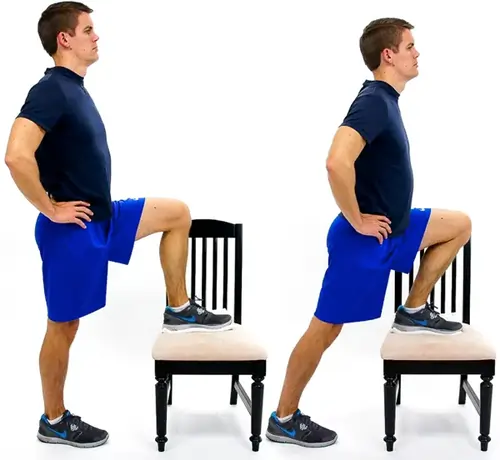
Long durations of sitting can cause the lower body to become very taut. While seated, the glutes stretch and the hip flexors shorten and tighten. This simple stretch works every part of the hips and glutes at once.
How to: While sitting down, wrap your right ankle over your left knee. Fold forward at the hips while sitting upright until your right glute feels stretched. To make the stretch deeper, you might apply pressure to your right knee. Repeat on the opposite side after holding this stretch for 15 to 30 seconds.
Hamstrings Stretching

Your hamstrings may get tight quite rapidly if you don’t exercise regularly. This easy stretch keeps your hamstrings flexible and relieves leg pain.
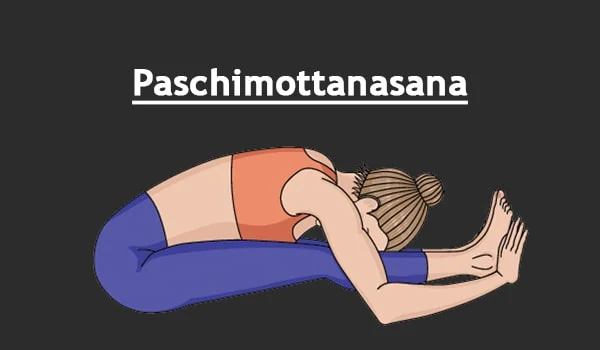
How to: Keeping your left foot level on the ground, extend your right leg forward. Fold forward and reach for your right toes while sitting upright and aligning your head with your spine. To prevent your chair from rolling backward, lock the wheels if it does. Repeat on the opposite side after holding this stretch for 15 to 30 seconds.
Wrist Stretching
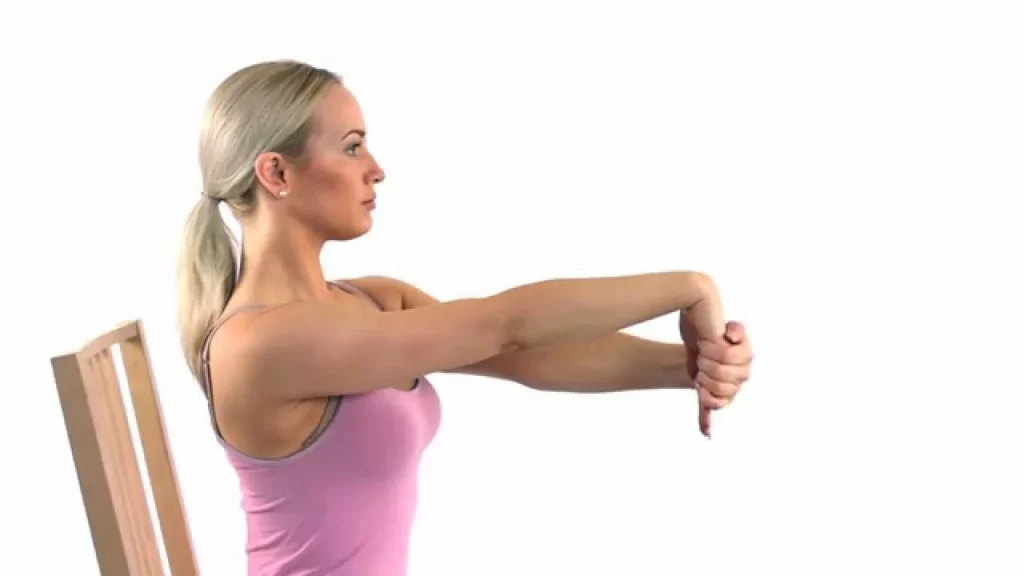
Wrist tightness might result from typing for extended periods of time or from resting your wrists flat on your keyboard. Both the wrist flexor and the wrist extensor will be worked by these two easy wrist stretches.
How to: With your palm facing up, extend your right arm straight out in front of you. Point the tips of your fingers toward the floor while flexing your wrist. To deepen the stretch and feel a stretch up your arm, draw back on your fingers with your left hand. Repeat on the opposite side after holding this stretch for 15 to 30 seconds. Flex your fingers upward and repeat this stretch with your palm facing down.
Tips on maintaining an active lifestyle when working from home
When working from home, you could discover that you move less because the coffee maker is just a short distance from your seat. One excellent place to start is with the seven simple sitting stretches once per hour. However, take into account some of our other top suggestions for getting and maintaining an active lifestyle throughout the day.
Start Moving
Everybody’s definition of getting active is different. This might entail working out in the middle of the day rather than in the morning. Alternatively, set aside time on your calendar for a little stroll outside or around your home every few hours. Heart health, posture, weariness, mood, and cognitive function can all be significantly improved by 15 minutes of mild exercise.
Modify Your Mindset
It may make a huge difference to have something else to look at while working. Instead of working at your desk, try spending an hour at your table. Alternatively, stop along the route to replenish your water bottle and observe the weather.
Try Joining a Digital Walking Club
Consider organizing a virtual walking club among your coworkers. Hold each other responsible for taking quick walks. Establish accountability partners or a weekly competition. Make anything you do enjoyable and inspiring.
Balance, Stand, and Strengthen
All day on the phone? Make the most of that time by relocating. You may increase your heart rate and relieve back stress by standing. Do some squats or bicep curls with a set of weights or bands at your desk. To aid with stability and posture, do balancing exercises like wall sits and tree pose. We advise you to switch off your video for these activities, regardless of your choice.
The important thing is to do something on a regular basis, regardless of how you move your body during the day. You may significantly lessen the negative effects of sitting on your body by performing these six easy stretches while seated at your desk.
Benefits of stretching exercises
Movement is stretching. The muscle fibers that shrink while you’re not moving are lengthened by it. Stretching for just ten minutes a day actually increased flexibility and lessened the detrimental effects of inactivity, according to one study… Stretching has several advantages and is a gentle approach to moving away from a sedentary lifestyle, including:
Increased range of motion
If your joints are immobile for long periods of time, the surrounding muscles, ligaments, and tendons may start to shrink and stiffen. This can eventually reduce range of motion, making daily tasks like walking and climbing stairs more difficult. Stretching has the opposite impact. By tightening your muscles and rotating your joints, you may fight weariness and stiffness by supplying fluid and nutrients to every part of your body.
More energy
Contrary to popular belief, sitting depletes your vitality. When you stand up and stretch, your body awakens. The increased blood flow powers your body and brain, increasing your level of alertness and productivity.
Improved stability
Stretching enhances your awareness of your body in space and keeps your muscle fibers functioning together, which both help you feel secure, maintain or recover your balance when necessary, and reduce the likelihood that you may fall while moving during the day.
Less pain and distress
According to research, stretching can help people tolerate more pain. Stretching increases your range of motion and alters how your body perceives pain. The body learns via stretching that movement is healthy, safe, and beneficial.
Improved blood flow
Movement and stretching increase blood flow, which enables the body to take in more oxygen and minerals.
key takeaway
- Sitting stationary for extended periods of time at a desk job can cause musculoskeletal disorders, lower back pain, shoulder and neck pain, and other health issues.
- Simple exercises you can do without getting out of your chair include triceps stretches, overhead reaches, shoulder stretches, hip and knee flexion, hamstring stretches, and neck stretches. Hold each stretch for ten to thirty seconds.
- To avoid recurrent stress injuries, walk during meetings and phone calls, use a standing desk, or set a timer to remind you to move every hour.
Conclusion
It’s more crucial than ever to maintain an active lifestyle while working at a desk. A sedentary workweek may be transformed into a chance to enhance your health and well-being by performing certain activities at your desk.
You may purchase which is ergonomically engineered to enhance posture, lessen strain, and increase attention, in addition to these 10 desk exercises. Enjoy the advantages of a healthier, more active lifestyle by incorporating these comfort goods into your routine right now.
FAQs
How can I stretch after spending too much time sitting down?
After extended periods of sitting, try expanding your chest, rounding and arching your spine, and releasing your tense hip flexors. Use the Hinge Health Stretch Guide for a short workout that includes chest openers, torso twists, and hip flexor stretches.
How can one recover from extended periods of sitting?
To increase blood flow, get up gently and move about for a little while. To release tense muscles, relax stiff joints, and correct your posture, perform mild exercises like ankle circles, hip flexor stretches, and shoulder rolls.
What happens if you spend eight hours a day sitting down?
Sitting for eight hours a day weakens your muscles, inhibits blood flow, and lowers your calorie burn. This everyday practice increases your risk of heart disease, type 2 diabetes, weight gain, and back pain over time.
How many hours of sitting are bad for you?
When you sit for more than eight hours a day, your health risks start to rise, and beyond 10.5 hours a day, your chance of developing serious cardiovascular disease increases dramatically. Sitting above these limitations damages your blood sugar levels and decreases your metabolism, even if you exercise.
Which illnesses are associated with excessive sitting?
Several health risks associated with excessive sitting are sometimes referred to as “sitting disease.” Type 2 diabetes, cardiovascular disease (such as heart attacks and strokes), obesity, metabolic syndrome, deep vein thrombosis, some types of cancer, and mental health issues including depression are among the major illnesses associated with extended inactivity.
References:
- Sportsspt. (2021, June 16). 7 Easy Stretches to Counteract Sitting All Day | optimalsportspt. Optimalsportspt. https://optimalsportspt.com/7-easy-stretches-to-counteract-sitting-all-day/
- Website, N. (2026, April 9). Sitting exercises. NHS.uk. https://www.nhs.uk/live-well/exercise/sitting-exercises/
- Anil, A. (n.d.). 10 exercises to do while sitting at a desk in 2025. The Sleep Company. https://thesleepcompany.in/blogs/lifestyle/10-exercises-to-do-while-sitting-at-a-desk-in-2025?srsltid=AfmBOooojaDa3fUs_EN8LSvb8Vnj87kw3g0AktJXPFcNJaekIpvClWte