Calf Stretches For People Who Stand All Day
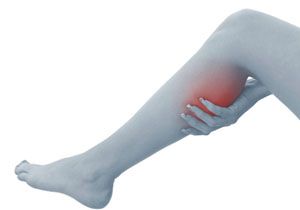
The calf muscles extend around halfway down the lower leg from the back of the knee. Tightness and pain in the calf muscles can be lessened by learning how to stretch them properly.
Overactivity or inadequate stretching might cause people to develop tight calf muscles. Stretches for the calf can ease related pain and stiffness.
In this post, we outline five stretches that can ease tense calf muscles and any pain they may be causing.
Tight calves can impede flexibility and prevent you from engaging in regular activities. They can also cause pain and damage. Stretching and taking a break can be beneficial, but to rule out a more serious underlying reason, consult a physician.
There are several reasons why your calves could constantly feel tight.
Your weight distribution and the pressure you apply to other parts of your body when moving about may be impacted if they are not as flexible as they should be. Your knee, ankle, and foot may not work properly as a consequence. Tightness, soreness, and even damage might result from this, preventing you from engaging in your favorite hobbies.
Table of Contents
What symptoms are present?
Depending on the source, tight calf muscles can create a variety of symptoms.
You may experience everything from mild pain to excruciating agony if your muscles are constricted. The muscle may twitch beneath the skin and feel rigid to the touch. The duration of cramps might range from a few seconds to fifteen minutes, or even longer. Cramping may occur immediately following activity or up to four or six hours later.
Other signs and symptoms might be:
- Rapid pain behind your knee or in the back of your calf
- Difficulty standing on your tiptoes
- Soreness, swelling, or injury
- Particularly when the muscles are exposed to resistance
What are the reasons?
Overuse frequently results in tightness or soreness in the calves. Running and participating in sports may be taxing on your calf muscles. Particularly taxing on the body are endurance sports.
Triathletes, marathon runners, and elderly people who engage in a lot of physical activity may be more susceptible to tight calves or even cramping in their muscles.
Additional reasons for cramping or calf pain might be:
- Peripheral vascular disease (PVD)
- Deep vein thrombosis (DVT)
- Muscle tear or tendonitis injuries
- Equinus, or limited range of motion in your ankle
- Dietary imbalances
- Dehydration
- Medication side effects
- Poor circulation
How to perform stretches
Frequent stretching might assist if you find that your calf muscles are tense. Try performing these exercises every day. To begin, you might even wish to stretch twice a day. This may help you feel less pain by lengthening the muscle fibers.
People should always warm up before stretching. For a few minutes, people can walk quickly or sprint slowly in place to achieve this.
In its foot and ankle fitness program, the following calf stretches assist patients in resuming their regular activities and sports after an injury or surgery.
Anyone may also do these exercises to relieve stiffness in their calves.
1. Stretch your calf muscles with or without a wall
The calf muscles can be stretched using one of two main methods. A wall is necessary for one, but not for the other.
Using a wall
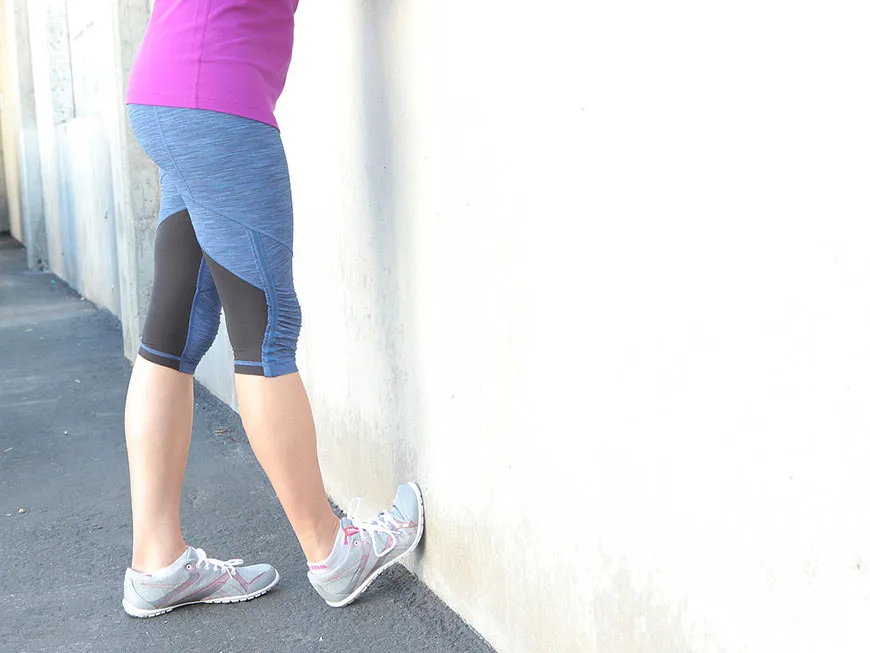
- Approach a wall at a distance of approximately an arm’s length. Put the right leg ahead of the left. Extend both arms toward the wall.
- While maintaining the front leg bent, straighten the rear leg by pressing the left heel into the ground. For 15 to 20 seconds, maintain this posture.
- Perform three sets, then switch to the other leg.
Without a wall
- Use your right leg to advance.
- With the rear heel firmly planted on the ground, shift the body’s weight to the front (right) leg. For 15 to 20 seconds, maintain this posture.
- Perform three sets, then switch to the other leg.
Advice
The stretch should extend into the heel and down the calf muscle. Slide the rear leg farther away till you feel the strain; if this isn’t the case.
When doing this stretch, try not to arch your back.
2. Stretch your heel cord while bending your knee
This section requires the use of a wall.
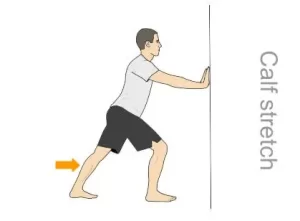
- Place your right leg in front of your left.
- Point the toes slightly inward and slightly bend the rear (left) knee. Place both hands up against the wall.
- Press the hips toward the direction of the wall while keeping both heels level on the ground. For thirty seconds, maintain the posture.
- Perform three sets, then switch to the other leg.
Advice
- Try not to tilt to one side while doing this stretch.
- Instead, maintain the hips centered over both feet.
3. Towel stretch
You’ll need a hand towel for this stretch.
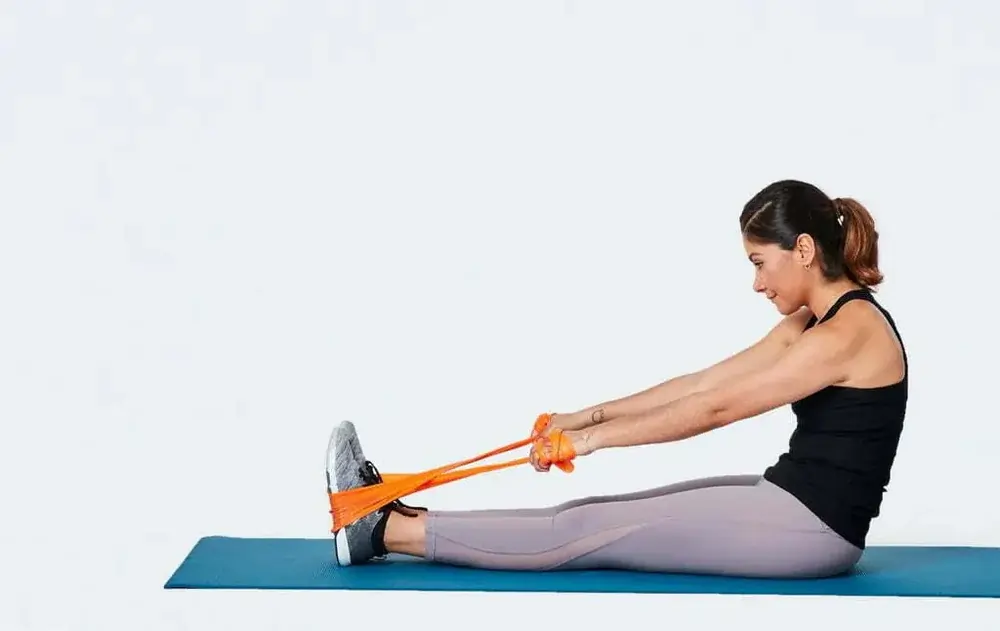
- Get into a position on the floor with both legs out in front of you.
- Wrap the hand towel around one foot’s ball. Grasp the towel’s two ends.
- Pull the towel toward the direction of the body while maintaining a straight-leg stance. Hold this position for 30 seconds. After that, take a 30-second break.
- Perform three sets.
Advice
- If needed, pull harder on the towel to adjust the stretch’s intensity.
- During the stretch, the back should remain straight.
4. Calf Raising
For support, a tabletop or chair is needed.
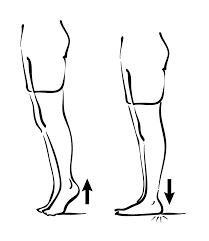
- Place your body weight equally on each foot. For balance, cling to a tabletop or the back of a chair.
- Raise the right foot and bend the right knee. The whole weight of the body should be supported by the left foot.
- Raise the left heel as high as you can while maintaining a straight left leg. Repeat this motion ten times after lowering it.
- Perform three sets, then switch to the other leg.
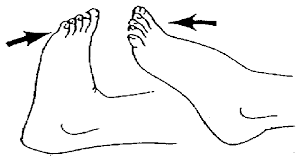
5. Ankle dorsiflexion and plantarflexion
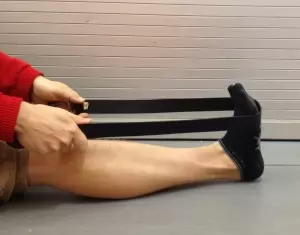
An elastic stretch band that offers pleasant resistance is necessary for these activities
By strengthening the calf muscles, each stretch helps improve the lower leg, foot, and ankle stability. Injuries can also be avoided by strengthening these muscles.
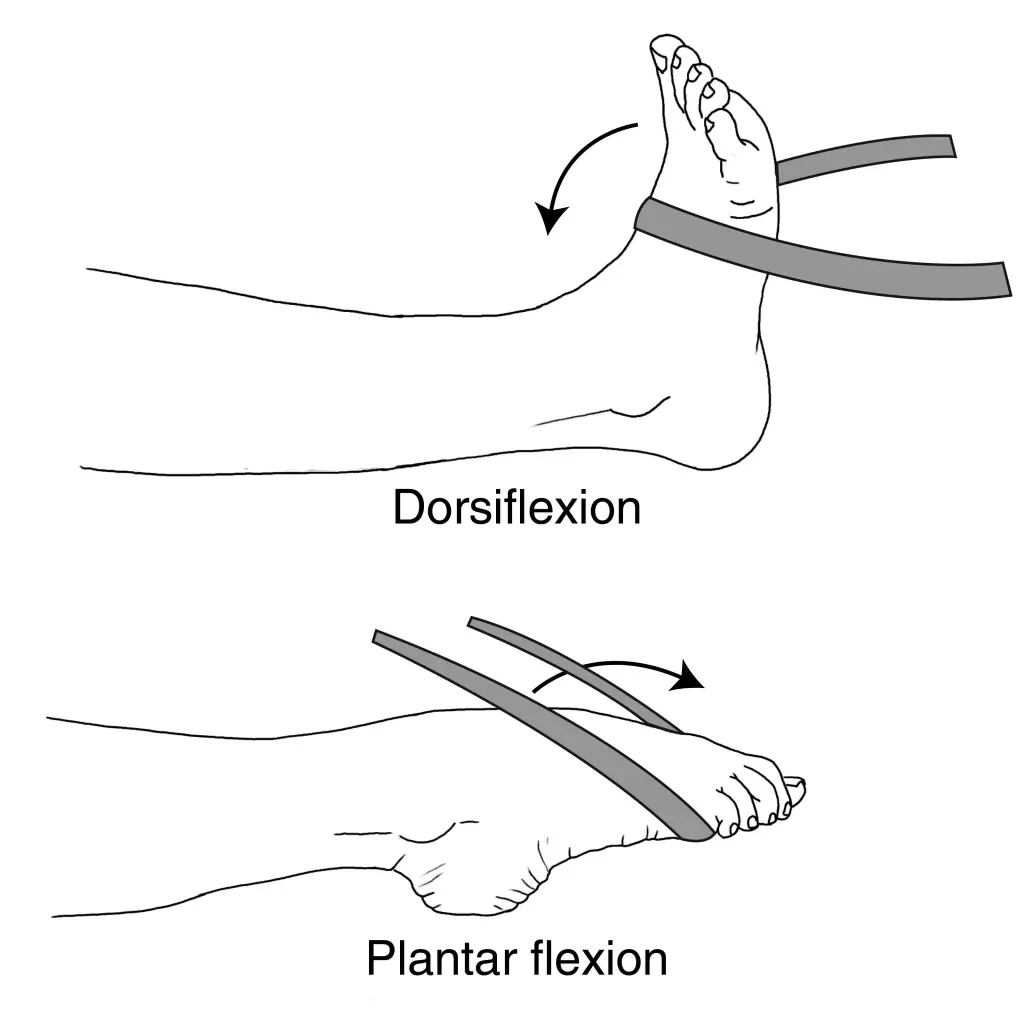
Dorsiflexion Stretching
- Take a seat on the floor with your legs extended straight forward.
- Securely fasten the elastic band to a sturdy piece of furniture, like a hefty table or chair. Put the band’s other end around the foot.
- Gently bring the toes back to the starting position after pulling them toward the torso.
- Perform the exercise ten times, then switch to the other leg.
Plantarflexion stretch
- Take a seat on the floor with your legs out in front of you.
- Hold the other end of the elastic band while wrapping one end around one foot.
- Slowly return to the starting posture after gently pointing the toes forward.
- Perform the exercise ten times, then switch to the other leg.
Advice
Confirm that the elastic band is offering a comfortable level of resistance to the motions. If not, tug harder on the band or move away from the piece of furniture.
Additional therapies
RICE Principle:
For the first 48 to 72 hours following the onset of tightness and pain, rest, ice, compression, and elevation (RICE) is a useful therapy for muscular problems. Muscle injury can be lessened by using the RICE approach.
Every two hours, try resting and raising the leg while applying an ice pack for 20 minutes. Controlling bleeding and swelling may be aided with a compression bandage. Another way to lessen swelling is to elevate the affected region.
Over-the-counter drugs
Your pain may be momentarily relieved by over-the-counter painkillers. Try naproxen (Aleve) or ibuprofen (Advil, Motrin IB).
Physical treatment
You might wish to consider physical therapy if your calves are consistently tight. For everything from pain to muscular imbalances, a physical therapist might recommend specialized stretches, exercises, and other therapies.
Massage treatment
Another alternative is massage therapy. A massage therapist may assist with anything from pain to tense muscles by manipulating the body’s soft tissues and muscles with their hands.
Your health insurance may or may not cover massage. To find out about any related copays or out-of-pocket expenses, it is preferable to give a call in advance.
Are there any issues?
The RICE technique or stretching at home are effective treatments for the majority of cases of tight calf muscles. Reduce the activities that are producing tightness and pain because you might not experience benefits right away.
If you don’t get therapy, you can experience more severe issues like:
- Calf pulls
- Shin splints
- Compartment syndrome
- Stress fractures
If stretching and resting don’t help your tense calves, get in touch with your physician. You could need medical care for a more serious problem, such as tendinitis or DVT.
If you experience tight calves along with any of the following symptoms, see your doctor:
- Severe pain
- Edema
- Inflammation
- Discharge
- Increased pain
Preventing Tight Calf Muscle
- Your best option for maintaining your calf muscles pain-free and flexible could be to stretch frequently. Other strategies to avoid tense muscles include the following:
- Before stretching and other exercises, warm up. To start the blood flowing, a few minutes of jogging or an easy walk should be sufficient.
- Look at your shoes. How recently did you purchase new ones? Your muscles and joints receive less support from worn-out footwear.
- Put on compression sleeves. You wear these cheap, sock-like items over your lower legs. They could assist in improving blood flow to your muscles and provide momentary pain relief when you move.
- Regularly receive massage therapy or physical therapy. A professional’s ongoing care might help you stay strong if you do endurance activities that affect your calves.
- Improve your general fitness. Muscle atrophy and inactivity may be the cause of some cramps. For those over 40, this is particularly true.
- Drink plenty of water. Throughout the day, stay hydrated. Consume a diet rich in calcium, potassium, and magnesium that is well-balanced.
Takeaways
Tight calf muscles should not be disregarded. They’re probably trying to tell you something. To rule out more serious illnesses like DVT, you might need to slow down for a bit or schedule a visit with a doctor. You should be back on your feet quickly after resting and stretching.
FAQs
After standing all day, why are my calves so tight?
After standing all day, you have tight calves because your muscles remain partially constricted for hours, which lowers blood flow and causes fluid and metabolic waste to accumulate. Wearing compression socks or supportive shoes, stretching gently, and raising your legs above your heart will provide instant relief.
Is massaging a tense calf beneficial?
Because it increases blood flow, releases knots, and relaxes stiff muscle fibers, massaging a tight calf is often harmless and beneficial. However, if you suspect a serious blood clot or an acute tear, you should stay away from deep massage.
Do stronger muscles get tighter?
No, muscles do not automatically get tighter as they are strengthened. Flexibility and joint mobility may actually be enhanced by proper strength training using a full range of motion. Tightness is frequently not an indication that a muscle is overly strong or physically shortened, but rather the neurological system’s reaction to weakness or instability
Is magnesium beneficial for tense calves?
Because magnesium helps muscles relax after contracting, it can aid with tight calves and cramping in the muscles if your tightness is caused by a low mineral level. However, overall research indicates that magnesium supplements may not always prevent or treat leg cramps since tightness is frequently caused by other factors.
At what age is it most difficult to grow muscle?
Gaining muscle is most difficult in your 80s and beyond because the body encounters strong anabolic resistance, which makes it respond much less to protein and weight exercise, and muscle loss increases. Around age 30, a gradual decrease (losing 3% to 8% per decade) starts, but beyond age 60, the process gets much steeper.
References:
- Marcin, A. (2023, March 14). Stretches and treatment for tight calves. Healthline. https://www.healthline.com/health/tight-calves#takeaway
- PharmD, J. C. (2025, May 30). Calf stretches and how to do them. https://www.medicalnewstoday.com/articles/calf-stretches