5 Physio-Approved Exercises to Improve Hip Mobility
Table of Contents
Introduction:
The primary muscle groups around your hips help stabilize the range of motion of your hip joints. Stretching and strengthening these areas may make walking, standing, and climbing stairs easier as your physical fitness improves.
Try holding each position for five to eight breaths, and note any pain or numbness. If you have sharp, pinpoint pain or it persists for more than a few hours, see a doctor or physical therapist to assess the problem.
Exercises to Instantly Improve Hip Mobility Video:
Exercises to Instantly Improve Hip Mobility:
Pigeon Pose:
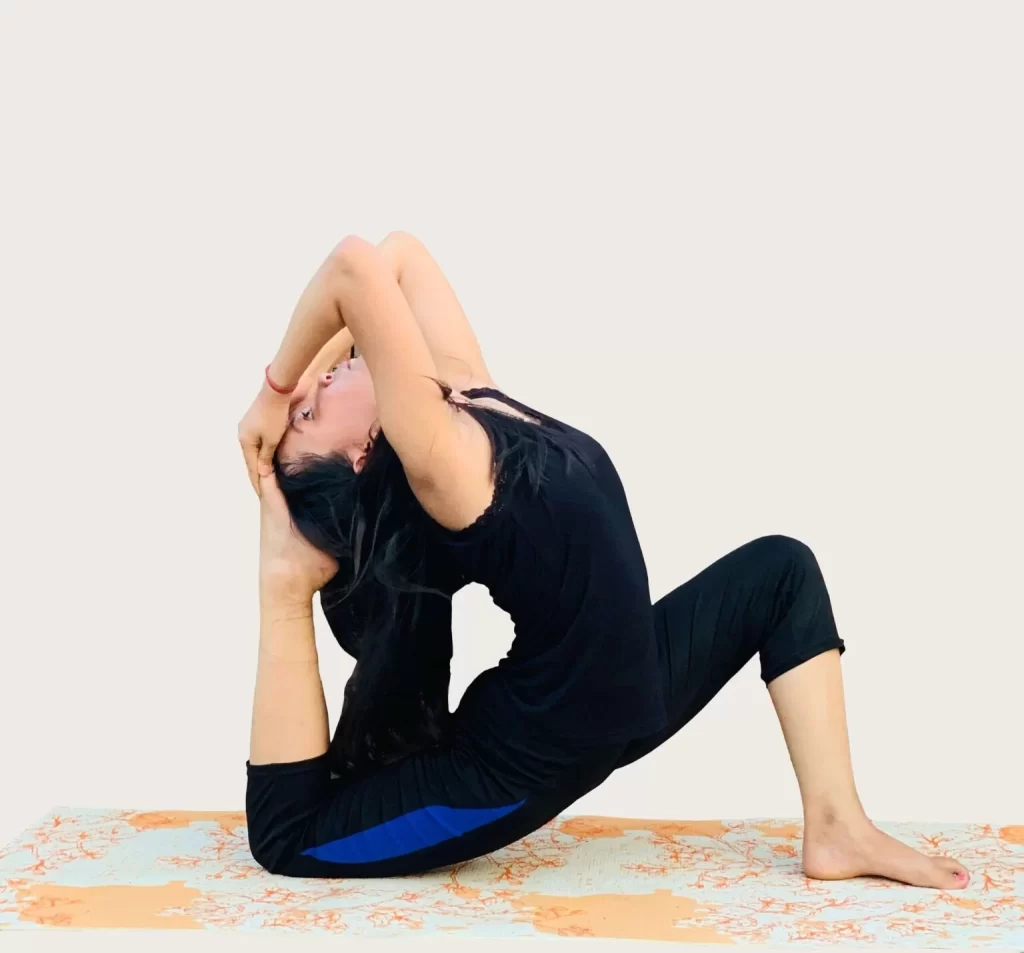
Move your weight forward and move your right knee closer to your right wrist after beginning in downward-facing dog. Place the correct foot facing the mat’s outer margin. Slide your left thigh back while lowering your left leg to the ground. Make sure your hip bones are aligned and facing forward, and that your left leg is parallel to the length of the mat.
To maintain an upright posture, press the tips of your fingers on the mat (or use two yoga blocks to move the ground closer to you). (You can also lie your forearms on the floor and fold forward over your right leg for a deeper stretch).To move back into the pose, press through your hands, tuck your left toes, and return to the downward-facing dog position.
90/90 Hip Rotations:
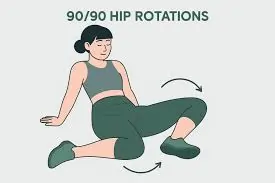
A great mobility exercise for improving both internal and external hip rotation is the 90/90 hip rotation. To keep your chest upright and your core stronger, you should sit on the floor with one leg folded at a 90-degree angle in front of you and the opposite leg bent at the same angle in front of you.
Carefully turn both knees to the other side without lifting your feet off the ground. Then, change to the other side with ease and repeat the 90/90 posture. This intentional movement enhances hip flexibility, glute activation, lower back strain, and overall lower body mechanics. Regular practice can lessen hip stiffness, promote better posture, lower the risk of injury, and increase performance in exercises like squats and lunges.
Hip Flexor Stretch:
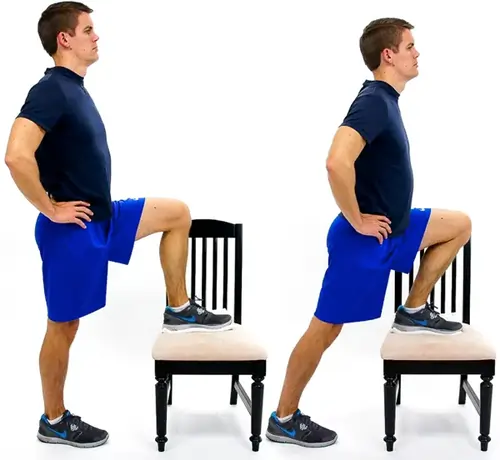
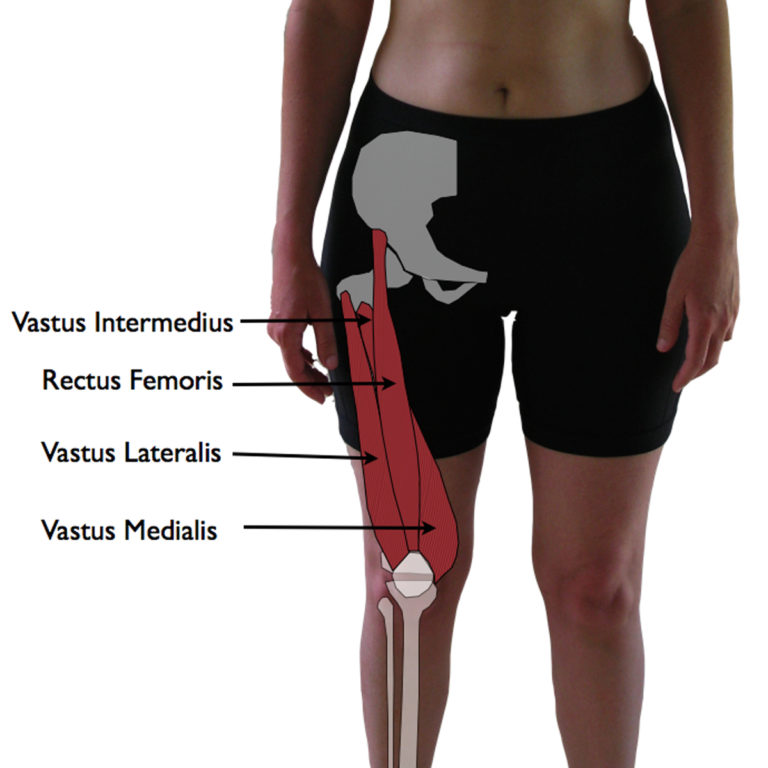
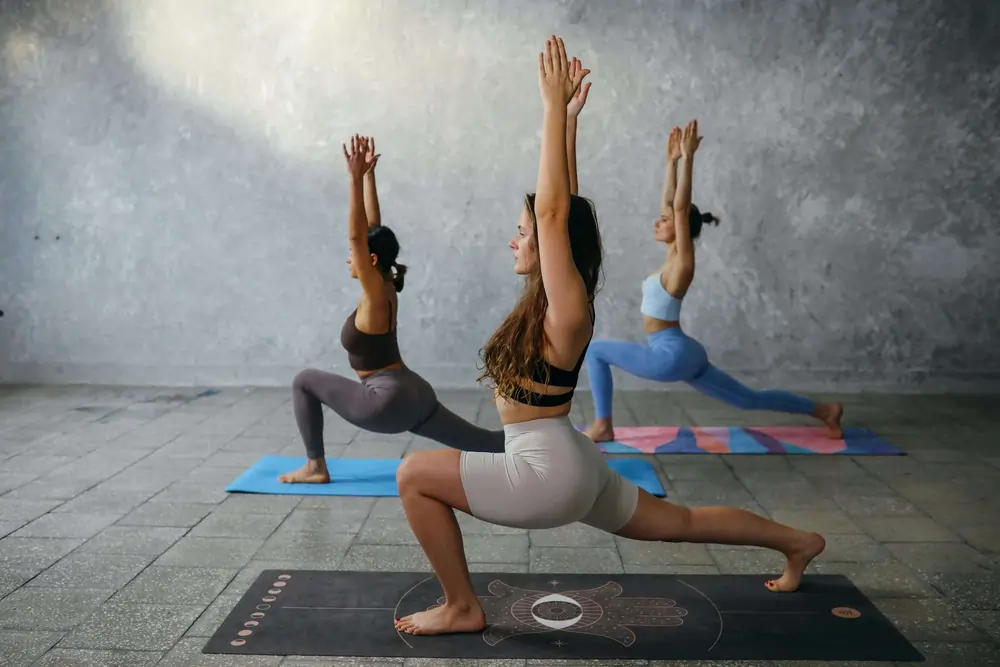
The hip flexor stretch is a simple yet very effective exercise that targets the muscles at the front of the hip, specifically the rectus femoris and iliopsoas. Sitting for extended periods of time can tighten hip flexors, which can lead to poor posture and lower back pain. Those who spend a lot of time sitting down will particularly benefit from it. To perform this stretch, begin in a half-kneeling stance with one knee on the ground and the other foot forward at a 90-degree angle.
Slowly forward your hips until you feel a stretch in the anterior part of your kneeling leg while maintaining an upright chest and a strong core. Hold the pose for 20 to 30 seconds while taking deep breaths, then change sides. Regular hip flexor stretches can improve posture, increase flexibility, reduce hip stiffness, and help with movement such as walking, running, and squat strength.
Glute Bridge:
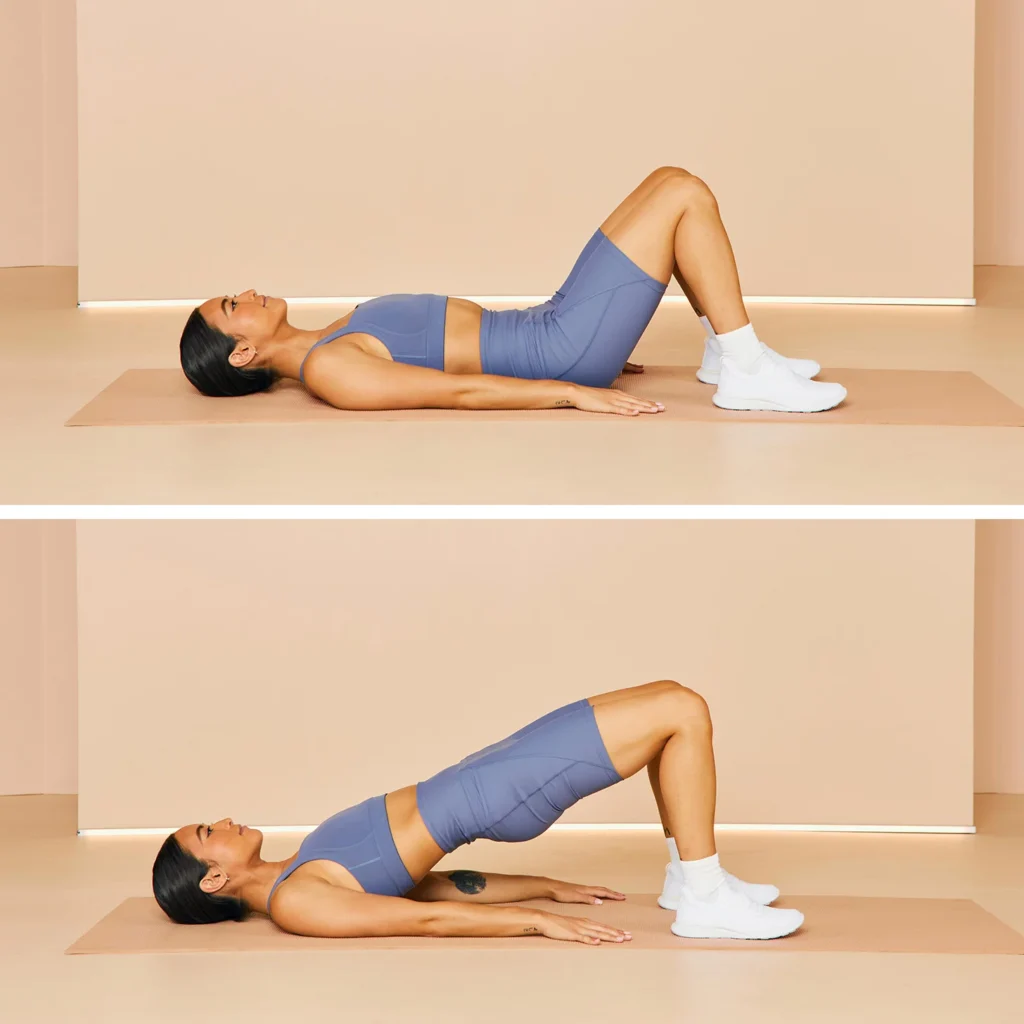
A great lower-body exercise that supports the lower back and improves the hamstrings, core strength, and glute muscles is the glute bridge. Press through your heels to raise your hips toward the ceiling until your body forms a straight line from your shoulders to your knees. Squeeze your glutes for a brief minute at the level, then gently drop your hips back down.
This exercise helps increase hip stability, enhance performance in exercises like lunges and squats, and improve posture while reducing lower back pain. Regular practice can also help reduce prolonged sitting pain and activate weak glute muscles.
Dynamic Hip Circles:
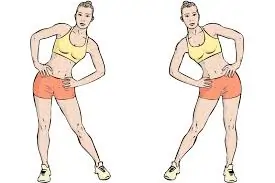
The dynamic hip circle is a useful movement exercise that improves hip flexibility, joint lubrication, and overall lower-body movement control. This exercise is often incorporated into warm-up routines to prepare the hips for activities like walking, running, squatting, or sports training. To perform strong hip circles, stand tall and hold onto a wall or other stable surface for balance.
Raise one leg to hip height and move it carefully in a large, controlled circle without arching your lower back. Make eight to ten circles in one direction before changing legs, followed by the reverse action. This exercise helps activate the hip flexors, glutes, and stabilizing muscles, while increasing range of motion and reducing the risk of injury during regular exercise.
Conclusion:
One of the best methods to immediately increase hip mobility and overall movement quality is to include physio-approved exercises in your everyday routine. Hip flexor stretches, glute bridges, dynamic hip circles, and 90/90 rotations are simple exercises that help release tense muscles, activate weak spots, and restore normal joint function. Making hip mobility a priority will improve your mobility, reduce your chance of injury, and improve long-term joint health.
FAQs:
Who should avoid doing these exercises?
People with recent hip surgery, severe arthritis, labral tears, or acute injuries should consult a physician or physical therapist before starting.
Do hip mobility exercises improve athletic performance?
Absolutely. Running structure, squats, lunges, balance, and general lower-body strength all improved with increased hip mobility.
Are you typically experiencing a little pain following mobility exercises?
Yes, feeling a little uncomfortable is normal, especially if your hips were quite tight. However, acute or chronic pain is irregular and requires examination.
What defines hip mobility from hip flexibility?
Hip mobility includes both strength and flexibility via a full range of motion. Mobility allows for controlled movement, although flexibility simply indicates muscle length.
Should I warm up before doing hip mobility exercises?
To increase blood flow and prevent damage, it is recommended to do a quick warm-up for three to five minutes, such as vigorous leg swings, marching, or walking in place.
Are hip mobility exercises safe for people with hip pain?
Yes, but make sure the exercises are mild and painless. If you have arthritis, severe hip pain, or a history of injuries, consult a physiotherapist before starting.
How often should I perform hip mobility exercises?
To get the most out of hip mobility exercises, do them four to five times weekly. If you have stiffness or spend a lot of time sitting down, you can safely perform simple mobility exercises every day.
References:
- Cronkleton, E. (2025, July 3). 14 Exercises for strengthening and increasing mobility in the hips. Healthline. https://www.healthline.com/health/hip-exercises
- Exercises for the hips. (n.d.). Arthritis UK. https://www.arthritis-uk.org/information-and-support/living-with-arthritis/health-and-wellbeing/exercising-with-arthritis/exercises-for-healthy-joints/exercises-for-the-hips/
- Team, C. P. (2025, November 13). Best hip exercises to ease stiffness and pain. County Physio Ltd. https://countyphysio.co.uk/best-hip-exercises/
- Clinic, C. (2025, December 4). Target your hips, groin, and glutes with these Hip-Opening stretches. Cleveland Clinic. https://health.clevelandclinic.org/hip-opening-stretches
- Gdrummond. (2025, November 15). Rehab exercises to restore smooth hip motion. St Leonard’s Physio. https://stleonardsphysio.com.au/rehab-exercises-to-restore-smooth-hip-motion/