Best Sleeping Position For Low Back Pain
Table of Contents
Introduction:
Sleep has a significant impact on how our bodies feel the following day, particularly in terms of hip and back comfort. The majority of people are unaware that stiffness or soreness in the morning may be caused by their sleeping position. Sleep posture affects joint pressure, muscle relaxation, and spinal alignment.
Making little changes to your sleeping posture can help you become more flexible, comfortable, and well-supported in your spine. This article emphasizes postures that assist in lessening needless pressure on the body and talks about the best sleeping positions for hip and lower back pain.
Both physical and mental well-being depend on getting a decent night’s sleep. Sleeping might be difficult if you have back pain. You can relieve back tension by simply altering your sleeping posture.
Sleeping Positions
It can be challenging for those who find an unfamiliar sleeping position to be just as stressful as the pain they are feeling, even if it is ideal to select suggested sleeping positions. Therefore, a sleeping posture might not be suitable for you if it is uncomfortable.
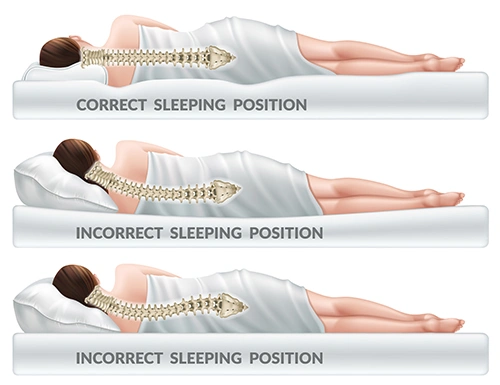
The basic conclusion is that you should sleep in whatever position allows you to rest, but you should also allow for adjustments. Maintaining alignment—keeping your hips, shoulders, and ears in a straight line—is essential for proper sleep posture. There will inevitably be voids between the mattress and your body. You should use cushions to fill in these holes and lessen the tension on your neck and back muscles.
Second, as they sleep, people frequently shift about. Therefore, worrying and creating additional stress over maintaining a single sleep position is pointless. If you do move, have additional pillows nearby that you may use to support sensitive regions while you sleep in different positions.
Sleeping on your side
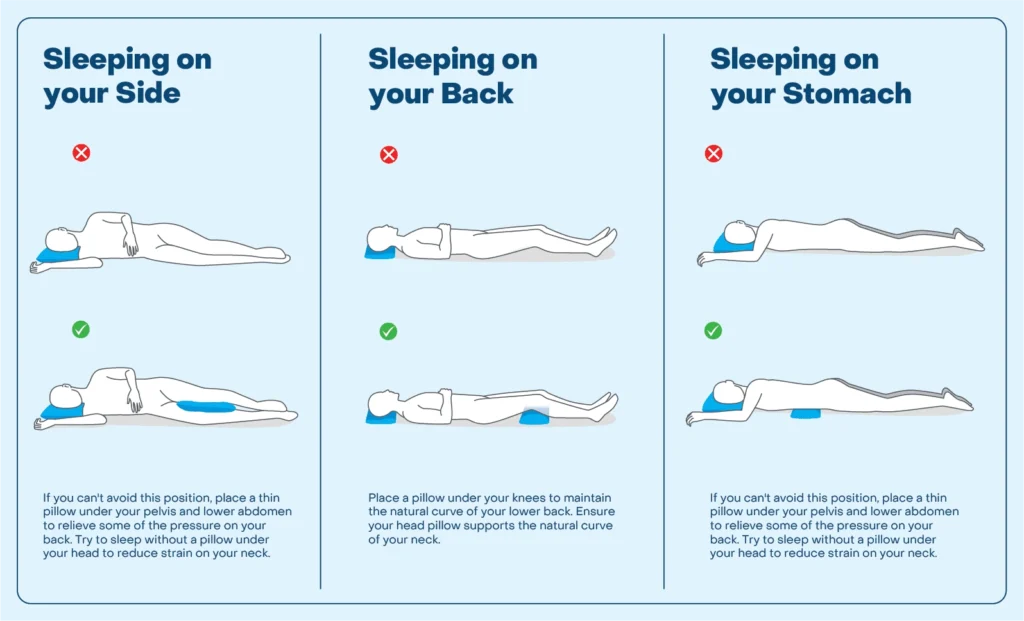
If you sleep on your side, place a cushion between your knees and raise them slightly toward your chest.
Aligning your spine, pelvis, and hips may be achieved by flexing your knees and placing a cushion between your legs. Your spine is relieved of pressure in this position. If you would like, use a full-length body pillow.
Sleeping on your back
Put a cushion beneath your legs if you sleep on your back. This might assist you in keeping your lower back’s curvature and relaxing your back muscles. Try placing a small, wrapped towel under your waist if you want more support.
Use a cushion to support your neck. Your neck should remain in line with your back and chest, thanks to your cushion.
Sleeping on your stomach
It might be difficult for your back to sleep on your stomach. If you can, try different sleeping positions.
If you can’t sleep any other way, place a cushion under your hips and lower abdomen to reduce back pressure. Use a pillow under your head if it doesn’t put too much strain on your back.
When back pain prevents you from falling asleep, what should we do?
Sleep issues are often mentioned as an undesirable side effect of back pain. There are several methods you may attempt to ease pain when back pain prevents you from falling asleep.
Start by trying out various sleeping positions. You might no longer be able to sleep in the position that was most comfortable for you before the beginning of back pain.
Try applying heat or ice to your back before going to bed if changing your sleeping position, using body support pillows, and resting on a firm mattress don’t help. Pain and inflammation may be lessened as a result.
Additionally, practicing relaxation techniques like meditation and stretching before bed can help ease stiff muscles and increase flexibility. Extensive stretching or yoga can help lessen low back pain, according to research. Before going to bed, do these three easy stretches to calm your body and ease any back pain:
Stretch to relax back pain
Knee-to-chest:
Extend one leg while lying on your back. Grasping one knee with both hands, slowly pull it closer to your chest. After 15 to 30 seconds of holding the stretch, switch to the other leg
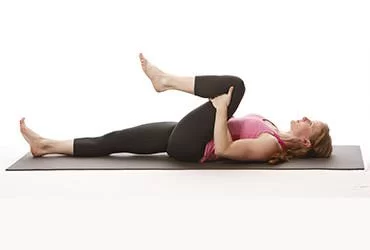
Child’s Position:
Start on your hands and knees, placing your knees behind your hips and your wrists exactly beneath your shoulders. Lower your chest toward the floor and stretch your arms forward while sitting back on your heels. If at all possible, keep your forehead on the ground and your arms outstretched

Start on your hands and knees, placing your knees behind your hips and your wrists precisely beneath your shoulders. Breathe in as you raise your head toward the ceiling and drop your belly toward the floor while arching your back. Breathe out as you press into your hands and knees, tuck your chin into your chest, and round your spine.

Best Sleeping Positions for Lower Back
The following sleeping positions are typically advised by specialists because they help maintain a straight spine and relieve strain on the hips and lower back. The best sleeping position for those with lower back pain varies on their needs, comfort level, and degree of flexibility.
Side Sleeping with a Pillow Between the Knees
One of the finest sleeping positions for lower back pain is said to be this one. To keep your hips in alignment and prevent your upper leg from pulling your spine out of alignment, lie on your side with a cushion between your knees. Additionally, it reduces tension on the pelvic and lower back.
For those who wake up feeling stiff, this is a recommended sleeping posture that helps reduce back pain. By combining good sleep posture with skilled orthopaedic care, many patients with chronic pain achieve long-term relief.
Using a cushion beneath the knees when sleeping on one’s back
Approximately one-third of individuals sleep on their backs, which is the second most prevalent practice.
Your spine can rest in a neutral posture when you lie on your back. To maintain the lower back’s natural curvature and reduce strain on the lumbar region, place a cushion beneath the knees. This has been suggested as the ideal sleeping position for people with back pain, especially those with middle or lower back pain.
Fetal Sleeping Position
The fetal position is lying on your side with your knees brought to your chest. When performed properly, this pose may help ease hip and spinal strain. Maintaining a relaxed posture rather than a tightly contracted one is crucial.
Those with hip stiffness and lower back problems may find this sleep posture suitable. When a pillow is employed, it is also seen to be a pleasant sleeping posture in terms of lower back pain. Timely medical assistance might be crucial if pain becomes abrupt, intense, or challenging to manage at home.
Side Sleeping with a Body Pillow
A full-length body cushion might give the shoulders, hips, and spine more support. The position stays in place during the night, prevents twisting, and supports the upper leg.
A body pillow can help those who often move positions while sleeping maintain one of the best sleeping postures for lower back pain.
Reclined Sleeping Position
Lower back and hip strain can be reduced by adopting a slightly hunched position, such as lying on a bed with an adjustable bed or chair. This posture lessens joint stress while preserving spinal alignment.
Those who are experimenting with different sleeping positions to alleviate lower back pain and are unable to remain flat may also find it helpful. Comprehensive lab testing in Chennai can also offer important insights for those who want to rule out any underlying problems or gain a better understanding of their health.
Back Sleeping with Legs Elevated
To relieve strain on the hips and lower back, it could be helpful to raise the legs slightly with cushions or a wedge. This position promotes improved circulation and spinal alignment.
This is said to be the ideal sleeping position for those with middle back pain, and it could be useful for people who feel stiff after a long day of sitting.
Best Sleeping Positions for Back Pain
The majority of individuals concur that the best sleeping position for lower back pain is lying on your back. In this position, the weight is dispersed along the whole spine. By putting a cushion under your knees, you may maintain the natural curve of your spine.
Those who sleep on their side should put a firm cushion between their knees to maintain the natural alignment of their hips, pelvis, and spine.
To enhance the alignment of your spine, insert a small pillow beneath your hips and stomach if you find it tough to switch up your sleeping position.
How can sleeping contribute to back pain?
Sleeping patterns can either relieve or worsen back pain depending on several factors, including the position of the spine and the quality of mattress support. Inadequate alignment or support of the spine during sleep can cause muscular stress and stiffness, aggravate underlying structural problems over time, and cause pain and discomfort when awakened.
Poor sleeping habits can make back pain worse if you already have underlying back problems such as ruptured discs, spinal stenosis, or strained muscles.
Investing in a comfortable mattress and pillows, maintaining good posture when sleeping, and seeking medical attention for any underlying sleep disorders or back issues are all crucial. Additionally, you may increase flexibility and ease back muscle tension while you sleep by including mild stretching or mobility exercises in your daily routine.
Which sleeping position is most effective for reducing back pain?
Maintaining your spine’s natural alignment is essential for restful sleep. Knowing how your spine aligns and keeping it that way when you sleep is an excellent place to start, regardless of whether you sleep on your back or your side.
Sleeping on your back applies almost fifty pounds of pressure on your spine, according to the American Chiropractic Association! To lessen the strain on your lower back if you sleep on your back, consider placing a cushion behind your knees.
Placing a cushion between your knees might help maintain hip balance if you sleep on your side. This can cut the strain on your spine in half!
Because it opposes your spine’s natural curves and requires you to turn your neck, sleeping on your stomach is the sleep position that puts the most strain on your spine. Upper back and neck pain may result from this.
Which mattress and pillow are most effective for treating back pain?
After supporting you all day under the weight of gravity, lying down is the spine’s opportunity to finally relax. You need a cozy cushion and mattress to maximize this time.
The spine is supported by a hard or medium-firm mattress. As a result, there is less pain while lying down or after getting up since the body’s pressure is distributed more evenly. Although a soft mattress may initially seem cozy, it frequently doesn’t provide adult-sized people with appropriate support for the duration of the night. To get the best of both worlds, think about using a firmer mattress with a soft mattress topper if you desire that level of softness
Additionally, you should change your mattress every seven to 10 years. Over time, mattresses soften, which may make it difficult for your spine to sleep in its normal alignment.
Look for pillows that support the lumbar region. These cushions may be positioned close to the bottom part of your spine or sat on, and they are available in a few different patterns. When you sleep, you may want to consider using a pillow with lumbar support. By doing this, you can avoid sleeping in postures that could strain or hurt your spine
A water cushion is another pillow that offers excellent alignment for the spine. Water pillows have a water-filled pouch or chamber that is usually encased in layers of foam or cushioning for support and comfort. These are very soft and prevent proper alignment of the spine.
Getting Enough Sleep
One of the most crucial things you can do to keep your spine healthy is to get adequate sleep. The recommended sleep duration for adults is seven to nine hours each night.
It is harder to fall asleep when you use the bed for non-sleep activities like watching television or using your electronics.
Because your body’s weight is more equally distributed when you lie down, activities during the day may not put as much strain on your spine. The body goes through a process of tissue regeneration and repair while we sleep, and getting enough sleep enables the healing of injured spinal tissues, including muscles, ligaments, tendons, and spinal discs. This aids in preserving the spine’s general integrity and health.
Muscle atonia, a condition of total relaxation of voluntary muscles, occurs in the body during deep sleep stages and encourages profound relaxation. In addition to relieving stress, this relaxation lowers the risk of developing strains or imbalances in the muscles that can cause back pain.
In fact, sleep deprivation has been linked to heightened pain sensitivity. Long-term sleep deprivation can reduce a person’s pain threshold, increasing their vulnerability to pain, especially back pain. On the other hand, by lowering inflammation and raising pain tolerance, obtaining adequate sleep can aid in pain management.
A higher risk of acquiring chronic diseases has also been associated with prolonged sleep deprivation. According to one study, regardless of the activities individuals engaged in throughout the day, long-term poor sleep quality significantly raises the likelihood of chronic and incapacitating back pain. Getting enough sleep might help avoid or postpone the start of these problems.
Sleep after Spine Surgery
Growth hormone, which stimulates tissue regeneration and repair, is released during sleep. This is essential for wound healing, tendon, ligament, and muscle restoration, and bone healing.
Additionally, sleep keeps your body’s immune system robust, which is essential for avoiding postoperative issues like infections. Additionally, it enhances your body’s reaction to physical therapy and rehabilitation activities.
Tips for Post-Surgery Sleep:
- Avoid drinking too much coffee and make an effort to move about during the day to ensure a restful night’s sleep after surgery.
- To get into and out of bed, use the log-rolling technique. The idea is to move your body as a single unit rather than twisting your spine.
- If you sleep mostly on your back, position a flat cushion under your head and a cylinder roll or pillow under your neck to achieve neutral neck and spine alignment.
- If you sleep on your side, lay a firm cushion between your knees and make sure the size of the pillow beneath your head does not bend your neck.
Conclusion
Maintaining optimal spine health requires making proper sleep hygiene a priority. Inadequate sleep patterns can worsen back pain, impede healing, and lower your quality of life in general.
You may give yourself the greatest opportunity for a restful night’s sleep by realizing the significance of good sleep posture, purchasing supportive mattresses and pillows, and learning a few easy exercises to perform before bed.
FAQs
What is the most effective sleeping posture for lower back pain relief?
It is often advised to sleep on one’s side with a cushion between the knees or on one’s back with a pillow beneath the knees.
Does lower back pain result from resting on one’s stomach?
Indeed, lying on one’s stomach is one of the worst sleeping positions for lower back pain since it can strain the neck and spine.
Does pillow placement really make a difference?
Indeed. Placing pillows correctly eases strain on the hips and lower back while also preserving spinal alignment.
How can I decide whether the way I sleep is hurting me?
Sleep posture may play a role if stiffness or soreness is greater in the morning and gets better during the day.
When should I consult a physician if I’m having back or hip pain?
Seeing a professional is advised if pain persists despite posture adjustments or interferes with day-to-day activities.
References:
- Admin, M. H. (2026, January 24). 6 Best sleeping positions for lower back and hip pain. Dr. Mehta’s Hospitals. https://mehtahospital.com/orthopedics/best-sleeping-positions-for-lower-back-and-hip-pain/
- Sleeping and the Spine | National Spine Health Foundation. (2024, March 15). National Spine Health Foundation. https://spinehealth.org/article/sleeping-and-the-spine/
- mruppel@katavamarketing.com & mruppel@katavamarketing.com. (2019, October 17). Sleeping positions for back and neck pain. Edison Spine Center. https://edisonspinecenter.com/sleeping-positions-for-back-and-neck-pain/