
Text Neck Exercise for Mobile Use
Table of Contents
Introduction
Every day, we stare at tablets, computers, and cellphones for hours. Even while these gadgets make life simpler, extended screen time can cause silent neck and spinal pain. Text neck syndrome is a problem that is growing more prevalent among smartphone users, office workers, and students.
When utilizing digital gadgets for extended periods of time, the head bends forward, causing text neck syndrome. If left untreated, this position puts more strain on the cervical spine, which can result in headaches, neck pain, stiffness, and other spine-related issues.
Spine physicians at MGM Malar are observing an increasing number of young individuals with symptoms associated with bad tech posture as a result of increased screen use in work and school settings.
Our cellphones are an essential part of our lives for a lot of us.
We utilize them to remain in touch with loved ones, obtain information in a matter of seconds, and navigate our preferred music, news, social media, sports statistics, and recipe websites. We also utilize them to manage our personal and professional schedules.
However, there is a very real and unpleasant side effect associated with all of our daily interactions with tech devices.
Tech neck, often known as “text neck,” is a result of spending too much time crouched over our gadgets, according to studies.
How is text neck caused?
How likely is it that you are using your portable device to read this article while engaged in the dangerous yet serious posture of text neck? (also called: slouchy back, rounded shoulders, and forward head.) This posture, also referred to as “text neck,” is a true epidemic.
People spend about five hours a day staring at their phones, which can cause severe text-neck aches and pains. Seven out of ten people will have neck pain at some time in their life.
The following are the physical effects of text neck: It compresses and tightens the tissues in front of the neck while lengthening the muscles, tendons, and ligaments behind the neck. A human head weighs 10 pounds.
Giving up our devices isn’t really an option, though. Instead, by exercising regularly and adopting healthy habits, we may avoid the aches and pains associated with text neck.
What is Tech Neck?
The phrase “tech neck” refers to the neck pain that has grown more prevalent as a result of our excessive use of technology.
It is caused by the neck strain that comes from staring down at our phones and tablets for extended periods of time.
Pain, stiffness, and even restricted range of motion may result from this strain. Because younger people spend so much time on their smartphones, it’s getting more prevalent.
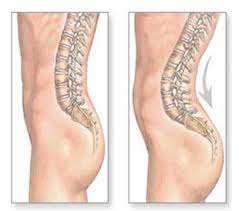
Bending the head forward when using phones, tablets, or laptops for lengthy periods of time can produce repeated pressure on the cervical spine, a condition known as “text neck.”
In a neutral position, the human head weighs about 4–5 kg. The pressure on the neck can rise to 20–25 kg when the head tilts forward while staring at a gadget, putting a lot of strain on the spine and surrounding muscles.
Exercises to prevent text neck
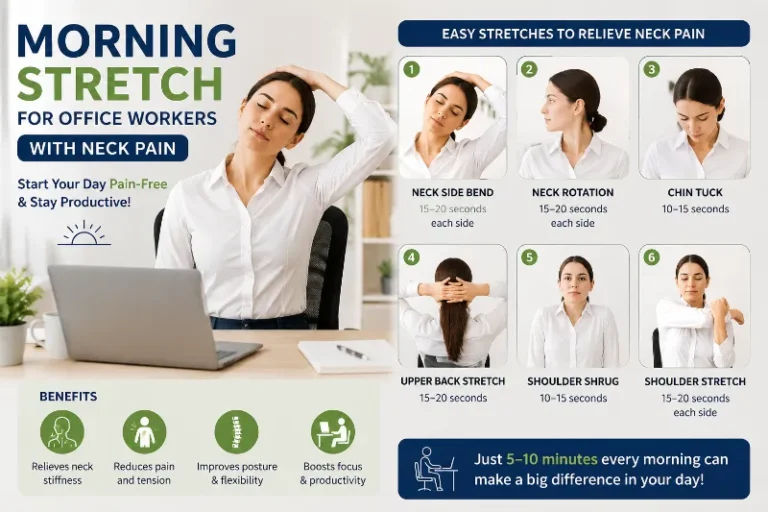
Stretching and strengthening your muscles may help reduce some of that bothersome neck pain.
Thus, we compiled the top equipment-free stretches and exercises with the assistance of qualified chiropractors. One to three times a day, include these in your everyday routine to demonstrate who is in charge of text messaging.
1. Exaggerated nod
An exaggerated nod balances the downward/forward position of the head, moving the shoulders down and back and increasing neck mobility.
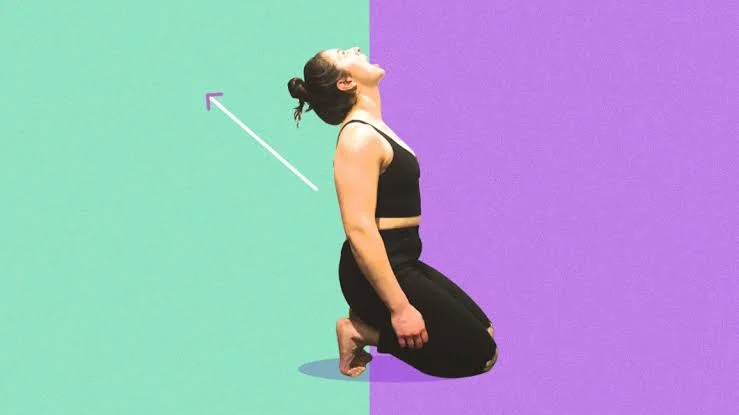
How to do it:
- To begin, choose a comfortable seat at your desk or stand with your shoulders relaxed. Look up toward the ceiling while keeping your mouth shut and your teeth in contact but not tightened.
- Here, take a moment to relax your jaw and open your mouth. Check to see if you can now move your head back an additional inch or two (usually you can).
- Holding your head still, close your mouth by bringing your bottom and upper jaws together. The front of your neck should feel stretched.
2. Downward-Facing Dog
The anterior chest wall and shoulders, which are frequently rounded and taut from extensive tech use, may be opened with Downward-Facing Dog. Since the focus of this posture is upper-body strength, you may compensate by scrunching your shoulders up to your ears if you lack shoulder strength. To make room in your neck, intentionally drag your shoulder blades down your back if you catch yourself doing this.
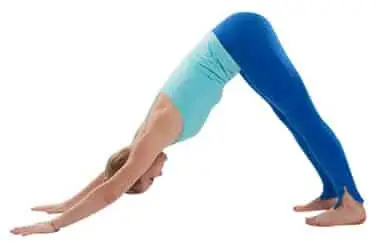
How to do it:
- Start on fours. Reach your hip bones toward the ceiling while tucking your toes and raising your hips high.
- Don’t let your heels plant on the floor as you reach back toward the mat.
- Make your neck long by lowering your head. Make sure your wrist creases remain parallel to the mat’s front border while you are here.
- Press into the knuckles of your thumbs and forefingers to relieve strain on your wrists.
- Take at least three deep breaths in this position. Then relax
3. Cat and Cow
The trunk and pelvis must control the flow from the cat to the cow. When you inhale, tilt your pelvis forward so that your tailbone points toward the ceiling, and when you exhale, tilt your pelvis back so that your tailbone points toward the floor. This sequence of movements helps improve awareness of the spine, which plays an important role in poor posture.
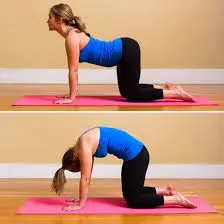
How to do it:
- Get on all fours with your shoulders over your wrists, your hips over your knees, and the tops of your feet flat on the floor. Look a few inches in front of your toes and stretch from your head to your coccyx.
- To begin the cat phase, exhale and tuck your tailbone (creating the Halloween cat shape) while using your abdominal muscles to bend your spine toward the ceiling. Extend your neck and lower your chin toward your chest so your ears are over your biceps.
- Inhale, tilt, and elevate your pelvis till your stomach hits the floor to start the cow phase. Spread your shoulder blades and move your shoulders away from your ears, lift your chin and chest, and look toward the ceiling.
- Do several “Cat-Cow” cycles while avoiding stress and pressure on your head and neck.
4. Hand-to-Foot Pose
Padhastasana stretches your neck and hamstrings, which can help with stiff necks and lower backs from sitting all day.
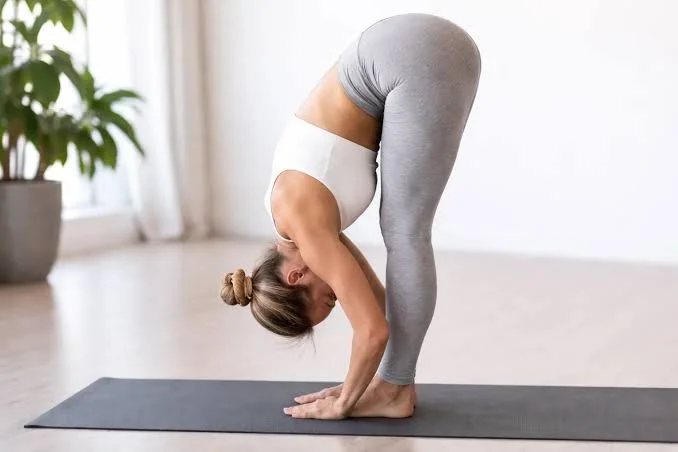
How to do it:
- Start with your feet hip-distance apart after removing your shoes. Next, lean forward so that your arms are in contact with the ground. Take your arms only as far as you can without straining if it’s challenging.
- Slide your hands, palms facing up, beneath your feet by bending your knees and raising the balls of your feet off the floor.
- Allow your wrists to rest in your wrist creases. Relax your head and use the balls of your feet to press against your palms. Take at least three deep breaths in this position.
5. Bow pose
Arch poses can help eliminate hunching by opening up the front of your shoulders and strengthening your back, says Marina Mangano, founder of Chilo Yoga Flow in Washington, D.C.
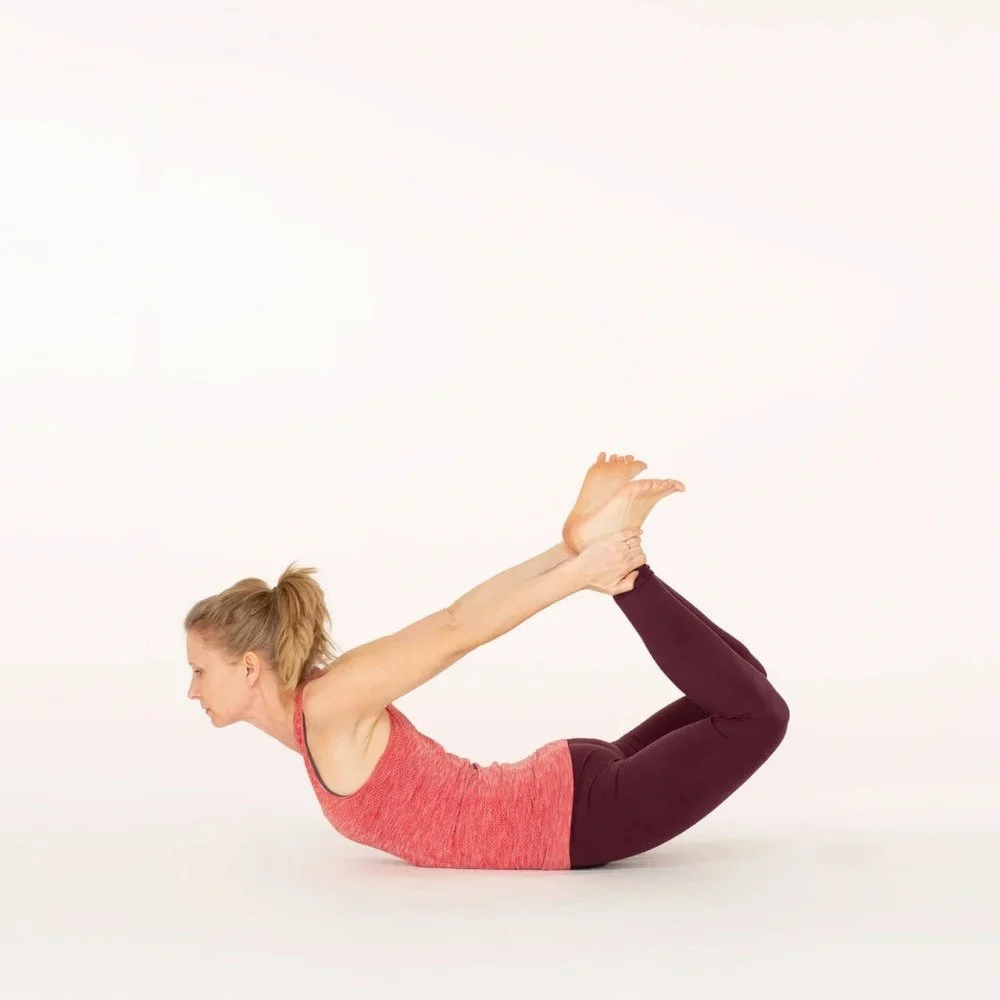
How to do it:
- With your hands on each side of you and your chin on the ground, lie flat on your stomach.
- Bring your heels as near to your buttocks as you can while bending your knees. Using both hands, reach backward and grasp your outside ankles. Lift your heels toward the ceiling as you take a breath, causing your upper torso, thighs, and chest to rise off the mat.
- Try raising your heels while keeping your tailbone pushed against the mat to increase the stretch’s intensity. Look ahead and pull your shoulders away from your ears.
- For ten breaths, maintain this posture. As you exhale, slowly drop your thighs to the floor, followed by the rest of your body.
6. Chin tuck
A quick workout that you can perform at your desk, at a stoplight, or even at a business meeting is the chin tuck. This easy stretch can strengthen the neck muscles and help bring your head back into alignment while also enhancing spinal awareness.
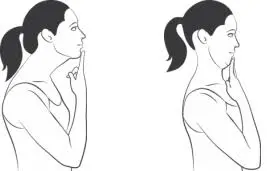
How to do it:
- Sit upright in a chair with your chin aligned parallel to the ground.
- Without tilting your head in any direction, gently retract your head and chin, as if you are trying to create a double chin.
- Be cautious not to push your head back forcefully. You should sense a stretch along the back of your neck.
- Now, envision a string pulling your head upwards like a puppet and actively lengthen your neck. Deliberately extend the base of your skull away from the upper part of your neck.
- Keep your jaw relaxed and maintain this posture for three deep breaths.
- Let your chin move forward. Repeat.
Prevention of text neck
1. Change how you hold your phone
To avoid slouching forward or raising your head too high, raise the screen to eye level. Rather, maintain a neutral spine to align your ears with your shoulders. This will prevent you from maintaining a forward-looking posture for extended periods of time.
2. Take breaks from your phone
Even if it’s only for two or three minutes per hour, taking frequent breaks from the computer might be beneficial. Use a sticky note or set reminders on your computer or phone. These little indicators can have a significant impact.
3. Use the Text Neck application
An Android app called Text Neck provides “immediate real-time feedback” on your posture (seen by a green or red light). Additionally, there is an optional buzzer or vibration alert to let you know when you’ve reverted to negative habits.
4. See a professional if your pain persists
This helps reduce pain and treat the structural problems that text neck eventually causes. They may also be onto something. One of the main nonpharmacological treatments for both acute and chronic neck and back pain is chiropractic therapy.
5. Practice yoga for ten minutes
It might be beneficial to perform the aforementioned exercises or practice yoga for ten minutes each day. The best technique to cure and prevent neck and back pain is yoga, since it helps improve movement patterns, develops body awareness, and involves breath practice. Tight rhomboids and other muscle imbalances are the root cause of neck pain, but regular yoga practice can help address these imbalances.
Consequences of excessive phone use
Overusing your phone can have a variety of negative impacts, from minor pain to excruciating pain and stiffness.
The most typical adverse effects consist of:
- Neck and shoulders pain
- Headaches
- Bad posture
- Cervical vertebrae
- Spinal discs
- Upper back muscles
- Nerve pathways
- Repeated strain can eventually cause postural problems and long-term problems with the health of the spine.
Blurred vision and numbness and tingling in the hands and arms are other adverse effects.
The human head weighs between 10 and 12 pounds, which is the same as a bowling ball. This is something we rarely consider. The more pressure and strain your head experiences as you tilt it down, the smaller the angle. It may seem like ten bowling balls.
Typical Symptoms of Text Neck
If postural patterns do not improve, text neck complaints frequently begin softly and then get worse.
Typical signs and symptoms include:
- Chronic neck pain
- Upper back stiffness
- Shoulder tightness
- Frequent tension headaches
- Pain between the shoulder blades
- Reduced neck mobility
- Tingling or numbness in the arms or fingers
- Forward head posture
- Rounded shoulders
Why Text Neck Is Frequently Ignored
Many individuals overlook the early warning signals of text neck syndrome because it develops gradually.
It is frequently disregarded because
- The onset of symptoms is gradual.
- Long work hours are blamed for neck problems.
- Many mistake headaches for weariness or stress.
- Changes in posture occur gradually.
A long-term forward-head position, however, can eventually cause nerve irritation, disk strain, and muscular imbalance. For a thorough assessment, speak with the MGM Malar Orthopedics team if symptoms continue.
Potential Concerns if Untreated
Long-term neglect of bad posture can result in more severe spinal disorders like:
- Cervical disc Deterioration
- Disc prolapse
- Nerves Compression
- Chronic neck pain
- Prolonged imbalance in posture
These issues can be avoided with early posture modification.
Who is more likely to Get Text Neck?
Long-term screen time increases the risk of text neck in some populations.
Among the higher-risk populations are:
- IT specialists
- Employees who work from home
- Students enrolled in virtual courses
- Players
- Content producers
- Adolescents who use smartphones excessively
- People who don’t have ergonomic workplaces
Maintaining proper posture is crucial to preserving the long-term health of the spine.
How to Avoid Text Neck
When using a screen, follow the 20-20-20 guideline. The risk of text neck syndrome can be considerably decreased by adopting simple daily routines.
Some useful preventative advice is as follows:
- Keep displays at eye level.
- Every 30 to 60 minutes, take brief breaks.
- When using a screen, follow the 20-20-20 guideline.
- When sitting, keep your back properly supported.
- Maintain a calm and aligned posture.
- To build stronger neck and upper back muscles, do text neck exercises.
- Don’t use your smartphone nonstop.
- Create an ergonomic workspace.
Small posture corrections can help protect the cervical spine over time.
When Is It Time to See a Physician?
It’s time to see a doctor if the pain persists for more than two weeks despite regular stretching and activity. Exercises alone may not be enough to address the underlying structural problems that are frequently the cause of chronic pain.
- More than two weeks of neck ache
- Pain radiating to the arms or shoulders
- A feeling of numbness in the hands or fingers
- Recurrent headaches originating in the neck
- Having trouble twisting the head
- Weakness in the hands or arms
Serious spine issues can be avoided with early medical assessment.
The benefits of posture correction treatment and doctor adjustments go beyond what workouts can accomplish on their own.
In places where joint motion has been limited as a result of long-term bad posture, doctor modifications assist in restoring normal joint motion.
Additionally, we provide comprehensive posture correction therapy that includes ergonomic examinations, workplace adjustments, and individualized exercise regimens created particularly for your condition and lifestyle.
Conclusion
Due to extended use of laptops and smartphones, text neck syndrome is becoming more prevalent in the digital era. Even though symptoms sometimes begin mildly, ignoring posture-related strain can lead to long-term spine problems.
Long-term spinal health may be preserved by maintaining good posture, cutting back on screen time, and building neck muscles.
FAQs
Can text neck be reversed with exercises?
Yes, in most cases, text neck can be significantly improved or completely reversed through regular exercise and lifestyle changes. However, the key word is “consistency”.
For these exercises to be effective, they need to become part of your daily routine, and the earlier you start, the better the results.
How long does it take to resolve text bottlenecks?
The timing of improvement depends on several factors, including how long your symptoms have been present, the severity of your symptoms, and how often you exercise. Most people begin to notice improvements after two to four weeks of daily exercise.
How can mobile neck be eliminated?
Raising your phone to eye level and routinely doing chin tucks to correct forward head posture are two ways to eliminate mobile neck (also known as “tech neck” or “text neck”).
Long periods of staring at a screen might cause mobile neck.
You may treat and avoid this pain with easy daily habits and exercises
What is mobile neck syndrome?
The repetitive stress injury known as “text neck,” or mobile phone neck syndrome, is caused by tilting the head forward while staring down at a mobile device.
How can tech neck be prevented?
Keep your gadgets at eye level and take regular breaks every 20 to 30 minutes to avoid tech neck.
Bending your head forward to gaze at displays causes tech neck. Your neck muscles are subjected to additional weight and strain as a result. With a few easy behavioral adjustments, you may relieve this stress.
How do I get better at text neck?
To alleviate tech neck, adjust your screens to be at eye level, engage in specific stretches, and work on strengthening your upper back. Tech neck is the result of spending a lot of time staring down at computers or phones, which strains the muscles in your neck and makes your head tilt forward.
References
- MyChiroPractice & MyChiroPractice. (2025, August 29). 10 best text neck exercises to relieve pain and improve posture. CorePosture Chiropractic – Chiropractor Newport Beach. https://coreposturechiropractic.com/text-neck-exercises/
- MGM Healthcare Malar, Adyar, Chennai. (n.d.). https://mgmmalar.in/blog/text-neck-syndrome/
- Kassel, G. (2020, May 30). 6 Chiropractor-Approved exercises to fight text neck. Healthline. https://www.healthline.com/health/fitness-exercise/text-neck-treatment#TOC_TITLE_HDR_1