Physiotherapy For Hip Pain
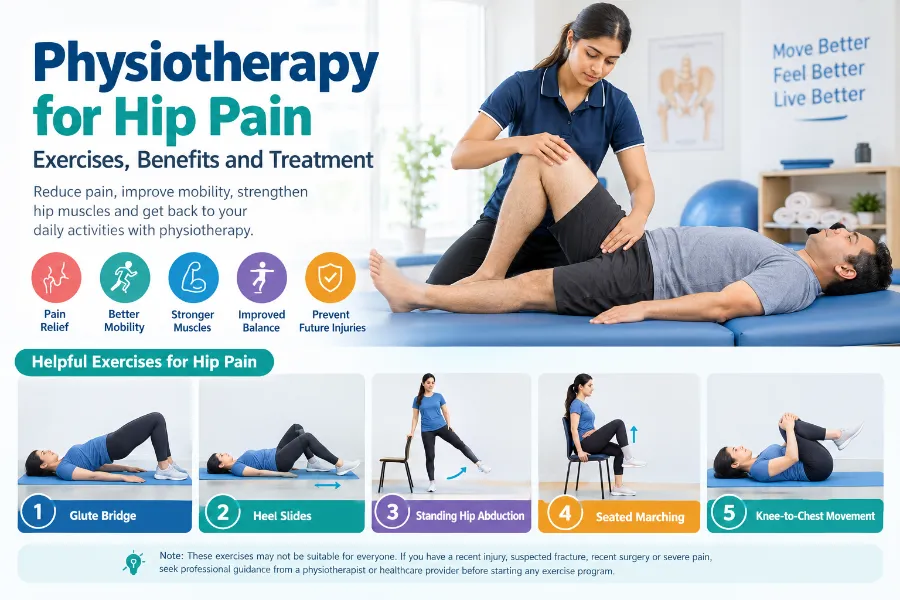
Physiotherapy for hip pain helps reduce discomfort, improve joint mobility, strengthen the muscles around the hip, and restore normal movement. A physiotherapist may recommend targeted exercises, stretching, manual therapy, and posture correction based on the cause of the pain.
Regular physiotherapy can help manage hip pain caused by arthritis, muscle strain, injuries, or other hip conditions and support a safe return to daily activities.
Table of Contents
What is Hip Pain?
Hip pain refers to discomfort or pain experienced in or near the hip area. The hip joint is where two bones connect. The hip joint links your thigh bone to your pelvic bones. Your hip joint is used continuously for movement, weight support, and balance maintenance. It could be a medical concern that requires attention. Which part of the patient’s hip joint is impacted? The patient may feel aching in their hip.
Close to the surface, located above or around your hip (often resulting from issues with muscles, tendons, or ligaments).
Deeper into cartilage and bones.
In the lower back. Hip discomfort may sometimes migrate to other locations, such as the lower back or groin area.
The pain could come and go. For example, you may suffer hip pain or discomfort when walking or moving, but it improves with rest. Certain patients experience pain at different times of the day. When you first wake up in the morning, you can feel greater discomfort.
Causes of Hip Pain
- Labral tears
- Hip impingement
- Hip bursitis.
- Muscle strains
- Tendonitis
- Sciatica
- Referred pain (comes from the lower back but is felt in the hip)
- Arthritis
- Arthritis causes discomfort and inflammation in the joints. Hip osteoarthritis is prevalent. It produces symptoms such as pain, swelling, and stiffness.
- Osteoarthritis.
- Rheumatoid arthritis.
- Ankylosing spondylitis.
- Bursitis
- Bursitis is a condition that involves painful swelling of a small, fluid-filled sac called a bursa. Bursae are small sacs that help reduce friction and cushion the spaces between bones and other tissues. Hip bursitis happens when the bursa located in the hip area becomes inflamed and swollen.
- Iliopsoas bursitis.
- Trochanteric bursitis.
- Injuries
- Damage to the elements of your hip joint can result in discomfort. Hip injuries are typically caused by:
- Repetitive strain injury.
- Sports injuries.
- Traumas such as falls or car crashes.
- Most common injuries that lead to pain in the hip joint are:
- Hip muscle injuries (particularly flexor strains).
- Iliotibial band syndrome.
- Hip labral tears.
- Bone fractures refer to broken bones.
- Hip dislocations.
Signs that you may benefit from physiotherapy for hip pain
- It can be challenging to determine when hip pain needs treatment.
- Pain while walking or during activity.
- Stiffness or a reduced ability to move your hip freely.
- Pain that lasts or gets worse over time.
- Pain that occurs with specific movements, such as climbing stairs or sitting for extended periods.
- Weakness, instability, or a feeling that your hip might “give out.”
- Pain that spreads from your hip to your thigh, groin, or lower back.
- Chronic pain that lasts for a few weeks or months.
Personalized care plays a key role in effectively addressing various forms of hip pain.
Physiotherapy for hip pain varies from person to person.
The treatment approach depends on the cause of the patient’s hip pain.
- If a person has joint pain or arthritis, therapy focuses on exercises that reduce stiffness, improve joint mobility, and strengthen the muscles that support the hip.
- For soft tissue injuries, physiotherapy includes exercises that strengthen muscles and stretch the affected areas to support healing and prevent further damage.
- If you have hip impingement or structurally related problems, treatment aims to increase joint mobility, build muscle strength, and reduce pressure on the hip.
How can physiotherapy help with hip pain?
Personalized care plays a key role in effectively addressing various forms of hip pain.
However, staying active, even if there is some discomfort, is often one of the most effective ways to address the cause of the pain and prevent it from continuing.”
Physiotherapists use different methods such as exercises, education, and adjustments to daily activities to treat hip pain. A major part of this treatment is exercise therapy, which involves a tailored program of exercises aimed at reducing pain and managing health conditions. At Hinge Health, physiotherapists offer customized exercise therapy as a central part of their treatment approach, highlighting that movement is a key form of treatment.
What to expect at physiotherapy for hip pain
The primary objective of physiotherapy for hip pain is to decrease pain and enhance the function of the hip joint. This is achieved by increasing mobility, improving joint function, and strengthening the muscles surrounding the hip. In addition to easing pain, physiotherapy helps you keep or get back the ability to carry out everyday tasks and reach your personal goals. Your physiotherapist will lead you through exercises and methods aimed at helping you achieve these results.
A personalized assessment is the first step.
Your physiotherapist will ask about your symptoms, past medical issues, and how you move. This helps them understand how your hip pain affects your life and create a tailored treatment plan.
Strengthening exercises are part of therapy.
Your therapist will show you specific exercises designed to build strength around the hip joint. This helps to improve support and stability in the hip area.
Stretching and mobility exercises are also used.
These help increase flexibility and movement in the hip and surrounding areas, reducing stiffness and improving overall function.
Balance and stability training are included to help you stay steady and coordinated.
This lowers your risk of falling and protects against future hip injuries.
Education is a vital part of physiotherapy.
Your therapist will teach you about managing hip pain, including ways to take care of yourself at home, make changes to your daily routines, and use exercise as a tool to manage pain.
Pain relief techniques may also be recommended.
Your physiotherapist might suggest using heat or cold, or performing certain movements to help ease pain during or after activities.
Physiotherapy Treatment For Hip Pain
Pelvic tilt
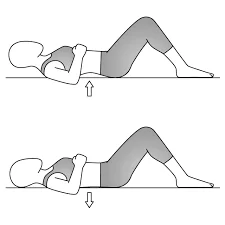
- In a neutral position, lie on your back on the ground. Bend the patient’s knees and keep your toes pointing forward.
- Pull your belly button toward your spine, letting your tailbone tilt forward as the gap beneath your lower back shrinks.
- Tighten the patient’s glutes and hold for 5 seconds.
- Relax and return to a neutral spine.
Hamstring Stretch
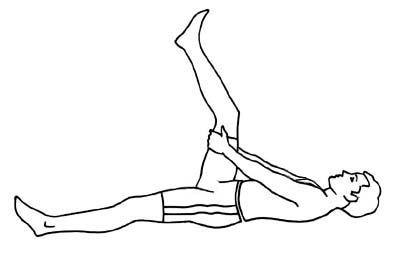
- Lie flat on the ground with both the patient’s knees bent.
- Lift one leg off the floor and bring the knee close to your chest.
- Place your hands behind your thigh, just below the knee.
- Slowly straighten your leg and pull it gently toward your head until you feel a stretch.
- If you can’t clasp the patient’s hands behind your leg, loop a towel around your thigh.
- Hold onto both ends of the towel and pull your leg toward you.
- Hold this position for 30 to 60 seconds, then relax for 30 seconds.
- Repeat on the other leg, then do the entire sequence four times.
Leg raises (lying down)
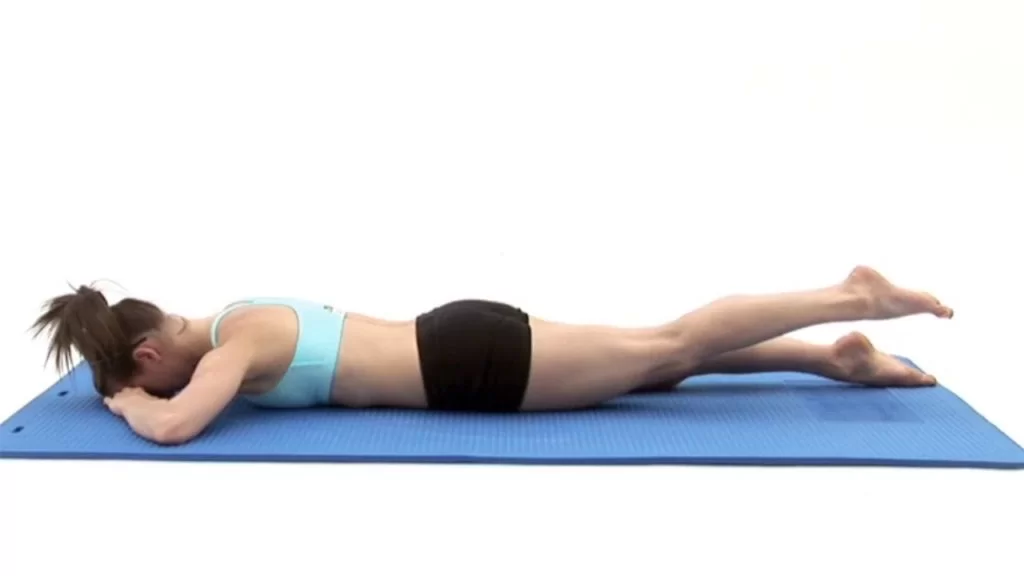
- Lie face down, or turn your head to one side if that’s more comfortable.
- Tighten your stomach and buttock muscles, then raise one leg slightly off the ground while maintaining your hips flat.
- Hold this posture for 5–10 seconds and repeat three times.
.
Hip abduction
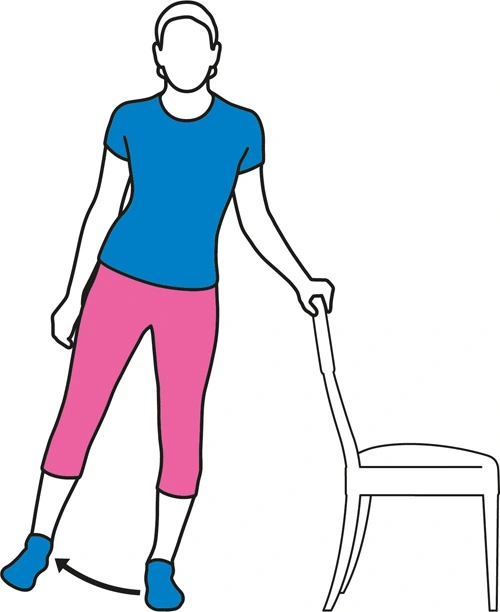
- Stand up straight.
- If required, provide support using a firm surface such as a wall, table, or chair.
- Begin with the patient’s feet together and raise your right leg out to the right side. Keep the left leg straight and avoid turning your hips.
- Hold the position for five seconds and then gradually bring the leg back to the starting position.
Squats
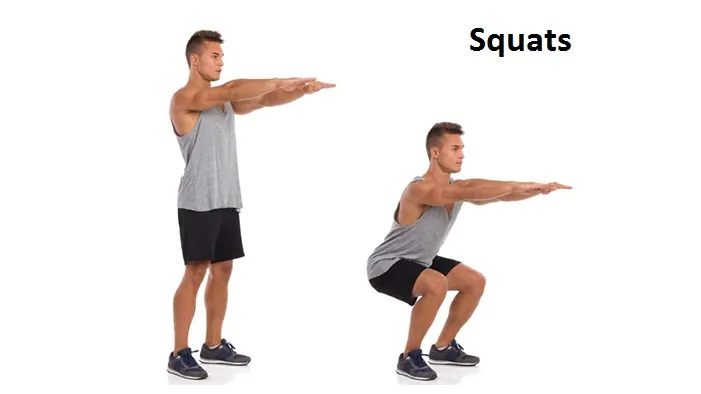
- Bend down until your kneecap is directly above your big toe. Make sure the patient’s knees do not extend beyond their toes. Return to your normal standing position.
- Continue this movement until you feel fatigued, then rest for one minute.
- Repeat the exercise two more times. As your strength improves, attempt to lower yourself a bit more, but avoid bending your knees past a 90-degree angle.
Frankenstein walk
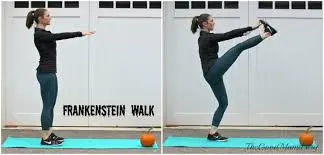
- Position yourself with the patient’s arms stretched out in front of you, hands facing down.
- Raise your right leg upward and outward, creating a 90-degree angle with your body.
- Gently lower the patient’s right leg to the floor, then repeat the same motion with your left leg.
- Continue for one minute, shifting directions if space is restricted.
- You can perform two or three sets of ten to twelve reps each leg.
Hip extension
- Stand straight, legs straight and feet shoulder-width apart.
- Extend both arms out in front and sit on a chair, table, or wall for support.
- Lift the left leg backward while keeping the right leg straight. Do not bend the knee.
- Lift the leg as far as possible without creating pain, then tighten the buttocks and hold the posture for 5 seconds.
- Switch legs and repeat the previous steps on the other leg.
Sidestep exercise
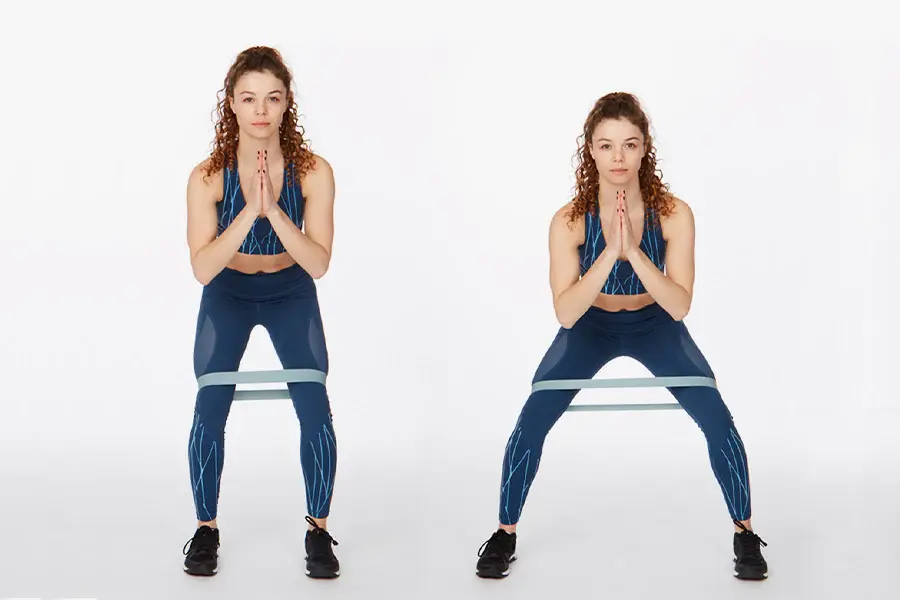
- Position yourself in a half-squat stance with a resistance band placed around your lower thighs
- Step sideways in small, controlled movements, engaging your hip muscles throughout.
- Take between eight and fifteen steps in a single direction.
- Then repeat on the opposite side.
Clamshell exercise
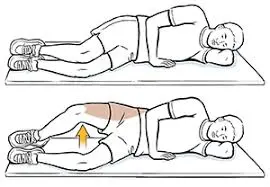
- Lie on your side, bend your knees, and place a resistance band around your lower thighs.
- Move your upper leg upward as far as you can, then hold the position for a moment.
- Return to the starting position.
- Perform 1-3 sets of 8–15 repetitions.
Knee lift
- Stand up straight, with a chair, wall, or table for support if required.
- Lift the right knee toward the chest while keeping the left leg straight.
- If possible, lay both hands on top of the knee to help draw it inside toward the chest.
- Hold the stretch for ten seconds.
- Let go of the knee area and slowly drop the right leg to the ground.
- Switch legs and repeat the previous steps on the other leg.
Hip marching
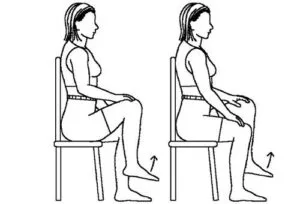
- Sit at the front edge of a chair.
- Lift your left leg as high as possible while ensuring the patient’s knee remains bent.
- Lower your foot slowly and with control.
- Then complete the right side.
- This is one repetition.
- Perform 2-3 sets of 5–12 repetitions.
Hip circles
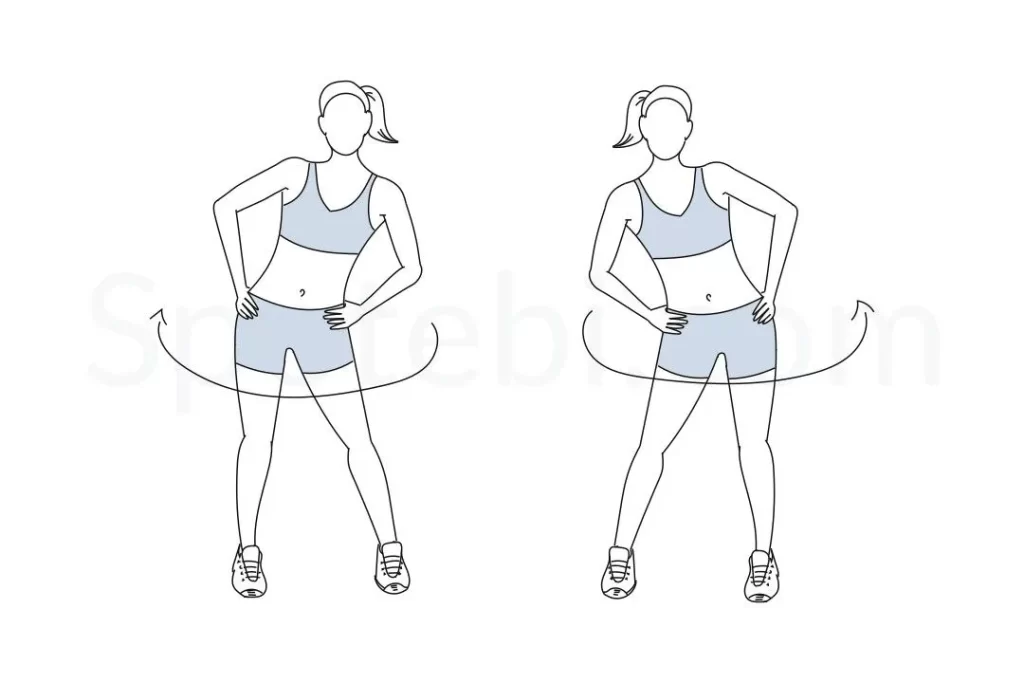
- Position yourself so that you are standing on the patient’s right leg, with your left leg raised.
- Move your left leg in circles.
- Create 20 circles in each direction.
- Repeat with your right leg.
- You can perform two or three sets of ten to fifteen reps on each leg.
Butterfly Stretch
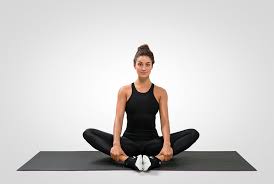
- Sit down on the ground with both legs stretched out in front of you.
- Bend the patient’s knees and slowly bring the soles of their feet together
- Place one hand on each knee and slowly press them towards the floor. Apply pressure to the knees until they stretch, but don’t go beyond what feels comfortable.
- Some people may like to lengthen the stretch by leaning forward at the waist while maintaining the back straight.
- Stretch for 15 to 30 seconds, then take a rest.
How can I prevent hip pain?
- Wear the appropriate protective gear.
- If your hip hurts during or after exercise, don’t “play through the pain.”
- Allow your body to relax and heal following strenuous exertion.
- Before participating in any physical activity, it is important to stretch and warm up your body
- After exercise, cool down and stretch.
- To lessen your chance of harm, follow these general safety precautions.
- Keep your house and workstation clean of clutter that might trip you or others.
- When reaching for items at home, make sure to use the correct tools or equipment. Avoid standing on furniture such as chairs, tables, or countertops.
- Use a cane or walker if the patient has trouble walking or is at risk of falling.
FAQs
What type of exercise is best for your hips?
The glute bridge is the best exercise for total hip strength and stability, since it safely targets the glutes and lower back to assist hip extension.
Glute Bridge: Lie on your back, knees bent and feet flat on the floor, then lift your hips.
Standing Hip Abduction: To strengthen the outer hip stabilizers, balance on a chair and pull one leg out to the side.
Squats: Perform a controlled squat to build fundamental strength across your whole lower body and hips.
What are the indicators of a weak hip?
Weak Hip Abductors: Symptoms, Causes, and Treatment Options…Weak hips are characterized by an uneven walking stride, knees that cave inward during a squat, and poor single-leg balance.
Walking and Posture Signs
When walking, you bend your upper body over the standing leg to decrease the strain on your weak hip muscles.
Short stamina or fatigue: Short hikes, climbs, or ordinary duties can rapidly weary your hips and outer glutes.
What vitamin is excellent for your hips?
Vitamin D and vitamin K are the important vitamins required for hip and bone health.
Vitamin D: This essential mineral aids in calcium absorption, allowing your body to grow and maintain healthy hip bones. It also strengthens the surrounding muscles, lowering your chance of falling and fractures. You may obtain it via sunshine, fatty fish, fortified meals, or from the GoodRx Bone Health Guide.
Vitamin K stimulates certain proteins needed to maintain bone density and normal bone metabolism in the hip joint. It is present in leafy greens and fermented foods.
Is too much walking bad for your hips?
Walking excessively is usually not harmful to healthy hips, but walking too much or increasing the distance suddenly can put stress on your joints and muscles, especially if you already have conditions such as mild arthritis or muscle imbalance.
What is the main reason for hip pain?
The primary cause of chronic hip pain is osteoarthritis, a type of degenerative joint disease that occurs due to the natural wear and tear of aging.
This condition leads to the breakdown of the cartilage that normally cushions the joint, resulting in pain and discomfort.
References
- Professional, C. C. M. (2026, April 23). Hip pain. Cleveland Clinic. https://my.clevelandclinic.org/health/symptoms/21118-hip-pain
- Lillis, C. (2025, August 13). Exercises and stretches for hip pain. https://www.medicalnewstoday.com/articles/325029
- Cronkleton, E. (2025b, July 3). 14 Exercises for strengthening and increasing mobility in the hips. Healthline. https://www.healthline.com/health/hip-exercises#warmup-exercises