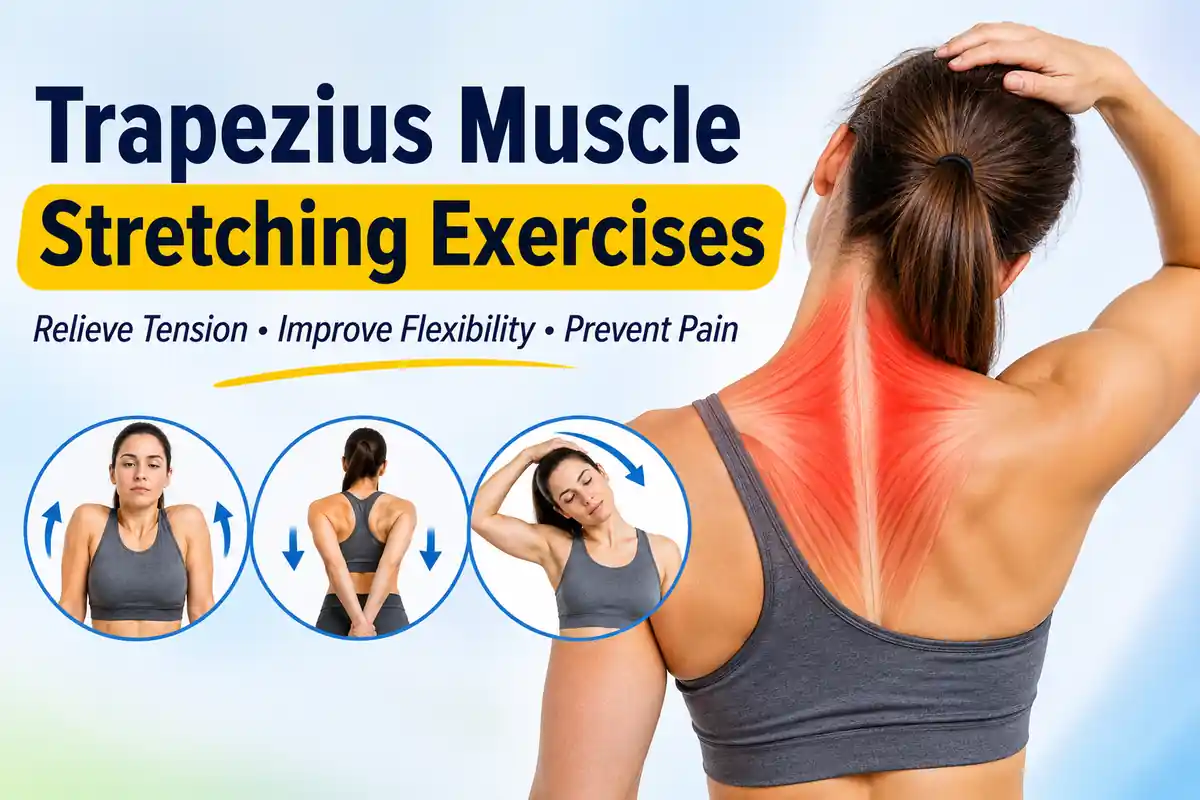
Trapezius Muscle Stretches – A Complete Guide for Relief
Table of Contents
Introduction
Stretching your trapezius muscles is an effective way of reducing muscle tightness, improving mobility within your neck and shoulders, and helping you to maintain good upper body posture. This muscle is important for controlling the movement of your shoulder blades, neck support, good posture, and performing everyday tasks.
Many people suffer from tightness within the trapezius muscle due to long periods of sitting, poor posture, excessive mobile phone use, long hours of work, repetitive shoulder movements, stress, and incorrect exercise technique. Prolonged periods of using your computer or looking down at your mobile phone can create constant tension within your neck and upper shoulders, which can lead to stiffness, discomfort, reduced mobility, and trigger points within the upper trapezius.
If this muscle becomes tight, then you can start to suffer from discomfort in your neck, shoulders, and upper back. Some people may also suffer from tension headaches due to the tension in their neck muscles.
Stretching your trapezius regularly can help with increasing your flexibility and reducing any feelings of stiffness. Simple stretches such as upper trapezius stretches, levator scapulae stretches, shoulder rolls, cross-body shoulder stretches, and doorway stretches can be added to your daily mobility routine.
However, sometimes stretching may not be enough to relieve the discomfort you may be suffering from. If your muscles are weak, you have poor ergonomics in your workspace, repetitive movements, and lack control of your shoulder blades, this can contribute to your symptoms. Combining gentle stretches with strengthening exercises, good posture, and regular movement breaks can help relieve your symptoms in the long term.
In this article, we will look at the anatomy of the trapezius muscle, what causes tightness, the best stretches to perform, benefits, how to perform them correctly, and precautions.
What is the Trapezius Muscle?
It is commonly referred to as the trap and is responsible for many movements within your neck, shoulders, and shoulder blades.
1. Upper Trapezius
A large muscle that starts from the bottom of the skull and cervical spine.
Main functions:
- Elevates the shoulder blades.
- Assists with upward rotation of the scapula.
- Helps stabilise the neck and shoulders.
- Assists with neck extension and lateral flexion.
- Assists with shoulder movement during overhead movements.
This muscle is often tight in people who work in an office, students, drivers, and those who use their mobile phones frequently.
2. Middle Trapezius
Main functions:
- Retract the shoulder blades.
- Helps stabilise your upper back.
- Assists with controlled shoulder movements.
If this muscle is weak or not activating properly, you may suffer from rounded shoulders and lack of control of your shoulder blades.
3. Lower Trapezius
Connects to the medial end of the scapula’s spinous process after emerging from the lower thoracic spine.
Main functions:
- Depresses the shoulder blades.
- Assists with upward rotation of the scapula.
- Helps stabilise the shoulder blade during arm elevation.
- Helps with good shoulder function.
This muscle works together with the upper and middle trapezius to provide controlled shoulder blade movement.
Common Causes of Trapezius Tightness
There are many reasons why you can suffer from tightness within your trapezius muscle. Identifying them can help you know what activities may need to be adjusted.
- Poor Posture
One of the most common reasons for trapezius discomfort is poor posture. Poor posture can involve rounded shoulders, forward head posture, and poor posture within your upper back.
Causing fatigue, stiffness, and discomfort. - Prolonged use of Computers
People who sit at a desk for long periods of time can suffer from tightness within their trapezius muscles due to lack of movement and prolonged shoulder positioning.
Common causes include:
Having your monitor too low.
Shoulders shrugged whilst typing.
Reaching forward over the keyboard.
Long periods of work with no breaks.
Making changes to your workstation and taking regular breaks can help reduce unnecessary muscular strain. - Excessive Mobile Phone Use
Looking down at your smartphone for long periods can cause increased strain on your cervical and upper back muscles.
This can cause forward head posture and discomfort in the upper trapezius. - Stress
Some people will raise their shoulders continuously when feeling anxious or stressed, causing increased feelings of tightness in the upper trapezius.
Practising relaxation techniques, controlled breathing, and gentle shoulder mobility can help. - Repetitive Shoulder Movements
Continual lifting, carrying, pulling, and overhead movements can cause increased work in your trapezius.
This can include:
Carrying heavy bags on one shoulder.
Lifting things overhead repeatedly.
Repetitive gym exercises.
Working with your arms raised for long periods.
Repetitive manual work.
Ensuring you are having sufficient recovery and using correct exercise technique can help to reduce excessive muscular fatigue. - Weak Shoulder Blade Muscles
The trapezius works with other muscles such as the serratus anterior, rhomboids and rotator cuff muscles.
If these muscles aren’t working together well, then the trapezius may be compensating. - Incorrect Sleeping Position
Having an insufficient pillow or sleeping in an uncomfortable position with your neck can cause stiffness in your neck and shoulders in the morning.
Choosing a supportive sleeping posture that maintains your neck’s natural alignment may help minimize pain and stiffness. - Overtraining
Too much heavy shrugging of your shoulders, incorrect weight lifting technique, too much training and not enough recovery can cause excessive strain on your trapezius.
Gradually increasing the intensity of your exercises and using correct technique can help avoid unnecessary strain on your muscles.
Symptoms of Tight Trapezius Muscles
Depending on which area of your trapezius muscle is tight and the cause, you may suffer from various symptoms.
Common symptoms include:
- Tightness in upper shoulders.
- Neck stiffness.
- Pain between the shoulder blades.
- Neck pain when turning your head.
- Reduced lateral flexion.
- Tension in the upper trapezius.
- Muscle fatigue when performing overhead movements.
- Pain after carrying heavy bags.
- Tension at the base of the skull.
Some people may suffer from tension headaches due to shoulder and neck tension.
Note: If you are experiencing pain, tingling, numbness, or weakness travelling down your arm or hand, this may not be due to tight trapezius muscles. This could be due to nerve irritation or another issue. Please seek advice from a qualified health care professional.
Benefits of Trapezius Muscle Stretches
This can be particularly useful if you spend long periods of time sitting down, using a computer, or driving.
Important benefits:
1. Decrease muscle tension
Stretching the upper Trapezius can help decrease any feelings of tension.
If you suffer from stiffness due to being sat for long periods of time regularly stretching can help.
2. Improve neck mobility
Tension in the neck and shoulders can cause discomfort when moving the head in certain positions.
By performing gentle stretches, you can help improve mobility of the neck when:
- Rotating the neck.
- Side-bending the neck.
- Flexing the neck.
- Extending the neck.
This will help provide greater comfort during daily tasks.
3. Improve posture
Stretching tight muscles and strengthening the right muscles to maintain good posture can help improve the alignment of the upper body.
Combining stretching, strengthening, and making ergonomic changes will generally be more beneficial.
4. Improve shoulder mobility
Maintaining good flexibility and balance can help improve mobility when performing daily tasks.
5. Decrease postural discomfort
Gentle Trapezius stretches can help decrease any stiffness caused by sitting for long periods of time.
6. Decrease muscle tension
This can be particularly useful if you tend to raise your shoulders when under stress.
7. Functional daily tasks
Having good function of the Trapezius muscles can help you perform daily tasks such as carrying bags, lifting items, reaching overhead, and general household tasks.
Maintaining good flexibility and strength can help with these.
8. Improve upper back flexibility
Stretching the Trapezius and surrounding muscles can help improve flexibility in the upper back.
This can help improve comfort when performing tasks that require reaching, rotating, and adjusting your posture.
Best Trapezius Muscle Stretches
The following stretches will help stretch the Trapezius and surrounding muscles in the neck and shoulders. You can perform these at home, in the office or as part of physiotherapy exercises.
Try to keep the movements comfortable and do not force any extreme movements.
Most gentle stretches should be performed 2-3 times with a hold of 15-30 seconds. Adjust as needed and as advised.
1. Upper Trapezius Stretch
The Upper Trapezius stretch is one of the best basic stretches for anyone suffering from tension in the neck and upper shoulders.
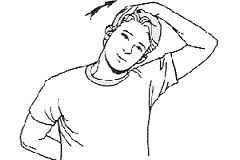
How to perform:
- Sit comfortably in a chair, keeping your back straight.
- Slowly tilt your head to the right.
- Ensure your left shoulder stays down.
- If comfortable, gently place your right hand over the left side of your head.
- Apply very light pressure to increase the stretch.
- Hold for 15-30 seconds.
- Slowly return your head to the neutral position.
- Repeat on the other side.
Recommended repetitions: 2-3 times per side.
Benefits:
- Stretches the upper trapezius.
- Improves side bending in the neck.
- Helps reduce feelings of tension in the shoulders.
- Improves mobility in the neck.
2. Levator Scapulae Stretch
It connects from the upper cervical spine to the upper medial border of the shoulder blade.
Although it is not part of the Trapezius muscle, it works closely with the Trapezius during neck and shoulder movements.
This stretch is useful if you suffer from tension around the upper medial part of the shoulder blade.
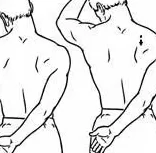
How to perform:
- Lay your feet on the ground and sit up on a chair.
- Make sure your shoulders are at ease.
- Turn your head slowly 45 degrees to the right.
- Gently glance down at your right armpit.
- Gently place your right hand on the back of your head.
- In order to get a comfortable stretch in the side and back of your neck, use little pressure.
- Hold for 15-30 seconds.
- Slowly return to the starting position.
- Repeat on the other side.
Recommended repetitions: 2-3 times per side.
Benefits:
- Stretches the levator scapulae.
- Improves neck flexibility.
- Helps reduce tension in the upper area of the shoulder blade.
- Improves mobility in the neck.
Top tip: Keep the movements slow.
3. Cross-Body Shoulder Stretch
This stretch will mainly target the posterior muscles of the shoulder, including the rear deltoid. It will also help encourage good mobility of the shoulder blades.
This can be a great additional stretch if you suffer from tension in the upper back and shoulders.

How to perform:
- Stand or sit comfortably, keeping your back straight.
- Ensure your shoulders are relaxed.
- Raise your right arm to shoulder height.
- Move your arm across your chest to the left.
- Rest your left palm lightly against the upper part of your right arm.
- Move your arm closer to your chest until you feel a comfortable stretch at the back of your shoulder.
- Hold for 15-30 seconds.
- Slowly release the stretch.
- Repeat on the other side.
Recommended repetitions: 2-3 times per side.
Benefits:
- Stretches posterior shoulder muscles.
- Improves shoulder flexibility.
- Improves arm mobility.
- Can be used as an additional upper back mobility stretch.
Top tip: Do not pull directly on your elbow joint.
4. Shoulder Rolls
You can do this during breaks or as part of a warm-up.
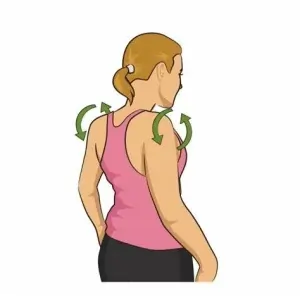
How to perform:
- Stand or sit comfortably, keeping your back straight.
- Allow your arms to hang by your side.
- Slowly raise your shoulders to your ears.
- Move your shoulders backwards in a circle.
- Gently lower your shoulders.
- Keep the movements slow and controlled.
- Repeat this movement the other way.
- Recommended repetitions: 10-15 times per side.
Benefits:
- Improves shoulder mobility.
- Encourages relaxed movement of the shoulders.
- Increases awareness of shoulder positioning.
Top tip: Keep the movements slow and controlled. Do not overdo the movements. Do not force your shoulders up.
5. Chin Tuck
This exercise is often used to increase awareness and control of the deep neck muscles.
This is a great stretch to use as an additional stretch for those with forward head posture.
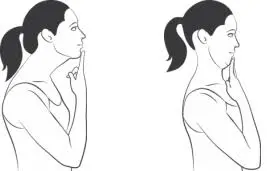
How to perform:
- Sit up straight with your shoulders relaxed.
- Look straight ahead.
- Slowly tuck your chin back without looking down.
- Imagine creating a double chin.
- Keep your eyes looking straight ahead.
- Hold for 3-5 seconds.
- Slowly return to the starting position.
Recommended repetitions: 10 times.
Benefits:
- Activates deep neck flexor muscles.
- Encourages neutral head position.
- Improves control of neck muscles.
- Can be used as an additional corrective posture exercise.
Top tip: Do not look down. Keep the movement gentle, with your head gliding back.
6. Lateral Neck Stretch
This will help to increase flexibility of the lateral neck muscles, including the upper trapezius.
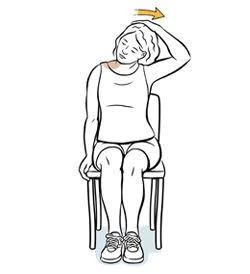
How to do:
- Sit comfortably in a chair, keeping both feet firmly supported on the floor.
- Sit up tall.
- Place your right hand either underneath the chair or by your hip.
- Slowly lean your head to the left.
- Make sure your right shoulder remains relaxed.
- The right side of your neck should start to slightly lengthen as you lean.
- Hold this for 15-30 seconds.
- Return to the start position.
- Repeat on the other side.
Recommended repetitions: 2-3x on each side.
Benefits:
- Helps to stretch the lateral neck muscles.
- Improves flexibility of the lateral neck.
- Helps relieve tightness in upper shoulders.
- Encourages your neck to stay in a relaxed position.
- Keep your chin pointed forward and do not twist your neck.
7. Sitting Thoracic Stretch
This will help to stretch the muscles between your shoulder blades and thoracic region.
This can be used alongside trapezius stretches, especially if you have hunched shoulders.
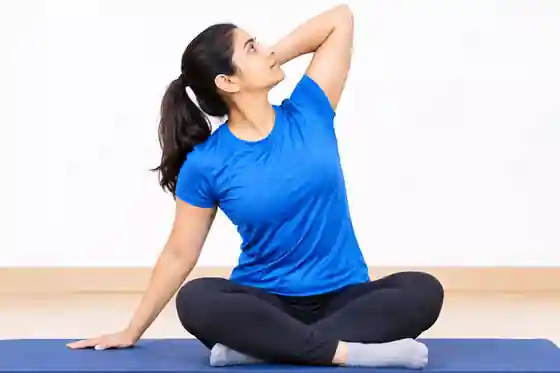
How to do:
- Sit upright on a chair with both soles resting comfortably on the floor.
- Stretch your arms out in front of you.
- Interlace your fingers together.
- Slowly reach your arms forward.
- Gently hunch your upper back.
- Allow your shoulder blades to separate.
- Ensure your head is relaxed and do not overextend your neck.
- Hold this position for 15-30 seconds.
- Return to the starting position slowly.
Recommended repetitions: 2-3x.
Benefits:
- Helps to stretch upper back muscles.
- Encourages shoulder blade movement.
- Improves upper back flexibility.
- Helps relieve stiffness from sitting for long periods.
8. Doorway Stretch
This stretch will help to stretch the pectoral muscles. It can be used alongside trapezius mobility exercises.
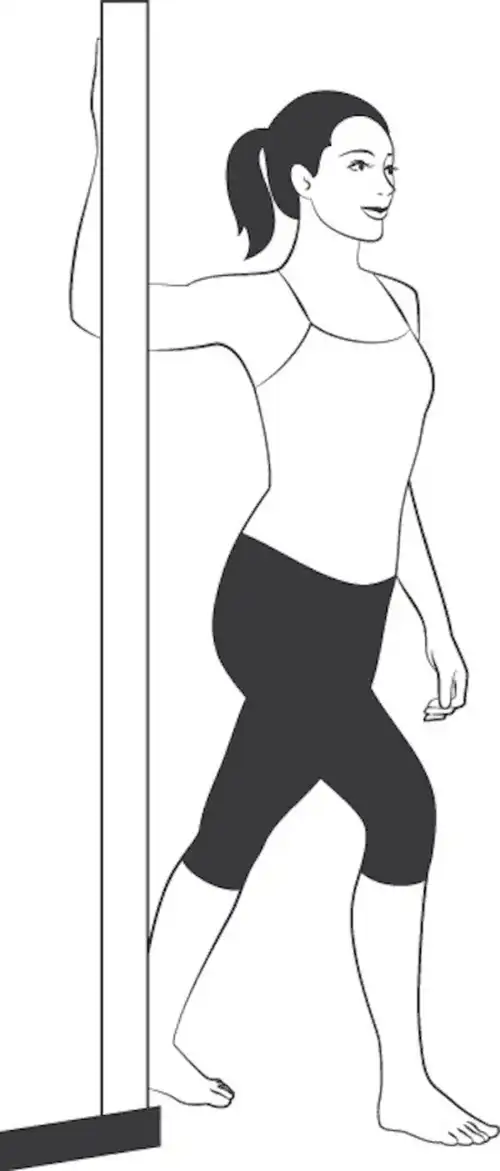
How to do:
- Stand in an open doorway.
- Bend your elbows to around 90 degrees.
- Place your forearms against the doorway.
- Ensure your elbows are around shoulder height.
- Place one foot slightly forward.
- Shift your weight slowly forward.
- Hold for 20-30 seconds.
- Return to the starting position.
Recommended repetitions: 2-3x.
Benefits:
- Helps to stretch your chest muscles.
- Improves chest flexibility.
- Helps create a comfortable shoulder position.
- Can be used alongside hunched shoulder correction exercises.
- Do not over-arch your lower back. Do not force your shoulders backwards.
9. Child’s Pose
A gentle yoga-based stretch that will help to stretch the back, shoulders, and surrounding muscles.
May help to increase comfort and flexibility in the upper back.
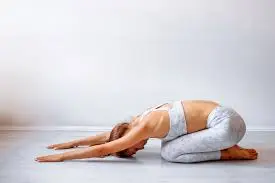
How to do:
- Ensure your hands are about shoulder-width apart.
- Slowly lean your hips backwards towards your heels.
- Reach your arms forward along the floor.
- Let your chest slowly descend toward the floor.
- Relax your shoulders and neck.
- Take slow and comfortable breaths.
- Hold for 20-30 seconds.
- Return to the starting position.
Recommended repetitions: 2-3x.
Benefits:
- Encourages shoulders to relax.
- Improves spinal mobility.
- Helps to increase overall upper body flexibility.
- Use a cushion under your hips/ chest if required.
10. Thread the Needle Stretch
A great mobility exercise to help improve mobility in the upper back, posterior shoulder, and surrounding muscles.
Encourages thoracic rotation and comfortable shoulder movement.
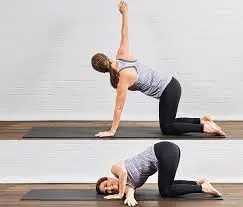
How to do:
- Start on your hands and knees.
- Make sure your hands are under your shoulders, and your knees are behind your hips.
- Lift your right hand off the floor.
- Allow your right shoulder and the side of your head to gently move closer to the mat.
- Ensure your hips are fairly steady.
- Hold for 15-30 seconds.
- Return to start position.
- Repeat on the other side.
Recommended repetitions: 2-3x on each side.
Benefits:
- Improve thoracic rotation.
- Stretch the posterior shoulder.
- Improve upper back mobility.
- Encourage shoulder blade coordination.
- Do not force your shoulder down. Keep movements comfortable.
11. Standing Wall Stretch
This is an excellent exercise for improving shoulder and upper back flexibility. It also encourages good posture.

How To Do:
- Stand up facing the wall.
- At shoulder height, place both hands on the wall.
- Take a few steps backwards, keeping your hands on the wall.
- Bend your hips forward.
- Lower your chest gently.
- Ensure that your back and neck are comfortable.
- Hold this position for 15-30 seconds.
- Slowly move back to the starting position.
- Repeat 2-3 times.
Benefits:
- Encourages good positioning of the upper body.
- Can pair well with trapezius flexibility exercises.
Tips: Don’t overarch your lower back.
12. Neck Rotation Stretch
This gentle exercise helps encourage good range of movement of your cervical spine.
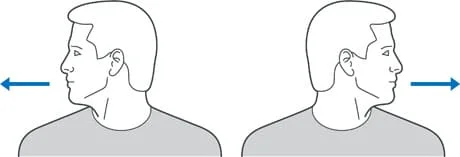
How To Do:
- Sit up straight with relaxed shoulders.
- Gently rotate your head to the right.
- Look over your right shoulder as far as you comfortably can.
- Hold this position for 5-10 seconds.
- Gently return to the central position.
- Repeat on the left.
- Repeat 5-10 times.
Benefits:
- Helps encourage gentle movement of the cervical spine.
- Can help reduce stiffness from long periods of sitting.
- Can pair well with upper trapezius stretches.
Tips: Don’t push yourself or rotate your neck quickly.
13. Shoulder Blade Squeeze

How To Do:
- Sit or stand up straight.
- Relax your arms by your sides.
- Squeeze your shoulder blades together.
- Don’t lift your shoulders towards your ears.
- Hold this position for 3-5 seconds.
- Gently release.
- Repeat.
- Repeat 10-15 times.
Benefits:
- Activates the middle trapezius.
- Strengthens the scapular retractors.
- Improves control of shoulder blades.
- Helps build muscle endurance in posture muscles.
Tips: Don’t over-squeeze your shoulder blades. Keep your neck relaxed.
14. Neck Stretch
This stretch can be done whilst lying down. This can help provide good support. If you struggle to do neck stretches whilst sitting, this can be a comfortable option.
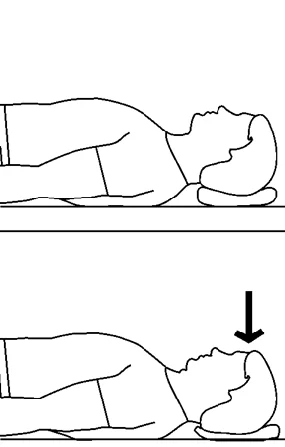
How To Do:
- Lie down on a comfortable exercise mat.
- Support your head.
- Gently tuck your chin in.
- Relax your shoulders.
- Hold this gentle position for 5-10 seconds.
- Return to the normal position.
- Repeat 5-10 times.
Benefits:
- Encourages neutral neck positioning.
- Activates deep neck muscles.
- Encourages gentle control of the cervical spine.
- Can provide support for those not able to do exercises when seated.
Tips: Don’t push the back of your head into the mat.
Stretching and Strengthening – Which is best?
Stretching and strengthening are both important for keeping your neck and shoulders healthy.
Stretching will help improve flexibility and ease muscle tightness, whilst strengthening will help improve muscle strength, stamina and control.
A small amount of stretching may help relieve tightness in your trapezius muscles caused by sitting for long periods or repetitive tasks, but strengthening may also be required if your scapular muscles are weak or lack stamina.
How to avoid tight trapezius muscles
There are a few ways you can avoid tight trapezius muscles. Your daily activities, workstation, exercise form, and physical activity can all cause tightness in your neck and shoulders.
Top tips include;
- Sit correctly
- Sit up comfortably. Try to make sure that;
- Your head is set comfortably above your shoulders.
- Keep your chin tucked in and do not keep it poking out.
- Shoulders are relaxed.
- Lower back supported.
- Feet on the floor.
- You do not need to sit in any particular position; just try to move regularly.
- Set up your computer workstation
An incorrect workstation can cause extra strain on your neck and shoulders.
Try to;
- Have the computer at eye level.
- Keyboard close to you.
- Mouse within easy reach.
- Elbows comfortably by your side.
- Avoid raising your shoulders.
- Making these small changes will help reduce strain on your muscles.
- Move regularly
- Try to get up and move regularly.
- Try to get up every 30-60 mins to;
- Roll your shoulders.
- Twist your neck.
- Tuck your chin in.
- Circle your arms.
- Gently stretch your upper back.
- Even small amounts of movement will help reduce stiffness.
- Avoid carrying heavy bags on one shoulder
- This can cause extra strain on your upper trapezius.
- Use a backpack with two straps. Keep the weight manageable and even.
- Practice correct exercise technique
- Incorrect technique when lifting weights can cause extra strain on your neck and shoulders.
- When exercising your shoulders;
- Avoid shrugging your shoulders too much.
- Use manageable resistance.
- Move slowly and with control.
- Avoid jerking or swinging.
- Give your muscles enough rest between sessions.
- If you are experiencing any sharp or increasing pain, stop and check your technique.
- Sleep comfortably
- Make sure it helps you keep your neck in a relatively neutral position.
- Reduce stress
Stress can cause you to tighten your shoulders and neck unconsciously.
Try;
- Deep breathing.
- Gentle yoga.
- Walking.
- Relaxation techniques.
- Physical activity.
- To help reduce extra strain on your muscles.
- Be physically active
- Being physically active will help keep your muscles healthy.
- Try walking, swimming, strength training, and gentle mobility exercises.
- Pick something to suit your fitness and physical ability.
Common Mistakes to Avoid
Whilst these stretches are generally easy to perform, incorrect technique can cause increased discomfort and unnecessary strain on your neck.
1. Pulling your head too hard
Too much force may be applied with your hands during upper trapezius/levator scapulae stretches.
This can cause unnecessary strain on your cervical spine and surrounding structures.
Correct technique: Apply light pressure only when necessary. Your stretch should be easy and not cause any pain.
2. Raising opposite shoulder
When performing your side neck stretch, some people will unknowingly raise their opposite shoulder.
This will decrease the effectiveness of your stretch. Correct technique: Relax your opposite shoulder and keep it low.
3. Holding your breath
This will cause unnecessary tension in your muscles.
Correct technique: Take slow, steady breaths.
4. Over-stretching
Over-stretching to get the most out of your stretch can irritate sensitive muscles and joints. Correct technique: Start with an easy range and gradually improve your flexibility.
5. Pain
Whilst it is normal to feel your muscles stretch, if you are experiencing sharp pain, burning, pins and needles, or numbness, then this is not appropriate. Correct technique: Stop the exercise.
6. Moving too quickly
Moving too quickly can limit your control and cause unnecessary strain. Correct technique: Move slowly through your stretches.
7. Not strengthening
Just stretching may not be enough, as your muscles may be weak and there may be poor control of your shoulder blades. Correct technique: Include strengthening exercises for your mid and lower trapezius, rhomboids, serratus anterior, and other relevant muscles.
Who Can Benefit From Trapezius Stretches?
The following groups of people can benefit from trapezius stretches:
Office Workers
Those who sit in front of a computer for long periods of time may develop stiffness in the neck and shoulder area.
Taking regular breaks, stretching your upper trapezius, and rolling your shoulders can help keep you comfortable.
Students
Those who spend long periods of time studying, writing, or using their mobile phone may feel discomfort.
Keeping your posture comfortable during study and taking gentle stretching breaks can help.
Drivers
Those who drive long distances may have a fairly static position for their head and shoulders.
Taking gentle neck mobility exercises and taking regular breaks can help.
Gym Goers & Athletes
Those who undertake weight training, swimming, throwing, and overhead exercises put stress on the trapezius muscle.
Doing a variety of mobility, strengthening, and recovery exercises can help keep your shoulders healthy.
Older Adults
With age, decreased activity, and stiffness in joints, you may experience decreased mobility in your neck and shoulders.
As long as they are comfortable and suited to your health and physicality.
When Should You Avoid Trapezius Stretches?
Not all neck and shoulder pain will benefit from trapezius stretches.
Avoid or adapt your stretches if you have:
- Recent injuries to your neck or shoulder.
- Severe or unexplained neck pain.
- Suspected muscle tear.
- Recent surgery to the cervical spine (without medical advice).
- Pain getting worse whilst doing stretches.
- New pins and needles in arm.
- Severe weakness in arm/hand.
- Dizziness or strange sensations when moving your neck.
- If you have severe, chronic, worsening neck pain or neurological symptoms, seek medical advice.
- If you have neck or shoulder discomfort with chest pain, shortness of breath, sudden severe pain, or numbness, seek medical advice. If your symptoms began after an accident or fall, it is important to seek professional advice.
- If your symptoms began after an accident or fall, it is important to seek professional advice.
Top Tips For Effective Trapezius Stretches
To help you get the most out of your stretches, do the following:
- Warm up – Take 3-5 minutes of gentle walking or shoulder movement.
- Avoid jerky movements – Do everything gently and smoothly.
- Be consistent – Do your stretches regularly rather than too much in one go.
- Breathe normally – Don’t hold your breath.
- Adapt – Use a chair, wall, or cushion to help.
- Keep your workstation ergonomically set up – Ensure your screen, keyboard, and chair are in the correct position.
FAQs
Can tight trapezius cause headaches?
Some people can also experience headaches due to musculoskeletal issues in their cervical spine. Not all headaches will be caused by tight trapezius.
Should I warm up my trapezius muscles?
Some people can benefit from warming up their muscles using either a warm shower or a nice warm compress. It isn’t necessary to warm up your muscles, however. Avoid over-warming, especially if there has been recent swelling.
Will strengthening help with tight trapezius?
Strengthening exercises may improve muscle endurance and scapula control. Resistance band rows, prone ‘Y’ lifts and wall angels can all be beneficial.
How long will it take to improve trapezius flexibility?
This can vary depending on the reason for tightness, how regularly you complete exercises, how active you are, and your individual circumstances. Some may feel more comfortable after completing some stretches; however, regular mobility and strengthening exercises may be required over a few weeks.
Can I massage my tight trapezius?
Gentle massage may provide temporary relief from feeling tense. Avoid pressing too hard on your neck, bony areas, and areas associated with numbness and tingling. If your symptoms persist or do not improve, seek an assessment from a qualified physiotherapist.
What are the best stretches for tight trapezius?
Some of the best stretches for tight trapezius include upper trapezius stretch, levator scapulae, side neck stretch (seated), shoulder rolls, and upper back stretch (seated).
References
- Hinge Health. (2026, September 9). 7 best trap stretches to loosen tight trapezius. Hinge Health. https://www.hingehealth.com/resources/articles/trapezius-pain-exercises/
- Stelter, G. (2026, October 13). Stretches to loosen your trapezius muscles. Healthline. https://www.healthline.com/health/fitness-exercise/trapezius-stretches]
- Assistant, W. (2026, April 15). The Ultimate guide to stretching your trapezius muscles. Brentwood Physiotherapy. https://www.brentwoodphysio.ca/ultimate-guide-stretching-trapezius-muscles/
- Foresite. (2026, June 12). Trapezius Muscle Pain Relief Exercises: A Complete Guide. MEDISTIK. https://medistik.com/blogs/pain-management/trapezius-muscle-pain-relief-exercises?srsltid=AYCX9vJX1kaSBq9Bw1WTXZVyKa2xw1zaqzXfgX1-hW6qsGuP-oV35Tk9