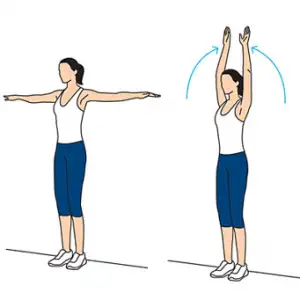
Home Exercises for Upper Crossed Syndrome
Table of Contents
Introduction
A muscular imbalance known as Upper Crossed Syndrome occurs when certain muscles are very tight (overactive), and others are excessively weak (underactive).
People who sit slouched for extended periods of time may acquire this imbalance. The good news is that there are particular workouts that can help with this condition; we’ve listed seven of them below.
Rounded shoulders, thoracic kyphosis, and forward head position are the hallmarks of this condition.
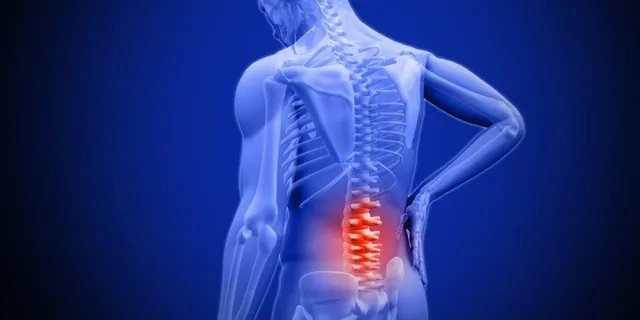
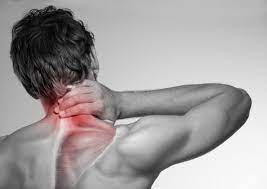
Upper crossed syndrome may cause range of motion restrictions, shoulder and neck pain, and an unattractive postural appearance.
Long-term bad posture over time typically causes upper crossed syndrome. Physical therapy and at-home workouts can typically alleviate pain.
When the muscles of the neck, shoulders, and chest become malformed, usually due to poor posture, it’s called upper crossed syndrome (UCS).
The levator scapulae and upper trapezius, two back muscles of the shoulders and neck, are often most affected. At first, they become extremely agitated and anxious. Next, the front of the chest’s main and minor pectoralis muscles contract and shorten.
When these muscles are overused, the surrounding counter muscles become weak and underused. The extremely active and underactive muscles may then collide to produce an X shape.
Upper Crossed Syndrome-related muscles
Weak muscles:
- Middle and lower trapezius
- Deep neck flexors
- Serratus Anterior
Tight Muscles:
- Upper trapezius
- Levator scapulae
- Suboccipital muscles
- Sternocleidomastoid
- Pectoralis major and minor
Upper Crossed Syndrome Causes
- Sitting slumped over for an extended period of time
- Extended use of mobile devices and computers
- Repetitive physical labor and bad posture might exacerbate this condition.
Upper Crossed Syndrome Symptoms
- Forward Head Posture
- Rounded upper back (kyphosis)
- Elevated and protracted shoulders
- Scapular winging
- Decreased neck range of motion
- Pain
- Headache
7 Upper Crossed Syndrome Corrective Exercises
Sternocleidomastoid (SCM) stretch
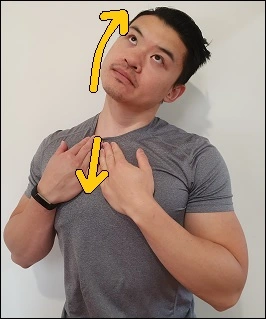
- Grasp the middle part of your left SCM muscle with your right thumb and fingers until you feel a sensitive or sore place in the muscle belly.
- For fifteen seconds, hold this position.
- Let go of this place and raise your thumb and fingers one fingerbreadth.
- As you proceed along the muscle, hold each location again until you reach the top of the muscle.
- On the right SCM, repeat.
Reduce the pressure you’re applying if this approach causes you a lot of pain. Additionally, when using this technique, move away from the neck’s midline if you feel a pulse in the middle of your throat.
Thoracic Twists
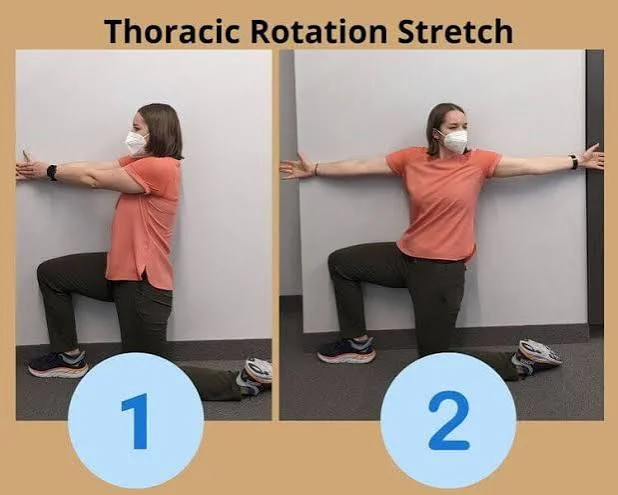
- Drop to both knees while keeping your butt in touch with the heels of your feet.
- The other is placed on the back of the upper part of the back of the ground.
- Twist your body so that the extended arm makes contact with the elbow of the arm that is resting on your head.
- Now, look up as your elbow lifts and rotate your body in the other direction to expand your upper back.
- You should aim for ten repetitions on each side.
- Make sure your hips don’t move as much as your upper back.
Chest Stretch
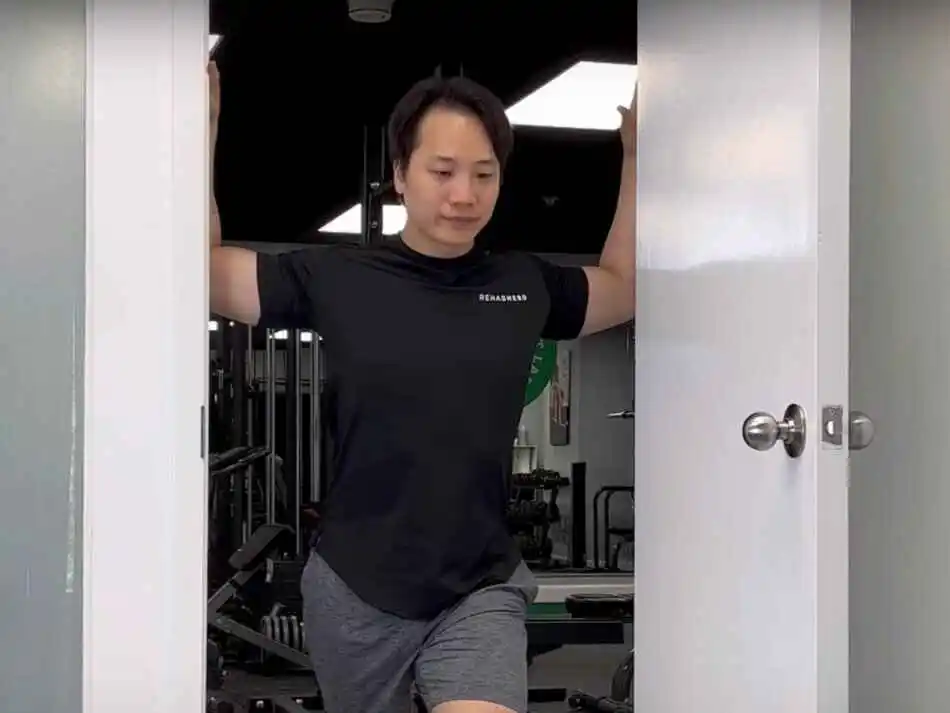
- Stretch one arm behind you while maintaining your palm positioned on the wall as you approach the wall.
- Bend forward now, slightly away from the outstretched arm.
- Your chest should feel stretched.
- Hold for thirty seconds.
- Stretch your chest along with your shoulders. Adjust your posture to strengthen the muscles in your chest.
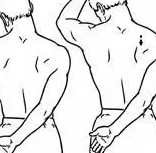
- To begin, place your right hand on the bottom of your chair and your left hand on the back of your head.
- Turn your head to look behind your left arm.
- Then, gently lower your head down toward your left armpit with your left arm until the right side of your neck begins to slightly extend.
- For 15 to 20 seconds, maintain this position.
- Go to the other side.
- Try stretching on each side three times.
Chin Tucks
This exercise will be working and develop the deep cervical muscles, which are located at the front of your neck.
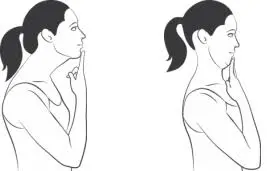
- Gently tuck your chin in and pull your head back. Keep your fingers tucked into your chin at the same moment.
- For approximately three to five seconds, maintain the end position.
- Let your neck come forward and rest for a time.
- Try for two to three sets of ten repetitions.
There should be packing in front of your neck, and you should feel as though the rear of your neck is “pulling up” or extending.
Supine Chin Tucks
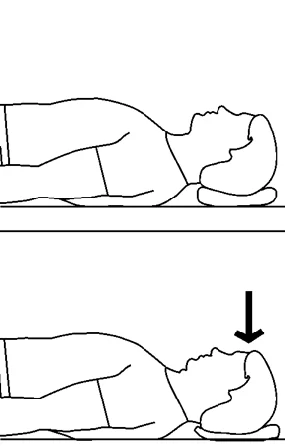
- While lying on your back, do a chin tuck.
- From this tucked posture, carefully move your head approximately three to four inches off the floor, bed, or other surface.
- Move to the starting position after keeping this position for five seconds.
- Work that way up to 20–30 repetitions, starting with 10.
- Remember to breathe while doing this workout.
Prone Y Raise
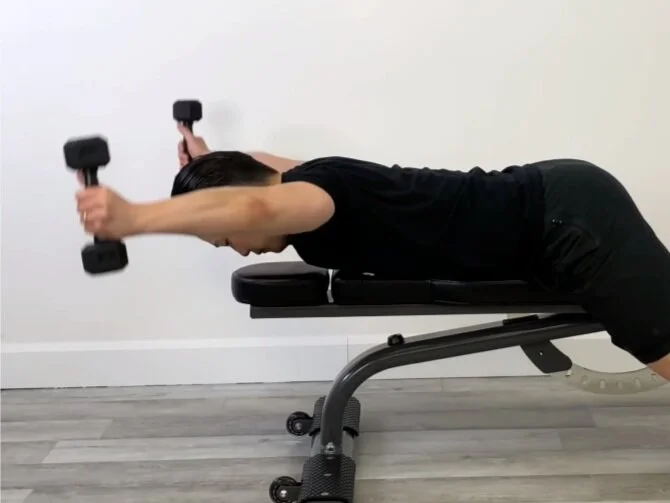
This exercise aims to stabilize your scapula and strengthen
- This exercise may be done on the side of a bed or while lying on your back on a large exercise ball with your arms straight down.
- With your thumbs up, stretch your arms to a 45-degree angle to form a Y shape with your body.
- After that, raise your arms to shoulder height.
- Now bring your arms down to the beginning position.
- Reduce to 2 by 10 inches
- Make sure not to arch your lower back when you lift your arms.
- Don’t shrug your shoulders.
Treatment options
Exercise, physical therapy, and chiropractic care are the available treatments for UCS. Typically, a mix of the three is advised.
Chiropractic corrections
Your joints may become misaligned as a result of the tense muscles and bad posture that induce UCS. These joints can be realigned with the assistance of a professional chiropractor. This may improve the affected regions’ range of motion. Additionally, the shortened muscles are often stretched and relaxed by an adjustment.
Physical therapy
They begin by teaching and counseling you about your illness, including the reasons behind it and how to prevent it going forward. We’ll demonstrate and perform exercises that you need to continue at home. Additionally, they use manual therapy, which involves using their hands to ease pain and stiffness and promote improved bodily movement.
How is the diagnosis made?
Your doctor will be able to identify several distinctive features of UCS. Among them are:
- The head is frequently positioned forward
- The spine curves inward at the neck
- The spine bends outward at the upper back
- The shoulders are rounded, extended, or lifted
- The visible portion of the shoulder blade is sitting out rather than lying flat.
Your doctor will make a diagnosis of UCS if you have these physical traits in addition to the symptoms.
Correcting Upper Crossed Syndrome
The ‘Cross’ and the Pattern
In the UCS pattern of imbalance across the shoulders and neck, underactive, lengthened deep cervical flexors, rhomboids, mid and lower trapezius, and serratus anterior muscles are crossed with overactive, shortened pectoralis major and minor, upper trapezius, levator scapulae, and often the sternocleidomastoid muscles.
Prolonged, rounded shoulders, a forward head, and an enlarged thoracic curvature are the obvious outcomes. Seldom do clients identify the disease when they first arrive; instead, they enter with a desk job, neck tightness, shoulders that crawl toward their ears, and a growing amount of time spent on screens and phones that reinforce everything.
Why It Matters Beyond Aesthetics
When a patient begins to press, pull, and reach under load, UCS significantly alters the way the shoulder complex functions. Modified scapular mechanics restrict the subacromial space and complicate overhead movement.
Additionally, when the chest compresses, it deteriorates breathing mechanics and worsen the headaches, neck tightness, and upper back tiredness that clients complain about. It’s not merely to correct the pattern; rather, it’s setting up the foundation for all upper body exercises.
Confirming It With an Evaluation
Start static: see the earlobe moving ahead of the shoulders and the shoulders ahead of the hips from the side; observe the scapular posture and any winging from the back. The distinctive compensations include an accentuated upper-back round, arms dropping forward, and dynamic confirmation with the overhead squat evaluation.
Pushing and pulling evaluations provide further information; keep an eye out for head protrusion during rows and presses, as well as shoulder elevation (upper traps taking over). Keep a record of your findings; you’ll be able to demonstrate your progress to each other in four to six weeks.
How Many Individuals Have Upper Cross Syndrome?
Many people of all ages and occupations suffer from Upper Cross Syndrome. It is especially prevalent among:
- Workers in offices who spend a lot of time in front of a computer
- Workers on assembly lines who have to execute repeated duties while looking down
- Drivers of trucks, taxis, ridesharing services, or long-distance commuters
- Athletes, particularly weightlifters and swimsuits
- Students who spend a lot of time in front of a computer or desk
- The aged, particularly those with mobility or postural problems
Upper Cross Syndrome can be worsened by repetitive motions and daily tasks that call for concentrating on an object in front of the body but below the head. Anyone who spends a lot of time with poor posture may be affected.
Is Breathing Affected by Upper Cross Syndrome?
Upper Cross Syndrome can change the posture of the diaphragm and rib cage, which can impact respiration in addition to producing headaches and neck pain. The rib cage may become compressed as a result of the shoulders being pulled forward and downward by the stiffness in the chest muscles. Shallow breathing may occur from this reduction in the volume of air that can be inhaled and expelled.
Furthermore, the muscles in the neck and upper chest may have to exert more effort to raise the rib cage during inhalation due to the weakening mid-back muscles, which may result in higher stress and exhaustion in these muscles. The respiratory problems linked to Upper Cross Syndrome may worsen as a result. The ease with which Upper Cross Syndrome breathing exercises may be incorporated into yoga is one of its advantages.
Is It Possible to Treat Upper Cross Syndrome?
Thankfully, there is a cure for Upper Cross Syndrome! My three previously mentioned customers’ conditions either decreased or disappeared after they made posture corrections.
Naturally, strengthening the weakened muscles to the point where your posture may be permanently corrected may take a bit longer. Learn how to cure Upper Cross Syndrome with yoga by reading on.
How Can Upper Cross Syndrome Be Treated?
- Strengthening exercises can assist in promoting good alignment and posture by correcting the muscular weakness that has developed.
- Stretching exercises assist in reducing the imbalance between the weak and tight muscles by releasing tension in the tight muscles.
- Lifestyle changes, such as reducing or doing away with repetitive motions and maintaining good posture, are also crucial for treating the disease’s underlying cause.
Performing these exercises regularly and consistently is crucial, as is correcting any bad posture. In addition to treating the strengthening and stretching exercises, beneficial yoga poses for Upper Cross Syndrome may be a very effective strategy to manage this problem. It also incorporates breathing techniques and improves mental health to support these efforts.
Is Yoga Beneficial for Upper Cross Syndrome?
There are several excellent methods to use yoga for Upper Cross Syndrome, as previously indicated. Yoga can relieve stress and correct postural imbalances by strengthening weak or underactive muscles and stretching tight ones. The most crucial thing is to concentrate on building muscles that maintain correct alignment without pushing the body into an unsuitable position.
Additionally, yoga has some special advantages for treating Upper Cross Syndrome:
- In order to treat Upper Cross Syndrome, it might include breathing exercises that encourage backbends, activate the parasympathetic nervous system, and reduce tension.
- It can assist in enhancing follow-through and habit modification related to lifestyle initiatives against UCS by lowering stress, anxiety, and sadness.
Breathing Exercises for Upper Cross Syndrome
There are several breathing exercises for Upper Cross Syndrome that you may do independently or as part of your yoga routine.
- Inhale during backbends like Cobra Pose, Warrior 1 Pose, and Cat-Cow Pose; inhaling can aid with rib expansion. This encourages backbending, a movement that opposes Upper Cross Syndrome’s slouching.
- Breathing deeply and deliberately can activate the parasympathetic nervous system. By reducing your fight-or-flight reaction and promoting your rest-and-digest response, regular breathwork can help you train your nervous system response. Conscious breathing, when combined with a posture-correcting yoga sequence, can communicate to the brain that maintaining an upright posture rather than hunching over is beneficial. This facilitates habit modification and long-term postural improvement.
- Standalone breathing exercise: By controlling your nervous system’s reactions, independent breathing techniques can also assist in reducing stress in general. Stress, anxiety, and sadness might be lessened as a result, making it simpler to adopt new routines and lifestyle modifications like good posture.
Breathing exercises can also benefit those with Upper Cross Syndrome who have shallow breathing or difficulty breathing.
Learn Yoga for Upper Cross Syndrome at Breathing Deeply
When Western medicine has failed, yoga therapy—the application of yoga practices to particular health conditions—offers patients an alternative route to well-being, healing, and good health. Through yoga therapy practice.
Outlook
UCS is typically avoidable. Both preventing and treating the condition depend on maintaining proper posture. Recognize your posture and adjust it if you find yourself in an incorrect position.
With therapy, UCS symptoms can frequently be reduced or eliminated entirely. Some people will continue to have the condition for the rest of their lives, but this is typically the result of not adhering to their regular exercise regimen or paying attention to their posture.
UCS is completely controllable when the customized treatment regimens are adhered to.
FAQs
Which workout is most effective for upper cross syndrome?
Because upper cross syndrome involves a chain of tight muscles in the front and weak muscles in the rear, there isn’t a single “best” exercise. However, chin tucks and face pulls are some of the best combined exercises to correct the imbalance.
In upper cross syndrome, which muscles are weak?
The deep cervical flexors, middle and lower trapezius, rhomboids, and serratus anterior are the muscles that are usually underactive (lengthened and weak) in conjunction with upper cross syndrome.
A Cleopatra pose: what is it?
Inspired by historical and artistic representations of the Egyptian queen relaxing, a Cleopatra pose is a semi-reclining or side-bending position that is typically encountered in yoga, Pilates, and dance floorwork.
Which workout is ideal for those with upper crossed syndrome?
Because it directly targets and improves the weak rear deltoids, upper back, and external rotators that bring rounded shoulders back into alignment, the face pull is the best single exercise for upper crossed syndrome.
Stretching tight regions and strengthening weak postural muscles are necessary components of a successful exercise program since upper crossed syndrome affects both weak and tight muscles.
What is the duration of treatment for upper crossed syndrome?
Although complete restoration may take many months, most patients see substantial improvements in pain and posture after 6 to 8 weeks of regular corrective exercise.
Retraining your movement patterns and altering daily routines are necessary to correct upper crossed syndrome (UCS), which is caused by muscular imbalances developed over months or years of bad posture.
When upper crossed syndrome occurs, which muscles are usually hyperactive?
The pectoralis major and minor, upper trapezius, levator scapulae, sternocleidomastoid (SCM), and suboccipitals are the muscles that are usually hyperactive and taut in conjunction with upper crossed syndrome.
References
- Passalacqua, B. (2023b, December 13). Yoga for Upper Cross Syndrome: 7 poses for fixing the slouch in your neck. Breathing Deeply. https://breathingdeeply.com/yoga-therapy-for-that-darn-neck/
- Cherry, H. (2026, July 26). Correcting Upper Crossed Syndrome: A Trainer’s Assessment-to-Program Guide. National Academy of Sports Medicine. https://www.nasm.org/resource-center/blog/recovery/correcting-upper-crossed-syndrome-a-trainers-assessment-to-program-guide?srsltid=AU7gw4X8c6hhTJyQbBb7mtbUWWUiGLVK9itGyZH2vqchOO9HEjLq5S6u
- Young, B. (2018, September 18). Upper Crossed Syndrome. Healthline. https://www.healthline.com/health/upper-crossed-syndrome#diagnosis
- Turetsky, L., & Turetsky, L. (2023, July 4). Upper crossed syndrome exercises. Back Intelligence (Creators of PostureFlow App). https://backintelligence.com/upper-crossed-syndrome-exercises/