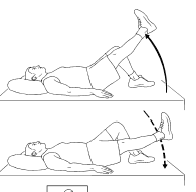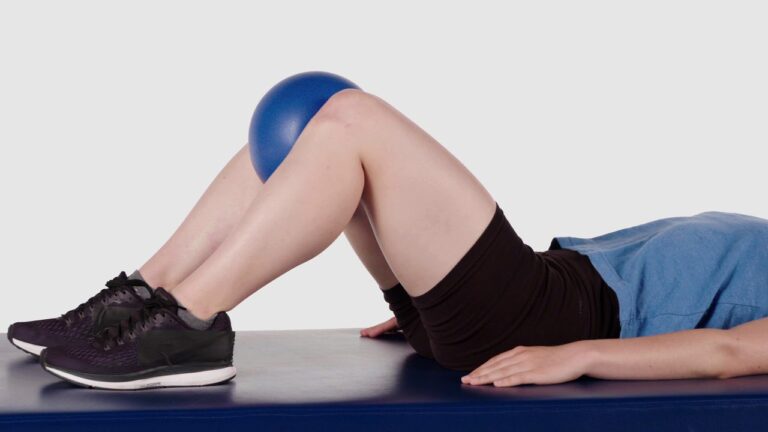
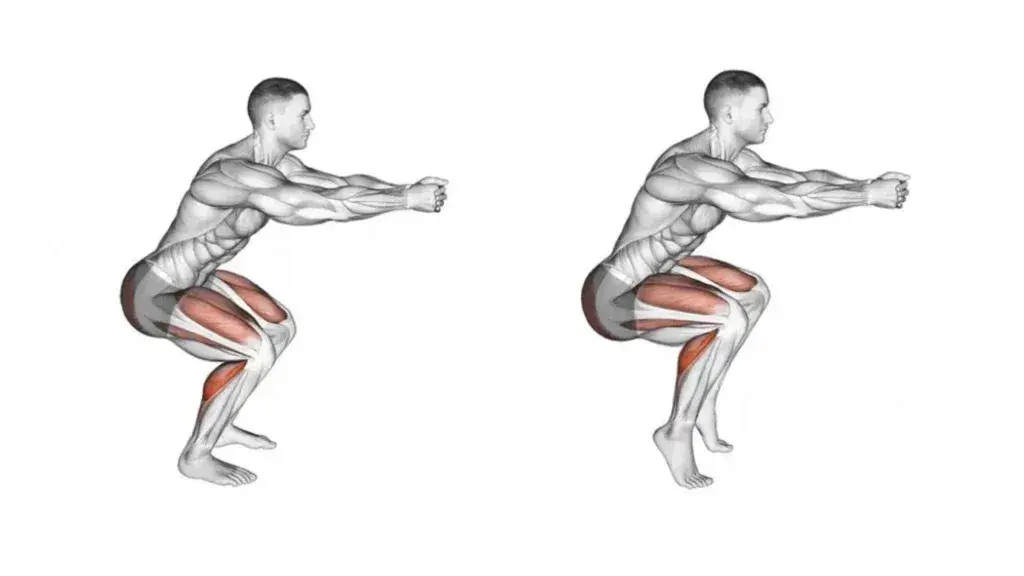
Weight-Bearing Exercises
Any physical activity that requires you to stand and use your muscles and bones to sustain your body weight against gravity is considered a weight-bearing exercise.
Because they are particularly effective at maintaining and boosting bone density, these exercises are crucial for managing and preventing conditions like osteoporosis.
Table of Contents
Function of Weight-Bearing Exercises :
Your body produces additional bone cells in response to the stress these kinds of activities place on your bones, increasing their density and strength. Because the water or bicycle supports your body weight, non-weight-bearing activities like swimming and cycling, although great for your general health, don’t have the same bone-strengthening effect.
Weight-Bearing Exercise Types
Exercises involving weights can be divided into groups according to how much of an impact they have:
- High-Impact Weight-Bearing Exercises: These exercises are harder and give your bones a bigger boost. They might not be suitable for everyone, especially for those who already have joint problems or severe osteoporosis.
- Low-impact weight-bearing exercises: For people who are unable to perform high-impact workouts, these offer a safer substitute. They still provide the bones a useful load, but they are kinder to the joints.
Benefits of weight-bearing exercises
The main advantage of weight-bearing exercise is that it helps to maintain and increase bone density. The process by which stress on your bones encourages the formation of new bone tissue is known as bone remodeling.
This lowers the risk of diseases like osteopenia and osteoporosis, especially as you age, by preventing or slowing down bone loss and increasing bone mineral density.
Strengthens Muscles: Exercises with weights work and strengthen a variety of muscular groups, such as the core, hamstrings, quadriceps, and glutes. In addition to enhancing your athletic performance, stronger muscles help better support and shield your bones and joints.
Enhances Balance and Coordination: Weight-bearing workouts improve your coordination and proprioception (your body’s knowledge of its position in space) by continuously using your stabilizing muscles to maintain balance while moving. This is especially crucial for reducing falls, which are a leading cause of fractures in the elderly.
Boosts General Fitness: A lot of weightlifting exercises, particularly those with a heavy impact, are also great cardiovascular exercises. They enhance endurance, support weight management, and strengthen the heart and lungs.
10 Best Leg Exercises at Home No Equipment
Bodyweight Squat
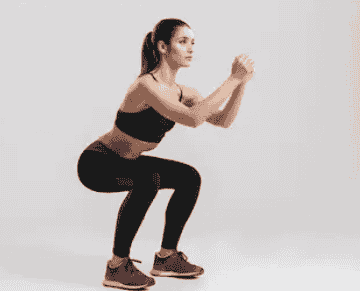
A fundamental exercise that targets your quadriceps, hamstrings, and gluteus.
Method: Press into your heels to raise yourself back up after bending your knees to sink until your thighs are parallel to the floor.
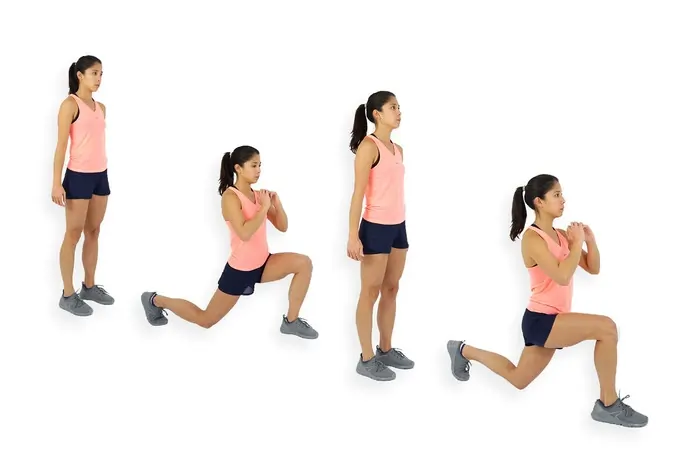
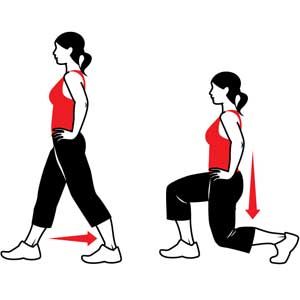
Lunges
This workout targets unilateral (single-leg) strength and stability.
Method: Standing with your feet hip-width apart is ideal. After taking a large stride forward with one leg, lower your hips until both knees are bent at a 90-degree angle. Your rear knee should be slightly above the floor, and your front knee should be exactly above your ankle. Return to your initial position. To repeat the movement, switch the legs.
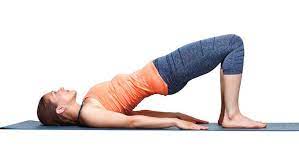
Glute bridges
The greatest exercise for strength and stability in the unilateral (single-leg)
How to perform it:
- Settle onto your back
- Bend your knees.
- Keep your arms by your sides. To elevate your hips and form a straight line from your shoulders to your knees, contract your glutes. Hold for a few seconds, then slowly lower yourself back to the floor.
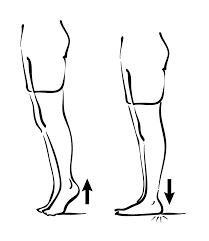
Calf Raises
A quick and easy way to strengthen your calves.
How to do it: Place your feet hip-width apart and, if necessary, grasp onto a chair or wall for balance. Slowly raise your heels from the floor onto the balls of your feet. After a moment of holding the pose at the top, slowly bring your heels back down. For an extra challenge, try doing this on a step to increase the range of motion.
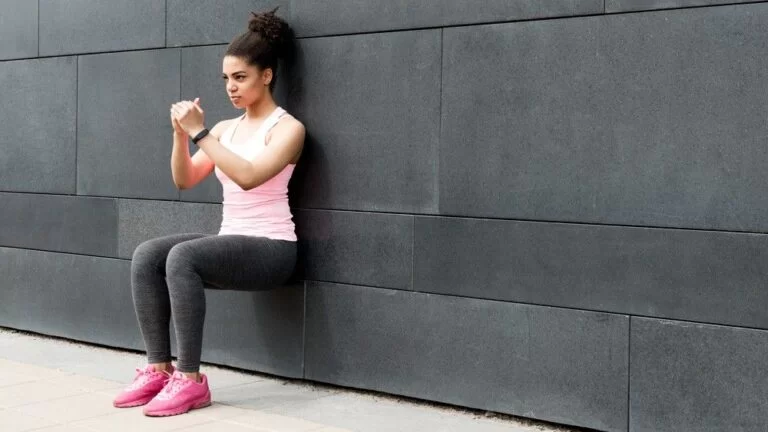
Wall sits
An isometric exercise that will really work your quadriceps is the wall sit.
How to do it: Stack your feet shoulder-width apart and rest your back against a wall instead. Lower your upper body like you are achieving a seated position, as if you’re sitting in an invisible chair, until your knees are bent at a 90-degree angle.
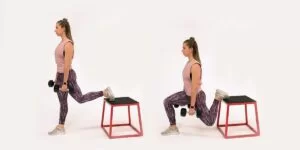
Bulgarian Split Squat
It is one of the most effective single-leg exercises. Particularly, the quadriceps and glutes are trained by this specific exercise.
How to do it: It is executed by raising the rear foot on a box or bench such that the front leg must exert the most effort.
The Bulgarian Split Squat is a vital exercise for athletes and anybody wishing to improve their lower body strength and muscle symmetry, despite the fact that it can be difficult to perfect.
Step-Ups
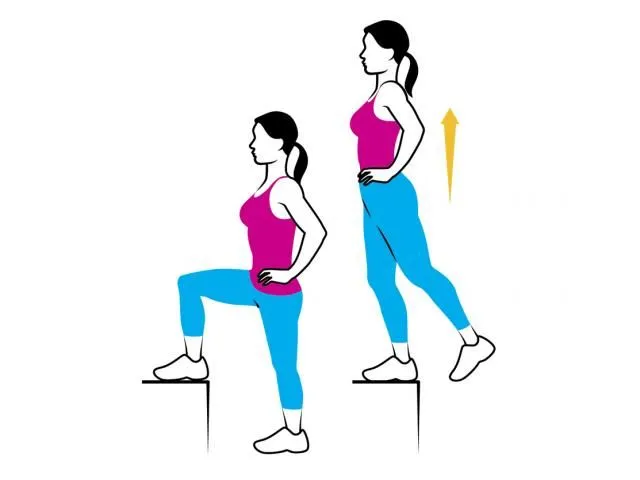
The step-up is a simple and versatile bodyweight exercise that is effective for building lower-body strength.
How to do it: Stepping up onto an elevated surface, such as a bench or box, and then carefully stepping back down is the activity that mimics the process of climbing steps. This single-leg workout challenges your balance and core stability while also strengthening your quads, glutes, hamstrings, and calves.
Step-ups are a terrific technique to develop functional strength for daily activities and are appropriate for all fitness levels because you can easily change the step height and add resistance with dumbbells.
Side-Lying Leg Raises
A straightforward yet efficient exercise for building up the gluteus medius and other hip abductor muscles is the side-lying leg lift.
How to do it: You do this by extending your legs while lying on your side, slowly raising your upper leg toward the ceiling, and then carefully lowering it back down. By isolating the hip and outer thigh muscles, this exercise helps to strengthen the core and enhance hip stability and balance. It’s a low-impact exercise that can be done without any equipment, making it accessible for most fitness levels and a perfect addition to a regimen focusing on lower-body and hip health.
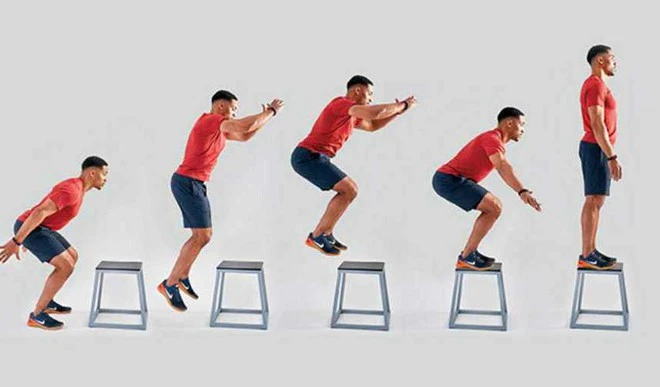
Box Jump
A box jump is a type of plyometric exercise in which you jump off the ground and land on a box or other elevated, secure surface. The quadriceps, glutes, hamstrings, and calves are primarily targeted by this workout. Building explosive power, enhancing athletic performance, and raising vertical leap height are all made possible by this workout. Additionally, it improves balance, coordination, and cardiovascular fitness.
How to do it: In order to execute a box leap, you must begin in a squat stance, drive through your legs explosively, then swing your arms for momentum before landing both feet gently on the box. To avoid injury, picking the right box height and paying attention to form are essential.
Walking Lunges
A dynamic and efficient lower-body exercise, walking lunges work the quadriceps, hamstrings, glutes, and calves, among other muscle groups. For stability and balance, this targets the core.
How to do it: They combine aerobic and strength training benefits and are executed by stepping forward into a lunge and then repeating the movement by stepping forward with the opposing leg. This exercise provides multiple benefits, including stronger legs and core, greater hip mobility, and enhanced general coordination.