Desk Job Back Pain Exercises
Table of Contents
Introduction
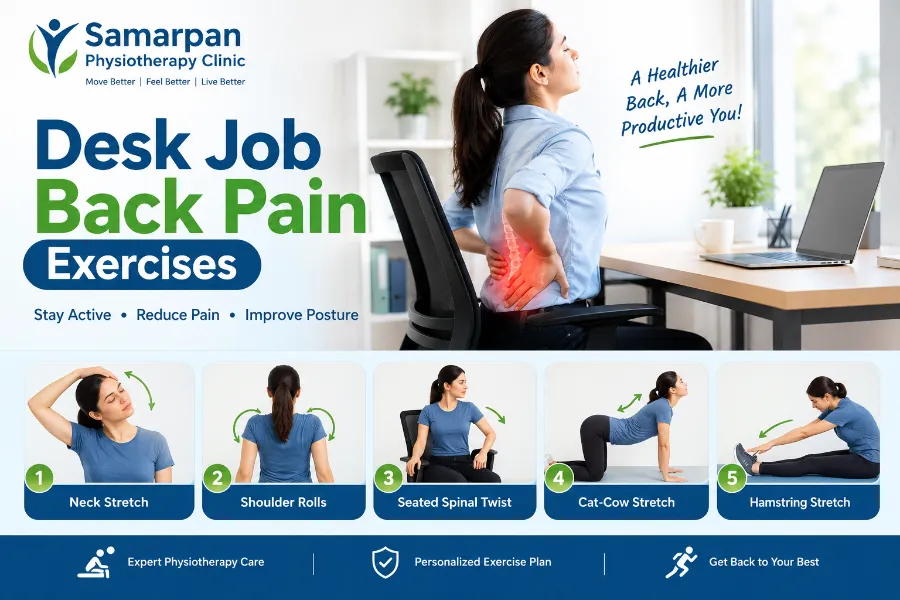
Your body, particularly your back, may suffer if you spend all day at a desk. Sitting for extended periods of time impairs posture, weakens muscles, and raises the risk of chronic pain. Fortunately, you may improve your overall musculoskeletal health and lessen pain by including a few simple exercises in your regular routine… Here are five simple exercises to help prevent and treat pain in your back that you can perform at your desk.
In an ideal world, those with sedentary or sitting-based jobs would strive to walk, stretch, and be active for at least one or two minutes per hour. Even if some of the exercises listed here might not be appropriate for your specific workplace, making an effort to complete a regimen of this kind for five to ten minutes before, during, or during a lunch break would significantly lower the chance of pain and injury. It is also strongly advised to engage in general exercise and safe, diverse movement of any type.
A frequent issue that many individuals struggle with daily is back pain. The back and the muscles that support it are strengthened and stretched by the following exercises.
Repeat each exercise many times when you initially begin. Then, when an exercise becomes simpler for you, increase the number of times you perform it. Discuss safe activities with a physical therapist or another member of your healthcare team if you’re starting an exercise program because of chronic back pain or following a back injury.
Spending a lot of time at a desk can have a negative impact on your posture, spine health, and general physical well-being, regardless of whether you work from home or in a corporate office. Office back pain, which frequently develops gradually as a result of bad posture, insufficient exercise, and incorrect workstation arrangement, is one of the most prevalent complaints among professionals today.
Why Back Pain Is Frequently Caused by Desk Jobs
Long durations of sitting put undue strain on the spine, particularly the lumbar area. Sitting incorrectly can strain the neck and shoulders, weaken the core muscles, and tense the hip flexors. Reduced mobility and ongoing pain eventually result from this muscular imbalance.
Back pain and office-related spinal pain are frequently caused by the following:
- Slouching while sitting
- Poor chair support
- Incorrect monitor height
- Lack of movement during work hours
- Tight hip and hamstring muscles
- Weak core stability
- Working from beds or sofas
- Stress-related muscle tension
Long-term musculoskeletal disorders, such as disc irritation, chronic neck pain, and postural syndromes, might result from these difficulties if appropriate treatment is not received.
1. Immediately correct your sitting posture
When these factors come together over months or years, back pain becomes chronic rather than sporadic, underscoring the importance of our goal to enhance spinal health via awareness, prevention, and early intervention.
How to properly sit at your desk:
- Verify that your feet are level with the floor.
- To support your lower back, recline in your chair.
- Don’t hunch your shoulders; instead, keep them relaxed.
- Ensure that the screen is at eye level.
- Maintain a 90-degree angle between your elbows and your body.
- Avoid sitting on the edge of your chair or bending forward for extended periods of time. Avoid slouching and don’t be stiff; even good posture requires variety.
2. Take Breaks for Movement Every 30 to 45 Minutes
Your spine is made for mobility, not extended periods of sitting. Joint stiffness and muscular weariness result from spending hours in one posture.
What you can do right now:
- Every 30 to 45 minutes, get up.
- Take a one- to two-minute stroll.
- Stretch your shoulders, neck, and back.
- Gently twist your spine and roll your shoulders.
If necessary, set a reminder on your computer or phone. These little pauses greatly lessen spinal strain.
3. Adjust Your Workstation to Encourage Spine Health
One of the main causes of back pain from desk jobs is improper workstation configuration.
Fast desk modifications:
- Put the screen at eye level to avoid straining your neck.
- Hips should be somewhat higher than knees due to chair height.
- Easy access to the keyboard and mouse
- If necessary, support your lower back with a little pillow.
A perfect ergonomic chair is not necessary; little adjustments to your current configuration can have a significant impact.
4. Develop Your Core Throughout the Workday
The spine is further strained by weak core muscles. Even while you’re seated, you can build and engage your core.
Easy routines you may begin right now:
- For ten seconds, gently contract your abdominal muscles, then release them.
- Do this many times throughout the day.
- While working, sit up straight and use your core.
These little activations lessen fatigue and increase spinal stability.
5. Frequently Stretch Tight Muscles
The hip flexors, hamstrings, chest, and neck muscles are frequently tightened by desk work, which has an impact on spinal alignment.
Simple desk stretches:
- Bends and rotations of the neck side
- For opening chest space, lift your upper body back.
- Spinal twists when seated
- Hamstring stretches when standing
Stretching increases range of motion and eases tension, both of which are factors in back pain.
6. Refrain from slouching over phones and laptops
Your neck and upper back are severely strained by the forward head position caused by computers and cellphones.
How to proceed:
- To elevate your laptop, use books or a stand.
- If at all feasible, use an external keyboard.
- Rather than bending your neck, hold your phone at eye level.
Your upper back and cervical spine are protected when you adopt a less forward head position.
7. Take Care of Your Spine After Work
Desk job-related back pain doesn’t go away. It matters how you recover and relax.
Tips for taking care of your spine after work:
- In the evening, take a stroll or stretch.
- Refrain from spending a lot of time curled up on plush couches.
- Choose a comfortable pillow when sleeping on your back or side.
Particularly for those with sedentary professions, recovery time promotes long-term spine health and enables your spine to recover from everyday stress.
Exercise to Relieve Back Pain
1. Hip flexor stretch
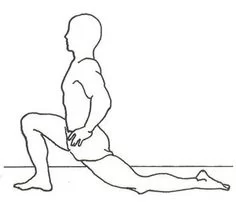
- As shown above, perform a kneeling or lunge posture; use a wall or piece of furniture for support if necessary.
- Gently contract your lower abdominal and buttock muscles while kneeling; visualize tucking your tailbone between your thighs.
- The front of your thigh or hip should feel stretched. Gently elevate the arm on the same side as the kneeling knee if balance permits.
- Repeat two to three times on each side after holding the stretch for at least thirty seconds.
2. Bhujangasana (Cobra Pose)

- Place your hands palms down at shoulder height while lying face down.
- Press out slowly with your arms, slowly lifting your upper body off the ground.
- Relax your buttock muscles and keep your hips heavy while attempting to keep them in touch with the floor.
- After five to ten seconds of holding the finish position, go back to the beginning and repeat five to ten times.
3. Shoulder bridge
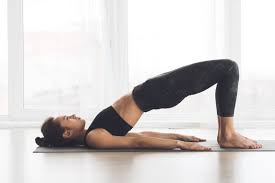
- With your knees bent and your feet shoulder-width apart, lie flat on your back.
- Lightly tilt your pelvis with your lower abdominals while pressing your lower back flat on the floor.
- Starting with your tailbone, gradually lift your spine off the ground by applying pressure through your heels and engaging your buttocks and abdominal muscles.
- In the end, distribute your weight crosswise over your shoulder blades, hips, knees, and shoulders.
- For two to three sets, hold the finish position for three to five seconds, then go back to the beginning and repeat ten times.
4. Bird Dog
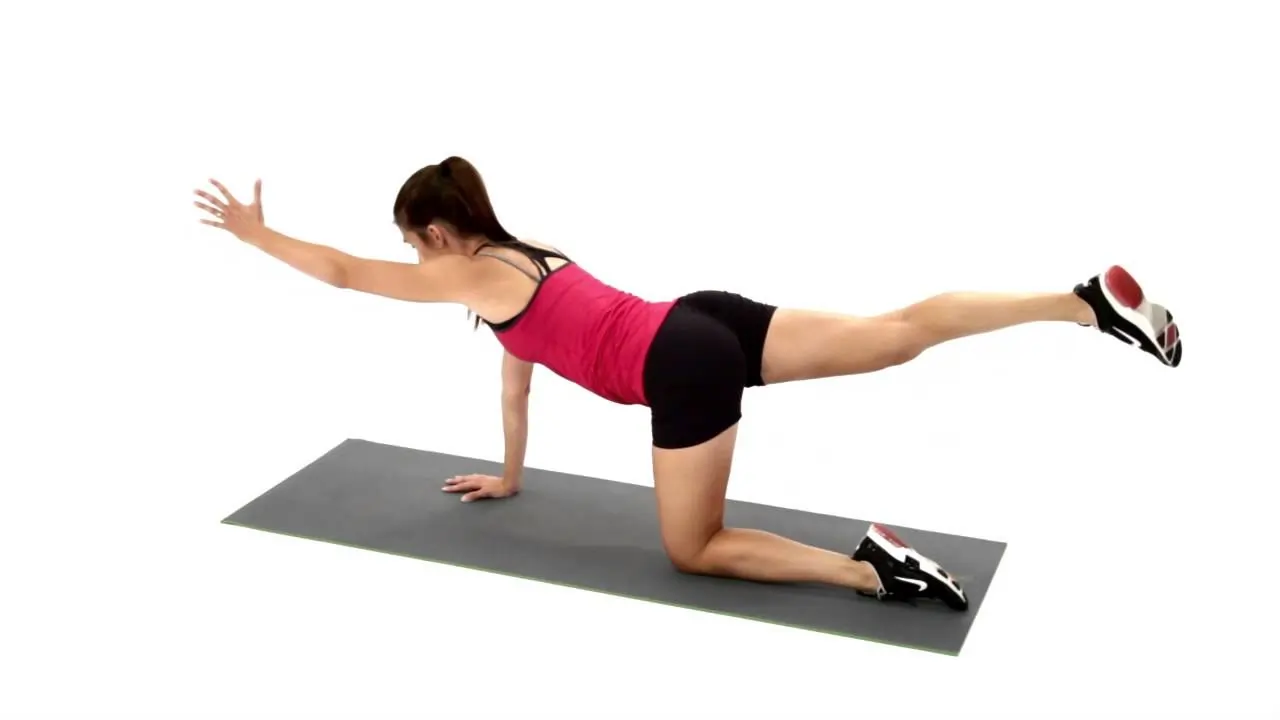
- With your knees under your hips, your hands beneath your shoulders, and your spine relaxed, begin on all fours.
- Extend the opposing arm and leg slowly, pointing the fingers to the front and the toes behind.
- Maintain mild tension in your lower abdomen; consider pulling your belly button closer to your spine.
- Throughout the exercise, try to keep your spine in the same posture. Return to the starting position gradually.
- Try 10–12 repetitions for two to three sets, then switch to the other arm and leg.
5. Thoracic Extension with Foam Roller

- Place a foam roller beneath your mid-upper back as indicated while lying on your back with your knees bent and your feet flat.
- Inhale deeply, then gently extend back over the roller to stretch your back as you exhale. To prevent overarching your lower back, try to keep your lower abdominals active.
- Keep your neck relaxed and use your hands to support your head. Try resting back on a cushion or pillows if you find this to be too intense or uncomfortable.
- Repeat five times, returning to the starting position after holding the finish position for two to three breath cycles.
- Try to work on three to five spots along your spine by moving the roller to a different location in your mid-upper back and repeating the procedure.
6. Pectoral stretch
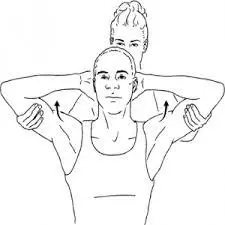
- Place your arm at shoulder height and press your palm to your forearm on the doorframe as shown.
- To expand and extend the front of your chest and shoulder, slowly turn your body aside by stepping your feet around.
- With your neck relaxed, gently lean into the stretch, hold it for at least 30 seconds, and repeat again on each side.
- As an alternative, place both arms in the stretch position using a doorway, then take a step forward to feel your shoulders and chest open. Hold for more than 30 seconds, then repeat twice.
7. Thoracic rotation
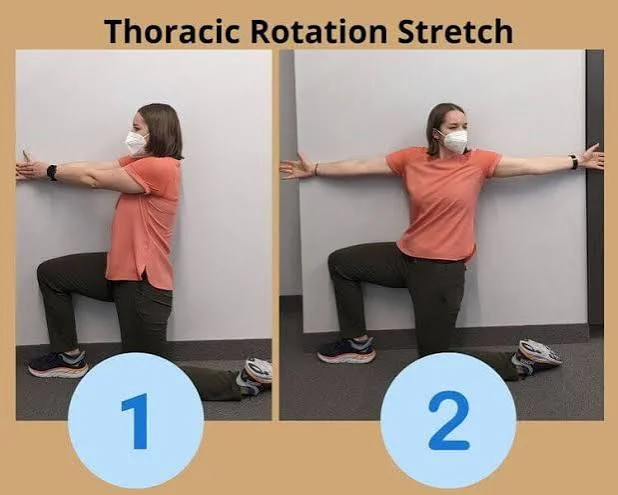
- Place one hand behind your head and begin on all fours.
- Turn your elbow slowly in the direction of the ceiling so that your trunk may extend and rotate.
- For three to five seconds, hold the highest position. Repeat with each arm ten times.
8. Cat and cow stretch
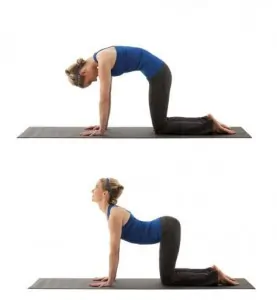
- With your hands on your knees and your feet flat on the floor, sit up straight.
- Breathe in while you raise your chest, arch your back, and tilt your head back (Cow Pose).
- Pull your belly button in, tuck your chin into your chest, and round your back while exhaling (Cat Pose).
- Move fluidly with your breath as you repeat five to ten times.
9. Shoulder-blade squeeze
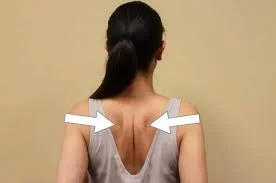
- With your arms by your sides, take a high seat.
- Squeeze your shoulder blades together to hold a pencil between them.
- Hold for five seconds, then release.
- Repeat ten to fifteen times.
10. Seated spinal twist

- On a level surface, sit upright with your feet flat.
- Put your left hand on the knee.
- Maintaining a long spine, gently turn your torso to the left.
- Stretch for 15 to 30 seconds, then go to the opposite side.
11. Knee to chest
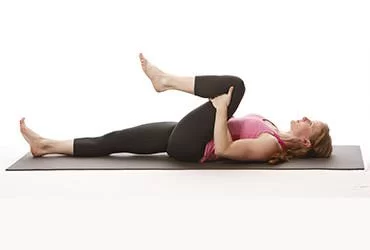
- Lie on your back with your legs bent and your soles flat on the ground.
- Holding both hands, raise one leg to your chest.
- Press your spine to the floor and tighten your abdominal muscles.
- Hold for five seconds. Do it with the other leg after coming to the starting position.
- Go back to your previous position.
- Do the same with both legs at the same time after that.
- Continue each stretch 2 or 3times.
- Do the complete procedure once in the morning and once in the evening, if at all possible.
Ergonomics Physiotherapy’s Contribution to Workplace Wellness
Ergonomic physiotherapy integrates workplace posture correction, mobility optimization, and physiotherapy concepts. The objective is to provide a workplace that promotes good body alignment and lessens physical strain.
A physiotherapist could suggest:
- Proper desk and chair height
- Lumbar support adjustments
- Correct monitor positioning
- Movement breaks every 30–45 minutes
- Stretching routines
- Strengthening exercises
- Postural retraining
These techniques enhance comfort, productivity, and long-term spinal health while reducing back pain at work.
When to Consult a Physician
If you have back pain:
- Endures for several weeks
- Worsens despite improvements in lifestyle
- Emanates into the arms or legs
- Is connected to weakness or numbness
For an accurate assessment, speak with a spine doctor or other medical expert.
Conclusion
You may greatly lessen spinal strain by improving your posture, moving frequently, modifying your workstation, strengthening your core, and stretching every day.
Consistency is crucial. Small adjustments made now will eventually add up to better comfort, a healthier spine, and a more productive workplace.
FAQs
For pain in the back, which three exercises perform most effectively?
The Modified Curl-Up, the Side Bridge (Side Plank), and the Bird Dog are the “Big 3” exercises for lower back pain that were created by a spine biomechanics expert. These exercises are intended to increase spine stability and core endurance without placing undue strain on your discs through bending or twisting.
Which sleeping posture is best for L4-L5?
Sleeping on your back with a knee pillow or on your side with a pillow between your knees to maintain a neutral spine are the ideal sleeping positions for those with L4-L5 disc problems.
Does it make sense to regularly decompress your spine?
Yes, the majority of people may safely and healthily relieve daily pressure from sitting and gravity by engaging in basic, regular spinal decompression activities like child’s pose, hanging, or light stretching. However, daily use of heavy-duty clinical or mechanical spinal decompression devices is not advised.
Is it possible to heal damage to the L4-L5 nerve?
Even though it can frequently heal or improve, whether an L4–L5 nerve injury or irritation can be fully “repaired” depends on whether the nerve is chronically severed, scarred, compressed, or inflamed.
Where can lower back pain be dealt with most rapidly?
Using targeted decompression postures, using ice or heat, and performing mild mobility exercises to ease muscular spasms are the quickest ways to relieve mild or severe lower back pain.
What sitting position is appropriate for those with lower back pain?
Sitting erect with your feet flat on the floor, your hips and knees at a 90-degree angle, and solid lumbar support filling your lower back’s natural curvature is the ideal sitting posture for lower back pain.
References
- Physiocare, C., & Physiocare, C. (2026, May 17). Desk job Back Pain: 10 Physio-Approved Exercises You can do at work. Corefit Physiocare. https://corefitphysiocare.com/desk-job-back-pain-exercises-for-desk-workers/
- Desk jobs and back pain: What you can do today. (n.d.). The Spine Foundation. https://thespinefoundation.org/desk-jobs-and-back-pain-what-you-can-do-today/
- Petrillo, K. (2025, August 20). Desk job back pain relief: 5 easy orthopedic exercises – Iowa Ortho. Iowa Ortho. https://www.iowaortho.com/blog/back-health/desk-job-back-pain-exercises-relief/
- Wray, D. (2025b, October 27). Back strengthening exercises for Desk-Based workers — Physio Effect. Physio Effect. https://www.physioeffect.co.uk/resources/back-exercises