
Sacroiliac Rocking Test
The sacroiliac rocking test is a physical examination maneuver used to assess the mobility and dysfunction of the sacroiliac joint (SI joint). The SI joint is located between the sacrum (the triangular bone at the base of the spine) and the ilium (the uppermost part of the pelvis).
- The Sacroiliac rocking test is also known as the knee-to-shoulder test for SI joints.
- The Sacroiliac rocking test is called the sacrotuberous ligament stress test.
- The clinic applies the Sacroiliac rocking test to check for dysfunction of the sacroiliac joint.
- When the patient complains of SI joint discomfort and pelvic pain, the therapist does this clinical examination.
Table of Contents
What is the importance of the sacroiliac rocking test?
- This sacroiliac rocking test is used to study the integrity of the sacrotuberous ligament.
How do you perform the sacroiliac rocking test?
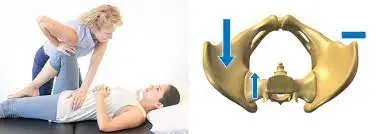
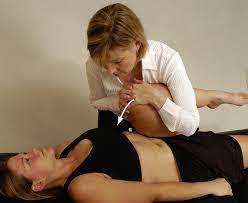
- Position of the patient is in a supine position, which is the standard beginning position.
- The therapist fully flexes the patient’s hip and knee joints before adducting the hip joint.
- Both the hip joint and the knee joint must be free of pathology and have a full range of motion (ROM) in order to complete the test correctly.
- The sacroiliac joint is rocked by the flexion and adduction motions of the patient’s hip joint.
- The knee joint must be positioned toward the patient’s opposing shoulder in order to do the test effectively.
- To put more strain on the sacroiliac joint, or SI joint, some writers contend that the hip joint should be medially rotated, or internally rotated, while it is flexed and abducted.
- The sacrotuberous ligament can also be felt for discomfort simultaneously.
What was the result of the Sacroiliac Rocking Test?
- A positive test results in pain in the sacroiliac joints.
- The exam puts a lot of strain on the hip and sacroiliac joints, thus stress is required.
- The sacrotuberous ligament is put under additional strain if a gradual, continuous longitudinal force is given throughout the hip joint for 15 to 20 seconds in an oblique and lateral direction.
- The examiner [therapist] may palpate the sacroiliac joint [SI Joint] on the test side during the test to feel for the little amount of mobility that is usually present.
FAQ
The sacroiliac rocking test’s goal is to put both sacroiliac joints to an anterior shear strain because the ilia are fixed by the assessment bench. The test is positive if the pain is produced in the sacroiliac region.
The pelvic rocking test is performed to assess the hip’s joint stability. The patient lies on their back with their knees bent for the exam. After that, the patient moves their pelvis back and flattens their lower back in the process.