5-Minute Lower Back Mobility Routine For Beginners
Table of Contents
Introduction:
Millions of individuals suffer from lower back pain, which is the primary cause of disability globally and places a significant strain on healthcare systems across the world. The healthcare system spends about $100 billion annually on lower back pain and chronic back pain disorders, including costs for prescription drugs, physical therapy, medical treatments, and lost productivity. One of the biggest public health issues of our day is chronic lower back pain, which is becoming increasingly common as people lead more sedentary and desk-bound lifestyles.
Lower back pain is one of the most prevalent medical problems in the world, affecting about 80% of individuals at some time in their lives. Many people with persistent lower back pain still have unsatisfactory long-term results despite major advancements in medical imaging, painkillers, spinal injections, and back surgery. Many people find that these therapies only offer short-term relief, underscoring the need for longer-term rehabilitation techniques, preventative measures, and more efficient back pain management.
The majority of lower back pain instances are not caused by significant structural damage. Rather, they are usually the consequence of a long-term mix of muscle tension, disc sensitivity, and joint irritation. Actually, over 90% of cases of lower back pain are categorized as nonspecific, which means that there isn’t a single known reason. The good news is that the appropriate movement-based therapies, focused exercises, and physical therapy techniques may greatly enhance mobility and lessen persistent back pain in these circumstances.
What Is Mechanical Back Pain?
Lower back pain is typically categorized as mechanical back pain if it varies based on your posture or movement. This kind of back pain is quite prevalent and frequently improves with appropriate mobility and movement techniques.
For instance, you may see that:
- Long durations of sitting make you more uncomfortable.
- The ache gets worse as you bend forward.
- Standing up or altering one’s posture lessens symptoms.
This type of variety is really encouraging rather than something to be afraid of. When back pain reacts to movement, it can be lessened with appropriate movement, mobility exercises, and posture corrections.
Most of the time, regular movement, strengthening exercises, and appropriate mobility routines help with mechanical lower back pain. Targeted workouts can start to restore spinal mobility, muscular balance, and normal function remarkably rapidly since mechanical issues demand mechanical remedies.
Why Is Movement the Real Solution for Back Pain?
Many patients with back pain are frequently told to relax, apply ice, take painkillers, get steroid injections, or even think about surgery.
These methods are referred to as passive therapies since they involve making changes to your body while it is mainly dormant. These techniques seldom deal with the underlying source of back pain, even if they could offer short-term relief.
In many situations, persistent lower back pain occurs because particular joints cease functioning properly, the hips become rigid, and surrounding muscles stiffen. When this occurs, the lumbar area is further stressed as the lower back adjusts for limited mobility above and below the spine.
Restoring appropriate movement patterns is the true cure, not avoiding movement.
At that time, a regular morning exercise practice for lower back pain became very important. You may start your day with reduced stiffness and greater overall function by engaging in targeted mobility exercises that increase spinal movement, release tense hips, engage stabilizing muscles, and lessen needless pressure on the lower back.
Key Takeaways:
- A sedentary lifestyle, underlying medical issues, or strained muscles are some of the reasons for lower back pain. Child’s Pose, knee-to-chest, and Cat-Cow are gentle stretches that can help release tense muscles.
- Your back, glutes, and core muscles may become more powerful, more flexible, and less painful if you stretch your lower back. Because mild stretching may worsen your back pain, or if it doesn’t go away.
- Medication, physical therapy, injections, and, in rare instances, surgery are all possible forms of treatment.The deeply while holding each stretch for 30 to 60 seconds.
- Consult a physician to identify the treatment.
Best Stretch for your lower back?
Certain yoga positions, such as Child’s Pose, and mild stretches, such as a pelvic tilt, might assist in releasing tense lower back muscles.
Be especially gentle and cautious if you have any injury or health concerns. Before beginning any new kind of exercise, it’s advisable to see a doctor, particularly if you are experiencing pain from a recent injury.
The National Institute of Neurological Disorders and Stroke (NINDS) suggests avoiding rapid movements that might shock or strain your back and instead adopting low-impact workouts that build up your back and abdominal muscles.
You may perform these stretches 1 or 2 times a day. But if the lower back pain seems to become worse, or you’re feeling particularly uncomfortable, it may be advisable to take a day off from stretching.
Take your time and be mindful of your breathing while you perform these stretches. To prevent straining or overdoing it, use your breath as a guide. For every position or stretch, you should breathe freely and pleasantly.
1. Child’s Pose
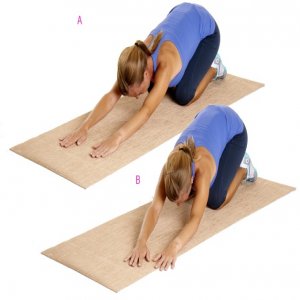
Your gluteus maximus, latissimus dorsi (lats), and spinal extensors are all gently stretched in this classic yoga posture. It helps ease pain and stress all over your spine, neck, and shoulders.
Its calming effects on your body also aid in releasing tense lower back muscles, which increases spinal flexibility.
Use these steps to perform Child’s Pose:
- Sink back through your hips to place them on your heels while keeping your hands and knees on the floor.
- Walk your hands out in front of you while bending forward and hinging at the hips.
- Place your stomach on your thighs.
- With your hands facing down, extend your arms in front of or beside your body.
- In order to relieve any stress or stiffness, concentrate on taking deep breaths.
- Maintain this position for a maximum of one minute.
Modifications:
You can put a rolled-up towel on top of or beneath your thighs if you think you need more support.
Widen your knees and place your forehead on a pillow if it feels more comfortable.
2. Knee-to-chest Stretch
Stretching encourages relaxation and eases tension in your thighs, glutes, and hips.
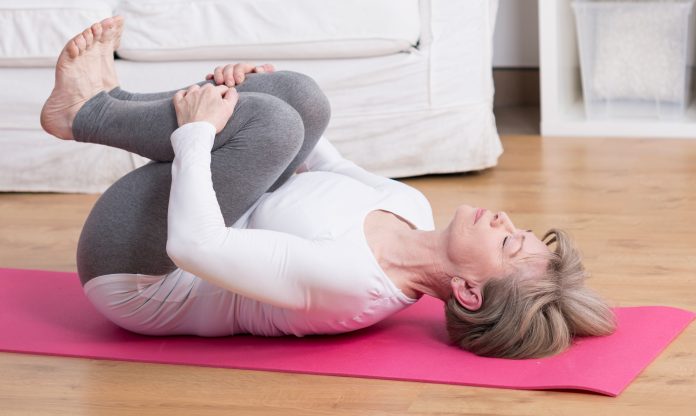
Use these procedures to do the knee-to-chest stretch:
- Lie on your back.
- Keep your legs bent.
- You can either stretch your left knee straight out along the floor or keep it bent.
- With your hands clasped behind your thigh or at the top of your shinbone, draw your right knee into your chest.
- Avoid raising your hips and extend your spine all the way to your tailbone.
- Take a deep breath and let go of any anxiety.
- For 30 to 60 seconds, maintain this stance.
- Continue with the opposite leg.
Modifications
For additional cushioning, place a pillow beneath your head. If your arms are unable to reach your leg, you can alternatively wrap a towel around it.
Lift your head toward your knee and tuck your chin into your chest to intensify the stretch. For added comfort, place a pillow beneath your head. If your arms are unable to reach your leg, you can alternatively wrap a towel around it.
3. Piriformis Stretch
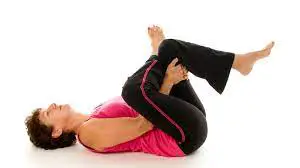
Your piriformis muscle, located deep in your buttocks, is worked by this stretch. Your lower back and buttocks may feel less stiff and painful if you stretch this muscle.
The steps to perform a piriformis stretch are as follows:
- Lie on your back with your legs bent and your feet flat on the ground.
- At the base of your left thigh, place your right ankle.
- After that, pull up toward your chest until you feel a stretch by placing your hands behind your left leg.
- For 30 to 60 seconds, maintain this posture.
- Next, work on the other side.
Modification
To make the stretch more pleasant, keep your bottom foot firmly planted on the ground. For support, place your head on a cushion.
4. Seated Spinal Twist
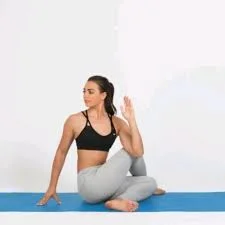
Your hips, glutes, and back are all stretched by this traditional twist. It extends your neck, shoulders, and abdomen and improves the range of motion in your spine.
Follow these instructions to perform a sitting spinal twist:
- Sit on the floor.
- Keep both legs out in front of you.
- Put your foot outside your right thigh and bend your left knee.
- Put your right arm outside your left thigh.
- For support, put your left hand behind you.
- Turn to the left, beginning at the base of your spine.
- Maintain this position for a maximum of one minute.
- On the opposite side, repeat.
Modification
Maintain both legs straight to make this posture more comfortable.
During this position, add neck rotations for an additional stretch: Breathe in to look forward, and out to look back. Perform 5 to 10 on each side.
5. Pelvic tilt
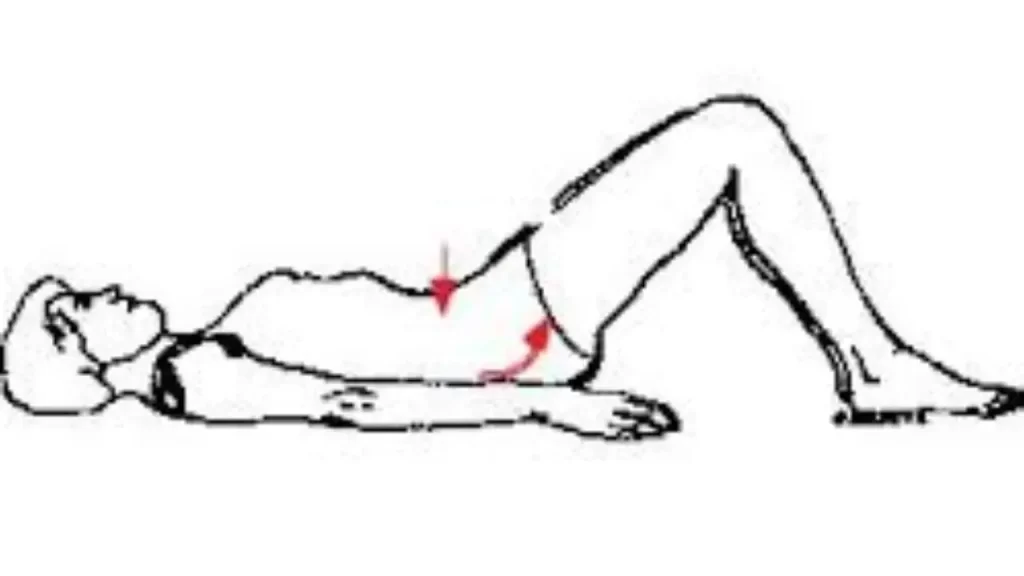
Pelvic tilts assist in easing lower back pain and stiffness by strengthening your abdominal muscles. They help your glutes and hamstrings.
The steps to do a pelvic tilt are as follows:
- Bend both knees and place your feet flat on the ground while lying on your back.
- As you press your back toward the floor, contract your abdominal muscles.
- Hold this position for up to ten seconds while breathing normally.
- Let go and relax by taking a few deep breaths.
- Perform one to three sets of three to five reps.
6. Cat-Cow stretch
Stretching your shoulders, neck, and chest while awakening your spine is what Cat-Cow is all about.
Take these actions to perform Cat-Cow:
- Put your hands and knees on the floor and drop to all fours on the tabletop.
- As you take a breath to look up, press into your hands and feet and let the air fill your belly.
- Breathe out while arching your spine toward the sky and tucking your chin into your chest.
- Keep moving in this manner, moving as you breathe.
- Spend one to two minutes doing this.
Modification
Put your hands slightly forward rather than right beneath your shoulders if you have wrist issues. Put a pillow beneath your knees for support and cushioning if you have any knee issues.
Instead of moving with each breath, maintain each posture for five to twenty seconds at a time for deeper holds.
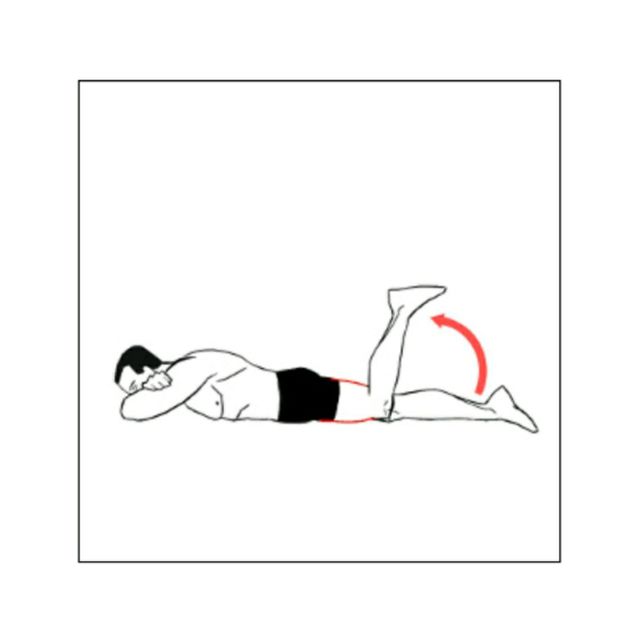
7. Sphinx Stretch
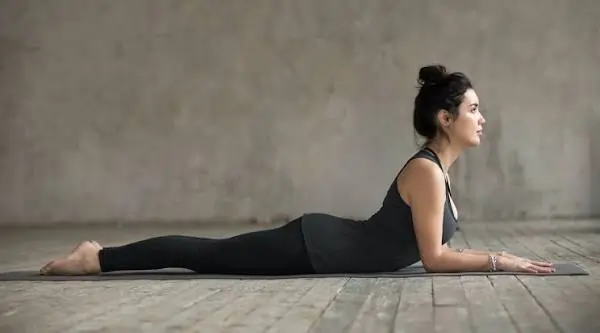
A mild backbend that enables you to be both active and calm is the sphinx stretch. The steps to perform the sphinx stretch are as follows:
- With your hands out in front of you, palms facing down, and your elbows beneath your shoulders, lie on your stomach.
- Place your feet a little apart. Your big toes can touch each other.
- As you raise your head and chest, gently contract your thighs, buttocks, and lower back.
- Breathe deeply while maintaining strength in your lower back and abdomen.
- Firmly plant your pelvis on the ground.
- Close your eyes slightly or look directly ahead.
- For 30 to 60 seconds, maintain this position.
8. Supine Lower Trunk Rotation
This exercise enhances lumbar rotation and spinal mobility.
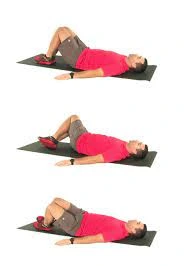
steps:
- Lying on your back.
- Bend your knees.
- Keep your feet flat.
- Pull your navel toward your spine to activate your core muscles.
- Lower both knees together slowly to one side, holding the position for one to two seconds while maintaining a flat back and shoulders on the ground.
- Return your knees to the beginning position slowly before lowering them to the opposite side.
- Hold for one to two seconds, then repeat on the other side.
- Ten to twelve repetitions per side.
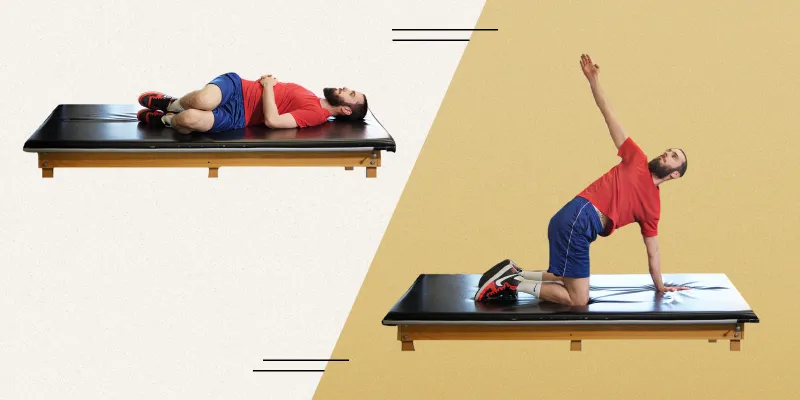
9. Side Lying Thoracic Rotation
This exercise enhances thoracic rotation and spinal mobility.
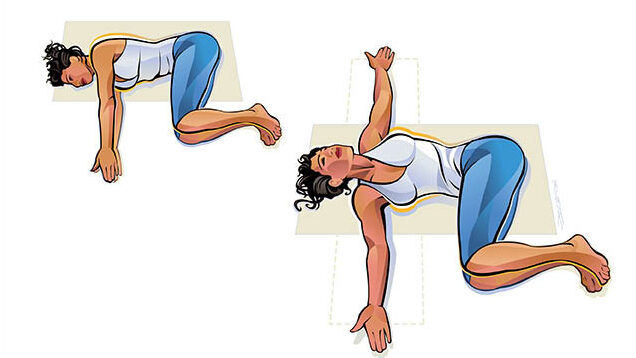
steps:
- Lay on your side with your knees placed on top of each other and bent at a 90-degree angle.
- With your head resting on your lower arm or hand, extend your upper arm straight in front of you. Slowly extend your upper arm up and across your body, aiming for the floor behind you, while maintaining a motionless lower knee and hips.
- As your back and chest gently rotate, follow your upper hand with your gaze.
- Return your arm slowly to its initial position.
- On the opposite side, repeat the set.
- Four to six repetitions per side.
10. Quadruped Thread the Needle
This exercise helps thoracic rotation and spinal mobility.
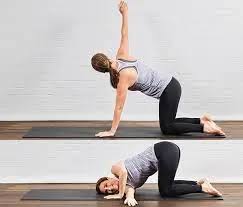
steps:
- Get down on your hands and knees. Keep your knees just under your hips and your wrists exactly under your shoulders. Maintain a flat back and a strong core.
- Follow your hand with your gaze as you slide one arm under your chest and across to the opposite side, allowing your shoulder and upper back to spin toward the floor.
- To reverse the motion, turn your body upward, stretch that same arm toward the ceiling, and follow your hand with your gaze.
- Return to the starting position slowly.
- On the opposite side, repeat the set.
- Four to six repetitions per side.
11. Bhujangasana (Cobra Pose)
This exercise improves spinal mobility as well as lumbar and thoracic extension.
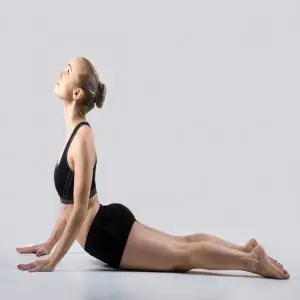
Bhujangasana (Cobra Pose) Steps:
- Lie on your stomach with your arms bent beneath your shoulders and your hands flat on the floor or table, as if preparing for a push-up.
- Return to this position gradually after maintaining it for one to two seconds.
- Ten to twelve times.
- Elevating the pelvis off the ground, excessively stretching the neck, and lifting the elbows too high are common mistakes to avoid.
12. Seated Lumber Flexion
This exercise increases lumbar and thoracic flexion as well as spinal mobility.
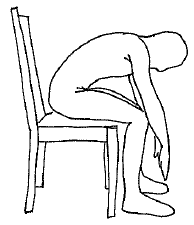
Steps:
- With your feet level on the ground, take a seat toward the front of a sturdy chair.
- For stability, place your feet shoulder-width apart.
- Before you start moving, contract your core muscles.
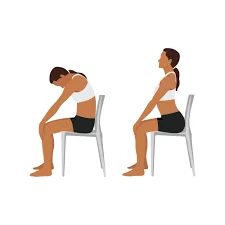
- Mimic a diving motion by bringing your arms forward with your hands together.
- Beginning at the neck and working your way down to the low back, slowly descend your torso segmentally toward the floor. Throughout the exercise, gradually increase the flexion (bending) of the spine.
- Reverse the motion to return to the starting position, beginning with your low back.
- Ten to twelve repetitions.
FAQs
Why This Routine Works Better Than Passive Treatments
May lessen symptoms momentarily.
They do not, however, retrain motor habits.
This practice:
restores movement in the joints
enhances the regulation of the nerve system
lessens mechanical strain
increases resilience
Rarely is back pain occasional.
It reacts to motions.
How Fast Will You Notice Results?
Many people experience:
Simpler application of shoes and socks
Driving with less rigidity
less pain toward the end of the workday
increased self-assurance when moving
Frequently in a single session.
Here’s the secret, though:
It’s important to be consistent.
You can’t do something once and expect it to last forever.
Do it every day.
What If This Only Helps Temporarily?
If this practice is beneficial but the alleviation wanes…
This implies that you probably want more specialised exercises suited to your particular condition.
Not every disk problem acts in the same way. Every type of back pain reacts differently.
Exercises using guesswork are not a long-term tactic
Refferance
- Melani, D. (2026, January 28). Five Mobility Exercises for Low Back Pain. https://www.masterclass.com/articles/dumbbell-bench-presses. https://news.cuanschutz.edu/news-stories/five-mobility-exercises-for-low-back-pain
- Cronkleton, E. (2026, May 7). 7 Lower back stretches to reduce pain and improve mobility. Healthline. https://www.healthline.com/health/lower-back-stretches#tips
- Elliott, G. (2026, March 11). 5-Minute morning mobility routine for lower back pain. Rehab Fix. https://www.therehabfix.com/post/5-minute-morning-routine-lower-back-pain