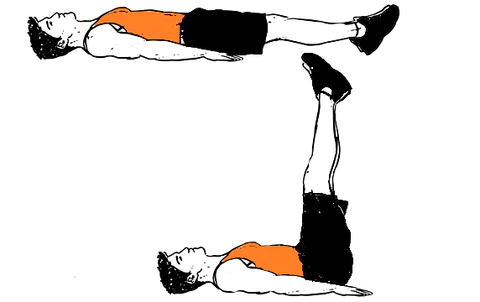
Leg Lift Exercise
Table of Contents
Introduction
The Leg Lift Exercise is a straightforward yet incredibly powerful exercise that strengthens the lower body, hip flexors, and abdominal muscles. You must rise and lower your legs in a controlled manner. One of the best ways to strengthen your core is to lift your legs.
This easy at-home exercise targets your hip and core muscles, including your stomach, lower back, and hip flexors. (Your hip flexors are the muscles at the top of your thigh that allow you to bend your knee and flex your hip.) You help strengthen pelvic and trunk stability by activating these muscles. Your movement is affected in a number of ways by this.
Strong hips and a core make it easier to run, play golf, and participate in other activities. Better everyday mobility, like bending down to pick up an object, is also made possible by a stronger core.
Leg lifts are one type of bodyweight exercise. This suggests that all you need is your own body and no additional equipment. However, leg lifts can take many different shapes, from straightforward to intricate.
If you’ve had low back problems, leg lifts may help you gain strength. But if done improperly, they can worsen pre-existing conditions. See your doctor or physical therapist before starting a hip and core exercise program.
Leg Lift Exercise Video
Benefits of leg lifts
Traditional leg lifts and their many variations target the muscles that comprise your core. A strong core helps you stand straighter and maintain your trunk level throughout exercise and daily activities.
Your entire core can be strengthened with leg lift exercises, which include:
- Your abdominal muscles, which include the front “six-pack” of abs and the muscles running down your sides.
- The muscles that run down and in between your spine’s bones are part of your back.
- diaphragm.
- The pelvic floor refers to the deep abdominal muscles that support your below-the-belt physiological functions.
- Hip flexors.
- Gluteal muscles.
How to perform leg lifts
- First, you’ll need a solid surface. A carpeted floor is an option. If your floor is tile or wood, you might want to use an exercise mat.
- On soft surfaces like couches or mattresses, leg lifts frequently don’t work. Your body won’t have enough support underneath it.
- Start by lying on your back with your legs toward the ceiling at a 90-degree angle. While straight legs are important, it’s acceptable to bend your knees. (Everyone has different levels of strength and flexibility.)
- Put your hands, palms down, just below your butt. You will be able to lift the leg a little more easily if you create a small “shelf.”
- Put your lower back up against the mat or floor. It’s crucial to keep your low back pressed against the floor the entire time. (Arching your back could cause you harm.)
- Keep your chin tucked, ideally a few inches above the floor, and lower your legs as much as you can. Some people like to keep their necks neutral (staring at the ceiling) when doing leg lifts. By tucking your chin in, you may keep your spine pressed against the mat.
- Go as far as you can without damaging your form or arching your back. (And if you get so low that you can’t raise your legs back up, try going a little lower the next time.)
- Try to breathe in as you go down and out as you go up. As long as you don’t hold your breath, you can find a breathing rhythm that works for you!
- Aim for a set of ten to fifteen repetitions. Increase each exercise’s number of sets to two or three. Raising and lowering more slowly will make it more difficult.
Leg lift workouts in different variations
Several leg lift exercises target different core muscle groups. Only side leg lifts, alternating leg lifts, and classic leg lifts (or the bent-knee variation) should be performed by beginners. Over time, you can advance to some of the more difficult forms.
Alternating leg lifts
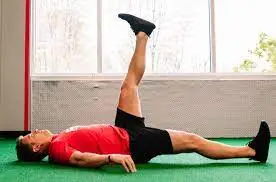
For the alternating leg lift variation, raise both legs until they are perpendicular to the floor (remember that capital L), then lower each leg separately. Ten repetitions per leg for 30 seconds.
Like with regular leg lifts, you can bend your knees 90 degrees to reduce the effort or maintain them straight to increase it.
Side leg lifts
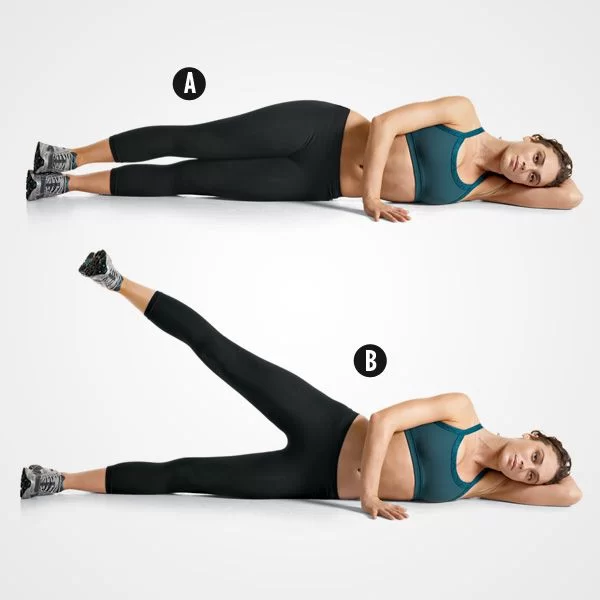
For this variation, lie on your side. By bending your lower arm at the elbow, you may use it as a cushion. Raise your upper leg while maintaining its straightness. Your body should form the letter Y. Switch sides to give each leg a turn after 10 repetitions (for beginners).
Side leg lifts are the best at-home workout to establish your gluteus medius, the “medium” muscle in your buttocks that supports your stride and trunk while you walk.
Reverse leg lifts
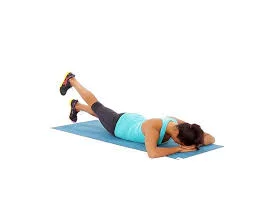
Only more experienced exercisers should practice reverse leg lifts, commonly referred to as “reverse hyperextension,” as they require a strong back.
Lie down on your stomach. Put your hands under your forehead to provide a resting spot for your head. Raise each leg as straight as you can, one at a time. Before moving to the other leg, do about ten reps with the first. Increase the length of your workouts and the number of repetitions as your strength grows.
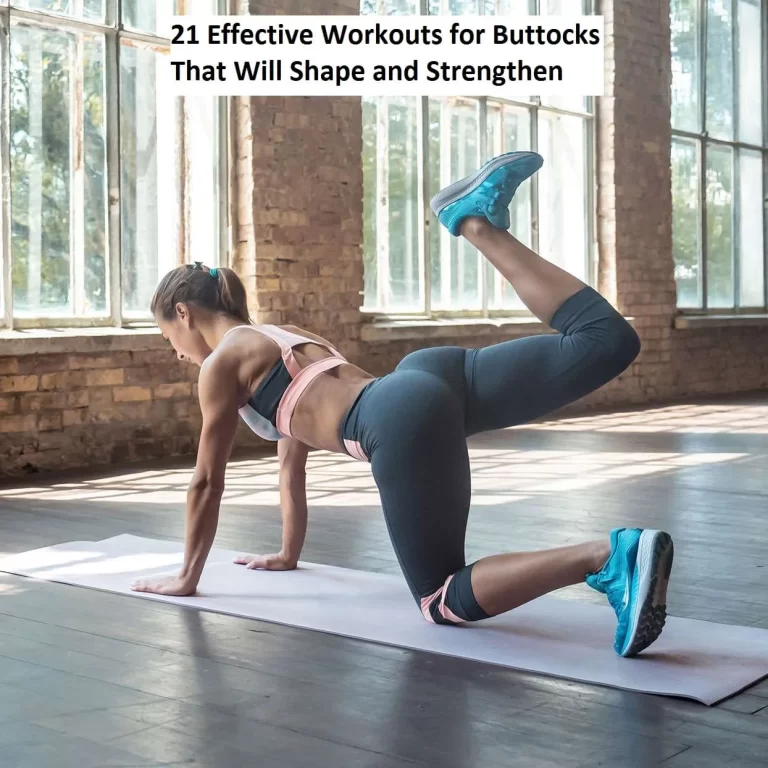
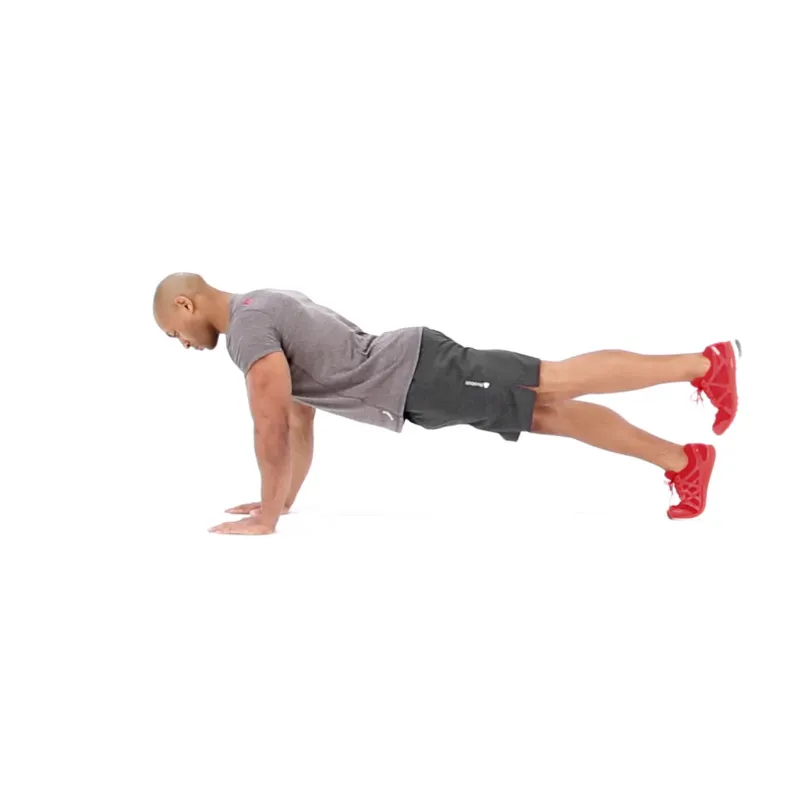
Plank leg lifts
To warm up for your reverse leg lifts, begin in the plank position. Your hands and elbows should be shoulder-width apart on the floor. Use your core to keep your body straight from the top of your head to your ankles. One leg at a time, raise it.
You can get an even higher gear by maintaining the same plank position with your arms straight and your hands on the floor compared to your elbows.
The plank leg raise is a complicated workout that may strengthen your shoulders in addition to your glutes, hamstrings, and stomach.
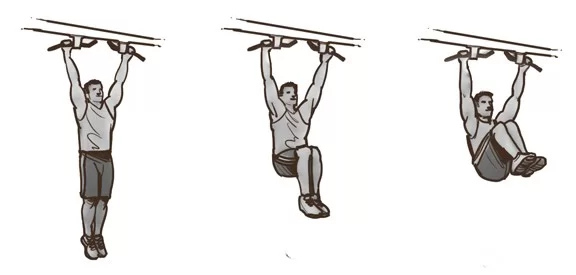
Hanging leg lifts
This extremely sophisticated type of leg raise requires certain equipment. To perform a hanging leg lift, dangle from a pull-up bar, also called a high bar, and elevate your legs until they are parallel to the floor.
You can also do this with your knees bent and your feet parallel to the floor. Drop your legs and uncurl your knees after each repetition.
Common Mistakes Made When Doing Leg Lifts
- Impairing back form is the most common mistake people make when attempting leg lifts. It is common for people to attempt to keep their spines neutral. They arch their back, which tenses their lower back in contrast to their core.
- In addition to weakening the targeted muscles, this may increase your risk of injury. To avoid this mistake, keep your lower back firmly against the mat throughout the exercise. If you notice that your legs are arching upward, stop lowering them as much.
- You should also refrain from using momentum to “swing” your legs up and down. Instead, keep your pace moderate and consistent so you can control the activity and feel the heat in your core.
Conclusion
Although leg lifts are a low-risk exercise, not everyone should do them. Leg lifts are a floor-based exercise that might not be the best choice if you have trouble getting off the ground or have a history of hip issues.
Additionally, it could be advised that those who are pregnant or have recently given birth stay away from doing floor-based core workouts for a while.
If you want to improve your core, leg lifts could be a good addition to your usual workout.
FAQs
What advantages can leg lifts provide?
Leg raises are an excellent technique to strengthen your hip flexors and your entire core (abs, obliques, back, and pelvic floor). By teaching muscles to cooperate, leg raises improve posture, boost stability, and reduce pain in the lower back. By strengthening the rectus abdominis muscle, supporting exercises like sprinting and jumping, and helping with regular tasks like putting on shoes or getting out of bed, they also enhance overall physical performance.
What differentiates leg lifts from leg raises?
Leg Lifts: Usually done while lying down, these workouts target the hip flexors, lower abs, and core stability. Perfect for low-impact exercises and beginners. Leg lifts offer more intensity, whether they are done with assistance or hanging. challenges grip and hip control while building significant core strength.
Can hip pain be relieved by side leg lifts?
Your therapist might recommend the lying lateral leg lift exercise to ease hip bursa pain. Because it attempts to strengthen the muscles that support your hips, this activity is advantageous.
Can hip pain be relieved by side leg lifts?
Your therapist might recommend the lying lateral leg lift exercise to ease hip bursa pain. Because it attempts to strengthen the muscles that support your hips, this activity is advantageous.
What would happen if I performed leg lifts on a daily basis?
As part of an abs workout, leg lifts can help develop a strong trunk. Better posture, less back pain, and more strength to complete your routines can result from this.
What disadvantages come with performing leg raises?
The abdominals cannot move in this position until the pelvis moves posteriorly. Because of this, hip flexor exercises like supine leg lifts are contraindicated and put unnecessary strain on the various parts of the spine.
What risks come with doing leg raises?
As a result, throughout the leg raise, the psoas not only pulls the legs up but also drags on the lower back due to its spinal connection. Leg raises that repeatedly use those hip flexors can cause the psoas muscles to become taut, which can put tension on the lumbar spine and increase the risk of low back pain.
Do leg lifts put your hips at risk?
Both side leg lifts and straight leg lifts put a lot of weight on the hips and require powerful hip muscles. For people who have hip bursitis, this should be avoided.
References:
- Integration, C. (2022, December 1). How to do leg lifts | UPMC HealthBeat. UPMC HealthBeat. https://share.upmc.com/2022/12/how-to-do-leg-lifts/
- Clinic, C. (2022, July 11). How to do leg lifts properly: A Step-by-Step guide. Cleveland Clinic. https://health.clevelandclinic.org/how-to-do-leg-lifts
- Ross, M. (2025, October 31). Leg lifts help you build a strong and stable core. Here’s how to do them. https://www.onepeloton.com/blog/leg-lifts