Seated Knee Tucks Exercise
Table of Contents
Introduction
Seated Knee Tucks are an effective core-strengthening exercise that targets the abdominal muscles, especially the lower abs.
It is appropriate for both beginner and experienced fitness lovers because it is typically done while sitting on the floor or a bench. In order to strengthen your core and increase stability, you must draw your knees into your chest while keeping your balance.
Seated knee tucks are a safe alternative for many people as they improve core strength without placing undue strain on the lower back, which is one of their main advantages. Additionally, it enhances balance, coordination, and general body control. Furthermore, depending on your level of fitness, you may easily adjust the intensity of this exercise.
Seated Knee Tucks can help you maintain good posture, increase athletic performance, and develop a stronger, more stable core, all of which are important for everyday movement and injury prevention.
Muscles Worked In Seated Knee Tucks
- Rectus Abdominis –The “six-pack” muscle is the primary muscle involved in core flexion.
- Lower Abdominals –Pulling knees toward the chest requires significant involvement.
- Internal & External obliques– help maintain the stability and balance of the trunk.
- Hip Flexors (Iliopsoas) – Help raise and pull the knees inward.
- Transverse Abdominis – Deep core muscle that facilitates control and stability
- Quadriceps – aid in regulating the mobility of the legs
- Erector Spinae (Lower Back Muscles) – Keep your spine stable and your posture correct.
Seated Knee Tucks Exercise Video
How To Do Seated Knee Tucks
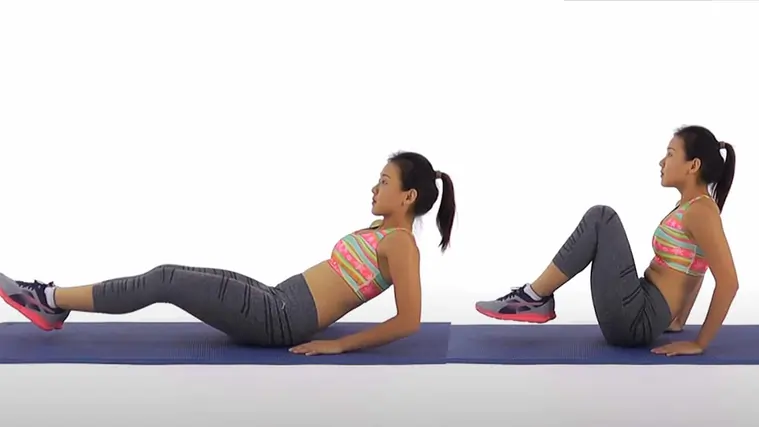
- Take a seat with your knees bent and your feet flat on the ground. Maintain a straight back and place your hands slightly behind you for support.
- Keep your back straight, lift your feet off the ground, and lean back a little.
- Stretch your legs outside and return to your starting posture without touching the ground.
- Keep your core active and in control while you repeat the exercise as many times as you like.
Variation of Seated Knee Tuck
Weighted sitting Knee Tucks: If you think you’ve mastered the basic sitting knee tuck, think about adding more weight. Perform the seated knee tucks while balancing a medicine ball, or any other weight, over your ankles using the same technique as the body weight variation.
Seated Knee Tucks to Leg Crunches: You can also include knee tucks into other workouts. For example, you may alternate between knee tucks and leg crunches. Keep your legs straight and tighten your core to pull your thighs to your chest after performing a seated knee tuck. Go back to knee tucks after that and keep switching.
Seated Knee Tucks on an Incline Bench: This exercise works the stabilizers, hip flexors, and lower abdomen. They become more difficult when done on an incline bench because of the additional resistance from gravity.
Seated Knee Tucks with Resistance Bands: This excellent variation on the classic knee tuck regularly works the core, hip flexors, and stabilizers.
Benefits
Improved Core Strength:
- When sitting, knee tucks immediately work your abdominal muscles. As a result, regular exercise will strengthen your core.
- A strong core is necessary for almost all of the exercises. Strengthening your core is the first step towards improving at difficult workouts.
- Seated knee tucks can help you achieve your goals, whether you want to lift weights and big lifts, toss a ball, or develop those six-pack abs.
Improved Posture:
- The fact that a weak core frequently results in slouched shoulders, an anterior pelvic tilt, and other postural problems surprises many people.
- Your abdominal muscles maintain your body’s alignment and support your spine.
- Seated knee tucks can help you strengthen your core and improve your posture right away if you have back pain or stiffness.
Enhanced aesthetics:
- Let’s face it, almost everyone wishes they had more attractive abs. Abdominal muscles can be strengthened and characterized by performing knee tucks while seated.
- This little exercise can make your core look better right away.
Common Mistakes When Performing Seated Knee Tucks
Complete Partial Reps:
- Half-repetitions are the most frequent mistake made when performing sitting knee tucks. Most people bend their knees straight back to the initial position after raising them to their chest.
- You must always fully stretch your legs to get the most out of each repetition. By doing this, you may make sure that the exercise appropriately strains your abs.
Getting Your Back Rounded:
- Knee tucks when seated need to be stable. Rounding one’s back puts excessive pressure on the spine and increases the likelihood of back conditions.
- To fix this mistake, concentrate on keeping your back straight and stabilizing your upper body. Your core will be strengthened, and your back will be secured.
Rushing the Method:
- Doing the sitting knee tuck too quickly is another frequent mistake. Too often, people shift their legs toward and away from them by rapidly moving their upper body back and forth.
- Rushing through the workout puts more strain on your arms and back than your abs, even though it is certain to increase your heart rate. Carefully performing seated knee tucks is the aim.
- To correct this mistake, concentrate on carefully moving your legs back and forth while fully activating your core muscles.
Prevention
- Before performing sitting knee tucks, confirm that you’re properly warmed up.
- Maintain good form throughout the whole activity.
- If you feel any pain or difficulty, stop exercising and consult a trainer.
Conclusion
- One common exercise for strengthening the core is the sitting knee tuck, sometimes known as a reverse crunch. They mainly work the abdominals, with secondary activation of the obliques, hip flexors, and lower back. Sitting on the floor, you must use your core to raise your legs toward your chest and then extend them back out without contacting the floor.
- Stronger core muscles, more defined abs, and improved posture are among the advantages. Hunching the back, rushing the exercise, and performing insufficient repetitions are common mistakes. Leg crunches, weights, resistance bands, and incline benches are a few variations.
- Warm up before starting any task, keep good form at all times, and stop if something aches.
FAQs
What advantages come with performing knee tucks while seated?
Knee tucks while seated improve hip flexor flexibility, core strength, and overall core endurance. Because they are flexible exercises that can be performed anywhere, they are a great addition to any training program.
How many knee tucks should one perform when seated?
Start with 10 to 16 repetitions. Once you are proficient with seated knee tucks, you may add v-sits and v-ups to make your core exercises more challenging.
Can Seated Knee Tucks help reduce belly fat?
They strengthen and tone the core, but fat loss requires diet, exercise, and general calorie control.
What is the effectiveness of knee tucks when sitting?
Knee tucks while seated primarily target your abdominal muscles. As a result, regular exercise will make your core stronger. A strong core is necessary for almost all exercises. The first step to getting better at compound lifts is developing a strong core.
When sitting, what do you call a knee tuck?
An essential part of any core training routine is the sitting knee tuck, sometimes known as the reverse crunch. If you want to build six-pack abs or strengthen your core, seated knee tucks are perfect.
Do knee tucks help when seated?
By introducing knee tucks into your exercise routine, you can use your core and hip flexors. It’s a dynamic workout that improves both your strength and overall coordination.
References:
- Aliens, A. (2020b, November 25). Seated Knee Tucks: A complete guide | How to build core strength! Anabolic Aliens. https://anabolicaliens.com/blogs/the-signal/seated-knee-tucks?srsltid=AfmBOopLT2tpP2YgtvtUxaSG73b-zIvSrfL888-SBxIGkMT0GfLeJF2E
- Seated knee tucks – Grinder gym. (n.d.-b). https://grindergym.com/seated-knee-tucks/