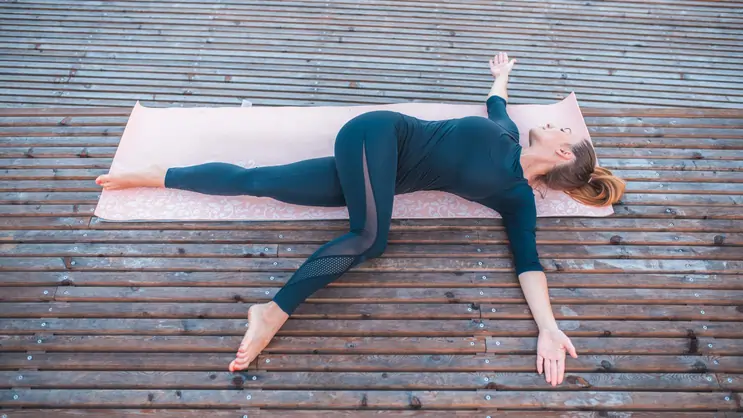
Supine Spinal Twist
Table of Contents
Introduction
The Supine Spinal Twist is a gentle and effective exercise that helps improve spinal mobility, release tension in the lower back, and promote relaxation.
By rotating the lumbar and thoracic spines while lying on one’s back, this twist relieves tension caused by extended sitting, bad posture, or repetitive strain.
Because it stretches the glutes, obliques, and lower back muscles, it is particularly helpful for people with musculoskeletal problems or sedentary lifestyles.
In addition to its physical benefits, the supine spinal twist boosts parasympathetic activation, which relaxes the nervous system and facilitates digestion, making it a great addition to cool-down exercises, evening stretches, or therapy regimens for spinal health and stress reduction.
Supine Spinal Twist Exercise Video
Benefits
- Boosts spine mobility: This position makes the spine more flexible, facilitating more fluid movement. It is particularly helpful if you spend a lot of time seated.
- Enhances Digestion: The twist improves digestion and lessens pain or bloating by massaging the inside organs.
- Lessens Stress and Tension: This posture eases tension in the back, shoulders, and neck. By lowering anxiety and calming your thoughts, you can also help you focus on your breathing.
- Stretches the Hips, Shoulders, and Back: It stretches the hip flexors, glutes, and lower back, and opens the shoulders, enhancing flexibility and posture.
- Detoxifies the Body: By removing toxins from the liver and kidneys, the twist aids the body’s natural detoxification process.
Indications
- Lower Back Pain or Tension: encourages relaxation of the lumbar spine and eases tension in the surrounding muscles.
- The thoracic spine’s rigidity enhances mid-back rotational mobility, particularly in sedentary or tech-using people.
- Unbalanced position: Prevents extended sitting, forward head position, and spinal compression.
- Digestion discomfort can be relieved by mild compression of the abdomen, which promotes peristalsis.
- Stress and anxiety stimulate the parasympathetic nervous system, which encourages rest and deeper sleep.
- Hip and pelvic alignment issues can be resolved by gently moving the sacroiliac joints and hip muscles.
- Recovery from a Minor Musculoskeletal Injury: Aids in the restoration of spinal mobility and proprioception under rehabilitative circumstances.
- Menstrual pelvic pain or congestion may lessen pelvic and lower abdominal strain.
- Limitations in Respiratory Function: Opening the chest and rib cage facilitates diaphragmatic breathing.
How to Do a Supine Spinal Twist?
- Supine is the position.
- With your knees bent and pointing toward the ceiling, place the soles of your feet on the floor. Press onto your feet to raise your hips slightly off the ground, then move them an inch to the right. Because it enables your hips to stack on top of one another when you enter the twist, this step is crucial.
- Exhale, then place your right knee in your chest while keeping your left leg flat on the ground. Maintain an aggressive flexion of your left foot throughout the position. Inhale.
- Look over your shoulder with your right fingertips as you turn your head to the right. You can omit this step if it is uncomfortable for your neck.
- Lower your left knee and right shoulder toward the floor as you release the breath.
- For five to ten breaths, maintain the position. Breathe, turn onto your back, and push your right knee into your chest to release the pose. Lower both legs to the floor to neutralize your spine for a few breaths before moving on to the other side.
When doing a supine spinal twist, what safety measures should I take?
Both new and experienced yoga practitioners can benefit from the supine spinal twist’s many mental and physical advantages.
Adopting this stance should be done carefully, though, particularly if you have any underlying medical issues. When performing a supine spinal twist, the following safety precautions should be taken:
- Consult your doctor. See your doctor about any injuries or health concerns you may have before striking this pose. Your physician can advise you on the safety of this position.
- See your doctor: Before striking this posture, discuss any injuries or health concerns you may have with your physician. Your physician can advise you on the safety of this position.
- Warm-up: Do some gentle yoga poses or stretches to warm up your body before performing the supine spinal twist. This lessens the possibility of any injuries or strains.
- Be mindful of your body: Don’t push yourself too far during the supine spinal twist. If you experience pain, leave the posture immediately.
- You can use supports like blankets or bolsters to modify your stance if you have any physical restrictions or injuries. This makes it possible for you to perform the posture safely and comfortably.
FAQs
What benefits might a supine spinal twist offer?
It aids in strengthening the knees, hamstrings, and quadriceps. The muscles of the abdomen get tighter. The lower back spinal stretch strengthens and engages the core. Flexibility and Range of Motion: By aligning the neck with a hip twist, the lower back, glutes, and hip muscles can be stretched.
Is it possible to relieve back pain with a supine twist?
The following are some additional noteworthy benefits of the supine twist exercise: Relieves Back Pain: Yoga’s supine twist relieves back pain. It stretches the abdominal muscles and relieves tension in the shoulders, neck, and back.
What time of day is best for doing supine poses?
Supine postures are usually done at the end of a session because they help the body relax and cool down.
What should you do if you get a spinal twist?
Your pelvis acts as your base when performing standing and seated twists such as the Half Spinal Twist (Ardha Matsyendrasana). Both of your sitting bones need to be on the ground to create a strong foundation. Avoid sitting on your heels or raising one hip above the other.
How should a supine twist make me feel?
Calms the Body and Mind: The supine twist is a great method for calming the body and mind. When your mind is at ease, you feel released. It enhances the quality of your sleep and leaves you feeling refreshed. Boosts Muscle and Body Flexibility: This yoga pose also helps to increase the flexibility of your shoulders, hips, and back.
How long should one hold a supine spinal twist?
Hold this position for 15 to 30 seconds, then release your grip and return to your starting position. Change to the opposite side after two to four repetitions.
References
- Yogitim. (2024, August 8). Supine Spinal Twist Pose (Supta Matsyendrasana) • Yoga Basics – Yoga Basics. Yoga Basics. https://www.yogabasics.com/asana/knee-down-twist/
- Ryt, A. P. (2020, July 31). How to do the Supine Spinal Twist (Supta Matsyendrasana) in yoga. Verywell Fit. https://www.verywellfit.com/supine-spinal-twist-supta-matsyendrasana-3567125
- Seo, K. (2025, March 7). Everything you need to know about Seated Twist Yoga Pose. Flow and Grow Kids Yoga. https://flowandgrowkidsyoga.com/blogs/news/everything-you-need-to-know-about-seated-twist-yoga-pose
- How to do Supta Matsyendrasana (Supine Spinal Twist) – Omstars. (n.d.). https://omstars.com/blog/pose-tutorials/how-to-do-supta-matsyendrasana-supine-spinal-twist/