Frozen Shoulder Recovery Timeline and Exercises
Table of Contents
Introduction
Adhesive capsulitis, another name for frozen shoulder, is a challenging condition characterized by pain, stiffness, and restricted range of motion. But you’ll be glad to learn that recovery is achievable with the correct strategy.
Customized frozen shoulder therapy is our area of expertise. As an upper extremity orthopedic expert with fellowship training, I can help you restore mobility and reduce pain using minimally invasive techniques and cutting-edge technologies.
Daily tasks, including dressing, brushing your hair, reaching above, and sleeping comfortably, may become challenging. Depending on the degree of the condition and each person’s recovery, frozen shoulder often develops gradually and may take several months to a few years to improve.
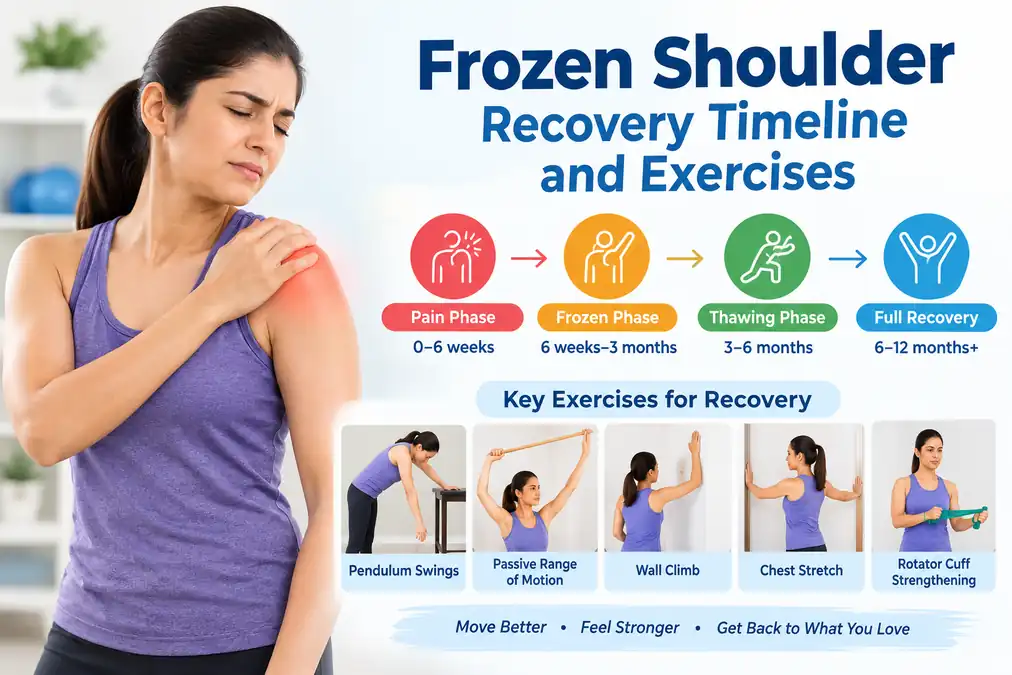
Three stages are often involved in the healing process: the freezing stage, during which shoulder pain worsens and mobility becomes restricted; the frozen stage, during which stiffness becomes more apparent; and the thawing stage, during which shoulder mobility progressively improves. Each stage’s duration and symptoms, however, differ from person to person.
Physiotherapy and exercise can help restore daily function, lessen stiffness, and increase shoulder mobility. Depending on your amount of pain and stage of recovery, gentle activities like pendulum exercises, table slides, finger wall walks, and towel-assisted stretches may be helpful.
The degree of stiffness, the condition’s stage, overall health, and adherence to a suitable rehabilitation program all affect how long it takes to recover from frozen shoulder. A physiotherapist can assist in choosing and safely advancing appropriate exercises.
Understanding the Phases of Frozen Shoulder
Adhesive capsulitis, often known as frozen shoulder, is a painful disease that causes the shoulder joint to become inflamed, rigid, and difficult to move.
Frozen shoulder occurs in three stages:
- Freezing Stage: Range of motion gets restricted, and pain progressively worsens. \
- Frozen Stage: Stiffness persists although pain may lessen. It might be challenging to reach behind your back or overhead during regular employment
- Thawing Stage: Mobility starts to become better. This stage might extend anywhere from six months to two years with the right treatment.
Treatment for frozen shoulder should be customized according to your stage of recovery, as each person experiences these phases in a unique way.
Symptoms of frozen shoulder
A frozen shoulder shows a reduced range of motion and feels painful and fixed. The following are signs of a frozen shoulder:
Stiffness that first becomes worse but eventually starts to get better; dull, agonizing pain that gets worse as the illness advances and may get worse when you move your arm.
It could take anywhere from two to nine months for a frozen shoulder to appear. Range of motion is still restricted, and stiffness persists even though the pain may gradually get better.
Anatomy of Frozen Shoulder
The glenohumeral joint, which joins the top of the humerus (upper arm bone) to the glenoid cavity, a scooped-out section of the scapula (shoulder blade), is the primary pivot in the shoulder’s larger and more varied range of motion.
The glenohumeral joint helps move the shoulder forward and backward and allows the arm to rotate and extend outward from the body. A flexible capsule containing synovial fluid, a lubricant, covers and maintains the joint’s range of motion. Tendons that join muscles to bones, ligaments that join bones to bones, and fluid-filled sacs termed bursae that cushion bones and muscles during movement around the capsule.
The rotator cuff consists of a group of muscles and tendons that support the shoulder joint and help keep it stable. The shoulder’s extraordinary flexibility can be explained by its complex soft tissue architecture, and this also makes it at risk for trauma and chronic wear and fatigue.
Cause of frozen shoulder
Although the exact origin of a frozen shoulder is unknown, an inflammatory process is most likely involved. Freezing can occasionally happen when the shoulder has been immobilized for an extended period of time due to an illness, accident, or surgery. The reason is often unclear. Fortunately, the shoulder can typically be unfrozen, but a full recovery requires a lot of self-help and patience.
The shoulder’s range of motion is limited by inflammation, which also causes pain that gets worse with movement. Usually caused by overuse injuries like bursitis or tendinitis of the rotator cuff, the process starts with an injury (such as a fracture) or inflammation of the soft tissues.
The connective tissue that covers the glenohumeral joint, commonly referred to as the joint capsule, thickens and becomes compressed when the shoulder is immobilized in such a way, losing its natural ability to contract. In an effort to lessen the pain associated with shoulder movement, the capsule compresses even further. In an effort to lessen the pain associated with shoulder movement, the capsule compresses even further.
The joint may lose its lubricating synovial fluid, and the humerus has less space to move. In more serious cases, adhesions, or bands of scar tissue, form between the humeral head and the joint capsule.
Who gets a frozen shoulder?
The following variables raise the risk of frozen shoulder:
- Lack of exercise therapy following tendinitis or an injury.
- Wearing a sling for longer than a few days without periodically stretching.
- 10% of patients with rotator cuff problems go on to develop frozen shoulder.
- Forced immobility following surgery, a heart attack, or a stroke.
- Multiple conditions such as Parkinson’s disorder or thyroid disorders
5 Frozen Shoulder Exercises
Before beginning any exercise, always warm up your shoulder. Taking a warm bath or shower for ten to fifteen minutes is the best approach to do that. While it might not be as useful, you could instead use a moist heating pad or a damp cloth that has been heated in the microwave.
Stretch till you feel tight but not uncomfortable while doing the following exercises.
1. Pendulum exercises
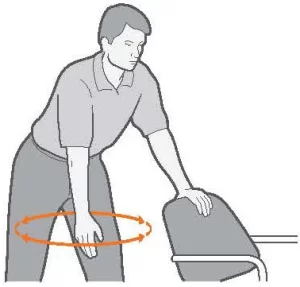
How to do it:
- Let your shoulders drop.
- Stand with your injured arm hanging down and lean slightly forward.
- Swing the arm in a small circle with a diameter of one foot.
- Once a day, rotate ten times in each direction.
- Increase the swing’s diameter as your symptoms get better, but don’t go overboard.
- When you’re ready for more, you may increase the stretch by holding a little weight (three to five pounds) in the swinging arm.
2. Towel Stretch
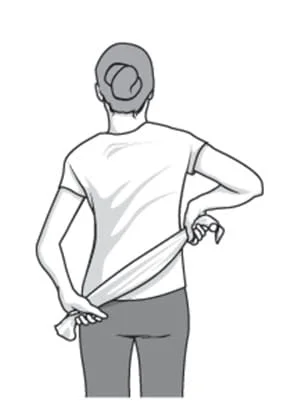
How to do it:
- Carry a three-foot-long towel horizontally with both hands behind your back.
- To stretch the affected arm, raise it with your healthy arm.
- Draping the towel over your healthy shoulder is an advanced version of this exercise.
- Grasp the bottom of the towel with your injured arm and pull it toward your lower back with your unaffected arm.
- Ten to twenty times a day, do this stretch.
3. Finger Ladder Exercises

How to do it:
- A seat should be three-quarters of an arm’s length away from a wall.
- Reach out and touch the wall at waist level with the fingertips of the injured arm.
- With your elbow slightly bent, gently move your fingers up the wall in a spider-like pattern until your arm approaches shoulder level or as far as is comfortable. Instead of using your shoulder muscles, use your fingers.
- Repeat after lowering the arm gradually (using the good arm if necessary).
- Do the exercises 10 to 20 times a day.
4. Armpit stretch
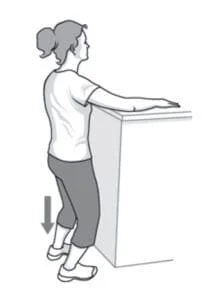
How to do it:
- Raise the injured arm about breast height onto a shelf using your good arm.
- Open your armpit by gently dropping your legs.
- Stretch your armpit and bend your leg slightly before straightening.
- Ten to twenty times a day, complete this exercise.
5. Cross-body reach

How to do it:
- Grab a place to sit or stand.
- Lift the affected arm at the elbow with your normal arm, then move it up and across your body while providing little pressure to extend the shoulder.
- Ten to twenty times a day, do this stretch.
6. Rotator cuff strengthening
Exercises to strengthen. Before doing any strengthening activities, always remember to warm up your shoulder while performing your stretching exercises. Then your rotator cuff can be added once your range of motion has improved.
1. Outward rotation
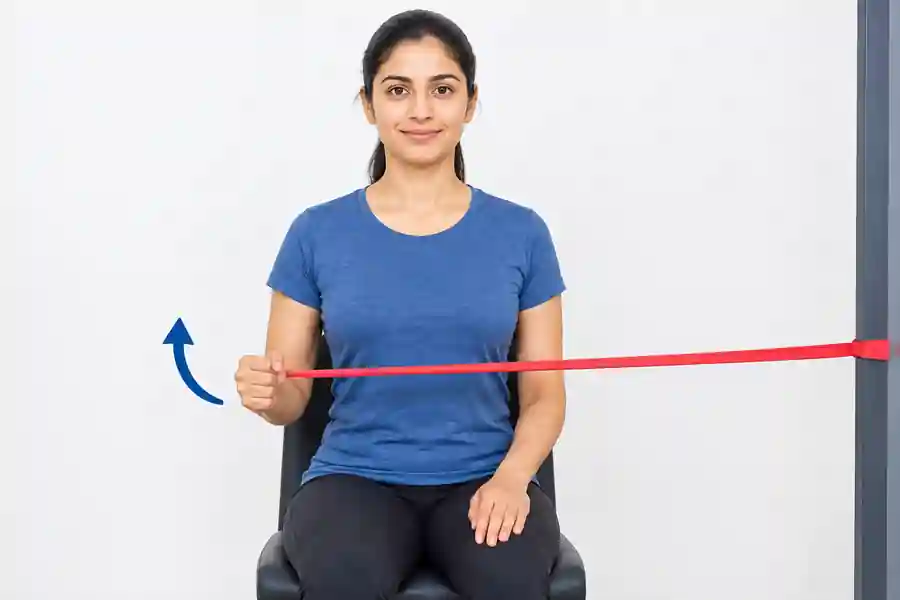
How to do it:
- With your elbows at a 90-degree angle in front of your sides, hold a rubber exercise band between your hands.
- Hold the pose for five seconds, extending the bottom half of the injured arm outward approximately two or three inches.
- After a day, continue 10 to 15 times.
2. Inward rotation
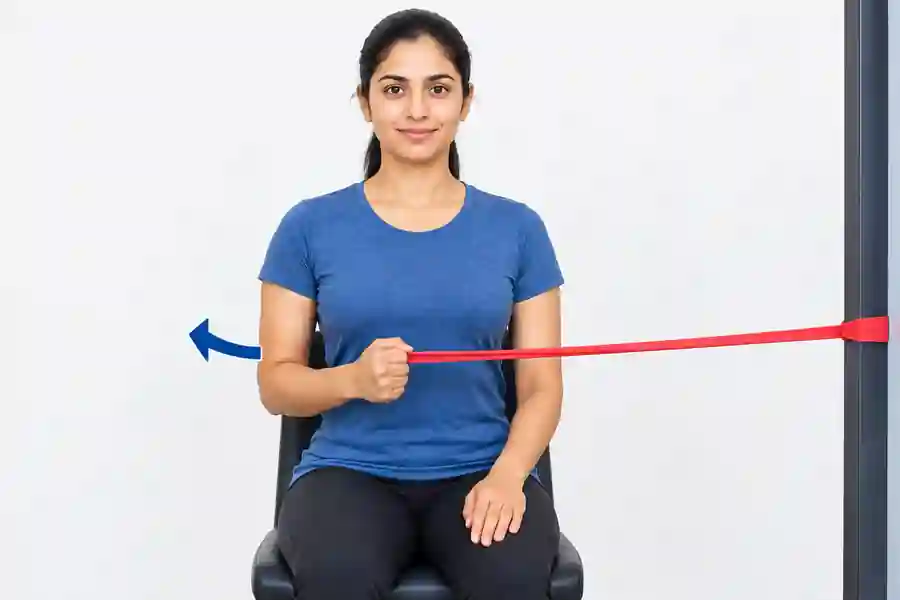
How to do it:
- Place one end of a rubber exercise band around the doorknob while leaning near a closed door.
- Holding the elbow at a 90-degree angle, grasp the opposite end with the hand of the injured arm.
- Hold the band for five seconds after moving it two or three inches away from your body.
- Do these exercises 10 to 15 times a day.
Treatment for frozen shoulders
See your therapist or a shoulder specialist for a physical examination if you believe you have a frozen shoulder or are in the process of developing one. To assess your shoulder’s range of motion, the doctor will ask you to move your arm in various directions. These motions might include the Apley scratch test, which involves reaching down your back to touch the opposite shoulder blade or across your chest to touch the opposite shoulder.
To ensure that there are no underlying issues, such as arthritic changes or a dislocation, your healthcare professional could order X-rays. To look for a rotator cuff injury, an MRI could be requested.
Reducing pain and restoring the shoulder’s natural range of motion are the main goals of therapy for a frozen shoulder. Your treatment plan will be created by your clinician. The following are possible treatments for frozen shoulder:
- Anti-inflammatory medications that can help with pain include aspirin, ibuprofen (Motrin, Advil), and naproxen (Aleve, Naprosyn, Anaprox).
- Applying an ice pack or bag of frozen veggies to the shoulder for ten to fifteen minutes many times a day is an additional alternative
- Delivery of corticosteroid medications into the shoulder joint or soft tissues
- The cornerstone of treatment is physical therapy, which starts with joint capsule-stretching activities and progresses to strengthening exercises. A physical therapist can teach you the right exercises and demonstrate how far you can push yourself. You may perform the majority of your workouts at home on your own if you are aware of your limitations.
Avoid doing anything that makes your shoulder pain worse, such as lifting or overhead reaching, as you try to extend the shoulder capsule. If you strictly adhere to the frozen shoulder exercise regimen, you should be able to resume your usual level of activity (more than 90% of patients improve with these nonsurgical techniques).
However, recovering completely from a frozen shoulder may take many months to two or three years. See your doctor again or speak with a shoulder expert if you don’t continue to improve.
What is the typical duration of frozen shoulder?
“How long does frozen shoulder last?” is a frequently asked question. Depending on the severity, timing of therapy, and underlying medical issues, healing from frozen shoulder can take anywhere from nine months to more than two years.
Recovery time may be prolonged by the following factors:
- Delaying a diagnosis
- Insufficient early intervention
- Underlying diseases such as thyroid issues or diabetes
Early intervention with appropriate frozen shoulder treatment can enhance long-term results and drastically reduce healing time.
Options for Treating Frozen Shoulders at Every Stage
Adhesive capsulitis, often known as frozen shoulder, necessitates a focused strategy that changes as the illness worsens.
In order to maximize outcomes and reduce pain, we customize your treatment plan according to your unique stage of recovery.
This early phase, which is characterized by increasing pain and decreased mobility, can extend for a few weeks to months. Controlling inflammation and preventing more joint limitation are the main objectives during this time.
Among the possible treatment approaches are:
Anti-inflammatory drugs: To lessen pain and swelling, NSAIDs or injectable or oral corticosteroids may be utilized.
In order to loosen the joint capsule and make workouts more bearable, heat treatment is applied prior to movement or physical therapy.
Exercises for gentle stretching: Passive or aided movement preserves current range of motion without aggravating it further.
The goal of guided physical therapy is to maintain joint function without causing flare-ups.
Permanent Stiffness During The Frozen Stage
At this point, there may be a progressive decrease in pain, but there is still considerable stiffness and restricted range of motion. Patients frequently have the greatest limitations in their day-to-day activities at this time.
Among the possible treatments are:
Ongoing physical therapy: Mobility exercises and targeted workouts assist in gradually increasing joint flexibility.
Manual therapy: Methods like joint mobilization can facilitate capsule remodeling and ease tightness.
Corticosteroid injections: In certain situations, intra-articular steroid injections can help with movement and provide regional pain relief.
Through The Thawing Stage (Gradual Improvement)
A gradual recovery of shoulder mobility characterizes the last stage of frozen shoulder. Most patients see notable functional improvement when the appropriate strategy is used.
The emphasis of treatment consists of:
Progressive strengthening exercises: To promote shoulder stability, therapists implement strengthening routines once stiffness subsides.
Functional rehabilitation: Activities that replicate everyday tasks aid in the restoration of self-assurance and motor coordination.
Home exercise regimens: To sustain the progress obtained during therapy, stretching and strengthening exercises are carried out at home.
Advice for Building a Speedy Recovery
Even though healing takes time, patients may assist healing and encourage prompt shoulder pain alleviation by doing the following:
- Maintain your physical treatment regimen. Frequent workouts lessen stiffness and preserve mobility.
- Before stretching, apply heat. Heat facilitates mobility by loosening the joint capsule.
- Every day, stretch at home. Progress comes from slow, deliberate movement; avoid abrupt or forced action.
- Pay attention to your body. Some pain is natural, but intense pain may indicate strain or overuse.
- Keep your posture correct. When you’re sleeping or relaxing, keep your shoulders from sagging and support your arms.
When to Consult a Shoulder Expert
It could be time to see a specialist if your shoulder stiffness has persisted for more than a few weeks and isn’t getting better, or if the pain is getting in the way of your everyday activities or sleep.
Additionally, you should get professional help if:
- Your shoulder pain began following surgery or an injury.
- Conservative therapies have not proven effective.
- You don’t know what stage of frozen shoulder you are in.
Conclusion
An adequate physiotherapy program may help reduce stiffness, increase flexibility, and facilitate everyday tasks, even if progress may take months or more.
As your shoulder improves, progressively increase the range of motion after beginning with mild, pain-tolerant activities. Avoid intense activities and abrupt, forceful stretches that worsen your symptoms. See a medical expert to confirm the diagnosis and create a customised treatment plan if shoulder pain or stiffness continues.
Many patients see significant gains in shoulder mobility and function with the correct direction and consistent practice. Recall that everyone recovers differently, and success should be gauged by increasing mobility and comfort rather than by a schedule.
FAQs
When healing from frozen shoulder, what should I avoid?
Exercises involving heavy lifting, prolonged stretching, sudden jerking motions, or severe pain should be avoided. Keep moving gently inside your comfort zone.
If I have frozen shoulder, when should I see a doctor?
See a physician if shoulder pain or stiffness persists, prevents you from sleeping, or limits your daily activities. If you have sudden, severe pain, significant swelling, fever, or shoulder pain following a traumatic accident, get medical attention right away.
Should I practice out if my frozen shoulder hurts?
It is normally advised to move gently and tolerably; nevertheless, do not push your shoulder through severe or worsening pain. Reduce the intensity of your workouts and speak with your physiotherapist if they result in a persistent worsening of your symptoms.
For frozen shoulder, is ice or heat preferable?
Heat can release stiff muscles and make light stretching more comfortable. After exercise, ice may assist in reducing pain. Avoid applying extremely high or low temperatures directly to the skin, and use either with a protective towel.
Which exercises work best for frozen shoulder?
Pendulum swings, table slides, finger wall walks, mild shoulder stretches, and towel-assisted stretches are examples of common exercises. A physiotherapist may recommend exercises based on your symptoms and level of recovery.
Is surgery required for the healing of a frozen shoulder?
Indeed, with time, adequate exercise, physiotherapy, and pain management, many individuals do recover without surgery. If symptoms continue in some circumstances, more medical care may be necessary.
How much time does it take to recover from a frozen shoulder?
It might take many months to a year to recover from frozen shoulder. The length of time is determined by the degree of pain, stiffness, general health, and treatment response.
References
- Singh, N. (2025, September 30). How Long Does Frozen Shoulder Recovery Take? What to Expect. Frozen Shoulder. https://www.singhorthopedics.com/blog/how-long-does-frozen-shoulder-recovery-take-what-to-expect
- Harvard Health. (2023, June 26). How to release a frozen shoulder: 5 stretches to use. https://www.health.harvard.edu/pain/how-to-release-a-frozen-shoulder
- Keerthy. (2026, October 7). Frozen Shoulder physiotherapy: stages, treatment & recovery timeline. Curis 360 Physiotherapy. https://www.curis360.com/blog/frozen-shoulder-physiotherapy-treatment-exercises