Evening Stretching Exercise for Stiff Joints
Table of Contents
Introduction
Stretching and low-impact workouts enhance mobility, lessen stiffness, and strengthen joints. For pain-free mobility, stay active.
Mobility, flexibility, and general well-being depend on maintaining healthy joints. Whether you have arthritis, joint discomfort, or just want to maintain strong joints, incorporating the right stretches and exercises into your regimen can help enhance function and reduce pain.
How and When to Stretch Before Going to Bed
Stretching at night works best when you can do it regularly, whenever and wherever you can. Before going to bed, try to stretch for 30 to 60 minutes. You’ll be more inclined to skip it if you put it off until the last minute when you’re exhausted. Do it while you’re winding down, not right before bed.
She advises taking a few deep breaths to begin. Take five to ten minutes to calm your entire body if you’re feeling worried and agitated. The stretches will help you more.
The objective is to gradually lengthen the muscle groups rather than overextend them, just like with any stretching. When stretching, avoid forcing your body beyond its limits. You may feel mild tension or discomfort, but the stretch should never cause pain. Throughout the stretch, you should be able to breathe.
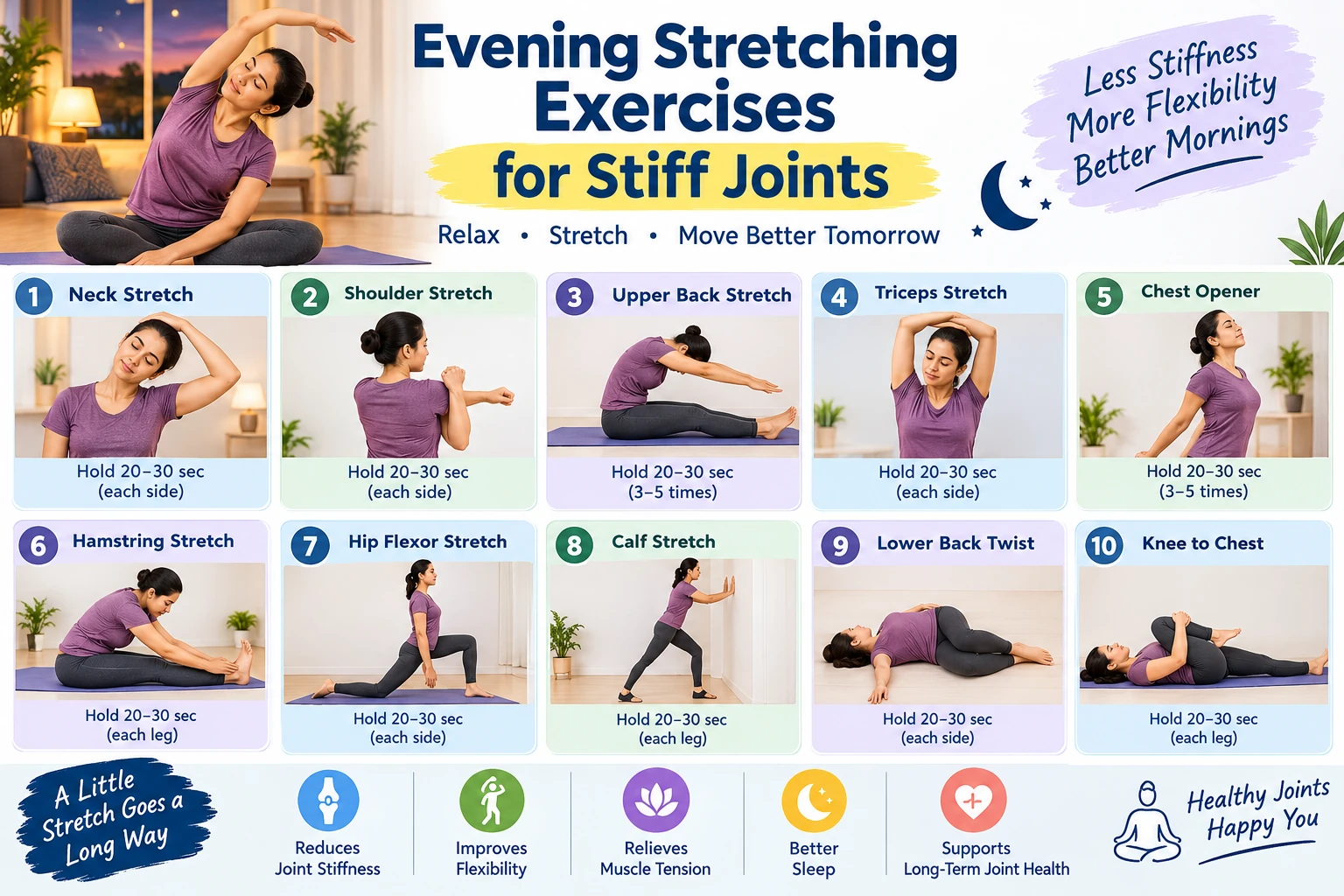
10 Stretches to do at bedtime
1. Neck stretch
The neck and upper trapezius muscles are worked by this stretch. Tension accumulates in these shoulder and neck muscles throughout much of the day, especially if you’re seated at a computer.
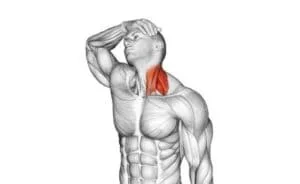
- Keep youKeep your posture correct whether you’re standing or sitting.
- Maintaining a straight face, extend your left hand toward the floor and lean your right ear toward your right shoulder.
- Gently bring your head up to your right shoulder with your right hand.
- Hold for 20 to 30 seconds.
- Repeat two or three times on the right, then switch sides and do it again.
Tip: Make sure your neck is in line with your body and that you are starting in a neutral posture by using a mirror.
2. Neck twist
This stretch, which works the scapula, can also benefit those who spend a lot of time sitting down.

- With the palm facing out, place your right hand on your tailbone.
- Turn your head toward your left hip while bending your neck to the left.
- Reach your right hand down and use your left to gently pull your head toward your left hip.
- For 20 to 30 seconds, hold.
- After two or three repetitions on the left, switch sides and repeat.
Tip: For a greater stretch, place your palm on your tailbone.
3. Spinal twist
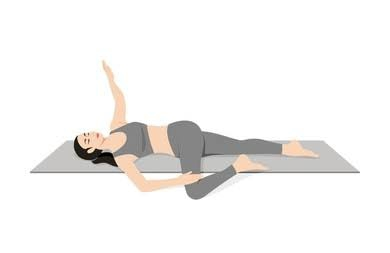
- With your legs bent, your knees on top of each other, and your arms on top of each other, lie on your right side.
- As you turn your head and upper body to the left, slide your left (top) arm across your torso.
- Rotate back to the stacked position after holding the “T” position for ten seconds.
- After three to five repetitions on the left, switch sides and repeat.
4. Cat-Cow stretch
The lower back, which might get tight from sitting, standing, or walking, is the focus of the cat-cow stretch. Although most individuals don’t always bend forward or backward correctly, there is no chance of performing it incorrectly when you’re on your hands and knees, since you’re in an unweighted posture.
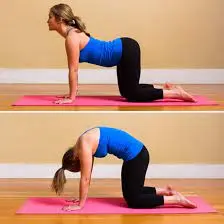
- Place your hands behind your shoulders and your knees beneath your hips as you drop to your hands and knees. (This is your posture of neutrality.)
- Squeeze your buttocks, tuck in your tailbone (“cat”), and tighten your abdominal muscles to arch your back.
- For ten seconds, maintain this posture.
- Stretch the front of your neck (“cow”), twist your tailbone upward, and allow your lower back to droop toward the floor.
- For ten seconds, maintain this posture.
- Repeat five to ten times after returning to the neutral posture.
5. Chest stretch
Even people with great posture round their shoulders, which might cause tightness in the front of the chest. The pectorals and anterior deltoid muscles, which are found in the shoulders and chest, are worked by this stretch.
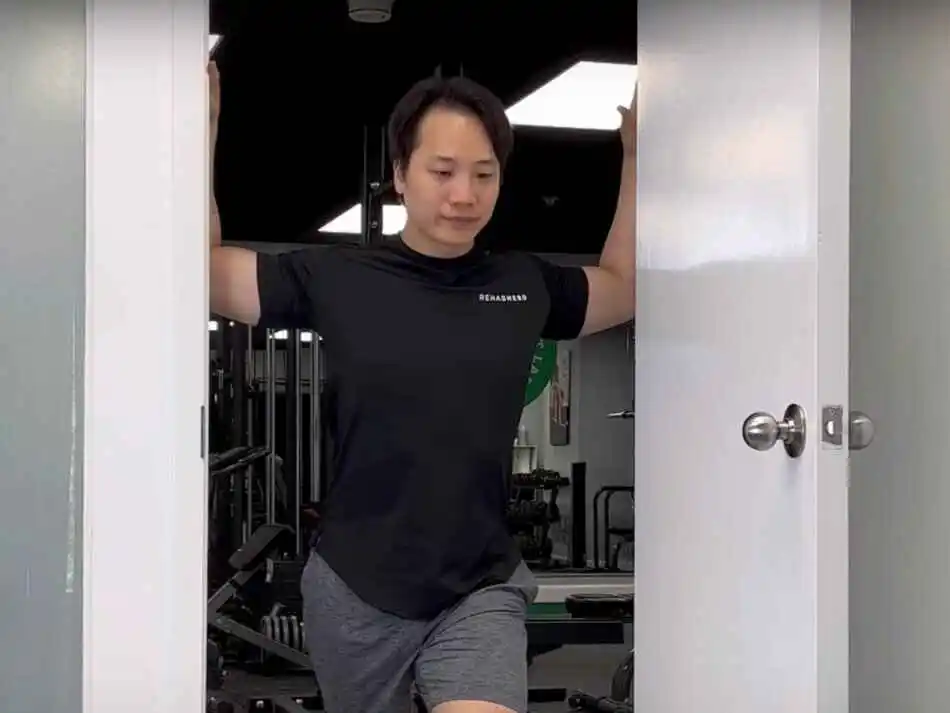
- With your shoulders and elbows at right angles and your forearms flat on the doorframe, stand in a doorway.
- Stretch your upper shoulders and front of your chest as you lean forward.
- Hold for thirty seconds.
- Do this two or three times.
- Advice: Your lower back shouldn’t arch or feel strained.
6. Child’s pose
This stretch allows for optimal spinal alignment by releasing tension in the lower back and stretching the glutes and upper body.

- Lower your butt slowly toward your feet from your hands and knees (neutral).
- Hold for thirty seconds.
- Go back to neutral and do it three times.
Advice: Pay attention to shifting your butt toward the direction of your heels.
7. Single knee-to-chest
The hips are the primary target of this stretch, but it also opens up the glutes, back, neck, and shoulders.
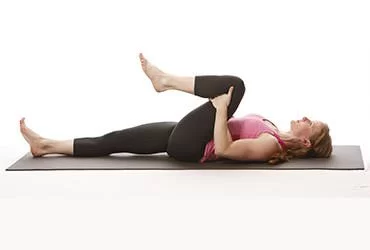
- Lie on your back with both legs straight, then bend your right knee and hold the back of your thigh with both hands.
- Pull your knee gently to your chest.
- Hold for thirty seconds.
- After three repetitions on the right, switch sides and repeat.
Advice: Bend your opposing leg to support your pelvis if you have lower back pain during this stretch.
8. Hamstring stretch
We frequently overlook the hamstrings, a large muscle group that we utilize frequently for sitting, standing, and walking, which can restrict our range of motion and put stress on our joints. This stretch can help relax the calves in addition to the hamstrings.
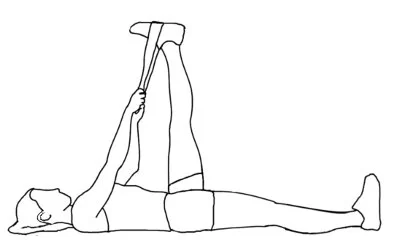
- Lift your right leg straight up while lying on your back with your legs outstretched, then use both hands to hold the back of your right calf.
- Hold for thirty seconds.
- Bring the leg down.
- After three repetitions on the right, switch sides and repeat.
Advice: It’s more crucial to keep the leg you’re extending as straight as possible than to get it as high as you can. If you have a strap, it may be quite useful. Put it around your foot to deepen the stretch by gently pulling your leg back.
9. Quadriceps stretch
This stretch focuses on the quadriceps, or the front of the thighs, a big muscular area that is frequently used when standing, climbing stairs, or getting in and out of seats. It’s easy to perform this stretch throughout the day, but it’s crucial to do it just before bed.

- Bend your right knee while standing, keeping your right hand to hold onto your foot or ankle behind you.
- Pull your foot gently in the direction of your butt until your front thigh begins to stretch.
- Hold for thirty seconds.
- Bring your leg down.
- After three repetitions on the right, switch sides and repeat.
Advice: Make sure your straight leg and bent knee are in alignment. “Take a good, tall stance. Neither forward nor backward bending is appropriate.
10. Calf stretch
Another significant region that we frequently overlook is the calves.
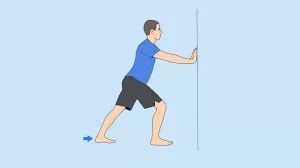
- Stand facing a wall with your right foot forward and your left foot behind, keeping both feet pointed straight ahead.
- Lean forward and place your hands on the wall in front of you while bending your front leg and straightening your back leg.
- Move closer to or farther away from the wall to adjust the strength of the stretch as you gradually bend your front leg more deeply until you feel a stretch at the back of your rear leg.
- Hold for thirty seconds.
- To go back to a neutral position, straighten your front leg.
- After three repetitions, switch sides and repeat.
Advice: Keep the heel of your back foot on the ground and your toes facing forward.
The Importance of Joint Health
Joints link bones and allow mobility, but they can become stiff, inflammatory, or weaker over time due to age, injury, or chronic illnesses. You may stay active and pain-free by maintaining joint flexibility, minimizing pain, and reducing stiffness with the use of strengthening and stretching activities.
5-minute home stretching routine for stiff joints
Do you feel stiff after sitting for a long time or when you wake up in the morning? Targeted stretching for a few minutes may help release tense muscles, increase range of motion, and make daily tasks much simpler.
1. A full-body stretching routine in the morning
A mild head-to-toe stretching practice might help warm up and awaken your muscles and joints before you begin your day if you frequently experience the most stiffness first thing in the morning.
Start with stretching your neck gently:
- Until you get a slight stretch along the side of your neck, tilt your head toward one shoulder.
- Hold for ten to fifteen seconds.
- On the other side, repeat.
- Perform five to ten gentle neck circles in each direction.
Next, let your shoulders and upper body relax
- Ten times, roll your shoulders forward and ten times backward.
- Stretch both arms up to the ceiling.
- Finish with five to ten overhead reaches.
Maintain your spinal mobility exercises:
- Do ten mild trunk rotations to each side, twisting your upper body while maintaining the stability of your lower body.
- Next, perform five to ten side bends on each side, keeping your motions slow and deliberate as you reach for your knee.
2. Chair-Based Mobility Stretching Program
You can move many key joints through a comfortable range of motion while stretching with the assistance of a chair.
Warm up your lower body first:
- With both feet flat on the ground, take a lofty seat on a solid chair.
- To improve circulation and relax your hips, march your legs in place for 30 to 60 seconds.
Next, extend your knees while seated:
- Extend your leg by gradually straightening one knee.
- Controllably lower it back down.
- Perform ten to fifteen repetitions for each leg.
Ankle pumps come next:
- Pull your toes back toward your shins and point them toward the floor alternately.
- Perform 15–20 repetitions.
Proceed with spinal twists while seated:
- With your hips facing forward, sit up straight.
- Gently move your upper body to one side.
- Repeat on the other side after returning to the middle.
- Finish five to ten twists on each side.
Stretch your chest open to finish:
- Put your hands together behind your back.
- Lift your chest and gently pull your shoulders back and down.
- Hold while breathing deeply and slowly for 20 to 30 seconds.
Chair-based stretches are a great option for people who have difficulty maintaining balance or performing exercises on the floor.
3. Lower Back and Hip Stretching Exercise
Tight hips can worsen lower back pain or stiffness, which frequently makes walking, standing, and climbing stairs more difficult.
Start with a figure-four stretch while seated:
- Take a firm chair and sit tall.
- You should cross one ankle over the other knee.
- Gently bend forward until your glutes and hips begin to expand.
- Hold for 20 to 30 seconds.
- On the other side, repeat.
Stretch your hip flexors next:
- Place one foot ahead of the other while standing.
- Gently push your weight forward and move one foot behind you.
- For 20 to 30 seconds, hold.
- On the opposite side, repeat.
Go to the floor and extend your knees to your chest:
- Lying on your back, extend your legs.
- Keeping the other leg loose, gently bring one knee closer to your chest.
- Hold for 20 to 30 seconds.
- On the other side, repeat.
Lastly, perform pelvic tilts:
- Keeping your feet flat on the surface and your knees bent, lie on your back.
- Flatten your lower back against the floor and gently contract your abdominal muscles.
- Hold for a little while, then let go and return to a neutral posture.
- Perform ten to fifteen repetitions.
- Maintaining hip mobility can help you move more efficiently throughout the day and lessen the pressure on other joints.
4. Upper Body and Shoulder Stretching Exercise
Shoulder mobility is necessary for many daily tasks, such as carrying groceries and reaching overhead.
Start by warming up your upper body and shoulders:
- Swing your arms forward and backward in a comfortable range of motion for ten to fifteen repetitions.
- To release the shoulder joints, perform ten backward and ten forward shoulder circles.
Next, extend your shoulders:
- Cross one arm over your chest.
- Gently bring the arm closer to your body with your opposing hand.
- For 20 to 30 seconds, hold.
- On the other side, repeat.
Proceed with a chest stretch in the doorway:
- Press your forearms up against a doorway’s sidewalls.
- Slowly advance until the front of your shoulders and your chest start to expand.
- Hold for 20 to 30 seconds while inhaling deeply.
Lastly, perform mild neck mobility exercises:
- For between fifteen and twenty seconds, tilt your head in the direction of one shoulder.
- On the other side, repeat.
- Make five gentle head rotations in both clockwise and counterclockwise directions, staying within a comfortable range.
- The negative consequences of extended sitting and general bad posture can be mitigated by increasing shoulder and chest flexibility.
5. Ankle and Lower Leg Stretching Exercise
Walking, balance, and general stability are all greatly influenced by your ankles and calves. But this part of the body is frequently disregarded.
Start with stretching your calves while facing a wall:
- With your heel level on the ground, place one foot behind you.
- Gently lean forward while bending your front knee until your calf starts to stretch.
- Hold for 20 to 30 seconds.
- On the other side, repeat.
Next, use ankle circles to increase ankle mobility:
- Raise one foot just a little bit off the ground.
- Make ten clockwise and ten counterclockwise circles.
- On the other foot, repeat.
Proceed with the heel raises:
- For support, cling to a chair, countertop, or other sturdy surface.
- Get up on your toes slowly.
- At the peak, pause for one to two seconds.
- Controllably go back down.
- Perform ten to fifteen repetitions.
Lastly, extend the undersides of your feet:
- Place a small ball or water bottle under one foot and gently roll your foot over it, moving from the heel toward the toes while applying light pressure.
- For 30 to 60 seconds per foot, keep going.
- Maintaining ideal ankle mobility may encourage improved balance and make daily tasks more enjoyable and easy.
How to Plan a Daily Routine of Stretching
The most effective stretching regimen is one that you can perform regularly. Think about combining your stretching exercise with a habit you already have, like drinking coffee in the morning, taking a regular stroll, or watching your favorite TV show just before bed.
Stretching gently for even five to ten minutes a day can enhance mobility, lessen stiffness, and promote healthy movement as you age. Small daily workouts can eventually result in a discernible increase in general flexibility and comfort with daily tasks.
FAQs
Is stiffness relieved by stretching?
Indeed, stretching improves range of motion, increases blood flow, and increases your body’s tolerance to the feeling of tightness, all of which assist in alleviating muscle and joint stiffness.
How can one determine whether stretching is effective?
By assessing both short-term and long-term changes in your body, such as decreased muscle stiffness, greater range of motion, and lower tension during movements, you may determine whether your stretching is effective.
Is stretching best done at night or in the morning?
According to The Power of Morning and Evening Stretching Guide, there is no one “best” time to stretch; depending on your objectives, morning and evening stretching serve entirely different purposes.
Which stretching technique is the safest?
Static stretching, which involves slowly moving a muscle to a point of moderate tension and holding the posture stationary without bouncing, is the safest way to stretch warm muscles.
What are the benefits of stretching exercises?
Frequent stretching increases blood flow, eases muscular tension, and improves joint range of motion.
References
- Cktp, A. K. R. P. D. O. (2021, January 19). 10 stretches to do before bed to improve your sleep. Hospital for Special Surgery. https://www.hss.edu/health-library/move-better/stretches-before-bed
- Best stretches and exercises to improve & maintain joint health. (n.d.). Orthopedics and Pain Medicine Physician Located in Edison, Clifton, Hazlet, Jersey City and West Orange, NJ | Garden State Pain & Orthopedics. https://www.gardenstatepain.com/post/best-stretches-and-exercises-to-improve-maintain-joint-health
- PgDip, S. W. B. (2026, April 1). Stretches for joint relief: Simple exercises to ease stiffness. Healthline. https://www.healthline.com/health/stretches-for-joint-relief