Top VMO Strengthening Exercises
Table of Contents
Introduction
VMO (Vastus Medialis Oblique) Strengthening Exercises are designed to improve the strength and stability of the inner part of the quadriceps muscle, which plays a crucial role in proper kneecap (patella) alignment and knee joint function.
The Vastus Medialis Oblique (VMO) is the lower oblique portion of the vastus medialis muscle, which is one of the four muscles of the quadriceps group located in the front of the thigh. The quadriceps muscles are:
- Rectus femoris
- Vastus lateralis
- Vastus intermedius
- Vastus medialis
The VMO is the oblique (angled) distal part of the vastus medialis near the inner side of the knee.
VMO stabilises the kneecap (patella) actively and dynamically. The VMO fibres are active throughout the range of motion in healthy, pain-free people. The fibres in people with patella issues contract weakly, in phases, out of time, and quickly become fatigued.
Anatomy of the VMO
Location
- Situated on the medial (inner) side of the thigh
- Lies just above and inside the kneecap (patella)
Shape
- Muscle fibers run obliquely at approximately 50–55 degrees
- Gives a teardrop appearance near the knee
Origin
The vastus medialis originates from:
- Intertrochanteric line
- Medial lip of the linea aspera of the femur
Insertion
- Quadriceps tendon
- Medial border of the patella
- Tibial tuberosity via the patellar ligament
Nerve Supply
The VMO is supplied by the:
- Femoral nerve
- Nerve roots: L2, L3, L4
Functions of VMO
VMO is essential for correct kneecap tracking as well as knee extension. When the quadriceps contract and pull on their insertion sites at the patella, the knee cap moves higher in the femoral groove. When the quadriceps contract simultaneously, the patella should move smoothly and upward via the femoral groove.
The VMO is especially important for:
- Patellar stabilization
- Knee extension
- Dynamic knee control
- Lower limb alignment
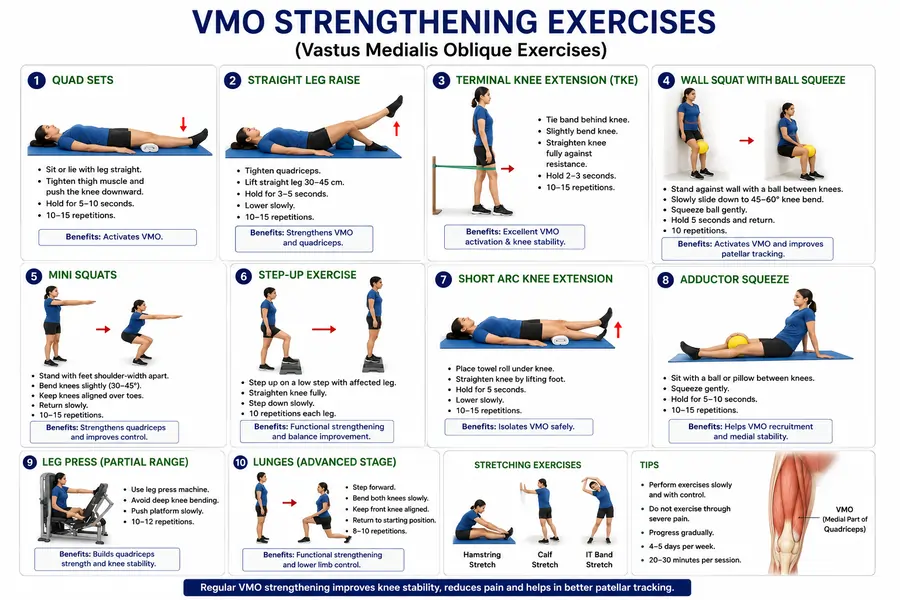
Exercise for VMO strengthening
- Quad Sets
- Straight Leg Raise
- Terminal Knee Extension (TKE)
- Wall Squat with Ball Squeeze
- Mini Squats
- Step-Up Exercise
- Short Arc Knee Extension
- Adductor Squeeze Exercise
- Leg Press (Partial Range)
- Lunges (Advanced Stage)
- Hamstring Stretch
- Calf Stretch
- IT Band Stretch
Quad Sets
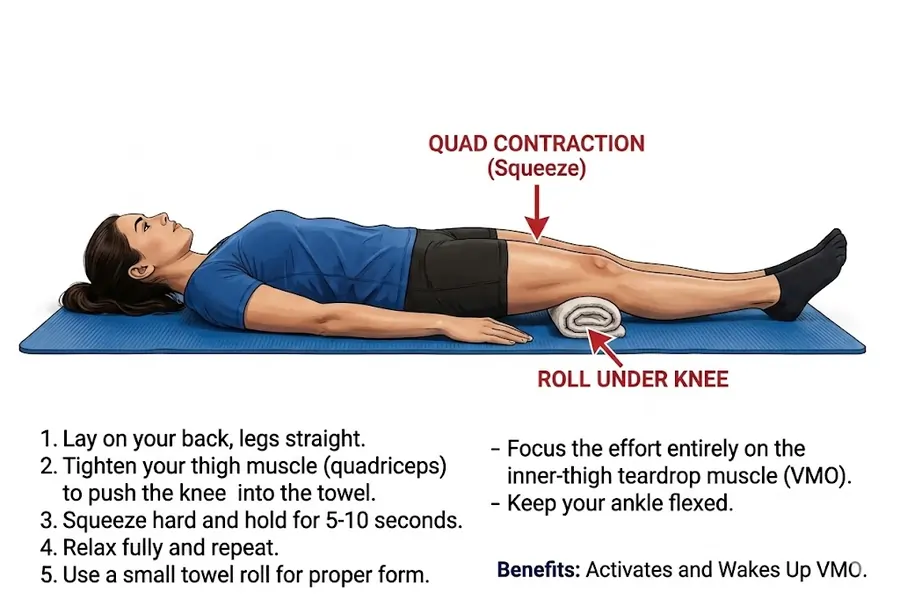
Starting Position: Sit or lie down flat on your back with your legs straight out in front of you.
Technique (How to do it): Pull your toes back toward your shin to flex your foot. Now, tighten the muscle on top of your thigh as hard as you can, trying to push the back of your knee flat against the floor. You should see your kneecap slide slightly upward toward your hip. Hold this tight squeeze for 5 to 10 seconds, then relax.
Benefits: This is a gentle way to wake up a lazy or weak VMO muscle without moving your knee joint at all, making it perfect if you have knee pain or are recovering from an injury.
Straight Leg Raise
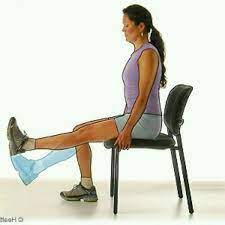
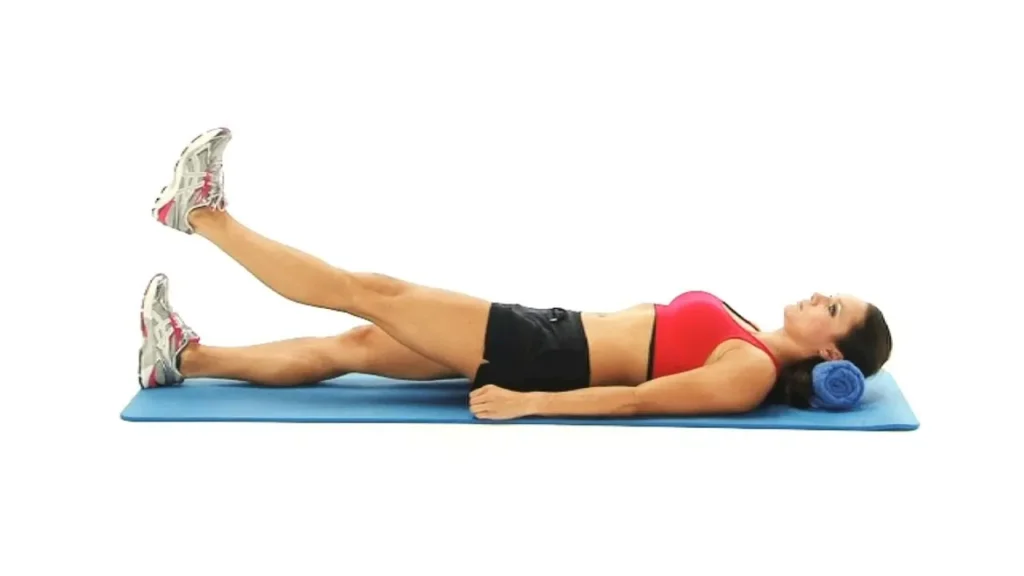
Starting Position: Lie flat on your back. Bend your healthy leg and put that foot flat on the floor (this protects your lower back). Keep your target leg perfectly straight on the ground.
Technique (How to do it): First, tighten your thigh muscle (just like you did in the Quad Set). Keeping your knee locked completely straight, slowly lift your whole leg about 12 to 18 inches (30–45 cm) off the floor. Hold it there for 3 to 5 seconds, then lower it back down very slowly.
Benefits: It builds strength in both the VMO and your hip flexors while keeping your knee securely locked in a safe, straight position.
Terminal knee extension
Starting Position: Tie a resistance band around a heavy table leg or door anchor at knee height. Loop the other end behind your target knee. Stand facing the anchor point so the band pulls your knee slightly forward into a bent position. Keep your heel flat on the floor.
Technique (How to do it): Push your knee backward against the pull of the band until your leg is completely straight. Squeeze your inner thigh muscle tightly at the back of the movement for 2 to 3 seconds, then slowly let the band bend your knee again.
Benefits: The VMO works hardest during the very last bit of straightening your leg. This exercise targets that exact “end range” to improve your everyday walking stability.
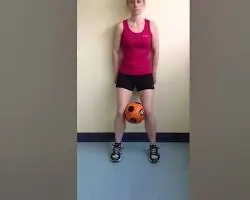
Wall Squat with Ball Squeeze
Starting Position: Stand with your back flat against a wall and your feet about a foot away from the wall. Place a small, soft ball (like a playground ball) or a firm pillow between your knees.
Technique (How to do it): Squeeze the ball gently using your inner thighs. While keeping that squeeze, slowly slide your back down the wall until your knees are bent at a comfortable angle (about halfway down to a chair position, or 45–60°). Hold this position for 5 seconds, then slide back up.
Benefits: Squeezing the ball activates your inner thigh muscles, which automatically forces your VMO to work much harder during the squat.
Mini Squats
Starting Position: Stand up straight with your feet shoulder-width apart and your toes pointing just slightly outward.
Technique (How to do it): Push your hips back and down as if you are about to sit on a tall stool. Only lower yourself a little bit (a shallow 30–45° bend). Make sure your knees stay right in line with your toes and do not cave inward toward each other. Slowly stand back up.
Benefits: This strengthens your thighs using a natural, daily movement (squatting) but keeps it in a shallow, safe range so it doesn’t hurt your kneecaps.

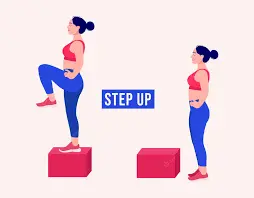
Step-Up Exercise
Starting Position: Stand facing a low, sturdy step or the bottom step of a staircase (about 4 to 6 inches high).
Technique (How to do it): Place your entire foot of the weak leg firmly on the step. Push down through your heel to lift your body until your leg is straight. Bring your other foot up to touch the step. Then, slowly lower yourself back down, landing softly on your back foot.
Benefits: This teaches your knee how to balance and control your body weight, which is exactly what you need to climb and descend stairs without pain.
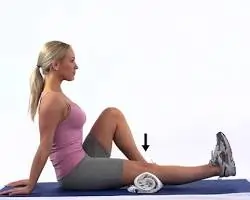
Short arc knee extension
Starting Position: Lie on your back and place a rolled-up bath towel or a foam roller directly under your knees so they rest in a slightly bent position.
Technique (How to do it): Keep the back of your knee resting heavily on the towel. Slowly lift your foot to straighten your lower leg. To focus even more on the VMO, point your toes slightly outward as you straighten the leg. Hold for 5 seconds, then slowly lower your foot.
Benefits: This isolates the thigh muscles without putting any pressure on your hips or lower back.
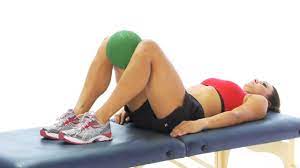
Adductor Squeeze
Starting Position: Sit on the floor with your knees bent and your feet flat on the ground. Lean back slightly onto your hands for comfort. Place a ball or pillow between your knees.
Technique (How to do it): Smoothly squeeze your knees together, crushing the ball between them. Hold this squeeze tightly for 5 to 10 seconds while breathing normally, then slowly release.
Benefits: The VMO muscle is physically attached to your inner thigh muscles. Strengthening your inner thighs directly helps trigger and support the VMO.
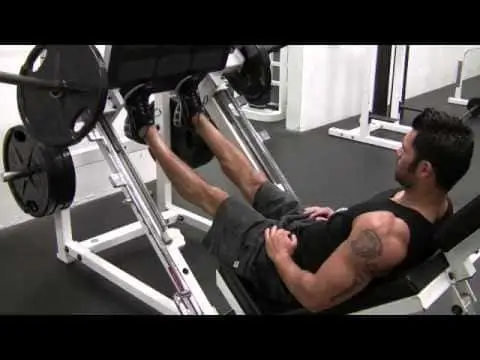
Leg Press (Partial Range)
Starting Position: Sit in a leg press machine at the gym. Place your feet high and hip-width apart on the footplate.
Technique (How to do it): Push the platform away by driving through your heels, stopping just before your knees lock out completely. When bringing the weight back in, stop early—do not let your knees bend deeply. Keep the movement small and controlled.
Benefits: The machine supports your back and hips, allowing you to safely use heavier weights to build up thigh strength without overloading the knee joint.
FAQs
What is the VMO muscle?
The VMO (Vastus Medialis Oblique) is the inner part of the quadriceps muscle that helps stabilize the kneecap and support knee movement.
Why are VMO strengthening exercises important?
These exercises improve knee stability, reduce knee pain, enhance patellar tracking, and prevent knee injuries.
How often should VMO exercises be performed?
Usually 4–5 times per week, depending on the rehabilitation program and pain level.
Can VMO exercises reduce knee pain?
Yes, proper VMO strengthening can improve kneecap alignment and reduce knee pain.
What precautions should be taken during VMO exercises?
Avoid deep, painful squats
Maintain proper knee alignment
Exercise slowly and with control
Stop if severe pain occurs
Are resistance bands helpful for VMO training?
Yes, resistance bands are commonly used for terminal knee extension and other strengthening exercises.
References
- Anorexia nervosa – Symptoms and causes. (n.d.). Mayo Clinic. https://www.mayoclinic.org/diseases-conditions/anorexia-nervosa/symptoms-causes/syc-20353591
- AQ Health Care. (2024, November 20). Physiotherapy for Broken wrist: Key rehab exercises for quick recovery | AQ Health Care. AQ Physio Clinic. https://www.aqhealthcare.in/physiotherapy-for-broken-wrist/
- Norkin & Levangie: Joint Structure and Function — Pamela K. Levangie & Cynthia C. Norkin. Useful for understanding patellar mechanics and the VMO role.
- Sports Injury Prevention and Rehabilitation — David Joyce & Daniel Lewindon
Includes functional knee strengthening and VMO rehabilitation. - Stiffler, J. (2024, November 20). VMO strength exercises. JOI Jacksonville Orthopaedic Institute. https://www.joionline.net/library/vmo-strength-exercises/
- American Academy of Orthopaedic Surgeons (AAOS)
- Physiopedia – VMO Exercises and Knee Rehabilitation
- Textbook of Orthopedic Medicine for Physiotherapists — Dr. M. Dena Gardiner
Commonly used physiotherapy reference in India.