Léri-Weill dyschondrosteosis
Table of Contents
What is Léri-Weill dyschondrosteosis (LWD)?
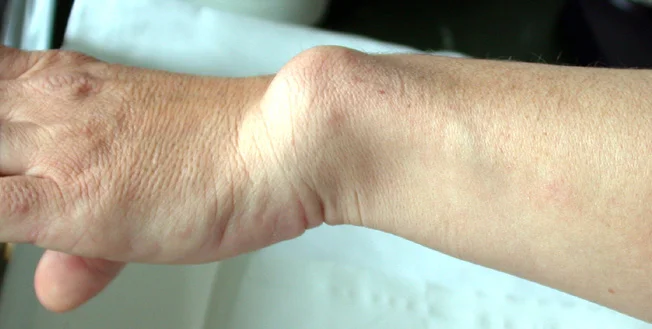
- Léri-Weill dyschondrosteosis (LWD) is a disorder of bone development. Affected person commonly have shortening of the long bones in the arms & legs (mesomelia). As a result of the shortened leg bones, people with Leri-Weill dyschondrosteosis (LWD) commonly have short stature. Most people with the condition also have an abnormality of the wrist and forearm bones known as Madelung deformity, which may cause pain and limit wrist movement.
- Léri–Weill dyschondrosteosis or LWD is an infrequent pseudoautosomal dominant genetic disorder that results in dwarfism with short forearms and legs (mesomelic dwarfism) and a bayonet- such as deformity of the forearms (Madelung’s deformity).
- This abnormality commonly appears in childhood or early adolescence. Other features of Léri-Weill dyschondrosteosis (LWD) can include increased muscle mass (muscle hypertrophy); bowing of a bone in the lower leg known as the tibia; a greater-than-normal angling of the elbow away from the body (increased carrying angle); & a high arched palate.
- LWD occurs in both males and females, However, its signs and symptoms tend to be more severe in females as compared to male. Researchers believe that the more serious features may result from hormonal differences.
Frequency
- The generality of Léri-Weill dyschondrosteosis is unknown. It is diagnosed more sometimes in females than in males.
Causes of Léri-Weill dyschondrosteosis
- Most cases of Léri-Weill dyschondrosteosis outcome from changes involving the SHOX gene. The protein produced from this gene plays a role in bone development and is particularly main for the growth and maturation of bones in the arms and legs. The most typical cause of Léri-Weill dyschondrosteosis is a deletion of the entire SHOX gene.
- Other genetic changes that can cause the disorder involve mutations in the SHOX gene or deletions of nearby genetic material that normally helps regulate the gene’s activity. These exchanges decrease the amount of SHOX protein that is produced. A shortage of this protein disrupts normal bone development and growth, which underlies the great features of Léri-Weill dyschondrosteosis.
- In affected people who do not have a genetic change including the SHOX gene, the cause of the condition is unknown.
Inheritance
- Léri-Weill dyschondrosteosis has a pseudoautosomal dominant figure of inheritance. The SHOX gene is located on both the X and Y chromosomes (sex chromosomes) in a part known as the pseudoautosomal region. Although many genes are special to either the X or Y chromosome, genes in the pseudoautosomal region are present on both sex chromosomes. As an outcome, both females (who have two X chromosomes) and males (who have one X and one Y chromosome) normally have two functional copies of the SHOX gene in each cell. The inheritance figure of Léri-Weill dyschondrosteosis is described as dominant because one missing or altered copy of the SHOX gene in each cell is sufficient to cause the disorder. In females, the condition outcomes when the gene is missing or altered on one of the two copies of the X chromosome; in males, it results when the gene is missing or changed on either the X chromosome or the Y chromosome.
- A related skeletal disorder known as Langer mesomelic dysplasia occurs when both copies of the SHOX gene are mutated in each cell. This disorder has signs and symptoms that are similar to, yet typically more severe than, those of Léri-Weill dyschondrosteosis.
Diagnosis
- Diagnosis is made by genetic blood testing.
Radiographic features
Plain radiograph
- individuals have short stature,
- forearm plain films often look at features of a Madelung dyschondrosteosis or Madelung deformity.
Other Names for This Condition
- DCO,
- Dyschondrosteosis,
- Leri-Weill dyschondrosteosis,
- LWD.
How can a patient organization be helpful?
- Patient advocacy and support organizations offer many valuable services and sometimes drive the research and development of treatments for their diseases. Because these organizations involve the life experiences of many different people who have a specific disease, they may best understand the resources required by those in their community.
Although the missions of organizations may differ, services may involve, but are not limited to:
- Produce to connect to others & share personal stories,
- Easy-to-read information,
- Latest treatment & research information,
- Lists of specialists or specialty centers,
- Financial aid and travel resources.
NOTE
- GARD produces the names of patient organizations for informational purposes only and not as an endorsement of their services. Please contact the organization directly if you have questions about the information or resources they produce.
FAQs
Genetic counseling.
SHOX deficiency disorders are inherited in the pseudoautosomal dominant manner.
Deletions of the entire SHOX gene or mutations within or near the gene have been identified in certain people with short stature. This short stature is commonly described as idiopathic, which means it is not associated with the characteristic features of a disease or syndrome.
Disease definition: Short stature-webbed neck-heart disease syndrome is characterized by the short stature, intellectual deficit, facial dysmorphism, short-webbed neck, skin changes & congenital heart defects. It has been described in four Arab Bedouin sibs born to consanguineous parents.
Leri-Weill dyschondrosteosis (LWD) is a rare genetic disorder characterized by abnormal shortening of the forearms & lower legs, abnormal misalignment of the wrist (Madelung deformity of the wrist), & associated short stature, which is defined as a child who has a height below percentile 3 (P3) for age, gender, and population.
Management: Treatment of manifestations: For before pubertal children with SHOX-deficient short stich, recombinant human growth hormone (rhGH therapy) (dose 50 µg/kg body weight/day) should be offered. The therapeutic result is a gain in the final height of 7 to 10 cm.
Conclusions: SHOX deficiency is frequently found (2–15%) in individuals with formerly idiopathic short stature, causes Leri-Weill syndrome (dyschondrosteosis) in the majority of cases and is included in the short stature phenotype of Turner syndrome.
This an infrequent genetic condition that results in short stature and shortening of the bones of the arms and legs. The loss of both SHOX genes (complete lack of SHOX), is very infrequent and causes a very severe skeletal abnormality known as Langer syndrome.