
Neck Injury
Table of Contents
What is a Neck Injury?
Any harm or stress to the neck’s structures is referred to as a neck injury. With its vertebrae (bones), intervertebral discs, spinal cord, nerves, muscles, ligaments, and blood vessels, the neck (cervical spine) is a delicate and complicated region of the body. The neck is especially prone to damage because of its anatomy and movement.
Symptoms of a Neck Injury
Pain is a common side effect of neck injuries. Additional signs of a neck injury might be:
- Stiffness in the neck
- The inability to turn your neck due to muscular spasms
- Headaches
- Nausea
- Dizziness
- Vision issues
Causes of Neck Injuries
- Injury from driving (particularly fractures and whiplash)
- Falling from a height
- injuries suffered in sports (such as rugby, diving, and wrestling)
- Repetitive strain from things like bad posture and computer use
- Degenerative conditions (such as disc disease and osteoarthritis)
- Violence (such as shootings and assaults)
Risk factors
The following are some of the most common risk factors for neck pain:
- Vehicle accidents
- Effects of riskier activities, including gymnastics, wrestling, motorcycling, horseback riding, skiing, snowboarding, etc
- Herniated disc history
- Age
- Repetitive motion overuse
- Sleeping in an awkward posture
- Bad posture, especially while seated or using a desk
- strain from spending a lot of time at an office workstation, particularly if the screen is not properly positioned
- Taking part in a job or pastime that demands bending over or strains the neck muscles
Types of neck injury
Soft tissue injuries
Sprains and strains of the neck: A strain is an injury to a muscle or tendon, whereas a sprain is an injury to a ligament. The severity of these tears might vary.
A common injury from sports or auto accidents, whiplash is caused by a quick, forceful back-and-forth motion of the neck. Strains, sprains, and other diseases may result from it.
Awkward motions, poor posture, or stress can lead to muscle tension and spasms, resulting in pain and stiffness.
Bony and disc injuries
Both fractures and dislocations can happen when a vertebra breaks or moves from its natural position. These are dangerous and may cause damage to the spinal cord.
When an intervertebral disc’s weak, jelly-like core pushes through the outer layer, it might herniate or burst. The material that protrudes may put pressure on the spinal cord or nerves.
Facet joint sprain: Two vertebrae connect at the facet joints, which are prone to fractures.
Nerve injuries
Pinched nerve: Pain that radiates down the arm may result from a herniated disc, bone spur, or other tissue compressing a nerve root.
Damage to the nerve system that extends from the neck down the arm is known as brachial plexus damage.
Diagnosis
Physical Examination
- Verify nerve function, strength, pain, and range of motion.
Imaging Examinations
- X-ray: Identifies problems with alignment and bone fractures.
- CT scan: Better for specific bone imaging.
- For soft tissue injury (discs, spinal cord, nerves), MRI is the best option.
- EMG/NCS: To assess nerve injury.
Treatment for Neck Injury
Pain Management
For the first 24 to 48 hours, using cold packs helps to minimize swelling and inflammation. After 48 hours, heat treatment helps in the relaxation of tense muscles.
Medications:
- NSAIDs for pain and inflammation, such as naproxen or ibuprofen.
- If NSAIDs are not appropriate, take acetaminophen
Relaxation and Mild Motion
- For a few days, avoid hard lifting and other demanding tasks.
- Once pain is gone, gentle neck stretches might aid in restoring range of motion.
- Long-term immobility is not advised because recovery can be helped by progressive movement.
Modalities for Pain Relief
Rest and protection: Avoid away of hard lifting and abrupt neck movements.
Cryotherapy (cold therapy): To lessen the pain and swelling, apply ice packs three to four times a day for ten to fifteen minutes.
Transcutaneous Electrical Nerve Stimulation, or TENS, stimulates sensory nerves to help regulate pain.
Exercise for the Neck
Mild isometric workouts, which involve contracting muscles without moving the neck, as soon as pain subsides.
For example, place your palm against your forehead and keep it there for five seconds without moving.
Chin Tucks
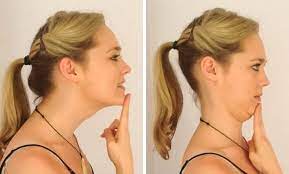
- You can lie on your back or sit.
- Make a “double chin” by gently drawing your chin backward.
- Repeat 10–15 times after holding for 5–10 seconds.
Neck Extension and Flexion (Active)
Flexion:
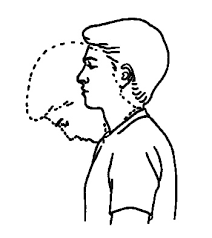
- Tuck your chin in and slowly raise your head two to three centimeters off the mat while lying on your back.
- Hold for five seconds, then gently lower.
Extension:
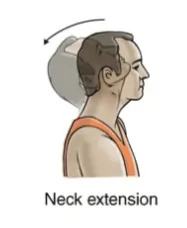
- While keeping your neck neutral, raise your head slightly off the mat while lying face down.
- Reps: 10–12 × 2 sets
Lateral Flexion
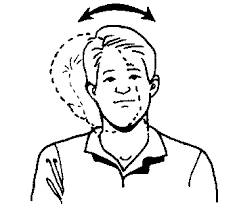
- Sit up straight. Move your ear slowly in the direction of your shoulder without raising it.
- Go back to the middle.
- Reps: 10–15 on each side
- Muscles: levator scapulae, upper trapezius, and scalenes
Stretching for the Neck
Upper Trapezius Stretch
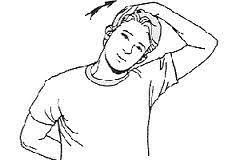
Upper trapezius (side/back of neck) is the target.
Position: Standing or sitting up straight.
Method:
- With your shoulders relaxed, choose a high seat.
- To stabilize your shoulder, grasp the chair’s edge with one hand.
- Gently move your head sideways (ear toward shoulder) with the other hand.
- Don’t turn your head; keep your face ahead.
- Stretch the side of your neck.
- Hold for 20 to 30 seconds
- Reps: three times on each side
- Regularity: two to three times daily
Levator Scapulae Stretch
The levator scapulae, which joins the neck and shoulder scapula, is the target.
Position: seated
Method:
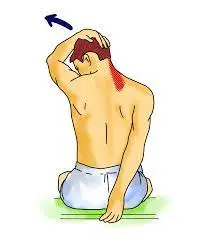
- Put one hand behind your back on the side you wish to stretch.
- Hold the back of your head with the other hand.
- From nose to armpit, look down and in the direction of the opposing armpit.
- Pull your head gently downward and diagonally forward.
- Hold for 20 to 30 seconds
- Reps: two to three times on each side
Advice: The back or side of your neck, close to your shoulder blade, should feel stretched.
Sternocleidomastoid (SCM) Stretch
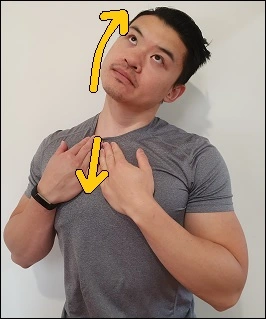
The sternocleidomastoid muscle (front and side of the neck) is the target.
Position: Either standing or sitting.
Method:
- With your shoulders relaxed, choose a high seat.
- Gently tilt your head back after turning it to one side (see up diagonally).
- The front and opposing sides of your neck should feel stretched.
- Hold for 20 seconds
- Reps: three on each side
Prevention
Always use a seat belt and protective gear when participating in sports or other potentially dangerous activities to avoid neck injuries. Another way to prevent tension on your neck is to learn good body mechanics and avoid overusing it.
Reducing your activity level rather than “pushing through” or carrying on with the activity that is causing your neck pain will help prevent it from getting worse.
By adjusting your posture, switching up your sleeping pillow, or making your workspace more ergonomic, you could also be able to reduce discomfort and avoid more injuries. To prevent bending over for extended periods of time, this may involve raising your workspace or raising a computer monitor.
FAQs
Can a neck injury heal on itself?
The majority of neck sprains and strains recover on their own in a few days. Pain can range from minor to severe during the healing process. Make an appointment with your doctor if the pain worsens or does not go away after a few days.
What is the duration of neck injuries?
The majority of whiplash sufferers, particularly those in lower grades, recover in a matter of days or weeks. The healing process for more severe cases of whiplash may take weeks or even months. When problems result in constant pain or inflammation in and around your spine, whiplash lasts the longest.
What should you do if you have a neck injury?
Avoid keeping your neck in one place for extended periods of time, such as when seated at a desk.
Avoid sleeping on your front.
When you’re in bed, avoid twisting your neck.Can a neck injury be healed?
After an accident, neck pain frequently becomes worse for a day or two before becoming better. Before it improves, you can experience more pain and stiffness for a few days. This is to be thought possible. It can take many weeks or more for it to fully recover.
What are the dangers of neck pain?
In rare cases, neck pain may indicate a more serious issue. Seek medical attention if you have neck pain that radiates into your shoulder or down your arm, or if you have numbness or weakness in your hands or arms.
References
- NHS inform. (2025, February 21). Neck injury | NHS inform. NHS Inform. https://www.nhsinform.scot/illnesses-and-conditions/injuries/head-and-neck-injuries/neck-injury/
- Common Neck Conditions, Symptoms & Causes | Dignity Health. (n.d.). Dignity Health. https://www.dignityhealth.org/conditions-and-treatments/orthopedics/common-neck-injuries-and-conditions