Home Exercises for Serratus Anterior Muscles
Table of Contents
Introduction
Quality sleep is incredibly important for good physical health and well-being. If you have postural problems, shoulder pain, stiffness in your upper back, and muscle weakness, it can be hard to get into a comfortable sleeping position. Working on strengthening the muscles around the shoulder blades could help improve shoulder stability, posture, and overall upper body comfort.
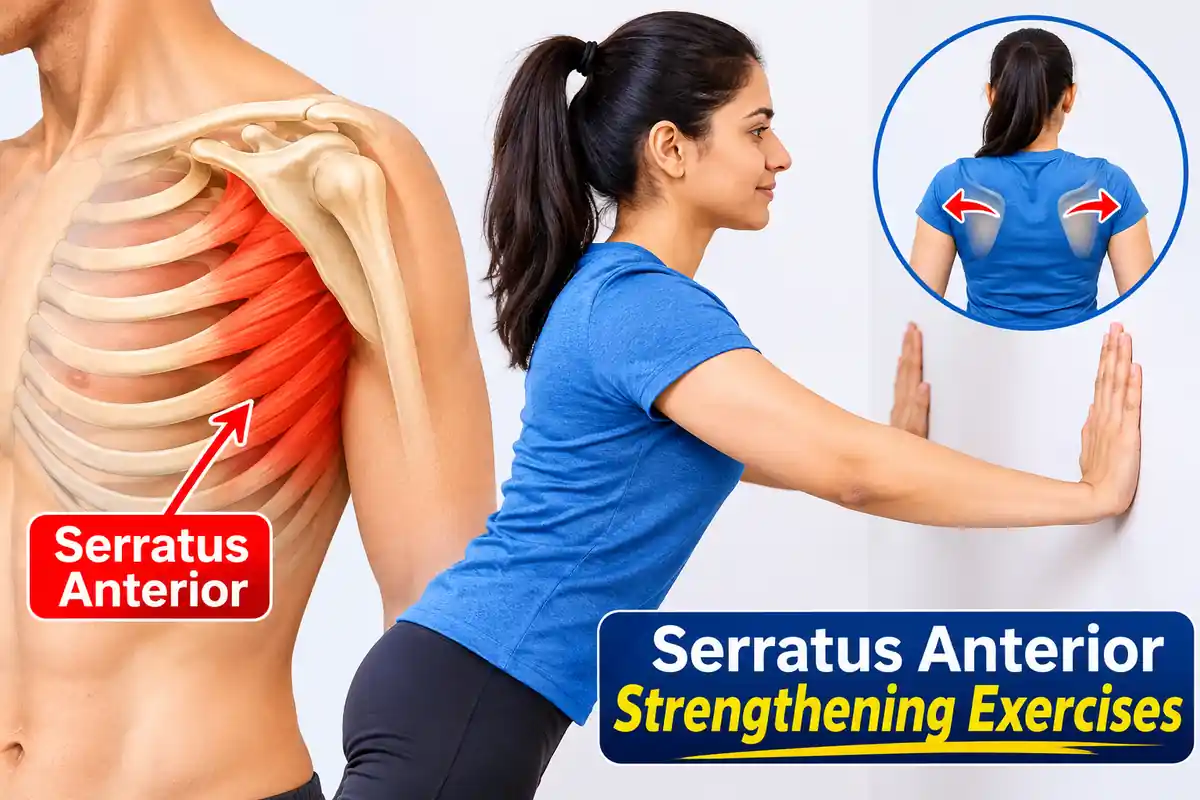
The Serratus Anterior Muscle is responsible for many movements in the shoulder blade. This muscle attaches to the medial border of the shoulder blade after running along the lateral side of the chest wall, beginning at the top of your ribs. The muscle helps with protracting the shoulder blade, rotating it upwards, and keeping it correctly positioned against your rib cage.
A weak or poorly coordinated Serratus Anterior Muscle can cause changes to the way your shoulder blades move and reduce stability in your shoulder joint. Including some Serratus Anterior Strengthening Exercises in your daily exercise routine can help improve shoulder function and reduce pain.
While strengthening this area won’t directly improve your sleep or cure insomnia, it can help some by making your shoulders feel more comfortable.
In this article, we’ll go through the best serratus anterior strengthening exercises, why they are beneficial, how to perform them, what to be cautious of, and how they can help you sleep comfortably.
What is the serratus anterior?
This muscle has a broad, fan-shaped structure and is situated along the outer side of the chest wall.
Sometimes referred to as the ‘boxer’s muscle’ due to its role in reaching and punching.
Primary actions of the serratus anterior:
- Protracts the scapula – moves the shoulder blade forwards around the rib cage.
- Upward Rotation – helps to rotate the shoulder blade upwards when lifting your arms.
- Improves shoulder mobility – helps your arms lift easily over your head.
- Helps with posture – helps keep your shoulder blade in the correct position.
How Can Strengthening The Serratus Anterior Help You Sleep?
Serratus anterior strengthening exercises can indirectly help you sleep better by helping your shoulders.
Below are some benefits of strengthening your serratus anterior:
Improves Shoulder Stability
- Strengthening this muscle can help improve control over your scapula during everyday activities.
Improves Posture
- A weak or poorly coordinated Serratus Anterior Muscle can cause changes in your scapula positioning.
- Performing the correct exercises can help improve your control over your shoulder blades and improve your upper body posture.
May Reduce Shoulder Pain
- Better muscle coordination means that movement can be more evenly distributed around your shoulder.
- This can help those who experience shoulder pain during movement.
Helps You Sleep In A Comfortable Position
- Those who suffer from shoulder pain may struggle to sleep on the affected side.
- Improving strength and mobility in your shoulders can help you sleep in a more comfortable position; however, these exercises don’t directly address sleep issues.
Improves Upper Body Mobility
- The Serratus Anterior Muscle helps your shoulder blade move smoothly during reaching and overhead movements.
- Improving control can help reduce stiffness caused by limited movement in your shoulder.
Best Serratus Anterior Exercises For Better Sleep
Begin with the simplest exercise variation and gradually increase the repetitions as your strength and endurance improve.
1. Wall Push-Up Plus
The Wall Push-Up Plus is a great beginner exercise to target the serratus anterior with minimal pressure on your shoulders.
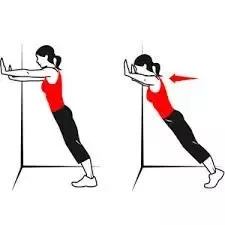
How to do:
- Stand facing a wall with arms at arm’s length.
- Keep your feet shoulder-width apart.
- Bend your arms so your chest moves towards the wall.
- Push yourself away and straighten your arms.
- At the end of the movement, gently push your upper back away from the wall by pulling your shoulder blades apart.
- Hold for 2-3 seconds
- Then return.
- 2 sets of 10-12 reps.
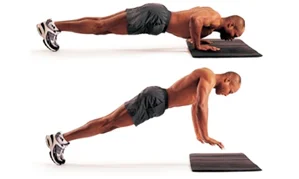
2. Scapula Push Up
The scapula push-up is a great way to strengthen and activate your serratus anterior.
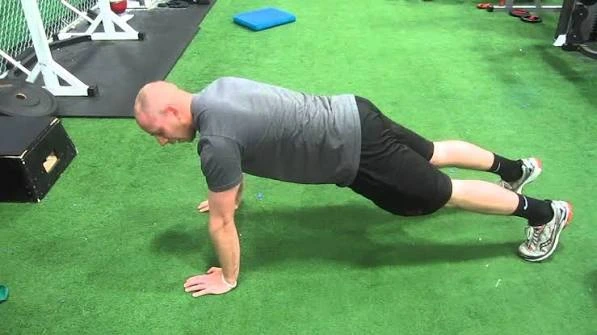
How to do:
- Start in the top plank position with your hands directly behind your shoulders.
- Keep your arms straight.
- Move your chest down slightly so your shoulder blades come together.
- Push through your hands and pull your shoulder blades apart.
- Maintain your back’s natural alignment throughout the movement while keeping both arms fully extended.
- Repeat slowly.
- 2 sets of 8-12 reps
3. Serratus Punch (Supine)
This exercise is easy to perform and targets the serratus anterior muscle.
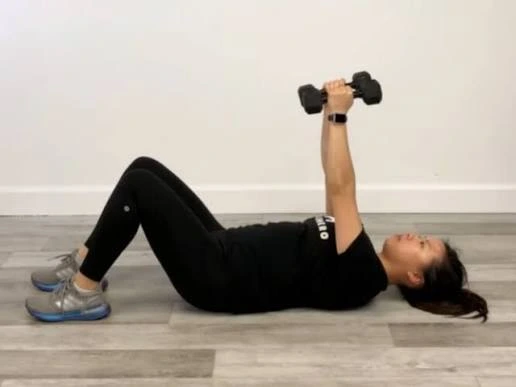
How to do:
- Lie on your back on an exercise mat.
- Extend one arm upwards.
- Keep your arm straight.
- Slowly raise your arm upwards by protracting your shoulder blade slightly.
- Hold for 2-3 seconds.
- Slowly lower your shoulder blade back down, ensuring your arm is still straight.
- Repeat on the other arm.
- 2 sets of 12-15 reps on each arm.
4. Wall Slide
Wall slides are a great way to strengthen the serratus anterior and upwardly rotate the shoulder blades.
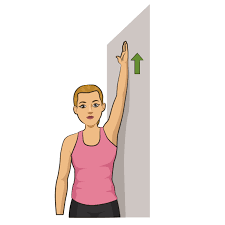
How to do:
- Stand facing a wall.
- Place your forearms on the wall.
- Ensure your elbows are around 90 degrees.
- Apply some light pressure to the wall.
- Slide both arms up.
- Ensure your ribs are controlled, and you don’t overarch your lower back.
- Slowly return to start.
- 2 sets of 10-12 reps.
5. Bear Crawl Shoulder Tap
This exercise will challenge your serratus anterior and also improve your core stability and shoulder control.

How to do:
- Get into a four-point kneeling position.
- Hands directly underneath your shoulders.
- Raise your knees approx. 2-3 inches off the ground.
- Check that your back maintains its natural spinal alignment without excessive arching or rounding.
- Lift one arm slowly and touch the shoulder on the other side.
- Lower back down.
- Repeat on the other arm.
- Don’t over-rotate your hips.
- 2 sets of 8-10 reps on each side.
6. Serratus Punch
This exercise will provide progressive resistance to strengthen your serratus anterior.
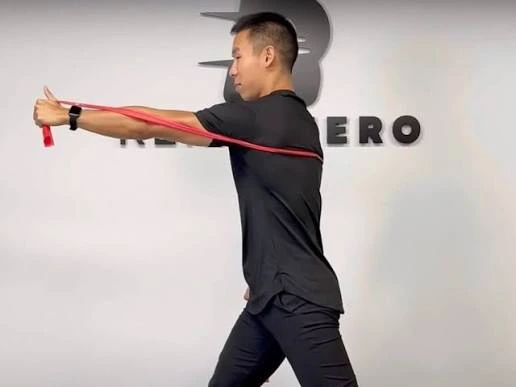
How to do:
- Loop the band around something behind you and secure it at chest height.
- Hold onto one end of the band.
- Stand with feet shoulder-width apart.
- Extend your arm forward at chest level, keeping it comfortably aligned with your upper body.
- Slowly extend your arm forward.
- At the end of the movement, gently go further by protracting your shoulder blade.
- Slowly return to the start.
- 2 sets of 10-12 reps on each arm.
7. Incline Push-Up Plus
This is a progression from the wall push-up plus. This will strengthen your serratus anterior and build upper body stability.

How to do:
- Stand facing a stable elevated surface such as a bench.
- Your hands should be somewhat wider than your shoulders.
- Move your feet backward until your head, torso, and legs form one straight line.
- Bend your arms and lower your chest down towards the bench.
- Push yourself up.
- At the top, gently protract your shoulder blades by pushing the bench away.
- Maintain the spine’s natural curves, ensuring your back remains aligned throughout the exercise.
- 2 sets of 8-12 reps.
Benefits of Serratus Anterior Exercises
Regularly performing serratus anterior exercises will provide various benefits.
Improves Shoulder Mobility
- Improves upward rotation and protraction of your scapula. This helps with overhead movements.
Improved Muscle Activation
- Helps with muscle activation between the serratus anterior and other scapular muscles.
Improved Upper Body Posture
- Improves scapular control, which can improve shoulder positioning when sitting/standing and reaching.
Reduce Discomfort During Movements
- May help reduce discomfort during everyday movements due to improved shoulder mechanics.
Help With Everyday Activities
- Can help with pushing, reaching, lifting, etc. due to improved serratus anterior strength.
Best Time To Do Serratus Anterior Exercises
The best time to perform serratus anterior exercises depends on your schedule.
- Morning: Gentle strengthening/mobility exercises can help prepare your shoulder muscles for activity.
- Afternoon: The best time to perform a full strengthening programme.
- Evening: Gentle low-intensity exercises can be done.
Avoid high-intensity strengthening exercises if you feel overstimulated or if you get muscle soreness.
Tips For Better Sleep
Whilst strengthening exercises are a part of good sleeping habits, consider these tips:
- Avoid lying on a painful shoulder.
- Place a pillow under your affected arm.
- Avoid using your mobile for long periods of time.
- Ensure you have a comfortable sleeping environment.
- Try gentle breathing and relaxation techniques.
- Avoid doing high-intensity shoulder workouts.
Common Mistakes To Avoid
Avoid:
- Lower back arching: Ensure your spine stays in a neutral position during wall slides and push-ups.
- Too fast: Perform all repetitions slowly.
- Pain: Avoid any exercises that cause sharp pain or make your symptoms worse.
- Overtraining: Give yourself enough rest between sessions.
- Wrong Scapular Movement: Focus on controlled movements of your scapula.
Safety Precautions
Serratus Anterior Strengthening Exercises can generally be done by many healthy adults; however, consider the following:
- If you suffer from any ongoing shoulder pain, consult a physiotherapist.
- Avoid any exercises that cause sharp pain or tingling.
- If you have had recent shoulder surgery, follow your surgeon’s rehab plan.
- Those with significant weakness and/or obvious scapular winging should have an appropriate assessment.
- Stop exercising if you experience any unusual symptoms.
If you have sleeping issues despite improving your sleeping habits, then consult a health professional to see what may be causing the issue.
Conclusion
Serratus Anterior Strengthening Exercises can be very beneficial to help improve scapular stability, shoulder mobility, and upper body muscle activation. Exercises such as wall push-Up Plus, scapular push-ups, supine serratus punches, wall slides, and resistance band serratus punches can help strengthen the serratus anterior.
Whilst they are not a direct treatment for insomnia or other sleep disorders, they can help improve shoulder function and reduce discomfort during movements to help some feel more comfortable.
To get the most out of these exercises, perform them regularly with correct form. Avoid using too much resistance and give yourself enough rest. By strengthening your shoulders and having good sleeping habits, you can improve your overall physical comfort and well-being.
FAQs
Can serratus anterior exercises improve my sleep?
Serratus anterior exercises can indirectly help with sleep by improving stability, mobility, and comfort of your shoulder. However, there is no strong evidence that strengthening this muscle will help improve sleep quality or insomnia.
Which serratus anterior exercise is ideal for beginners?
Wall push-ups and supine serratus punches are a great option for beginners. They are easy to control and don’t use too much resistance.
How often should I do serratus anterior exercises?
Most beginners would start with 2-3 sessions per week.
Can weak serratus anterior muscles cause shoulder pain?
Weakness and poor muscle activation can cause changes to scapular mechanics, which can cause shoulder discomfort in some.
Can I do serratus anterior exercises before bed?
Yes, gentle exercises can be done in the evening. Try to avoid high-intensity strengthening sessions.
How long until I strengthen my serratus anterior?
Some people may begin to see improvements in control after a few weeks of regular training. However, meaningful improvements will generally take regular training over a longer period of time.
Can serratus anterior exercises help with rounded shoulders?
They can help improve scapular control and therefore improve upper body posture. However, rounded shoulders are caused by many muscles and postural factors, so you may need a wider programme.
Can scapular winging be alleviated with serratus anterior exercises?
Some cases can be helped by specific serratus anterior strengthening. However, there are many causes of scapular winging, such as nerve injuries, so it is important to get assessed.
References
- Ocs, A. H. D., & Ocs, A. H. D. (2026, March 17). Serratus anterior: function, benefits, and best exercises. Core Exercise Solutions. https://www.coreexercisesolutions.com/the-serratus-anterior-a-secret-weapon-for-great-posture/
- CSCS, A. M. P. D. (2025, August 21). Learn the best Serratus anterior exercises. Prehab. https://theprehabguys.com/blog/serratus-anterior-exercises/
- Ninjas, N. (n.d.). Serratus anterior exercises for older adults in PT and OT. The Note Ninjas. https://thenoteninjas.com/blog/f/serratus-anterior-exercises-for-older-adults
- Gamble, E. (2022, November 14). Serratus anterior: 3 Exercises to Improve Overhead Mobility. BSR Physical Therapy. https://www.bsrphysicaltherapy.com/2018/01/08/serratus-anterior-overhead-mobility/