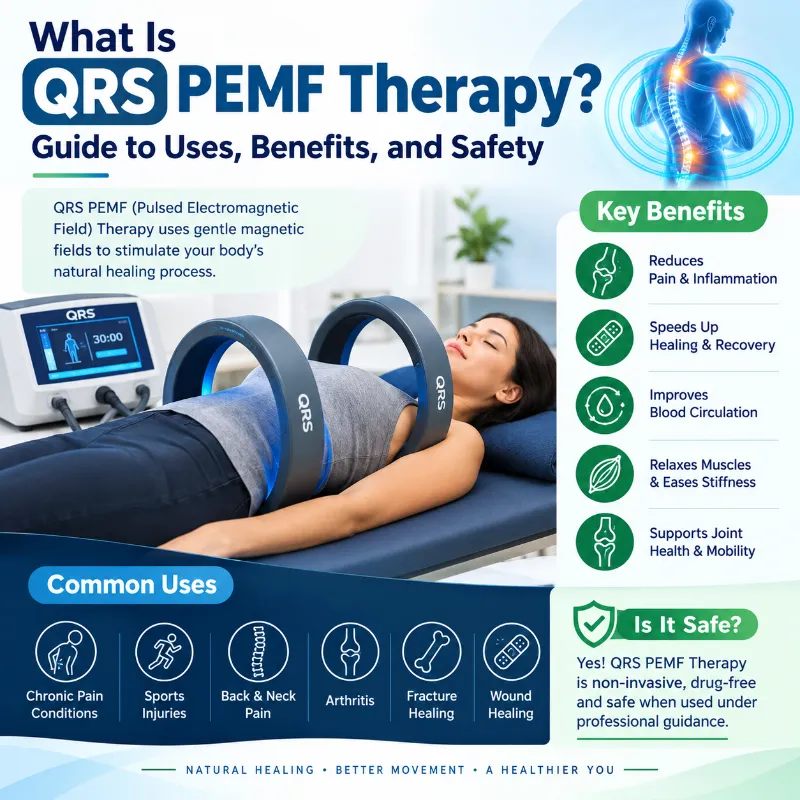
What Is QRS PEMF Therapy? Guide to Uses, Benefits, and Safety
QRS PEMF therapy is a non-invasive treatment. It uses pulsed electromagnetic fields to
stimulate cells, improve local circulation, and support the body’s natural healing process. It is
painless, produces no heat, and is often used for joint pain, muscle stiffness, and slow-healing
soft tissue injuries.
Physiotherapists may use PEMF alongside exercise therapy, manual therapy, and posture
correction as part of a complete rehabilitation plan.
Table of Contents
Introduction
Physiotherapy has incorporated magnetic field therapy into treatment practices for decades. Pulsed electromagnetic field (PEMF) therapy is a newer approach. It sends the magnetic field in short, repeated pulses instead of a steady stream.
The Quantron Resonance System, better known as QRS, is one of the best-known PEMF
systems. It was developed in Europe and is now used in clinics and homes in many countries.
The system includes a full-body mat, a pillow applicator, and smaller applicators for targeted
areas such as the knees, elbows, and hands.
In this article, we will explain what QRS PEMF is, how it works, which conditions it may help,
what the research says, and who should avoid it.
What Is PEMF Therapy?
PEMF stands for Pulsed Electromagnetic Field therapy.
A PEMF device passes an electric current through a coil. This creates a magnetic field that is
switched on and off many times per second. When the coil is placed on or near the body, the
pulsing field passes through the skin, muscle, and bone without needing any direct electrical
contact.
Key features of PEMF therapy:
● Non-invasive: Nothing enters the body.
● Non-thermal: Unlike shortwave diathermy, low-intensity PEMF does not heat the tissue.
● Painless: Most people feel nothing, or only a mild tingling or warmth.
● Reaches deep tissues: Including bone and joints.
● Drug-free: It requires no medication and has no recovery time.
Low-frequency PEMF has been studied for decades. Pulsed electromagnetic stimulation was
first cleared in the United States in 1979 to help with fractures that fail to heal (non-union
fractures). Since then, it has been studied for osteoarthritis, low back pain, post-operative pain
and swelling, and soft tissue injuries. Our earlier article on the use of pulsed electromagnetic
energy in physiotherapy explains the basic parameters, such as frequency and pulse width.
What Is QRS PEMF?
QRS (Quantron Resonance System) is a low-intensity PEMF system designed for regular,
everyday use. A typical QRS PEMF home system includes:
● Control unit: Lets you choose the intensity (10 levels) and the session time.
● Full-body mat: Used lying down for general sessions.
● Pillow applicator: For the neck, shoulders, or a single joint.
● Pen applicator: A small handheld applicator for focused areas such as the knuckles,
wrist, elbow, or a trigger point.
● Optional applicators: Glasses and ear applicators for the head region.
How Is QRS Different From Other PEMF Devices?
Many PEMF machines operate using basic sinusoidal or square-shaped waveforms. According to the manufacturer, the QRS signal uses a patented sawtooth-style waveform. They describe it as
being modelled on the body’s own natural electrical signals. QRS also states that it has more
than 20 years of research behind it.
These are the manufacturer’s own claims. Independent research comparing different PEMF
waveforms head to head is still limited. However, the general principles of low-intensity PEMF
apply to QRS just as they do to other devices.
Mechanism of Action
Researchers are still studying exactly how PEMF works. The current understanding includes the
following effects.
- Cellular Effects
Every cell has an electrical charge across its membrane. Injury, inflammation, and ageing can
disturb this charge. A pulsing magnetic field creates tiny electrical currents inside the tissue.
These currents are thought to:
● Improve the movement of ions such as calcium, sodium, and potassium across the cell
membrane.
● Support the production of ATP, the cell’s main source of energy.
● Stimulate cells that support tissue healing, including fibroblasts in soft tissues and osteoblasts responsible for bone formation.
2. Vascular Effects
PEMF may increase the release of nitric oxide. Nitric oxide relaxes and widens small blood
vessels. This can improve local blood flow, so more oxygen and nutrients reach the injured area,
and waste products are removed faster. Better circulation may also help reduce swelling
(oedema).
3. Anti-Inflammatory Effects
Studies on cells and animals suggest that PEMF can lower the levels of some inflammatory
chemicals in the tissue. This may explain why some patients notice less swelling and stiffness
after a course of treatment.
4. Pain-Modulating Effects
PEMF therapy may help ease pain by modulating sensory nerve signals and affecting the release of natural pain-relieving substances, including endorphins. This is similar to the
pain-gating idea behind TENS therapy, although PEMF works through a magnetic field rather
than electrodes on the skin.
Indications of QRS PEMF Therapy
QRS PEMF and other low-intensity PEMF systems are commonly used as a supportive therapy
for:
● Osteoarthritis, especially of the knee and hip
● Chronic low back pain and neck pain
● Muscle stiffness and muscle spasm
● Soft tissue injuries such as sprains, strains, and bruising
● Tendinopathies, including tennis elbow and Achilles tendinopathy
● Plantar fasciitis and heel pain
● Delayed bone healing and recovery after fractures
● Post-operative pain and swelling
● Fibromyalgia and widespread muscle pain
● Sports recovery and muscle soreness after training
● Poor sleep and stress, as part of a general relaxation routine
PEMF does not replace a proper diagnosis. A physiotherapist should first find the cause of your
pain. PEMF can then be added as one part of the treatment plan.
Does QRS PEMF Therapy Work?
The research on PEMF is encouraging, but it is not perfect.
Osteoarthritis: A 2022 systematic review and meta-analysis of 11 randomised controlled trials
(614 patients, mostly with knee osteoarthritis) found that PEMF improved pain, stiffness, and
physical function (Tong et al., 2022). However, an earlier review that only included placebo-
controlled trials found a benefit for physical function, but no clear benefit for pain and stiffness
(Chen et al., 2019).
Why do the results vary? The results of PEMF studies depend heavily on the treatment settings.
These include the frequency, intensity, waveform, session time, and the number of weeks of
treatment. Different studies use very different devices and settings, so their results are hard to
compare directly.
What this means for patients:
● PEMF is best viewed as a supportive (adjunct) therapy, not a cure.
● It tends to work best when combined with exercise and active rehabilitation.
● Noticeable benefits often develop gradually with consistent use over a few weeks, rather than following a single treatment session.
Benefits of QRS PEMF Therapy
- Non-Invasive and Drug-Free
PEMF offers an option for people who want to reduce their dependence on painkillers or who
cannot tolerate certain medications. - Suitable for Home Use
A home system like the QRS 101 allows patients to continue treatment between clinic visits.
This is helpful for long-term conditions such as osteoarthritis, where regular, consistent use
matters. - Treats Large and Small Areas
The full-body mat covers the whole body, while the pen and pillow applicators target a single
joint or muscle. - Supports Active Rehabilitation
When pain and stiffness are reduced, patients often find it easier to do their exercises. This is
where PEMF can support the work of physiotherapy. For example, a patient with knee pain may
use PEMF and then follow a programme of knee osteoarthritis exercises. - No Downtime
There is no recovery period. You can return to your normal daily activities right after a session. - How QRS PEMF Fits Into Physiotherapy Treatment
PEMF therapy is most effective when incorporated into a comprehensive treatment approach. A typical approach may include: - Assessment: The physiotherapist examines the area, checks posture and movement,
and identifies the cause of the pain. - Pain and inflammation control: PEMF therapy may be combined with treatments such as interferential therapy (IFT), therapeutic ultrasound, and hot or cold compresses.
- Exercise therapy: Stretching, strengthening, and mobility exercises to correct the
underlying problem. For back discomfort, the treatment plan may incorporate exercises designed to relieve lower back pain. - Education: Advice on posture, ergonomics, and activity changes at home and at work.
- Home programme: Exercises and, in some cases, home PEMF sessions, to continue
progress between visits.
QRS PEMF Treatment: What to Expect
QRS PEMF therapy is simple and comfortable.
Before the session:
● No special preparation is needed.
● Remove metal items such as watches and jewellery from the area being treated.
● Drink a glass of water. Good hydration is often recommended with PEMF.
During the session:
● Full-body mat: Lie on your back on the mat. You can stay fully clothed.
● Pillow or pen applicator: Place it directly over the painful joint or muscle.
● Choose a low intensity to start. Most people feel nothing, or a light tingling or warmth.
● QRS recommends sessions of 8 to 16 minutes, 1 to 3 times a day.
After the session:
● You can resume your normal activities right away.
● Some people feel relaxed or slightly sleepy. This is normal.
● It is best to start with lower intensities and shorter sessions, and increase gradually.
Contraindications
Do not use QRS PEMF or any PEMF device in the following situations:
● People with a pacemaker, implanted defibrillator, cochlear implant, insulin pump, or any
other implanted electronic device
● Pregnancy
● Epilepsy or a history of seizures
● Active bleeding, or over areas of recent haemorrhage
● Over areas of known or suspected cancer
● Over organ transplants, or in people taking medicines to suppress the immune system
after a transplant
● Over the eyes, unless using a device specifically designed for that area
Precautions
Use PEMF carefully, and only after consulting a doctor or physiotherapist, in people with:
● Metal implants such as plates, screws, or joint replacements (low-intensity PEMF is
usually tolerated, but check first)
● Diabetes, because blood sugar levels may change as circulation improves
● Low blood pressure
● Reduced skin sensation in the area being treated
● Children, older adults, or people who cannot clearly report how they feel
● Acute infections or fever
Side Effects of PEMF Therapy
Low-intensity PEMF is generally considered safe, and side effects are uncommon and mild.
Some people notice:
● A mild increase in pain or stiffness during the first few sessions
● Tiredness or a feeling of relaxation
● Mild headache
● Tingling in the treated area
These effects usually settle as the body adjusts. If they continue, reduce the intensity or session
time and speak with your physiotherapist.
Summary
QRS PEMF therapy uses gentle pulsed electromagnetic fields to support cell energy, improve
local circulation, and reduce pain and inflammation. It is non-invasive, drug-free, and easy to
use at home.
Research shows promising results for osteoarthritis and some musculoskeletal
conditions, although results vary between studies. PEMF works best as a supportive therapy
combined with a proper physiotherapy assessment and a regular exercise programme.
FAQs
What Is QRS PEMF Therapy Used For?
QRS PEMF therapy is mainly used to support the management of joint pain, osteoarthritis, back
and neck pain, muscle stiffness, soft tissue injuries, and recovery after fractures or surgery.
Some people also use it as part of a relaxation and sleep routine.
Is PEMF Therapy Safe?
Low-intensity PEMF, such as QRS, is generally considered safe for most adults when used as
directed. It should not be used by people with pacemakers or other implanted electronic
devices, during pregnancy, or by people with epilepsy.
How Soon Can You Expect Results From PEMF Therapy?
Some people notice less pain or stiffness after a few sessions. For long-term conditions such as
osteoarthritis, studies usually measure results after 4 to 12 weeks of regular use.
How Often Should I Use a QRS PEMF Device?
QRS recommends sessions of 8 to 16 minutes, 1 to 3 times a day. Your physiotherapist may
suggest a different schedule depending on your condition.
Can PEMF Replace Physiotherapy?
No. PEMF can help reduce pain and stiffness, but it does not correct weak muscles, poor
posture, or faulty movement patterns. It works best alongside exercise therapy and other
physiotherapy treatments.
Do You Feel Anything During PEMF Therapy?
Most people feel nothing at low intensity. At higher settings, some people feel a light tingling,
gentle muscle twitching, or mild warmth. PEMF therapy should never be painful.
Disclaimer: This content is intended for educational purposes and should not replace guidance from a qualified healthcare professional.
Please consult a qualified doctor or physiotherapist before starting PEMF therapy, especially if
you have any medical condition or implanted device.