
Morning Mobility Routine for Stiff Joints
Table of Contents
Introduction
A few light movements might be exactly what your morning needs if your joints feel tight when you wake up. Stretches for tight joints in the morning can improve range of motion and flexibility while you’re in bed.
Your body may ease into the day with a few light motions. Age tends to bring with it a certain rigidity. The knees are slow. When the back is straightened, it resists. It seems like the shoulders have been lugging something heavy all night. Additionally, those initial steps to the restroom might occasionally feel more like a character test than actual walking.
As we age, morning stiffness is frequent. Muscles may take longer to warm up, joints may feel less flexible, and diseases like osteoarthritis may cause pain while moving. A straightforward 10-minute mobility practice might be a far more practical approach to start the day for many elders.
The goal is to prepare the body for the day’s activities by gently activating the muscles and getting the joints working.
Additionally, there is no reward for doing it swiftly.
10-minute morning mobility routine for stiff joints
Before getting out of bed
Even before your feet contact the ground, you may start.
Lying comfortably on your back, take several deep breaths. Then, as if you were pressing and releasing a pedal, slowly raise and lower your ankles. For each foot, perform this ten times.
Next, make little circles with your ankles in both directions.
Now slowly pull your heel toward you while bending one knee, then straighten the leg once again. Proceed with the other leg.
These motions are so small, but that’s exactly the goal. Stop trying to push through excruciating pain, numbness, dizziness, or sudden weakness.
Minutes 2-3: wake up your hips and knees
Sit on the edge of the bed or a sturdy chair with your feet firmly planted on the floor.
Progressively straighten one knee until the leg is nearly straight, without locking. Lower the leg gently, then move on to the opposite leg.
Perform five to eight reps on each side.
Now raise one knee slightly toward your chest while keeping your feet on the ground, then lower it back down. Switch sides.
If lifting your knee causes hip or groin pain, cut back on the workout or stay away from it.
Lubrication, not lubrication under pressure, is the concept. Instead of being questioned, your joints should feel as though they are slowly awakening.
Minute 4: Move your shoulders
As people age, their shoulders may become extremely rigid, especially if they spend a lot of time sitting down.
Slowly roll your shoulders backward in little circles. Perform five or six reps. After that, roll them forward.
Then, without raising your shoulders in the direction of your ears, softly press your shoulder blades together. In a few seconds of holding in place, release and go.
Lift only one arm as high and forward as it feels comfortable. Repeat with the second arm after gently lowering it.
You don’t need to try to match the range of motion of your younger self.
Minute 5: Let go of the neck
The neck should be treated with kindness.
Look straight forward while sitting up straight. For support, place one or both hands on an upright chair behind you.
As you softly bend and then straighten your knees, keep your feet comfortably apart. Five to ten repetitions are adequate. Repeat on the opposite side after returning to the center position.
Avoid lowering your head backward or making big circles with it. These motions are unnecessary for most people and may exacerbate neck problems.
Continue to walk slowly and deliberately.
Minutes 6-7: Awaken your back
Turn your head to the right as far as is comfortable, then return it to the center. Repeat on the left.
Now slowly tilt your head such that your right shoulder and right ear line up.
Next, slowly rotate your torso to the right and then to the left while maintaining an erect upper body.
This rotation can be performed while seated if standing is difficult.
The idea is to inform your trunk and spine that they are expected to take part in the activities of the day.
Time 8: Ankle and calf normal range of motion
While holding onto the chair, gradually raise yourself up on your toes by lowering your heels. Try this five or 10 times.
Then, if your balance allows, elevate the toes while keeping the heels on the ground.
This easy workout gets the ankles moving and strengthens the muscles surrounding the lower leg. It can also be a helpful way to get ready to stroll.
If you are unsure about your balance, keep both hands firmly on the chair. Even better, stay close to someone until you feel comfortable doing it on your own.
Minute 9: A Few Sit-to-Stands
Because it mimics something we do every day—getting up from a chair—this exercise could be the most beneficial part of the regimen.
Take a seat in front of a firm chair. Keep your feet hip-width apart. Using your hands on the chair or armrests if needed, carefully rise up while bending forward a little.
Then carefully lower yourself back down.
Try it three or five times.
Use your hands if this is challenging. Its purpose is to maintain the activity of the muscles used in daily movement.
Walk for ten minutes
Finally, you can go around your room, downstairs, on the balcony, or any other place you feel comfortable.
You don’t have to go quickly. Step comfortably, let your arms swing freely, and focus on maintaining a respectable height.
Use a walking stick, walker, or other help if you typically do. Falling while trying to show independence isn’t a virtue.
What Causes Tight Joints in the Morning?
The cartilage, ligaments, and tendons that make up your joints are built to move.
While prolonged periods of inactivity might have the opposite effect—stiffness—regular mobility maintains them operating.
Waking up tight is more common in certain people than in others. The gel-like substance called synovial fluid, which lubricates joints, can be reduced by sitting for extended periods of time, staying still while you sleep, or engaging in other inactive activities. Inflammation in the joints can also be caused by conditions like arthritis or prior trauma, which can worsen pain and stiffness.
Because of things like decreasing cartilage, decreased muscle mass, and decreased general activity levels, feeling stiff in the morning is frequently more typical as people age. However, it may occur at any age, not only in elderly persons.
Why It Feels So Stiff in the Mornings
You’re not the only one who wakes up feeling as though your body has seized up throughout the night. Your body creates less synovial fluid—the lubricant that keeps your joints functioning smoothly—while you sleep. Additionally, your muscles shorten and cool down. As a consequence, everything seems constricted, creaky, and unwilling to move when you first wake up.
This impact is considerably more noticeable for those who have arthritis. Osteoarthritis usually results in stiffness that goes away after 15 to 20 minutes of exercise, whereas inflammatory arthritis is characterized by morning stiffness lasting 30 minutes or longer.
A quick, mild mobility exercise that warms your joints, replenishes fluid flow, and tells your body it’s time to move is a straightforward remedy. It just takes ten minutes to noticeably improve your mood for the remainder of the day.
Some Advice on Developing a Habit
Before checking your phone, do this. Compared to social media browsing, the habit takes less time. Start with simply five exercises. Choose five exercises to do if ten minutes seems too lengthy. Doing a 5-minute routine is preferable to skipping a 10-minute one.
Combine it with an existing activity. Do your mobility exercise just after your morning cup of tea or while the kettle is boiling.
Keep track of how stiff you are. On a scale of 1 to 10, note how stiff you feel both before and after the workout. In the first week, most people lose three to four points.
When Medical Attention Is Needed for Stiffness
Morning stiffness normally goes away with activity and is not harmful. But consult your doctor if:
- Every morning, stiffness lasts more than 45 minutes; this might be a sign of inflammatory arthritis.
- You have a joint that is noticeably swollen, red, or hot.
- Over the course of weeks, stiffness is becoming worse.
- Compared to other joints, one is noticeably more painful or stiff.
Exercise for stiff joints
1. Heel raise
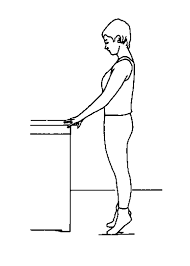
Better balance, fewer stumbles, and improved performance during exercises like squats and deadlifts can all be attributed to ankle mobility.
This stretch doesn’t require any equipment; however, some individuals might find it easier to balance if they stand next to a chair or wall.
- Place your hands on your hips and stand up close to a wall. Put one hand on the wall for balance if needed.
- Reach a tiptoe stance by slowly rocking forward onto your toes.
- After a few seconds of holding, let go and return your feet to the ground.
- Ten times over, repeat.
After step 3, you may try slowly rocking back onto your heels while raising your toes off the ground to continue this ankle stretch. Hold this position for a few seconds, then gradually return your feet to the floor.
2. Hip circles
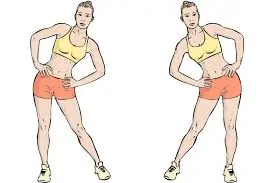
As a ball-and-socket joint, your hip joint may travel in any direction. Before beginning any exercise, it’s crucial to warm up the hip and surrounding muscles since they play a major role in stability and balance.
This exercise doesn’t require any equipment. It will focus on the glutes and hip flexors, among other muscles surrounding your hips.
- Place your feet hip-width apart and take a tall stance.
- Lift your right leg while maintaining a straight posture.
- Push your right leg behind you and sweep it counterclockwise in a circle until it returns to its starting position.
- Continue until you’ve completed ten circles.
- Repeat with your left foot after placing your right foot on the ground.
- Continue doing this while rotating your legs clockwise in the other direction.
Try grabbing a chair or a wall on the side of your body that isn’t doing the leg circle if you’re having trouble maintaining your balance.
3. Supine Spinal Twist
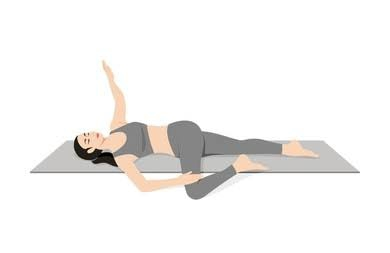
You can easily move your arms above your head and twist side to side when your spine is mobile. Slouching, upper back pain, and shoulder pain and issues can all be caused by reduced mobility.
However, you might find it more pleasant to perform this exercise on an exercise mat because it requires lying down.
This exercise will target your obliques, abdominal muscles, and muscles that support your spine, among other muscles.
- Stretch your arms straight out on the floor in alignment with your shoulders while resting flat on your back.
- A tabletop position is achieved by bending your hips and knees to a 90-degree angle.
- Keeping your knees together, twist your lower body to the left until your left knee meets the ground.
- Turn your head so that it faces your right arm.
- Bring your left arm across your torso and reach for your right arm to extend the stretch.
- After three seconds of holding this position, gradually release the tension and return your body to a neutral position.
- On each side, repeat five times.
4. Shoulder Flexion
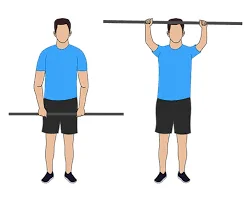
According to some studies, musculoskeletal diseases may be worsened by poor posture, which may be related to using electronic devices or working in an office. Regular exercise, however, can help lower this risk.
Your shoulders may become more flexible and mobile with this workout.
You’ll need a PVC pipe or broomstick for this activity.
- Hold a broomstick parallel to the floor while standing with your feet shoulder-width apart. Use an overhand grip, spreading your hands as wide as you can.
- Raise the broomstick gently over your head while maintaining a straight arm position. To keep your balance and posture correct, keep your core firm.
- As far as you can, move the broomstick behind your head. After two seconds of holding, go back to the beginning.
- Do this five times.
5. Neck Rotation
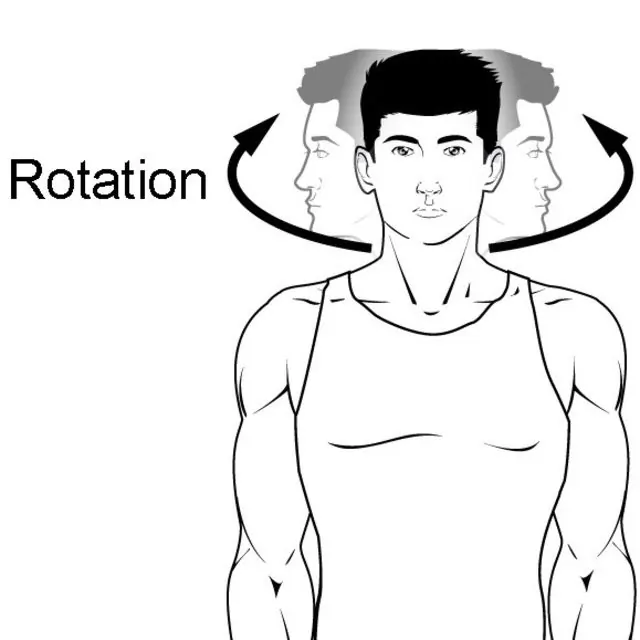
One of the most prevalent forms of musculoskeletal pain is neck pain. In addition to causing pain, reduced neck mobility might make it more difficult for you to carry out regular chores.
This exercise doesn’t require any equipment.
- With your hands at your sides or on your lap, take a comfortable seat or stand.
- Until you experience a stretch, tilt your head to one side. Bring your chin to your chest by slowly rolling your head forward, but just as far as it won’t hurt.
- Until you feel a stretch along the other side of your neck, keep rolling your head to the other side.
- Move softly and slowly as you complete three half circles.
Which kind of stretching is the best?
Stretching while performing a movement is known as dynamic stretching. A person’s joint range of motion can be improved by regularly stretching for at least two weeks, especially when static stretching is used.
Static and dynamic stretches, however, each offer advantages. Warming up with dynamic stretching may enhance lower limb function and range of motion.
Safety measures to follow when stretching
Before commencing a new fitness routine, always get medical recommendations. Some people may not benefit from dynamic warm-up and range-of-motion activities, particularly those who have had joint replacements or prior injuries.
Stop a stretch or activity right away if it begins to ache.
You can consult a trained expert, such as a physical therapist, if you’re not sure you’re performing these exercises correctly.
Conclusion
People of all ages can benefit greatly from joint mobility. It can help older people with arthritis or joint problems, and it’s a crucial component of a workout for athletes or gym patrons.
Your ankles, hips, shoulders, neck, and spine may become more mobile with the exercises in this article. Before beginning your next workout, try these exercises to feel warm and flexible.
FAQs
What is the 5-5-5-30 morning exercise regimen?
The 5-5-5-30 morning exercise program, which is a short, equipment-free bodyweight sequence intended to be performed just after getting out of bed in order to shake off sleep and increase natural energy.
For mobility, what is the ideal morning routine?
A 10-minute full-body movement exercise that awakens your joints, hips, spine, and shoulders without requiring deep, forceful stretches is the ideal morning routine for mobility. The best return on investment for joints is achieved by combining breathwork, spinal articulation (such as cat-cow or 90/90 exercises), and quadrupedal motions five to seven days a week.
Which vitamin deficit results in stiffness in the morning?
The main vitamin shortfall associated with morning joint stiffness and bone or muscle soreness is vitamin D insufficiency. Magnesium and vitamin B12 deficiencies can also result in cramping, tight muscles, or nerve-related pain that feels like stiffness in the morning.
What is the morning workout that lasts seven minutes?
Without the need for a gym or equipment, the 7-minute morning exercise is a short, high-intensity or mobility-focused bodyweight practice that will wake you up, increase your heart rate, and give you more energy.
What is the best morning activity?
Drinking a full glass of water as soon as you wake up is the best way to rehydrate your body and increase your metabolism in the morning.
References
- Freutel, N. (2026, January 9). 5 Joint mobility exercises to improve flexibility and function. Healthline. https://www.healthline.com/health/fitness-exercise/joint-mobility-exercises#best-type-of-stretching
- OperationFit. (n.d.). OperationFit — exercise app for adults 55+. OperationFit. https://operationfit.co.uk/blog/morning-mobility-routine-for-stiff-joint
- Seniors Today – An Exclusive Magazine for Seniors in India. (2026, September 21). The 10-Minute Morning Mobility Routine for Stiff Joints – SeniorsToday. SeniorsToday. https://seniorstoday.in/healthwellness/the-10-minute-morning-mobility-routine-for-stiff-joints