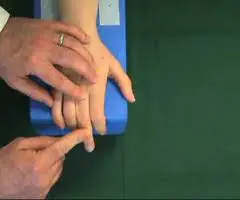
Special test for the Tendon & Muscle of the Wrist Joint
The wrist joint is composed of several tendons and muscles that play a crucial role in the movement and stability of the hand and forearm. Various special tests are conducted to assess the integrity, function, and potential pathology of these tendons and muscles. These tests are designed to provoke specific symptoms or reproduce certain movements to aid in the diagnosis and evaluation of wrist joint conditions.
- These tests are used to examine the muscles and tendons around the wrist joint.
- When the patient complains of wrist joint discomfort, the therapist [examiner] will do these clinical tests.
- These tests are used to arrive at a wrist joint evaluation component.
Table of Contents
List of the specific wrist-joint tendon and muscle test.
Boyes test
Bunnel – littler test
Linburg’s sign
Test for extensor hood rupture
Boyes test
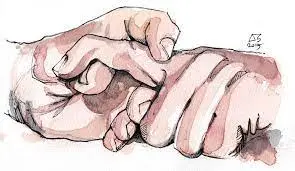
Purpose= The Boyes test is used to evaluate the distal interphalangeal joint.
Technique: Position of patient = Seating position.
At the proximal interphalangeal joint, the examiner (therapist) holds the fingers in mild extension.
The patient is next instructed to flex the distal interphalangeal joint by the examiner.
Result=The test can be considered positive if the patient cannot or tries to bend the distal interphalangeal joint.
Bunnel – littler test:-
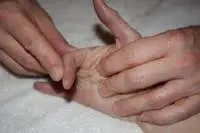
The metacarpophalangeal joint’s supporting structures are examined by this bunnel-littler test.
Purpose=The bunnel-littler test is performed to determine if the intrinsic muscle is tight or the joint capsule is contracting.
Technique: The test is conducted with the patient seated.
If it is possible, the examiner (therapist) will flex the proximal interphalangeal joint while maintaining a small extension of the metacarpophalangeal joint.
Result= tight intrinsic muscle or rigidity of the joint capsule is present if the test is positive, which is shown by the inability to bend the proximal interphalangeal joint.
The proximal interphalangeal joints flex fully if the intrinsic muscles are tight but not fully if the capsule is tight. in the situation that the metacarpophalangeal joints are partially flexed.
During the exam, the patient doesn’t move or react.
The intrinsic plus test is another name for this bunnel – littler test.
Linburg’s sign:
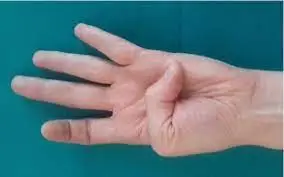
Purpose = The goal of this test is to determine whether the connectivity is affected by paratenonitis.
Technique: The test is conducted with the patient seated.
The patient voluntarily extends the index finger as far as possible while flexing the thumb onto the hypothenar eminence.
If localized, index finger paratenonitis at the flexor policis longus and flexor indices junction is an abnormal tendon ailment that affects 10% to 15% of hands.
Test for extensor hood rupture:
Purpose = This extensor hood rupture test is performed to examine the wrist joint’s torn central extensor hood.
Technique: The test is conducted with the patient seated.
The finger being examined is extended over the edge of a table with the proximal interphalangeal joint bent to 90°.
The examiner fixes the therapist’s finger into place.
The therapist [examiner] palpates the middle phalanx while the patient is instructed to carefully stretch the proximal interphalangeal joint.
The examiner experiencing minimal pressure from the middle phalanx while the distal interphalangeal joint is stretching is considered as a positive test for a torn central extensor hood.
Conclusion:
These are just a few examples of special tests used to assess the tendons and muscles of the wrist joint. It’s important to note that these tests should be performed by a healthcare professional or a qualified therapist to ensure accurate interpretation and minimize the risk of further injury. Additionally, the results of these tests should be considered alongside other clinical findings and imaging studies to reach a definitive diagnosis.