
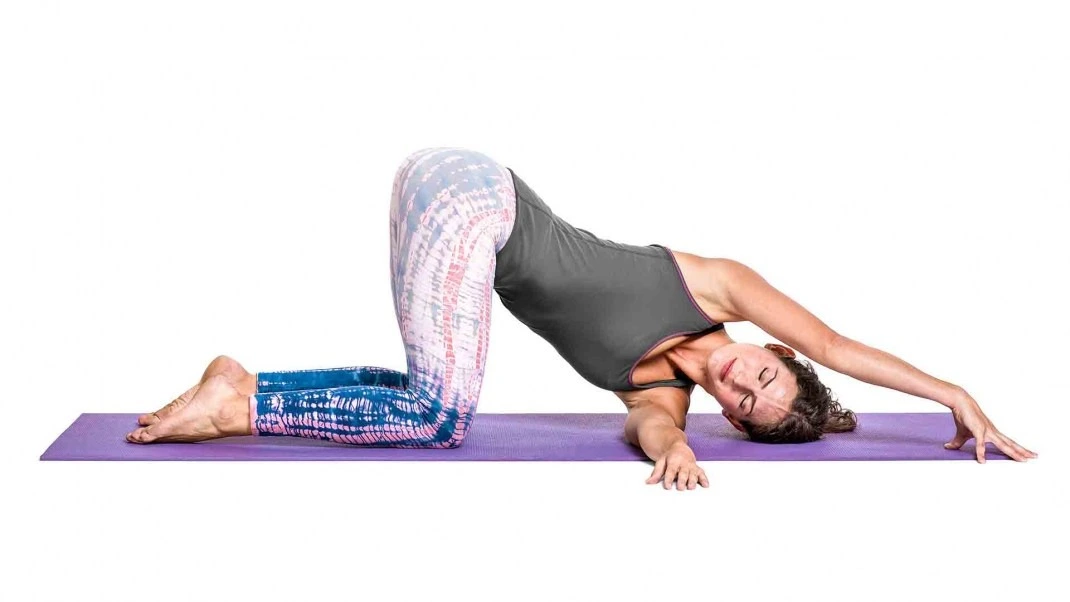
Thread the Needle Pose (Parsva Balasana)
Table of Contents
Introduction
Thread the Needle Pose (Parsva Balasana) is a gentle yoga stretch that targets the shoulders, upper back, and spine. It involves sliding one arm under the body while in an all-fours position, promoting spinal rotation and relieving tension in the neck and shoulders.
Students who spend a lot of time sitting enjoy this stance. It relieves stress in the back, like the gap between the shoulder blades, which is difficult to reach in other poses.
Additionally, it relieves the weight around the shoulders and neck, which frequently results in a hunched posture and persistent pain.
You can progress deeper into the stretch, unwind, and let your body remain passive by using the ground’s support to harness gravity and the earth’s energy.
In addition to strengthening your spine and detoxifying your organs, Thread The Needle’s twisting position increases blood flow and acts as a mild massage.
Active people who are continuously shortening their muscle fibers through activity will also find relief in this stance. Lengthening your muscles will increase your range of motion, improve your performance, and lower your risk of injury and strain.
To put it simply, you can include this lovely, calming stance into your practice at any time. It can also be done independently before bed, as part of your cool-down ritual, or after a long day at work. This pose quickly becomes a favorite since it offers a sensation similar to a massage, so we highly suggest trying it.
The Thread the Needle Pose benefits
- The body’s left and right energy channels, Ida and Pingala Nadi, are beneficial for cleansing.
- It maintains the spine’s strength, tone, and lubrication. This increases stability and improves posture when combined with the active usage of the ab muscles.
- It may aid with hormone imbalances and digestion by stimulating the internal organs.
- The position may help lessen chronic pain and stress by releasing stored tension in the back.
- The Anahata Chakra (heart chakra) and Visuddhi Chakra (throat chakra) are opened and balanced.
- It strengthens the back muscles and increases spinal flexibility.
- It works on the uncommon shoulder muscles, including the deltoids, trapezius, and rhomboid.
- The thread-needle pose provides an excellent stretch for the muscles of the cervical spine.
- While twisting benefits the internal organs, it also encourages a healthy digestive system.
- It increases access to bodily fluids and enhances circulation in the upper body.
- It serves as a gentle prelude to the next phase of Ashtanga yoga, which is meditation and pranayama.
- In the yogic system, withdrawal of senses is referred to as pratyhara, and the parsva balasana also encourages it.
Thread the Needle Pose video
How To Do Thread The Needle Pose: Step-By-Step
How to do:
- Start with your knees beneath your hips and your wrist slightly below your shoulders in Table Top Pose. Maintain a neutral spine.
- Now extend your upper body to the right and elevate your right arm to the ceiling. Raise your head so that you can see the right arm.
- Exhale, pivot back to the floor, and tuck your right arm beneath your left shoulder. Keep the ear on the ground while turning the head to the left.
- To slightly deepen the twist, bend the left elbow and apply the strength of the left arm. You can alternatively stretch your arm in front of you or put your left hand on your lower back.
- Hold the pose for three to five breaths, or longer if you want a deeper release.
- Push yourself out of the posture with your left arm, then turn your right and body back toward the ceiling. Go toward the Table Top position, then carry out the identical actions on the opposite side.
Tips And Tricks:
- Keep your head slightly raised and concentrate on extending your arm as far as you can if it is not touching the floor.
- If you experience any kind of pain, adjust the stance or avoid it completely. This pose should be calming and relaxing.
- The benefits increase with the duration you maintain the stance. With each effort, try to attain a state of calm in your body and mind and maintain it for a little while longer.
- The majority of your weight should be supported by your legs rather than your head and wrists.
- Lift your hips as high as you can while keeping them stacked, just above your knees.
- Try to direct your inhales into the area of your body that is most stiff as you concentrate on taking deep, controlled breaths.
Variation of Thread the Needle Pose: Thread the Needle Using a Blanket
Use soft props, such as a pillow or a folded blanket, if you are practicing this position for the first time or intend to hold it for a prolonged period of time. Put the pillow beneath your head, knees, shoulder, or all three. Your muscles will relax more when you use props to make the pose more pleasant.
Dynamic Variation in Threading the Needle Pose
You can use this variant to get ready to hold the stance.
Start at Table Top and raise your left arm toward the sky while taking a breath. Breathe out, then pull your arm down and beneath your right armpit with your subsequent breath. Stretch the shoulder back toward the sky after hovering it slightly above the ground without touching it.
After a few repetitions of his motion, release your shoulder completely to the ground for static Thread The Needle and hold.
Use a Block to Thread the Needle Pose Variation
Use a block if you have trouble finding condition and feel unstable in your lower body.
To maintain your hips vertical and your thighs active, squeeze the block between your thighs. Additionally, the diversity will lessen the tension on your knees.
Precautions & Contraindications:
Common misalignments
carrying an excessive amount of weight. Avoid placing too much weight on your head, neck, or shoulders, as this could cause strain. Instead, balance the majority of your weight in your legs and core.
Your back may be compressed if you move your hips too far forward. As in Extended Puppy Pose, push them up and back a little. You can get a deeper stretch in your lower body and relieve some of the strain on your shoulders by shifting them slightly back.
Injuries and condition
If you are recuperating from surgery or an injury to your neck, arms, rib cage, shoulders, abs, back muscles, knees, head, pelvis, or hips, avoid this position.
Additionally, avoid the posture if you have a herniated disc, severe arthritis, migraines, back pain, or high blood pressure. If you experience intense pain or tingling, you should lessen the stretch since you went too far in the pose.
Conclusion
A different term for the thread-the-needle pose is parsva balasana, or side child pose. It is beneficial in numerous ways, including relaxing the neck and shoulder muscles. Spiritual advantages include harmonizing the chakras in the upper body and cleaning energy channels.
FAQs
What advantages does Parsva Balasana offer?
A restorative, beginner-friendly yoga practice, Parsva Balasana (Thread the Needle practice) softly twists the spine while deeply stretching the shoulders, upper back, and neck. It enhances upper body circulation, increases thoracic mobility, eases stress from prolonged sitting, and encourages relaxation.
What advantages does the Thread the Needle position offer?
A very powerful yoga-based mobility exercise, the Thread the Needle stretch promotes spinal rotation while releasing tension in the shoulders, neck, and upper back (thoracic spine). It promotes mobility for overhead movement or rotational sports like tennis or golf, opens the chest, and lessens stiffness from extended sitting.
Which muscles are impacted by the thread-needle pose?
The stretch known as “thread the needle” mainly works the muscles in your shoulders and upper back. The term stems from the way the motion resembles threading a strand of string sideways through a needle.
Is it a beginner’s position to thread the needle?
A basic twist that improves spinal mobility and helps lessen neck and shoulder blade pain is called Thread-The-Needle. In essence, it’s Twisted Puppy posture.
For what length of time should you thread the needle stretch?
Breathe out and place your right palm facing up between your left arm and left leg, beneath your left armpit. Rotate your chest to the left while lowering your right shoulder and the side of your head slowly to the ground. Breathe deeply while holding this position for 20 to 30 seconds.
References
- Thread the needle pose Yoga(Parsva Balasana)| yoga sequences, benefits, variations, and Sanskrit pronunciation | Tummee.com. (n.d.). Tummee.com. https://www.tummee.com/yoga-poses/parsva-balasana
- Cpatterson. (2022, July 4). Parsva Balasana: Thread the needle pose. Gaia. https://www.gaia.com/article/thread-needle-pose-parsva-balasana
- Cheung, J. (2025b, December 11). How to do the thread the needle stretch (Urdhva Mukha Pasasana). Liforme. https://liforme.com/blogs/blog/how-to-do-thread-the-needle-stretch?srsltid=AfmBOopgtIxAN3wxw20SRZfmIezhWp5ozZctFgHno_9YacshuWfzUK5D
- YogaRenew. (2025, November 11). Thread the Needle | YogaRenew. https://www.yogarenewteachertraining.com/yoga-poses/thread-the-needle/


One Comment