
Plyometric Exercise
Table of Contents
What Is Plyometric Exercise?
Plyometrics is a kind of exercise training that builds muscular power by varying the force and pace of various exercises. Your physical performance and capacity to complete various tasks can be enhanced by plyometric training.
Exercises such as push-ups, throwing, sprinting, jumping, and kicking are examples of plyometrics. Plyometric exercises are frequently used by athletes in their training, although anybody may perform them. Plyometric exercises are used by those undergoing physical rehabilitation following an accident or injury to regain their physical function and fitness.
The challenge of plyometrics might be attractive to you if you’re in good physical condition and want to increase the intensity of your strength training. For those who like high-impact sports that require a lot of running or leaping, such as tennis, skiing, or basketball
Work with a skilled trainer who can demonstrate safe jumping and landing techniques while you’re just starting. Start low and slowly. Include a couple of plyometric exercises in your usual training program.
Plyometrics is a high-impact, challenging kind of exercise; therefore, if you are not already active or have any health issues, consult your doctor first.
Are plyometric exercises safe?
Plyos have many advantages, but there is a huge disadvantage as well: Because they are a high-impact workout that requires maximum effort, there is a greater chance of injury with these motions than with more conventional strength training or cardio. Because of this, it’s crucial to perfect a movement’s fundamental form (like lunges) before including a plyometric component (like jump lunges).
Additionally, it indicates that beginners should probably wait until they have some experience working out before beginning plyometric activities; those who are just starting in fitness should get comfortable with the more traditional versions of the motions first.
Plyometrics requires you to become proficient in more than just how to execute a maneuver. The landing, or the final portion of the control, is equally crucial.
Hodges states, “I always start with landing mechanics when I’m doing plyometric training.” “I want to demonstrate how to land properly before I teach anyone how to jump.” This requires properly absorbing shock and landing back on the ground.
The movement you’re performing determines the proper placement, but for instance, if you’re performing a jump squat, it would involve a solid upper body (so no swaying back and forth), a slightly bent knee that doesn’t collapse inward, an engaged core, and a quiet landing (instead of letting your feet strike the ground).
Beyond landing mechanics, it’s crucial to confirm that you can do the complete action correctly before adding a plyometric aspect to make it more intense. Are you unsure if you’re doing a move correctly or what excellent form means? Consult a certified fitness professional.
Another crucial piece of advice is to warm up adequately before performing any kind of plyo exercises, since doing so too soon will make you more likely to be hurt. To make sure his body is prepared for them, Hodges usually prefers to include these exercises in the middle or at the end of a workout.
When you finally start doing plyo exercises, pay close attention to your body. Either reduce the intensity of the exercise to restore proper form (for instance, by lowering the height of your box jumps) or stop doing plyometric activities for the day if you see that your form is beginning to worsen.
The 3 components of plyometric patterns
- Eccentric Component: The muscles storing potential energy are impacted during this plyometric phase as they prepare to complete a movement. The cocking, loading, yielding, deceleration, or absorption phase is another name for it.
- Amortization component: At this point, the muscles undergo dynamic stabilization. They go from packing the energy and overpowering gravity to releasing it. Energy loss is more likely to occur the longer this period lasts. The shorter the period, the more powerful the released energy.
- Concentric component: To release the stored energy, the final stage, known as the concentric element, involves contracting the muscles. During a crouching jump, a step occurs when the participant raises themselves off the ground and into the air using their leg muscles.
How Plyometrics Works?
Do you recall how much fun it was to hop, skip, and jump around the playground as a child? Plyometric workouts replicate those dynamic movements.
In the past, plyometrics, or simply “plyo,” was known as “jump training.” You may apply this strategy in a variety of ways. To train for basketball, volleyball, tennis, or any other sport requiring explosive movements, for example, you can use plyometric exercises.
You will do an activity of hops and jumps, such as one-leg hops or jump squats. You might jump over cones or up and onto a box or bench. There will be quicker and slower motions.
Your muscles are stretched each time you land after a leap. That increases the force of your next jump. Your muscles are whipped into shape by the combination of stretching and contracting.
Because of all the jumping, your muscles will need a rest, so you won’t be doing plyometrics every day. To avoid being hurt, you might need to start working on your fundamental fitness first and then have an expert teach you the techniques if you aren’t already active.
It improves your muscular power, strength, balance, and agility, and is an enjoyable alternative to a regular strength training session. You may incorporate some plyometric exercises into your regular program without committing a complete session, or you can perform a plyometric workout.
Intensity of Plyometrics
Your muscles will get stronger with this workout that makes the most of your power. Expect to use a lot more energy than you would during a normal strength training session since the exercises are fast and intense.
Areas Plyometrics Targets
- Core: No. Your core isn’t the main focus of this exercise.
- Arms: Not at all. The majority of plyometric exercises do not focus on the arms. However, you may add upper-body exercises like plyometric pushups and medicine ball tosses if you want to work them out.
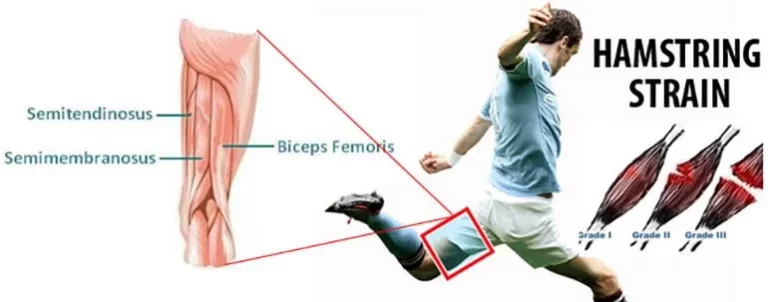
- Legs: In agreement. As a result of all the hopping and bouncing, your legs should get in excellent condition.
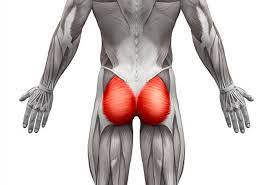
- Glutes: Indeed. Exercises that strengthen your glutes include jump squats.
- Back: Not at all. Your entire body is worked out, but your back muscles are not the main priority.
Plyometrics Workout Type
- Yes, flexibility. The foundation of this workout is a combination of stretching and tightening your muscles, which is excellent for increasing your flexibility.
- Not aerobic. Although it isn’t regarded as an aerobic workout, your heart rate will increase if you repeat your jumps for 30 to 60 seconds at a time without stopping.
- Strength: In agreement. The main goal of this workout is to increase your muscle power.
- Athletic: No.
- Low-impact: Not at all. High-impact jumping and hopping are common.
Risks and disadvantages
- Damage Risk: Plyometrics’ high-impact nature raises the possibility of damage by putting a great deal of strain on joints, muscles, and tendons.
- Joint Stress: The lower body joints, especially the knees and ankles, can be subjected to significant strain during quick, explosive motions and landings.
- Overtraining: It can be harmful to overtrain the body with too much plyometric training too soon without enough time for rest and recuperation.
- Not Suitable for beginners: The demands of plyometrics are too much for people who lack underlying strength, appropriate movement patterns, or a foundation in fundamental exercises.
- Not for some of those: Without first speaking with a physician, plyometric exercises are not advised for those who already have injuries, joint disorders, obesity, or specific respiratory or cardiovascular disorders.
Plyometric Exercises
Burpee
Burpee steps:
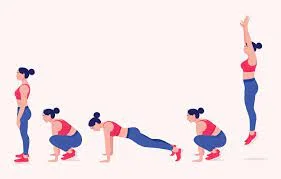
- Place your arms by your sides and your feet shoulder-width apart as you stand.
- Reach forward with your hands shoulder-width apart on the floor while squatting.
- With your hands piled beneath your shoulders, leap into a high plank with your legs straight out behind you.
- Put your palms back on the floor after lowering your body to the floor, then push yourself back up to the high plank.
- Jump as far as you can, raising your arms aloft, then jump your feet toward your hands.
- For one rep, land softly on your feet. Drop down into your next rep right away.
Box Jump
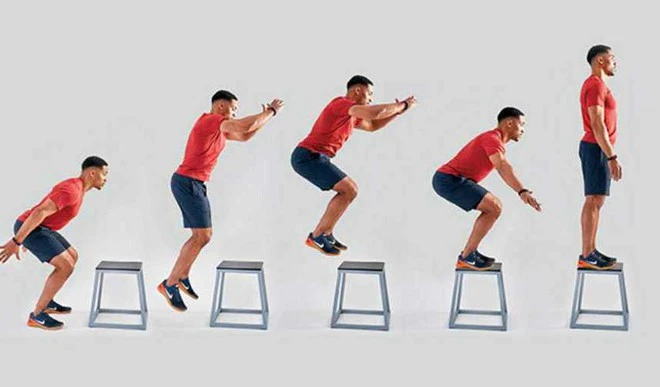
- Place your feet hip-width apart and stand on the balls of your feet, approximately a foot away from a box or strong step.
- Lower yourself into a squat by bending your knees, then straighten your arms behind you.
- To jump on top of the box, swing your arms forward and push through both feet.
- Make sure your knees are relaxed and your feet are hip-width apart when you land on the box.
- To begin another rep, stand up and then step down.
Alternating Lunge Jump
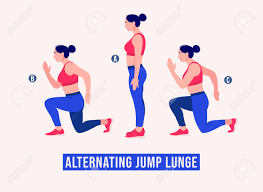
- Place your feet shoulder-width apart as you stand.
- Jump your right foot back and your left foot forward while maintaining an engaged core. Then, bend both knees to lower yourself into a lunge.
- Return to the starting position by hopping both feet.
- Now put your left foot back and your right foot forward, then drop into a lunge on the other side. That is one rep.
Reverse Lunge to Knee-Up Jump
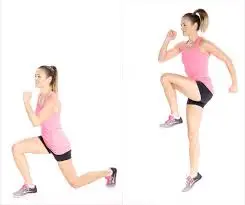
- Engage your core while standing with your feet shoulder-width apart.
- Keep your right heel off the ground as you take a step backward with your right foot, landing on the ball of your right foot.
- As you drop into a lunge, bend both knees to a 90-degree angle. Bend the elbows of your left arm slightly back and your right arm forward. Don’t extend your butt; instead, keep your hips tucked in and your core active.
- To jump as high as you can, drive your right knee toward your chest and push through your left foot.
- After a gentle landing on your left foot, instantly lower yourself back into a lunge. That is one rep.
- Perform every rep on a single side. After that, flip the sides and repeat the process.
Jump Squat With Heel Tap
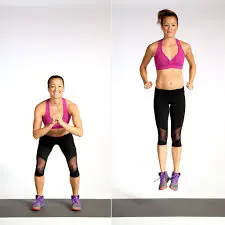
- Place your feet shoulder-width apart and slightly tip your toes out. Put your hands behind your head and extend your elbows wide by opening your chest.
- To lower yourself into a squat, bend your knees, flex forward at the hips, and push your butt back. Maintain a flat back, an engaged core, and an elevated chest.
- Jump up while pushing through your heels, bringing them together for a little tap at the top. Lower yourself right into the next squat after landing with your feet in the beginning position.
Squat jumps
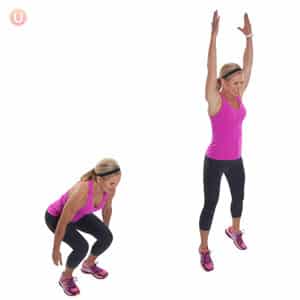
- The patient’s feet should be a little wider than their hips when standing.
- Squat down by lowering your body.
- Jump up with your force, contract your core muscles, and push up through your feet on the ground.
- As you jump, raise your arms over your head.
- After landing, return to the squat.
- Perform two to three sets of ten reps.
Skater Hop
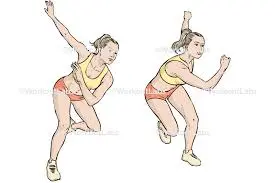
- Place your feet hip-width apart as you stand. Jump to the right by raising your right leg. Straighten your left leg and follow.
- Keep your left foot off the ground and fling it behind you as you land on your right foot. As your right arm swings behind your back, swing your left hand in front of your body.
- Jump with your left leg swinging back to the left, letting your right foot swing behind you, and landing lightly on your left foot. While your left arm swings behind you, swing your right arm in front of you.
- Keep going, switching sides.
Lateral Lunge to Single-Leg Hop
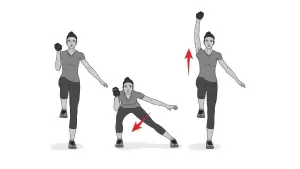
- Place your feet hip-width apart as you stand.
- Step out to the left a lot. To lower into a lateral lunge, bend your left knee, sit your butt back, and hinge forward at the hips. Keep your core active and your chest up.
- To get back to standing, push through your left heel, but instead of putting it back on the floor, instantly lift your knee to your chest and jump toward the ceiling.
- Move straight into the following repetition after landing softly on your right foot.
Crab Walk to Jump
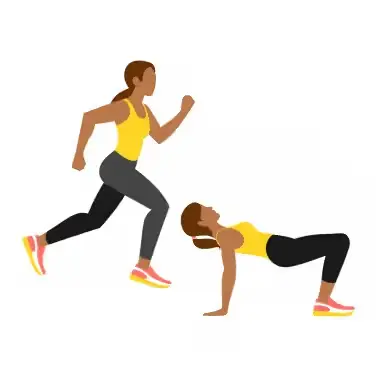
- Place your feet hip-width apart, stand tall, and contract your core.
- Drop into a quarter squat by bending your knees and sending your hips back.
- Step to the right with your right foot while maintaining the squat stance, and let your left follow. With your right foot, take two additional steps to the right.
- Leap up and completely extend your legs, putting your arms behind you to gain velocity.
- Drop back into a squat right away after sitting gently on the balls of your feet. Continue on the opposite side. This is one repetition.
- Keep going in different ways.
Single-Leg Deadlift to Jump
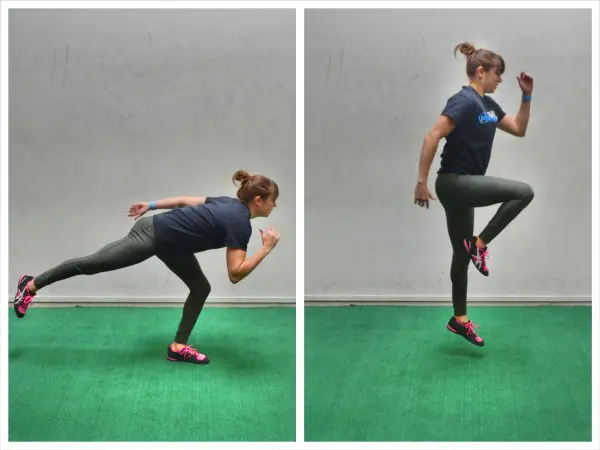
- Place your feet together as you stand. Turn your weight to your left leg, hinge at the hips, and tilt your chest forward while maintaining a little bend in your left knee. With the knee bent and the toes pointing down toward the floor, extend your right leg behind you.
- Reach your right hand toward the floor while maintaining a flat back and an engaged core. You want your torso to be almost parallel to the floor at the bottom of the action.
- To jump as high as you can, push through your left heel while maintaining a strong core. Swing your left arm in front of you with a little bent elbow, then swing your right arm behind you with a slightly bent elbow.
- After one gentle landing, begin your next rep by lowering yourself into a deadlift.
- Repeat on the opposite side after completing all the repetitions on the same side.
How Frequently Should You Do Plyometrics
- Depending on your training objectives, we recommend plyometric exercise 1 to 2 times a week in addition to a strength-based training regimen. As with most training regimens, results would start to show up after 4–8 weeks.
How Long Should You Train in Plyometrics
- Usually, a session would start with a thorough warm-up, followed by a half hour of focused firing and movement pattern exercises for the appropriate muscles. Plyometric exercises would be quick and accurate, lasting one to twenty seconds, with one to two minutes of recovery in between, depending on your level of fitness.
How to put in the most effort while reducing the risk of injury
- Choose a surface with some give. Try using grass or soil outside, a well-padded carpeted wood floor, or a thick, solid mat (not a tiny yoga mat) to reduce the shock as you land. Avoid jumping on tile, asphalt, or cement surfaces.
- Aim just a few inches above the ground at first. The higher you jump, the more forceful your landing will be.
- Bend your legs as you land. Keep your knees apart.
- Instead of landing only with your heels or the balls of your feet, try to land softly.
Cautions
- Use caution while including plyometric workouts in your training routine if you’re just starting or have any chronic illnesses or ailments. It’s best to have a solid exercise routine and be in good physical condition before beginning plyometric exercises. Due to the possibility of joint stress, these workouts require strong ligaments and tendons.
- You should incorporate plyometric activities into your program gradually. Start with easy, low-intensity exercises and work your way up to harder ones. Increase the workouts’ complexity and intensity gradually when you’re sure your body can take them.
- Consult a personal trainer, exercise physiologist, or other exercise professional for further details on this type of training. A few one-on-one or group sessions might be useful to get you started.
- In order for a trainer to evaluate your progress, provide you guidance, and teach you new abilities, make sure you see them at least once a month. Proper shape is necessary to ensure safety.
- Talk to your doctor before starting a new fitness exercise/program. This is especially important if you have any medical conditions, use any drugs, or have been hurt.
Summary
Plyometrics is an activity that uses rapid, strong movements to help people enhance their speed and force when performing activities or actions. In addition to helping athletes improve their performance in their sport, these exercises may also benefit other individuals.
When beginning, one should consider partnering with a personal trainer or other specialist. A professional can aid in tailoring a program to meet the individual’s aims and needs.
FAQs
What are typical plyometric mistakes?
Excessive volume is a common error that turns your training objective from speed or power to conditioning. Plyometric exercise volume should be determined by the recommended level of exercise intensity.
When should I begin doing plyometrics?
Low-impact exercises like hopping, skipping, and jump rope can be used as a starting point for young athletes (ages 7–10). With the right form, preteens and teens (ages 11-15) can progress to moderately intense jumps. Only older youths who are well-trained should perform high-intensity plyometric exercises, such as depth jumps.
What is plyometrics’ opposite?
Plyometric exercise involves a change in muscle length and joint angle and includes both concentric and eccentric contractions. Conversely, isometric training causes neither a change in joint angle nor muscle length. As a result, static strength training is another name for it.
References
Robinson, K. M. (2024, November 20). Plyometrics. WebMD. https://www.webmd.com/fitness-exercise/what-is-plyometrics
CPT, J. M., & CPT, C. S. (2023, August 4). 12 plyometric exercises to build explosive strength and crank up your workout’s intensity. SELF. https://www.self.com/story/a-10-minute-fat-burning-plyometric-workout-you-can-do-at-home
Cronkleton, E. (2019, January 23). How to do 8 different plyometric exercises. Healthline. https://www.healthline.com/health/exercise-fitness/plyometric-exercises#exercises-for-runners