5 Physiotherapy Stretches to Relieve Sciatica Nerve Pain
Physiotherapy stretches for sciatica nerve pain focus on gently relieving pressure on the sciatic nerve, improving flexibility, and reducing muscle tightness. These stretches target the lower back, hips, and legs to ease pain, promote healing, and restore mobility safely.
Table of Contents
What is Sciatica?
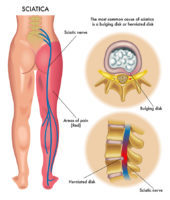
Someone may tell you that their “sciatica is flaring up.” However, sciatica isn’t a singular, distinct illness. Instead, “sciatica” refers to the sign that results from irritation or compression of a sciatic nerve segment. The largest nerve in the body is the sciatic nerve. It travels down the back of each leg, via the buttocks, into the foot, and from the lower spine. Therefore, a significant area of the lower body may be impacted by irritation or damage to this nerve.
The majority of sciatica cases are caused by compression of the lower body nerve roots that supply the sciatic nerve. Pain and sensitivity are increased as a result.
The sciatic nerve and its associated nerves may become irritated for several causes, such as:
- Herniated discs occur when the intervertebral disc’s soft inner core, which acts as a cushion between your back’s bones, protrudes out of alignment. The most frequent cause of sciatica is this.
- One of your spine’s bones may fall out of position due to spinal stenosis, a narrowing of the spinal canal, or spondylolisthesis.
Pregnancy is one of the other possible reasons for sciatica.
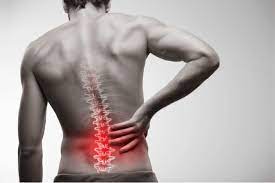
Individual differences in sciatica pain severity and location are significant. Sciatica might seem like a little discomfort to some people. Others may have a strong, continuous, shooting pain that travels down one or both legs from the lower back into the buttocks. Sometimes the back or buttocks are not uncomfortable; instead, the pain is restricted to the leg and foot. Certain positions or times of day may worsen the pain.
How stretching helps
One of the most effective strategies for reducing sciatica pain and promoting long-term recovery is stretching. Gentle stretches and movement may offer several advantages, such as:
- Improved range of motion and flexibility: Leg, hip, and lower back stretches help alleviate tension in muscles that could irritate or press on the sciatic nerve.
- Stronger supporting muscles: Increasing flexibility lessens the strain on the lower back and promotes healthy spinal alignment, which lowers the likelihood of recurrent episodes.
- Circulation boost: By providing wounded tissues with oxygen and nutrients, increased blood flow hastens the healing process.
- Decreased perception of pain: Endorphins, which are naturally occurring painkillers, are released during gentle exercise and serve to reduce discomfort.
It’s crucial to approach stretching with caution. Avoid excessive bending or activity that might strain your spine. Pay attention to your body and concentrate on making little, deliberate motions. To ensure you’re on the correct track to recovery, consult a healthcare professional if stretching worsens your pain or discomfort.
Gentle stretches to relieve sciatica pain
You can alleviate back pain, including sciatica, by incorporating stretch-focused exercises into your daily home routine. To get relief, try the following easy stretches.
Knee to Chest Stretch
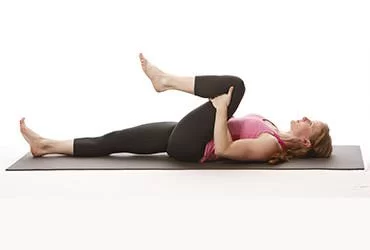
- On a yoga mat, the patient is in the supine position with their knees bent. Ensure that your feet are level on the ground.
- Pull one knee toward the chest while holding it with your hands.
- For ten to fifteen seconds, hold the knee to your chest while pushing your lower back to the floor.
- Return your knees to their initial position and take a break.
- Repeat with the opposite knee now.
- Perform this stretch two or three times.
Piriformis Stretch
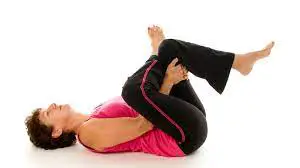
- The patient is in the supine position. With both knees flexed and your feet flat on the ground,
- With your left leg’s ankle lying just above your right knee, cross your left leg over your right.
- Using both hands, grasp your right thigh and draw it toward your chest until your buttocks start to expand. Hold for ten to thirty seconds.
- Go back to where you were before.
- Do the same with the opposite leg.
Supine Spinal Twist
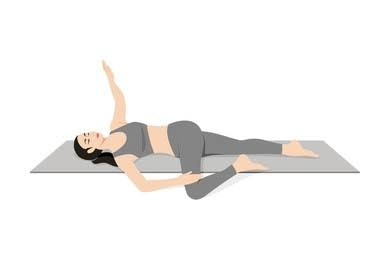
- Lie down on your back.
- Put the soles of your feet on the floor while bending your knees and looking up at the sky.
- Press into your feet to raise your hips slightly off the floor, then shift them about an inch to your right. This step is important because it sets up your hips to stack one on top of the other when you enter the twist.
- Exhale, then draw your right knee into your chest while keeping your left leg flat on the floor. Keep your left foot flexed and active throughout the pose. Breathe.
- Exhale and move your right knee to the left side of your body, where it rests on the floor, crossing your midline. You are now standing with your right hip over your left. You can loop your right foot behind your left knee if you’d like.
- Stretch your right arm to the right while keeping your shoulders in line. Either extend your arms out and form a T shape or place your left hand on your right knee. Ensure your palms are facing upward.
- Turn your head to the right and look over your right shoulder at your right fingertips. You can skip this stage if your neck doesn’t feel comfortable.
- As you exhale, let go of your left knee and right shoulder toward the floor. Hold the position for five to ten breaths. To release the stance, inhale, roll onto your back, and draw your right knee into your chest. For a few breaths, neutralize your spine by letting both legs drop to the floor before switching to the other side.
Cat Cow Stretch
Cat Cow stretch steps:
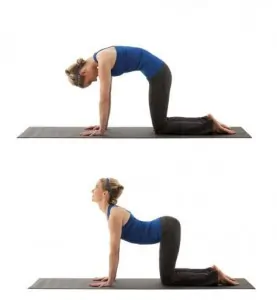
- Please start with the patient on their hands and knees on the floor. Your hands should be shoulder-distance apart and slightly forward of your shoulders, with your knees beneath your hips.
- Firmly press down with your hands.
- As you inhale, elevate your chin and chest, expand your chest, and drop your stomach to arch your back.
- To extend your upper back, concentrate on lengthening the back of your neck while maintaining an active belly muscle.
- Hold for a few breaths.
- Bring your spine back to a neutral posture when you’re ready to release the pose.
Hamstring Stretch With Theraband
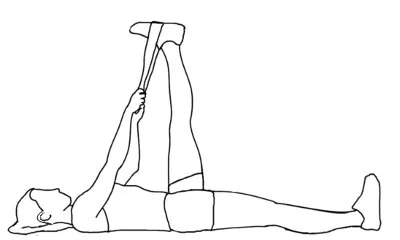
- On a comfortable mat or floor, lie on your back.
- Wrap a resistance band with a medium tension around your foot’s sole.
- With one leg flat on the floor, extend the other leg toward the ceiling.
- Feel the strain in your hamstring as you slowly draw the band in your direction.
- Breathe into the stretch, hold it, and relax.
Does Exercise Help With Sciatica?
Sciatica and other forms of back pain can be reduced with gentle exercise in many ways:
Your spine’s supporting muscles get stronger as a result.
It increases flexibility to facilitate more comfortable movement.
It increases blood flow to your lower back, which eases stiffness and encourages recovery.
However, a home workout regimen isn’t always effective. Physical therapy and/or medication may be suggested by your physician. A physical therapist can offer sciatica supportive therapy in addition to teaching you back pain-relieving exercises like:
- To reduce inflammation and relax muscles, apply hot or cold packs.
- Using massage treatment to relax your lower back and leg muscles
- Transcutaneous electrical nerve stimulation (TENS) involves passing a small electric current into your legs and back muscles using a machine.
- Warm water and massage jets are used in hydrotherapy to increase blood flow and ease muscular tension.
Avoidable Exercises for Sciatica
Bending, lifting, and twisting are some of the movements that might worsen sciatica pain. So many jarring, high-impact exercises like jogging on a hard surface and carrying big weights.
When you’re recovering, stay away from:
- Leg circles and double leg lifts, which include elevating both legs while on your back,
- Squats
- Forward bends or toe touches
- bent over rows
- Russian twist
FAQs
How can I repair sciatica more quickly?
Other self-care methods that might be beneficial are cold packs. Apply a cold pack to the sore spot many times a day for up to 20 minutes.
Warm packets. Apply heat to the sore spots after two to three days…. stretching. Some alleviation may be obtained with low back stretches and medications.
Who suffers from sciatica the most?
Sciatica affects around 10% of those who suffer from lower back pain. People over 40 are more likely to have the disorder. Physical treatment, applying heat to the affected region, or engaging in physical exercise can all provide relief.
Which activity is most effective for sciatica?
Knee to Chest Stretch
Cat Cow Stretch
Hamstring Stretch With Theraband
Supine Spinal Twist
Piriformis Stretch
What vitamin relieves pain in the sciatica nerve?
Vitamin B12 and Nervous System Function
Nerve damage and pain can result from a lack of vitamin B12, which is necessary for the maintenance of healthy nerve cells. To promote nerve health and lessen sciatic nerve pain, you need to consume enough vitamin B12 in your diet.
Refernces
- Restivo, J. (2025, January 13). Sciatica: Gentle stretches to help relieve pain and improve mobility. Harvard Health. https://www.health.harvard.edu/pain/sciatica-gentle-stretches-to-help-relieve-pain-and-improve-mobility
- Ryt, A. P. (2020, July 31). How to do the Supine Spinal Twist (Supta Matsyendrasana) in yoga. Verywell Fit. https://www.verywellfit.com/supine-spinal-twist-supta-matsyendrasana-3567125
- Sporty Doctor. (2025, September 11). [5 easy steps] How to do the banded hamstring stretch right. Sporty Doctor – Sports Medicine Advice for Weekend Warriors. https://sportydoctor.com/exercises/banded-hamstring-stretch/