Seated Spinal Twist: How To Do It Safely
Table of Contents
Introduction
Seated Spinal Twist is a gentle yoga pose that helps improve spinal mobility, flexibility, and posture. It provides a mild stretch to the back, shoulders, and hips while encouraging better rotational movement of the spine.
We frequently spend a lot of time in automobiles, behind computers, or at workplaces due to modern life. A tight spine, tense shoulders, and poor posture can result from this sedentary lifestyle. Fortunately, the Seated Spinal Twist is an easy, accessible remedy that you can perform practically anywhere. In only a few minutes each day, this mild exercise can improve your general well-being, alleviate tense muscles, and restore spinal mobility.
Yoga is full of twisting moves. Additionally, these exercises can help restore and maintain range of motion in the spine by stretching the muscles of the back and abdomen when standing, upside down, or on the floor. One such exercise is the seated twist seen above. Additionally, they can aid with digestion, circulation, relaxation, and stress reduction.
Twists are widespread; however, they can have some typical problems. Instead of using the thoracic spine (mid-back) and lumbar spine (lower back), one is starting—or forcing—the twist through the cervical spine (neck).
Start by sitting up straight, grounding through your sit bones, and stacking your shoulders over your hips to activate your lower vertebrae and prevent neck pain. Next, begin the twist at the base of your back: Imagine your lower back, mid-back, upper back, and neck forming a spiral.
Another mistake is to “muscle” the twist using your arm power. It’s okay to get further into the posture with help, but try not to drag yourself into it with your hand or elbow.
Disconnecting the action from the breath is still another problem. The foundation of every asana practice is breathing; when twisting, pay attention to your breath and coordinate it with your movements to improve your relaxation and deepen your rotation, both of which facilitate digestion.
Lastly, it’s critical to understand and value your individual body. Try executing the twist while sitting on a solid chair or a yoga block if you find it difficult to assume and maintain an upright posture while sitting on the floor.
What is a Seated Spinal Twist?
A healing yoga practice that helps spine mobility and healthy digestion is the Seated Spinal Twist. Twisting poses can ease lower back pain, tone the abdomen, and massage internal organs. This position, which is frequently done at the conclusion of a sequence, is both calming and energizing.
Ardha Matsyendrasana, another name for the Seated Spinal Twist, is a traditional twisting pose that provides balance, strength, and flexibility. It provides a deep stretch and energizes the spine, which helps to improve posture. This posture, which bears the name of the yogic sage Matsyendra, is a potent method to promote internal cleansing by improving spine rotation and facilitating breath expansion. The position provides both physical and mental clarity as it softly massages the digestive system.
The twist’s swirling action fosters awareness of your body’s alignment and core control. You may establish a strong connection between your body and breath by performing this pose in an erect, stable pose. Frequently used in both contemporary Vinyasa and traditional Hatha, A great approach to add awareness to your everyday practice is with the Seated Spinal Twist.
How to Do a Spinal Twist While Seated
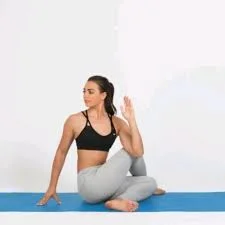
- Extend your legs in front of you while seated on the floor (Dandasana).
- Put your right foot outside of your left leg and bend your right knee.
- You can either bend your left leg with the foot close to your right hip or maintain it extended.
- Inhale to extend your spine and sit up straight.
- Breathe out as you turn to the right and put your right hand behind you.
- You can clasp your right knee with your arm or hook your left elbow outside of it.
- Keep your head in a neutral position or glance over your right shoulder.
- To continue spinning, take three complete breath cycles.
- Inhale back to the center after progressively switching sides to remove the grasp.
Additional Advice
- To look over your right shoulder, slowly rotate from the base of your spine to your mid-back, upper back, and neck.
- Concentrate on twisting upward and lengthening the spine. When you twist, avoid stooping or bending back.
- Reach your left hand around your right leg and gently lay it on your right hip if hooking the elbow is too challenging.
Try These Modifications
Seated Side Bend
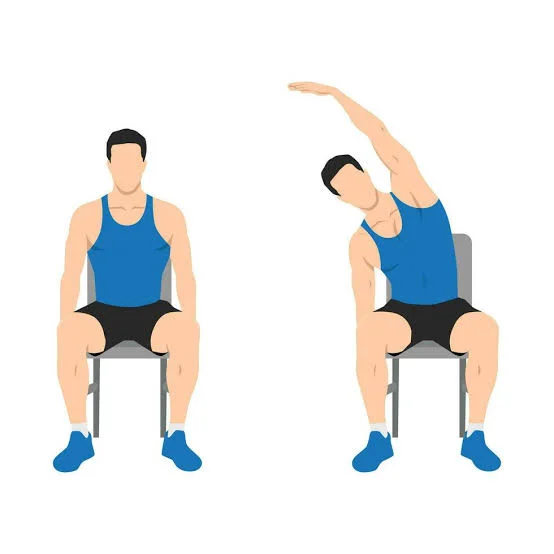
- With your hands on the floor next to you, take a comfortable, cross-legged (or kneeling) position while sitting tall on the floor.
- Stretch your left arm above and consider raising your spine as you inhale.
- Lean slightly to your right side as you exhale. Allow your right forearm to descend toward the floor while maintaining your hips on the ground and your shoulders square to the front.
- Hold for four to five breaths once you’ve reached the end range of motion, which may or may not involve placing your right forearm on the ground. Instead of just slumping to the side, concentrate on extending the spine up and over. Repeat after switching sides.
Supine Spinal Twist
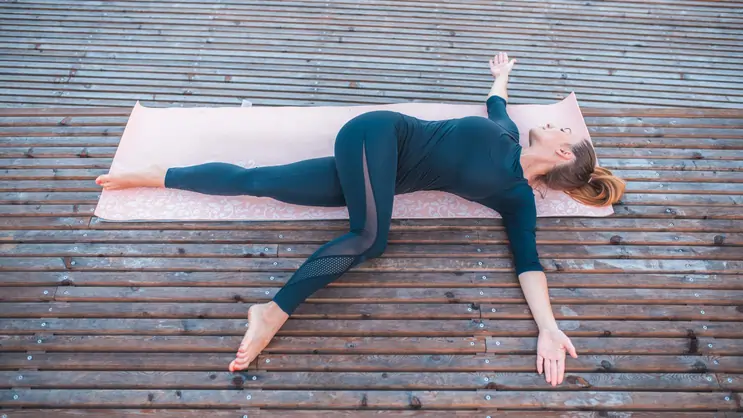
- Bend both knees till the soles of your feet are flat on the ground while lying on your back.
- Lift your hips gently, move them one inch to the right, and then return your hips to the floor.
- Use your hands to help you bring your right knee toward your chest while extending your left leg on the floor (but without pushing your knee down).
- Keeping your shoulders on the floor and your left leg straight, steadily rotate your lower body to the left. Don’t press on your lower back to create a deeper twist or force your right knee to hit the floor; instead, let your right knee slide over the left. As gravity and your breath assist you in going deeper into the posture, let your right knee hang loosely and strive to relax.
- Extend both arms perpendicular to your body at your sides. To further improve the stretch, you can also lightly lay your left hand on the outside of your right knee, but again, don’t push too hard.
- Hold for four or five breaths. Repeat after switching sides.
Seated Spinal Twist Advantages
The Seated Spinal Twist offers numerous benefits for the body and mind. Regular practice of this position increases flexibility, promotes healthy rotation, and enhances spinal mobility. The twist has a cleansing effect that promotes natural detox by gently compressing the abdominal organs and stimulating digestion. Additionally, it eases stress in the neck, shoulders, and upper back by massaging and releasing tension throughout the body. In addition to anchoring your energy and offering an opportunity to refresh your body awareness, the position regulates the nervous system. For me, doing this position not only relieves physical pain but also gives me a sense of focus and serenity that lasts all day.
Guidelines and Advice for Correcting the Seated Spinal Twist
Tips for Alignment:
- Make sure to dig down equally through both sit bones to get the most out of the Seated Spinal Twist.
- Make your spine longer as you inhale, and twist a bit more deeply as you exhale.
- To prevent strain, keep your shoulders loose and your chest wide.
- Instead of leaning into the twist, use your hand behind you to raise.
- It’s crucial to avoid twisting only your neck and to keep the twist centered at your midline.
- This will guarantee that you fully benefit from the position without putting undue strain on any part of your body.
- I know from my experience that maintaining good alignment keeps my twist pleasant and effective.
Easy & Powerful Cueing Ideas:
To create space in your spine, breathe in and lift through the crown of your head as you perform the Seated Spinal Twist. With your body in alignment and your sitting bones firmly in place, slowly spiral out of your center as you release the breath. You can crook your elbow for more support or hug the knee to intensify the twist. Never push the twist; instead, let your breath direct the rotation.
To prevent over-rotating, maintain both sides of your body long and equal. Continue rising into the twist while taking regular breaths. For me, I stay grounded and avoid tension by letting my breath guide the action.
Contraindications
- If you have herniated discs or spinal injuries, avoid deep twisting and see a doctor.
- Use open twists instead of deep abdominal compression while pregnant.
- Wait until a doctor gives the all-clear following recent back or stomach surgery.
- Change the lower leg posture to lessen strain if you have knee or hip pain.
- For extreme gastrointestinal distress: If the pose is painful, skip it or apply softer twists.
Seated Spinal Twist Modifications and Variations
Modification
- To relieve strain on the lower body, extend the lower leg while maintaining its straightness.
- To relieve tense hips and hamstrings, raise your hips by sitting on a blanket or block.
- Use a strap and grasp it to help with the twist if your elbow is unable to reach your front knee.
- Instead of looping your elbow over the bent knee, you might give it a nice embrace.
Variations
Full Matsyendrasana offers a more difficult variation with a bind or deeper shoulder opening for seasoned practitioners who want to enhance their practice. The twisted easy seat, a cross-legged sitting twist that is suitable for beginners, is a kinder substitute. Try the chair twist, a fantastic chair modification, for additional sitting support.
The revolving head-to-knee position is another version that provides a greater stretch and twist by combining the twist with a forward fold over one leg. Depending on your flexibility and level of expertise, these variants assist in adjusting the practice to different levels, ranging from more difficult to milder.
Common Mistakes to Avoid
- Collapsing the spine: To prevent your spine from collapsing, always rotate with a lift through the top of your head.
- Twisting only the neck: To ensure a good twist and prevent undue neck tension, start the twist from your abdomen and rib cage.
- Avoid rising from the hip: To maintain balance while twisting, keep your sitting bones anchored.
- Overusing the arm for support: Concentrate on using your core muscles for support rather than depending too much on your arm.
- Attempting to force the twist: To ease into the twist without pushing yourself too far, let your breath lead you and concentrate on taking moderate, steady breaths.
When to Prevent or Adjust Seated Spinal Twist
- Pregnancy: To prevent strain, avoid the deep twist and instead use soft, open twists.
- Spinal disorders or injuries: To prevent additional strain, use extra caution and support the spine.
- Hip or knee pain: To ease soreness, extend your lower leg and lay a blanket beneath your hips.
- Digestive pain, like cramps: If you’re experiencing digestive pain, such as cramping, try adopting a more relaxed position that doesn’t put too much strain on your abdomen.
- Fatigue or stiffness: To avoid damage, warm up with light movement before performing twists.
Why Do You Do Seated Spinal Twists?
A great position that combines mental clarity with physical vigor is the Seated Spinal Twist. It supports the spine, aids in internal organ stimulation, and fosters serenity. It urges you to return to your core, both physically and emotionally, as a purifying and balancing position.
This twist promotes introspective energy and facilitates a greater level of self-connection. It may maintain a healthy spine, enhance posture, and expand your awareness of your breath with consistent practice. For me, this twist provides a grounding effect that improves my energy and attention, making me feel more balanced all day.
Purpose
The Seated Spinal Twist is an excellent workout to offset the consequences of sitting for office workers who frequently remain motionless for extended periods of time. This twist releases tension and stretches the muscles around your spine by opening your chest and ribs.
I’ve discovered that performing this pose on a daily basis may significantly enhance posture and avoid the stiffness that sometimes results from prolonged desk sitting. It’s an easy yet efficient technique to provide your body with energy and relief throughout the day.
To complete this exercise
Start with your feet flat on the floor and your back straight on a chair for a basic seated twist. Try to rotate your thoracic spine by twisting your torso to one side while maintaining a calm posture. For around thirty seconds, hold the twist while taking deep breaths.
Repeat the twist on the opposite side after gently releasing. Particularly after extended periods of sitting, this easy exercise is useful for increasing range of motion and relieving shoulder and back stress.
Who Needs to Do Twisting Yoga Poses?
Individuals with Digestive Health Objectives
The most direct yoga intervention for digestive stimulation is twisting postures; everyday practice of even the most basic supine twist may provide regular abdominal organ massage that promotes digestive health.
Key Highlights
- Produces the two properties Patanjali names for asana: sukha, ease, and sthirata, steadiness.
- Physically massages digestion by compressing and releasing the ascending and descending colon.
- Restores the thoracic rotation that is most hampered by working at a desk for more than eight hours a day.
- Varies from simple supine twists to complex bound positions that involve encircling the legs with the arms.
- Produces lateral fascial relaxation and spinal disk hydration that no other position category can equal.
- Particularly uses the twist’s compression-then-release pattern to stimulate peristalsis.
FAQs
Which yoga posture is the toughest in the world?
Because it involves tremendous backbending, inversion balance, and shoulder power, the Handstand Scorpion posture (Vrschikasana) is regarded as the hardest physical yoga posture in the world.
What advantages come from performing a spinal twist while seated?
In yoga, the sitting spinal twist, also called Ardha Matsyendrasana, is a very powerful, beginner-friendly pose that enhances mental and physical clarity. You can contract one side’s muscles while stretching the other by twisting the torso from the base of the spine. This provides your body and mind with a number of evidence-based advantages.
How should one perform seated twists correctly?
Sitting tall on the floor with your legs straight out in front of you, perform a conventional seated spinal twist by bending your right knee and placing your right foot flat on the ground outside your left thigh.
What does “seated twist” signify in Sanskrit?
The traditional sitting spinal twist is known as Ardha Matsyendrasana (Half Lord of the Fishes Pose) in Sanskrit. Vakrasana is another popular version, or a more straightforward sitting twist.
How is a spinal twist exercise performed?
With your shoulders level on the ground, perform a simple reclining (supine) spinal twist by lying on your back, drawing one knee to your chest, and gently guiding it across your body to the other side.
Twisting Yoga Poses: What Are They?
Yoga poses that twist the spine along its vertical axis produce lower back tension relief, digestive organ stimulation, thoracic spinal rotation, and the hydration of the spinal disk that comes from compression-release mechanics.
References
- Yoga_Admin. (2026, May 17). The power of seated spinal twist. Yoga Education Institute. https://yogaeducation.org/the-power-of-seated-spinal-twist/
- YogaDownload. (n.d.). Seated Spinal Twist – Pose Guide. Copyright 2012. https://www.yogadownload.com/Poses/PoseDisplay.aspx?PoseID=40
- Revitalize Your Spine with the Seated Spinal Twist. (2025, June 25). Stretching Videos for Flexibility | STRETCHIT. https://blog.stretchitapp.com/blog/revitalize-your-spine-with-the-seated-spinal-twist
- YogaRenew. (2025, November 11). Seated Spinal Twist | YogaRenew. https://www.yogarenewteachertraining.com/yoga-poses/seated-spinal-twist/
- Fard, B. M. F. (2025, June 23). How to do the seated twist. Experience Life. https://experiencelife.lifetime.life/article/break-it-down-the-seated-twist/