7 Best Exercise For Slipped Disc (L4-L5,L5-S1)
Table of Contents
Introduction
The best exercises for a slipped disc concentrate on strengthening the back and core muscles that support the spine, decreasing pain, and increasing flexibility. These exercises support improved posture for long-term healing and decrease strain on the injured disc.
A disc herniation happens when disc material moves outside of the intervertebral disc region, most frequently in the lower back (lumbar spine).
The displacement of disc material beyond the intervertebral disc space is known as disc herniation, and it typically affects the lumbar spine in the lower back. An intervertebral disc sits between each vertebra and functions as a cushion to keep the vertebrae from pressing against one another.
These intervertebral discs, which are located between the vertebrae, also contain the nucleus pulposus, a gel-like material. When the gel-like material breaks through the disc’s outer layer and presses against the spinal cord or spinal nerves, it results in a herniated disc, which can make daily activities difficult and cause symptoms like severe back pain.
Herniated Lumbar Disc Symptoms
involve: – Lower back pain, which is typically the first indication
Leg pain that fluctuates
- A tingling or numbness
- Leg weakness
- Sitting causes more pain
- Limited trunk flexion
- Pain from sciatica (pinched nerve)
Exercise For Slipped Disc (L4-L5, L5-S1) Video
Exercises For Slipped Disc
SLR ( Straight Leg Raise )
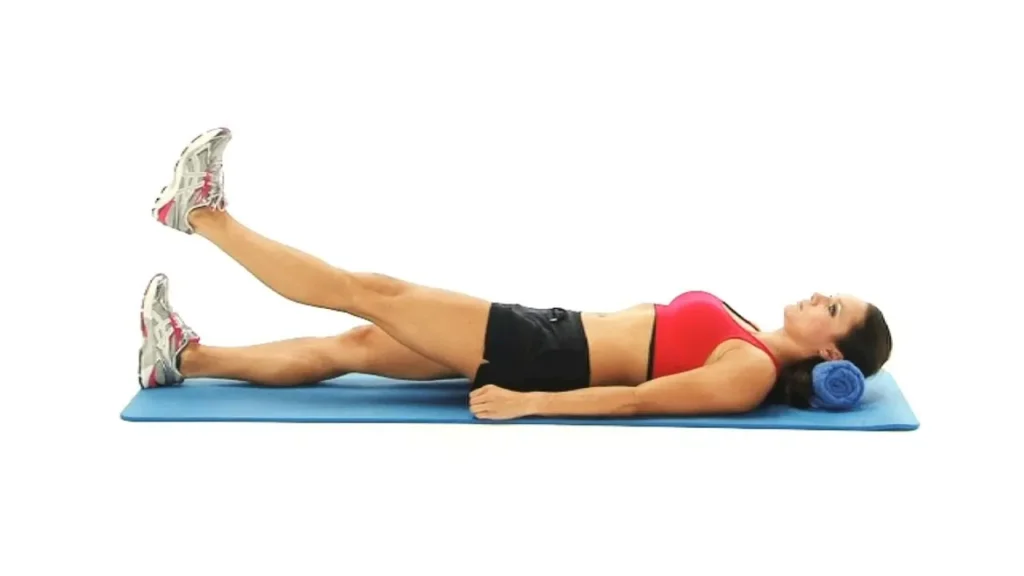
- Lie down on your back.
- Keeping one leg straight, bend the other. Contract your quadriceps muscles as you gradually raise your single leg to a 45-degree angle.
- Lower after holding for three to five seconds.
- On both sides, repeat at least ten times.
- The quadriceps and hip flexors are strengthened by this workout. Keep your legs strong as well.
Knee to Chest Stretch
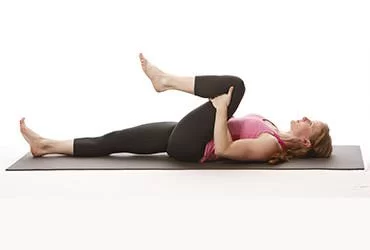
- Stretch your legs out while lying on your stomach, with both hands on either side of your body on a yoga carpet or other comfortable surface.
- Bend one knee till it touches your chest, then slowly pull it closer with both hands while keeping the other leg straight and comfortable on the floor.
- Breathe deeply, lower your scapula, and hold the position for 20 to 30 seconds before lowering your foot gently.
Bridging
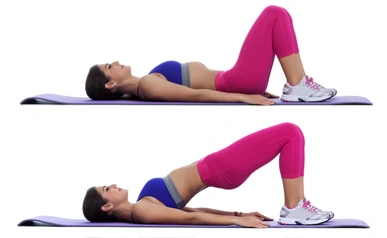
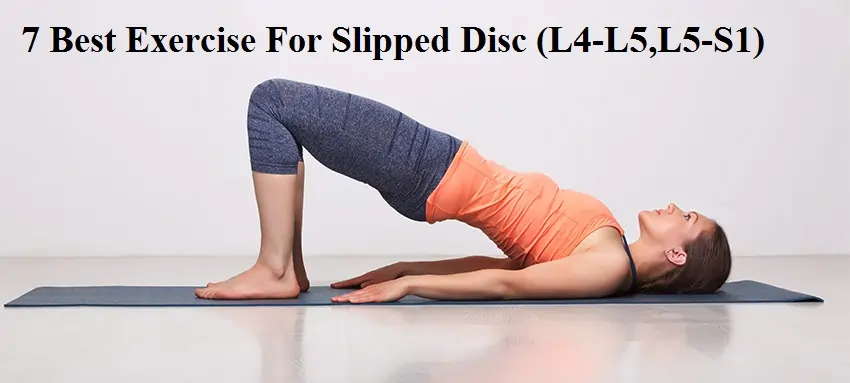
- If lying on your back is comfortable for you, use a carpet. It is wider than the floor or your waist. Put your palms by your sides and bend your knees.
- Squeeze your glutes, contract your core (tuck your belly button toward your spine), maintain a neutral back, raise your hips off the ground, and hold at the top for three to five seconds (or longer if you are stronger).
- Then, continue (10–15 reps, for 2-3 sets) while lowering carefully (bringing your hips back down to the floor with control).
Cobra Pose
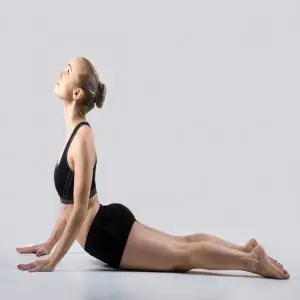
Cobra pose steps:
- Place your hands behind your shoulders while lying on your stomach. To contract your quadriceps, extend your big toes wide back and apply pressure with all ten toenails.
- To increase the size of your back, turn the inside of your thighs toward the top. Apply gentle pressure with your hands while you raise your head and chest and move your shoulders back and forth.
- To maintain the long-necked back, raise the sternum rather than the chin. Press your ear with your right hand.
- Remember that your elbows are slightly folded. Leave your back and go back to the carpet to break the posture.
Hip Extension in Prone
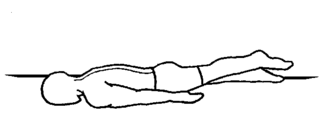
- Start by straightening your legs while lying on your stomach. Your heart will be more stable if you close your contract with the abdominal cavity.
- Lift your feet: At the level of the exercise, raise your feet off the ground while tightening your buttocks and keeping your other leg on your right.
- Hold: Hold for just a short period. Raise your feet to their initial posture slowly.
- Repeat: As instructed by a medical professional, complete three sets of 10 repetitions on each leg.
Superman Pose
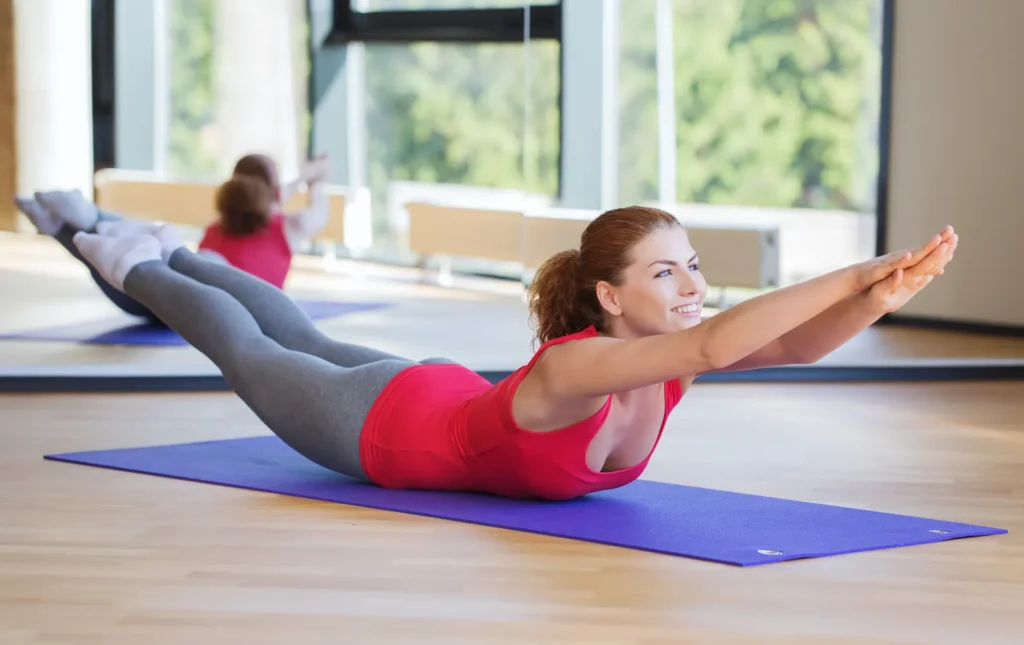
Superman pose steps:
- Lying on the ground, reach in front of you, and grip your straight leg while performing the installation (facing down).
- Lift your arms and legs until the lower back muscles start to contract. Slowly elevate your hands about 6 inches (15 cm) off the ground, or support your head in a neutral position without lifting.
- Tighten the muscles that connect the shoulder blades, the lower part of the neck, and the buttocks at the same time. You want to push your rep while lifting your belly button off the ground.
- Hold for two to three seconds. Remember that your breathing is constant. Turn your stomach, legs, and upper torso upside down while on the ground. Eight to twelve repetitions of this exercise are done two to three times.
Bird Dog Exercise
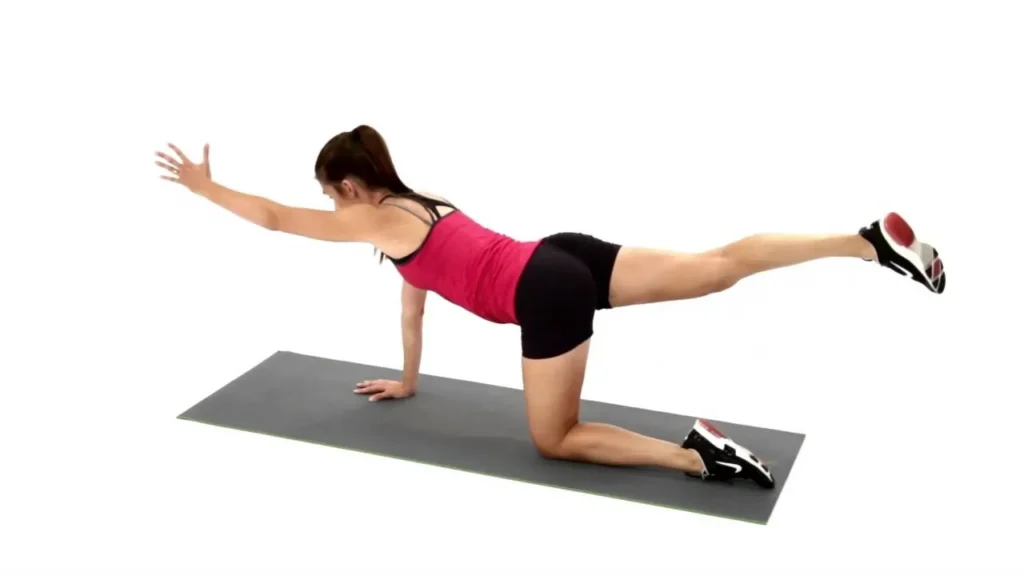
- Start on all fours in the tabletop position.
- Put your arms beneath your knees and shoulders.
- Contract your abdominal muscles to maintain a neutral spine.
- You must have your shoulder blades together.
- Supporting your shoulders and hips parallel to the floor, raise your left leg and right hand.
- After holding this position for a few seconds, go back to the beginning. Hold this position for a few seconds, then raise your left hand and right leg.
- Continue to your previous position. There’s just one round.
- In two or three sets, complete 8–12 repetitions.
Avoid activities for Slipped Disc (L4-L5-L5-S1)
- Taking Off Heavy Lifting
- Exercises with High Efficiency
- Twisting and bending forward
- Prolonged Sitting Abrupt Jerky Motions
- Sleeping on a Soft Mattress
FAQs
How does one define a slipped disc at L5-S1?
A slipped disc injury occurs at L5-S1 when the soft cushioning (disc) between the first sacral vertebra (S1) and the last lumbar vertebra (L5) is ruptured. This disc can grow or herniate, putting pressure on nerves and resulting in lower back, sciatica, or leg pain.
Are slipped disc exercises beneficial?
Some physiotherapy exercises can reduce nerve compression, decrease disc pressure, strengthen supporting muscles, and improve flexibility. However, exercises must be done appropriately and under supervision.
How frequently should I do these exercises?
These exercises are often performed once or twice a day, with eight to ten repetitions per exercise.
Does my L4-L5-S1 slipped disc need me to stay away from participating in any activities?
Yes, stay away from:
powerful twisting and raising motions.
Acute pain may result from high-impact activities like running or jumping.
exercises that call for toe contact or deep forward bending.
Can difficulties with the L5-S1 disc be fixed by walking?
Yes. Walking at a moderate pace reduces stiffness, increases blood flow, and improves recovery. Stay away from long stretches at first.
When should I quit working out and visit a doctor right away?
Stop and visit a doctor if you experience any of the following symptoms:
sudden decrease of leg or back pain.
legs that are weak or numb.
inability to regulate bowel or bladder motions.
References
- Inverarity, L., DO. (2022, November 21). How to do a straight leg raise. Verywell Health. https://www.verywellhealth.com/how-to-the-straight-leg-raise-2696526
- Ezrin, S. (2021, July 21). The benefits of doing the Cobra pose every day. Healthline. https://www.healthline.com/health/fitness/benefits-of-cobra-pose#how-to-do-it
- Cpt, K. D. M. R. (2023, April 12). Try the Superman Exercise to Stand Tall and Proud. Healthline. https://www.healthline.com/health/fitness/superman-exercise
- Cronkleton, E. (2023, October 27). How to perform the bird dog exercise and its core benefits. Healthline. https://www.healthline.com/health/bird-dog-exercise#how-to-do