14 Best Exercises For Hamstring Muscle Pain
Table of Contents
Introduction:
Even people who lead sedentary lifestyles and athletes frequently complain of hamstring pain. Hamstring problems can significantly affect mobility, performance, and quality of life, ranging from a persistent ache to a severe condition.
The first step to effective care is to understand the underlying reasons, which frequently include overuse, sudden strain, poor flexibility, muscular imbalances, or improper warm-up.
Pain relief and recurrence prevention can be significantly enhanced by a structured exercise program that focuses on improving movement patterns, strengthening, and gentle stretching.
Exercises for Hamstring Muscle Pain can help manage pain, promote healing, and prevent injuries. To improve function and restore muscular balance, gentle stretching and strengthening activities are essential.
Exercises for Hamstring Muscle Pain are important during the recovery phase. Strength, flexibility, stamina, balance, and joint stability are all enhanced by exercise.
Causes:
Age and Growth Spurts
- Bones may extend more quickly than muscles during rapid development phases, which can cause temporary muscle stiffness and increase the risk of muscle strains.
- As we age, our muscles and tendons may naturally lose some of their strength, elasticity, and recovery capacity, making them more susceptible to damage.
Hamstring strain
- Acute hamstring pain is most commonly caused by damage or tearing of the muscle fibers.
- It typically happens when engaging in activities that require quick, forceful motions.
Limited Mobility and Flexibility
- When hip flexors are tight, the pelvis rotates forward, a condition known as anterior pelvic tilt.
- This places the hamstrings in a position where they are stretched and extended over time, which may make them more prone to injury.
Fatigue of the Muscles
- Fatigued muscles lose their capacity to perform effectively, absorb shock, and offer stability, whatever the particular task.
- Acute strains and the rise of overuse injuries like tendinopathy are both significantly increased by this.
Too Much Static Stretching
- Aggressive or prolonged static stretching, particularly into deep hip flexion, may seem in contradiction, but it can irritate and stress the already weak proximal hamstring tendons.
An unexpected rise in the intensity of training.
- Excessively increasing the volume, frequency, or intensity of exercise too quickly without giving the tendons time to adjust can overwork them and cause micro-damage and degeneration.
An earlier hamstring injury
- This is among the best indicators of hamstring pain in the future.
- A history of tendinopathy or hamstring strains greatly raises the chance of re-injury, particularly if the first injury was not completely healed, if scar tissue has developed, or if the person resumes activities too soon.
Muscle Unbalances
- Hamstring pain can be considerably more likely to occur when there are differences in the strength and flexibility of certain muscle groups.
Hip or lower back pain that has been referred
- Conditions like lumbar disc herniation or issues with the hip joints can cause hamstring pain.
Poor biomechanics and technique
- Going too far when jogging or using poor landing mechanics are examples of workouts or sports where poor form can put an excessive amount of stress on the hamstrings.
Signs and symptoms:
Depending on the underlying reason and intensity, hamstring muscle pain can present in a variety of ways. To figure out if you require relaxation, self-care, or medical help, it’s important to pay attention to these indicators and symptoms.
Pain in the back.
- This symptom is the most noticeable. It might vary in severity and location.
Pain when moving
- The pain will typically be worsened by activities that stretch or contract the hamstring, such as bending the knee, straightening the leg, walking, running, and bending forward.
Excessive tenderness
- Touching the wounded region will be extremely uncomfortable.
Bruising and swelling
- Swelling typically occurs within a few hours, and bruising (discoloration) may show up a day or two later.
- Bruising frequently spreads down near the knee.
Cramping or spasms
- The muscles of the hamstrings may become unexpectedly rigid and uncontrollable due to overuse or dehydration.
Weakness
- Difficulty doing hamstring-using exercises, such as pushing off when walking or bending the knee against opposition.
“Pop” or “snap” loudly (common)
- The patient mentions hearing or feeling a certain sound that sounds like tears.
Struggling to Straighten the Leg
- The knee hurts more when you try to fully extend it.
Stiffness in the muscles
- Although the hamstring may feel tight, trying to stretch it forcefully often makes the tendons worse.
Having trouble with everyday tasks
- You may have trouble walking, getting up and down stairs, sitting for extended periods of time, or bending over, depending on how bad it is.
Exercise’s advantages:
Exercise can significantly speed up recovery and help you prevent re-injury if done correctly when experiencing hamstring muscle pain.
It makes you more flexible.
- Return to a normal range of motion.
- Make the following strains less likely.
- Encourage better mobility in the hip and knee joints.
Increases stability and Strength
- Develop your hamstrings’ strength and stamina.
- Improve your hamstring and quadriceps balance.
- Strengthening your core and glutes will help reduce the pressure on your hamstrings.
Promotes the healing and recovery process
- Elimination of such as lactic acid
Increased comfort in both daily and outdoor activities.
- Strong hamstrings make it easier to perform things like gardening, getting up and down off the floor to play with your children or grandchildren, or bending down to pick something up.
Improves Mental Well-being and Confidence
- Anxiety about injuries is lessened by exercise.
- Restores confidence in the leg’s functionality
- Lessens the nervousness that comes with moving, which could cause healing to be delayed.
Prevents Re-Injury
- Using conditioning to strengthen muscles
- Helps in improving proper mobility and load tolerance progressively.
Reduces Pain and Stiffness
- Assists in progressively stretching tight muscular fibers.
- Reduces muscle stiffness, especially after a long period of inactivity or an accident.
Exercises For Hamstring Muscle Pain:
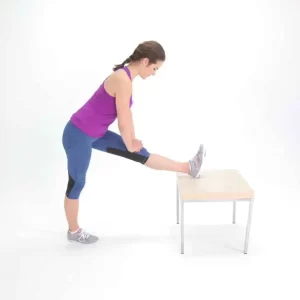
Standing hamstring stretch
- Place one heel on a stool or a yoga block and stand up.
- Make sure your knee is straight.
- Lift both arms till your arms and ears are nearly parallel.
- Lean forward a little from the hips.
- Your hamstrings should feel stretched.
- Hold this position for a few seconds.
- Then return to your neutral position.
- Then relax.
- Repeat these exercises 5 to 10 times.
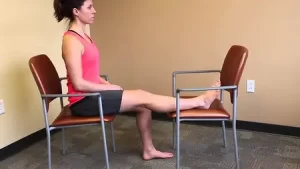
Seated hamstring stretch
- Sit on a chair with your back straight and close to the edge of the seat.
- A single leg should be flat on the ground at all times.
- Extend your second leg out on a chair.
- Your body should be gently bent forward till the rear of the thigh feels stretched.
- Hold this position for a few seconds.
- Then return to your neutral position.
- Then relax.
- Repeat these exercises 5 to 10 times.
Lying hamstring stretch
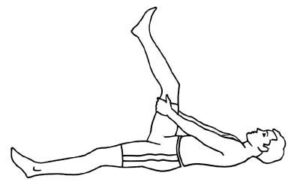
- First, assume a supine position on the floor.
- Utilizing both hands to grab the right knee’s back.
- Pull the leg towards your chest.
- The knee should feel like it is stretching as you slowly straighten it and draw it up towards the chest.
- Hold this position for a few seconds.
- Then return to your neutral position.
- Then relax.
- Repeat these exercises 5 to 10 times.
Wall hamstring stretch
- Look for an open doorway.
- With your left leg completely stretched on the floor and your back flat, lie flat on the ground or a mat.
- It should be the left leg that goes through the doorway.
- Lean the right leg on the wall next to the entrance.
- Hold this position for a few seconds.
- Then return to your neutral position.
- Then relax.
- Repeat these exercises 5 to 10 times.

Lying hamstring stretch using a strap
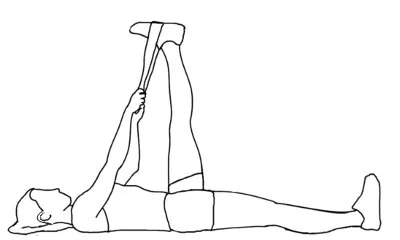
- To begin, lie on the ground in a relaxed supine posture.
- Bending the right leg and placing the strap across the center of the right foot will stretch the right leg.
- Use both hands to hold the strap.
- Make sure the left foot is comfortable and that the left leg is extended on the ground.
- As a result, the calf and thigh ought to be forced downward.
- While the right leg is straight up, the knee should be a little bent.
- The foot’s bottom ought to be at the ceiling.
- Pull the strap gently until the hamstrings are somewhat stretched.
- Hold this position for a few seconds.
- Then return to your neutral position.
- Then relax.
- Repeat these exercises 5 to 10 times.
Standing Hip Extension
- Maintain a shoulder-width distance between your legs.
- For stability, take a seat at a table or chair in front of you.
- Draw in your abdominal muscles to protect your back.
- This can be achieved by pushing your belly button in toward your back.
- Maintain a straight knee and pointed toes while slowly kicking your leg backward.
- Throughout the workout, make sure your back and upper body remain straight.
- Hold this position for a few seconds.
- Then return to your neutral position.
- Then relax.
- Repeat these exercises 5 to 10 times.

Single-leg deadlift
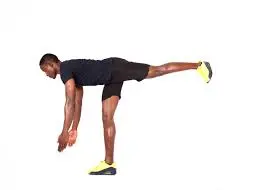
- Begin by standing on the floor.
- Next, apply pressure on your glutes and shoulder blades to generate pressure.
- Raise one foot in a balanced stance, keeping it just off the ground.
- Bent at the waist, descend your body towards the floor after pushing your butt back.
- Decrease until your back feels rounded or your hamstrings get tight.
- Hold this position for a few seconds.
- Don’t kick back behind yourself, but keep your foot high off the ground.
- Then return to your neutral position.
- Then relax.
- Repeat these exercises 5 to 10 times.
Straight leg raise
- To begin, lie on your back.
- Bend your knees.
- Lift one leg as high as you can, yet keep a straight knee.
- Hold this position for a few seconds.
- Slowly release the contraction.
- Lower the leg back to the floor.
- Then return to your neutral position.
- Then relax.
- Repeat these exercises 5 to 10 times.

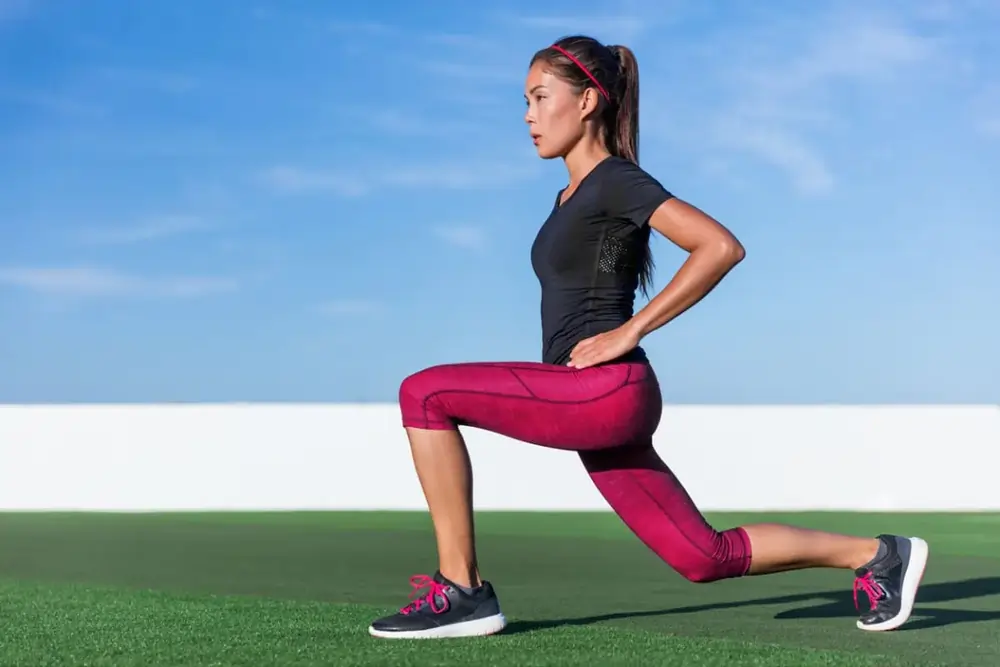
Walking lunges
- Get started by standing on the floor.
- Make sure your heel is supporting your weight when you bend your right leg forward.
- Put your toe on the ground and bend your left leg as you lower your entire body.
- Take a few seconds to hold this position.
- Take a step with your left leg to put yourself in the same position, but on the opposite leg as you pull yourself up.
- Continue doing this motion as if you were walking for lunges.
- Then return to your neutral position.
- Then relax.
- Repeat these exercises 5 to 10 times.
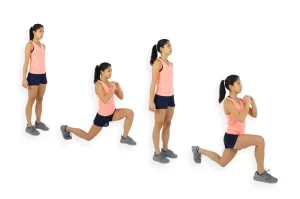
Split squat
- Place your feet hip-width apart to begin.
- The right foot should be in front of you.
- After that, place your left foot behind the back of your body.
- Your hands should remain on your hips.
- Try to have your front leg knee at a 90-degree angle while maintaining your front knees behind your toes.
- Pull your right knee back by applying pressure to your right foot before the left knee contacts the ground.
- This is one leg, one repetition.
- Then return to your neutral position.
- Then relax.
- Repeat these exercises 5 to 10 times.
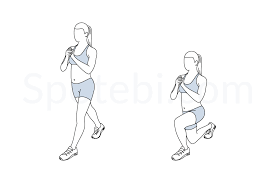
Standing hamstring curl
- Stand with your feet hip-width apart.
- Place your hands on an office chair or your hips for balance.
- Using your right knee, carefully bend it up to your butt.
- Your thighs should remain parallel.
- Hold this position for a few seconds.
- Drop your foot slowly.
- Then return to your neutral position.
- Then relax.
- Repeat these exercises 5 to 10 times.
- Do the same with the other leg.
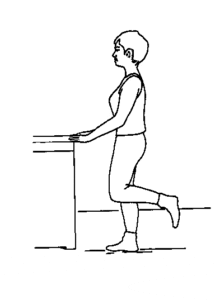
Side-lying leg raise
- On a mat or the ground, lie on your side.
- Make sure your legs are straight out.
- Right on the floor, lie your arm beneath your head.
- Alternatively, hold your head and bend your elbow for support.
- Your left hand can rest on your leg or hip, or be held out front for additional support.
- Next, elevate your upper leg.
- Hold this position for a few seconds.
- Then return to your neutral position.
- Then relax.
- Repeat these exercises 5 to 10 times.
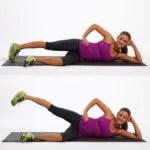
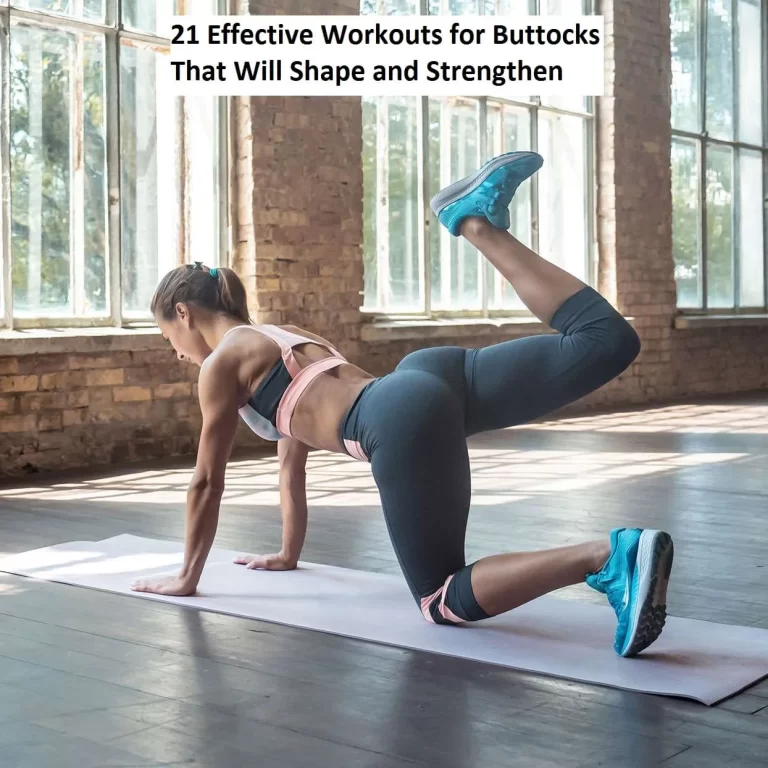
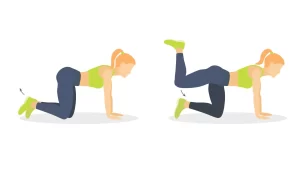
Donkey kick
- Place yourself on the floor in a kneeling position.
- Your hands are just beneath your shoulders.
- Using your core, raise your left leg.
- Make sure your foot remains flat and your knee stays bent.
- The leg ought to be turning around on the hip.
- As the leg extends upward, squeeze your butt while maintaining a floor-facing pelvis.
- Just the leg that is actively used ought to move your body.
- Hold this position for a few seconds.
- Then return to your starting posture by softly lowering your leg.
- Avoid allowing your leg to extend out and move with control, maintaining a neutral neck and spine.
- Then return to your neutral position.
- Then relax.
- Repeat these exercises 5 to 10 times.
Single knee to chest
- Lie down on your back.
- Next, bend both your legs.
- Using both hands, gently pull one knee towards your chest while bending it.
- For a few seconds, hold the stretch.
- Release the leg back down slowly.
- Then return to your neutral position.
- Then relax.
- Repeat these exercises 5 to 10 times.

What safety measures ought to be taken when exercising?
Exercises for hamstring pain must be done safely to avoid further injuries and encourage a quick recovery.
Warm up well.
- Spend 5 to 10 minutes walking or riding a stationary bike to improve blood flow.
- The following step should be dynamic stretches to prepare the muscles for action.
Make Use of the Right Form
- Observe planned, slow movements.
- Avoid compromising form to increase the number of repetitions or stretches.
- Use movies, mirrors, or guidance as needed.
Observe Your Body
- It’s okay to feel a little pain.
- If the pain is severe, punching, or worsening, stop.
- Pain should subside after 24 to 48 hours of exercise.
Slowly make progress.
- Depending on your strength and degree of pain, start with simple exercises and work your way up.
- Doing too much too quickly is a common cause of re-injury.
Utilise help if it is needed.
- For support, use a hard, not a soft, exercise mat.
- Utilize a cushion or towel roll support to reduce tension on the hamstring muscle during specific movements.
Continue to Breathe and Hydrate Properly
- Dehydration might result in fatigue or muscle cramps.
- In addition to lowering tension, deep breathing ensures that oxygen reaches the tissues that are healing.
If advised, wear safety equipment.
- Bandages, compression sleeves, or athletic tape help reduce strain during exercise.
- Follow your doctor’s or physiotherapist’s instructions only.
Take a break after your workout.
- Gentle stretching and controlled breathing can help prevent muscle stiffness and relaxation.
- Don’t stop suddenly without performing any exercises for recovery.
When did you stop exercising?
Pain That Gets Worse Over Time
- If the pain increases with each set or repetition, stop because the muscle can’t handle the tension.
A loss of strength or control
- A sudden weakness, shaking, or inability to contract the hamstrings could indicate nerve injury or fatigue.
Acute or Sharp Pain
- During a stretch or movement, a stabbing or tearing sensation could be a sign of a muscle tear or re-injury.
Symptoms of fatigue
- Being exhausted raises your chance of harm.
- If you feel weak, dizzy, or your muscles shaking, stop and take a break.
- Furthermore, severe fatigue affects coordination and body control.
Radiating pain, numbness, or tingling
- It may be a sign of sciatic nerve involvement rather than just a muscle issue, especially if the pain radiates down the leg.
Bruising, Swelling, or Heat
- This could mean that you’re using excessive force or causing further harm to the healing tissue.
Muscle cramps or spasms
- If you start experiencing cramps or spasms while exercising, stop.
- This might indicate that your muscles are stressed or unprepared for such a high degree of physical activity.
Which exercises should you avoid if you have hamstring muscle pain?
Exercises that worsen the problem and may slow its healing are essential if you have hamstring pain. Depending on the kind and intensity of your hamstring pain, you may need to avoid certain workouts, but in general, you should avoid movements that:
Extensive Stretching
- Toe-touching stretches
- Deep lunges
- Deep squats
- Overstretching may pull on damaged fibers.
- May delay tissue repair and make the pain worse.
High-Resistance Lower Body Machines in Early Stages
- Leg extension and leg press Machines
- Prone or seated hamstring curl machines
- These workouts could overstress the hamstrings.
- The injured area may be squeezed or strained if the hip and knee angles are incorrect.
High-Intensity or Intense Motions
- Running
- Exercises involving jumping (box jumps, bounding)
- Burpees and jump squats
- These exercises give the hamstrings their maximum load and stretch.
- Healing muscle fibres might rupture again under pressure.
Include extended periods of sitting.
- In particular, on hard surfaces, this might worsen pain by increasing pressure on the ischial tuberosity.
Advice on how to prevent hamstring pain:
You might be at a greater risk category, such as a teenager or older adult, or you might get an injury from an unexpected accident. However, you may be able to reduce your risk of injuries to your hamstrings by doing frequent stretching and strengthening exercises. For specific workout recommendations that might be most effective for your activity, ask your doctor.
Here are a few general preventative tips:
- Make sure to warm up and cool down before working out or running.
- Your weekly exercise routine should include time for stretching and muscle strengthening. By doing this, you can help avoid injury-causing muscular imbalances.
- Give your body enough rest by taking days off or scheduling easy days in between particularly demanding workouts.
- While maintaining enough water is beneficial for numerous organs, it may also help avoid hamstring strains. Dehydration can cause cramping in the muscles. For this and many other reasons, drinking enough water each day is essential.
- To get your hamstring muscles ready for the kinds of pressures that can cause injury, try to include speed work in your regimen.
- In between intense workouts, give your muscles enough time to relax. One of the main causes of hamstring injuries is fatigue. This includes eating healthily and getting enough rest.
- Stop the exercise right away if your hamstrings hurt, feel tight, or are uncomfortable. Ignoring early warning signs can cause a minor problem to worsen into a more serious injury.
- You have a greater chance of getting hurt again if you have previously suffered a hamstring injury. Maintain a focused preventative approach and make sure recovery is thorough.
Summary:
Exercises that need the hamstrings, a vital muscle group in your body, include jogging, taking a leap, and squatting. You may lower your chance of injury and increase your overall athletic performance by strengthening your hamstrings.
A thorough training program includes hamstring workout sessions. These workouts frequently aim to strengthen the hamstrings. There shouldn’t be any soreness from the stretches. People can prevent muscular tension and tears by stretching.
Sports like basketball, tennis, and many more include unexpected pauses and starts, which can cause hamstring injuries in athletes. Such issues are often a result of excessive effort or rapid loads on the hamstrings. The hamstrings may be injured and stretched by this load, which is created by a powerful forward motion and the person’s body weight.
FAQ:
How can I determine whether my hamstring pain is severe?
Walking and standing can be challenging while dealing with severe hamstring pain, which is typically extremely painful, tender, swollen, and bruised. You won’t be able to use the injured limb, and there might have been a “popping” feeling at the time of the accident.
How can I get rid of my hamstring pain fast?
To ease pain and minimize swelling, apply cold packs often throughout the day. To lessen swelling, apply a bandage with compression or put on compression shorts over the affected area.
Can hamstring pain be relieved by walking?
After a period of recovery, walking can be an effective return exercise for hamstring injuries. Although walking is a low-stress hamstring workout, it must be pain-free.
Is it still possible to work out while I have hamstring pain?
Yes, but only with focused, gentle exercise that promotes recovery. Avoid vigorous or high-impact movements. Always start with low-intensity, painless workouts and work your way up from there.
Is it possible to reduce hamstring pain with stretching?
Yes, but only after the acute phase. Start with gentle static or dynamic stretching as soon as the pain starts to go away. Never force yourself to stretch; it should feel more like stress than pain.
For hamstring healing, which strengthening exercises work best?
Standing hamstring stretch
Seated hamstring stretch
Lying down hamstring stretch
Split squat
Standing hamstring curl
Donkey kick
What would happen if your hamstring soreness persisted?
See a physician if the symptoms of a hamstring injury last more than a few days. If your leg hurts a lot or you are unable to move or use it at all, consult your doctor. After starting treatment for a damaged hamstring, let your doctor know if your symptoms worsen or return.
How long does hamstring pain last?
People who have injuries to the hamstrings may need to stop jogging or sprinting for one to two days or as long as six weeks, depending on how bad the injury is. Patients with some high-grade injuries, especially tendon injuries, may experience re-tears if they run too quickly.
References:
- Squeezing hamstrings while seated. (n.d.-b). [Video]. Exercises for strengthening the hamstrings. Hingehealth. https://en-gb.hingehealth.com/resources/articles/
- July 5, 2025b; Bariya, D. Therapy for Hamstring Muscle Pain: The Top 17 Exercises. Physical therapy, exercise, and treatment. Physical therapy exercises for hamstring pain: https://physical-therapy.us/
- The best strengthening exercises and stretches for hamstring injuries. June 30, 2001b. The People on Foot. Here are the top hamstring injury exercises and stretches for strengthening: https://www.thefeetpeople.com.au/learning-hub/
- Eske, J. January 19, 2024b. Which stretches are most effective for hamstring tightness? The article 323703 can be found at https://www.medicalnewstoday.com.
- Injury to the hamstrings (2025b, June 11). Cleveland Medical Centre. Hamstring injury: https://my.clevelandclinic.org/health/diseases/17039
- On April 25, 2025, CPT, R. S. F. 13 easy hamstring stretches and workouts to lengthen and strengthen your leg muscles. Easy. Workouts/hamstring-stretches/fitness-exercises https://www.realsimple.com/health
- S. Physio, n.d.-h. The Top 5 Hamstring Strengthening Exercises Surrey Physio. Surrey Physio. https://www.surreyphysio.co.uk/top-5/top-5-exercises/ has the most popular five hamstring strengthening exercises.
- Marcin, A. (April 30, 2020). How is hamstring pain treated, and what causes it? Healthline. Hamstring pain: https://www.healthline.com/health
- Image 2, HASfit. 30 May 2022. Twenty minutes of Exercises for sciatica pain relief: Sciatica stretches and medications [Video]. YouTube. Watch this: https://www.youtube.com/watch?v=AkgxIT2z0js.
- Image 7, Josh. (2019, June 25). My love for the single-leg deadlift. Josh Williams Fitness. https://joshwilliamsfitness.com/my-love-for-the-single-leg-deadlift/
- Image 9, Click on My Macros. 19 August 2021. Lunges when walking. Exercises for walking lunges: https://hitmymacros.com/