Ape Hand Deformity Physiotherapy Management
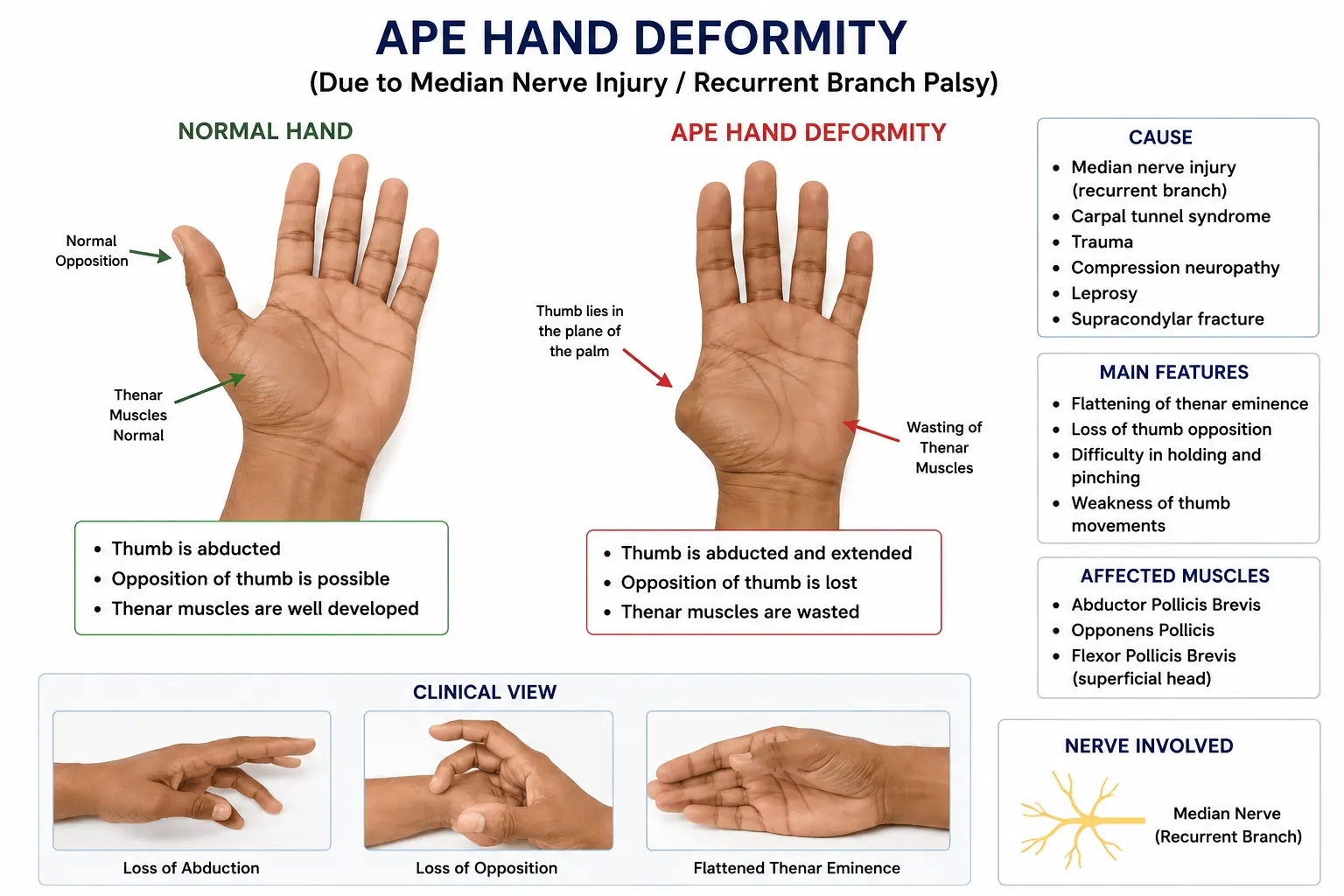
A condition known as “ape hand deformity” causes the thumb to be permanently rotated and adducted, which eliminates its opposable function. Damage to the distal median nerve, which supplies the muscles that control the thumb, results in this deformity. The ability to shift the thumb perpendicular (90°) away from the palm plane is known as thumb abduction.
The capacity of the first metacarpal to swing along the palmar surface of the hand to make contact between the thumb and the tip of the little finger is called opposition. There may also be restricted flexion and extension of the thumb.
However, the “ape hand” is deceptive since although apes have opposable hands, the thumb’s limited functionality
Table of Contents
Injury Mechanism/Pathological Process
The mechanism of injury is a severe injury to the arm, forearm, and wrist that damages the median nerve, impairing the opponens policis and thenar muscles.
Ape thumb deformity causes
- Advanced carpal tunnel syndrome
- Trauma to the forearm
- Fracture of the supracondylar
- Peripheral neuropathy caused by leprosy
- Neuropathy caused by compression
- Complications following surgery
- Damage to the median nerve
Ape Hand Symptoms
Ape hand symptoms might vary, but typical features include:
- Single palmar crease: Instead of the typical two creases, the hand’s palm has a single deep wrinkle.
- Short fingers: Short fingers, particularly the little finger, may be completely absent.
- Thumb abnormalities: Short or missing thumbs are examples of thumb abnormalities.
- Finger webbing is the term for the flexibility between the fingers, especially between the thumb and index finger.
- Hand function is restricted, making daily tasks challenging.
Phases of rehabilitation:
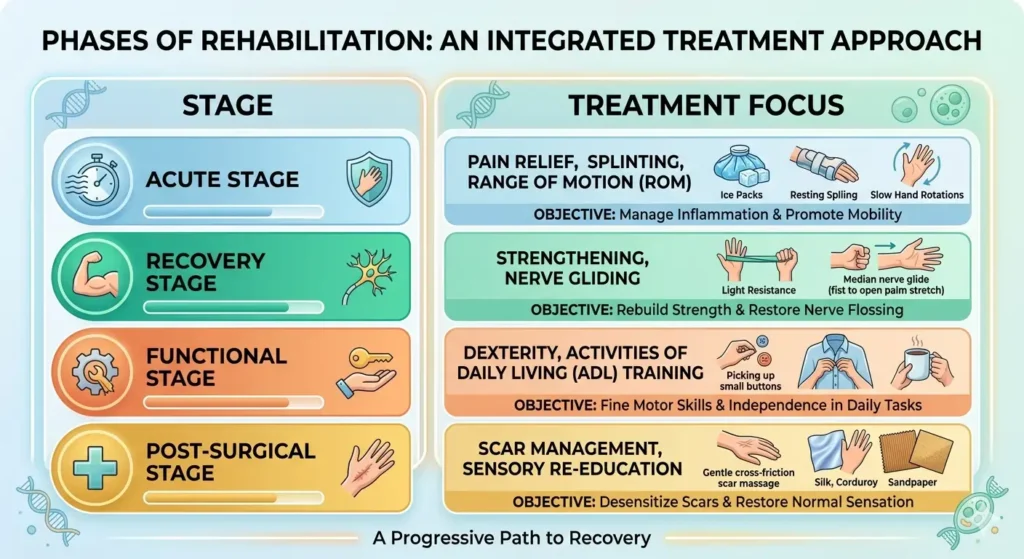
Physiotherapy management for ape hand deformity
- Using the unaffected hand or with the help of a therapist, passively move the thumb and wrist through their entire range of motion. This lessens the risk of contractures and stiffness.
- Active-Assisted Range of Motion: Using external aids or the unaffected hand to help with thumb and wrist movements.
- Active Range of Motion: The maximum amount of independent thumb and wrist movement.
- Stretching Exercises: To increase the thumb’s and the surrounding tissues’ flexibility, perform gentle stretches.
Stretch your thumb by gently removing it from your palm and holding it there. - Thumb Opposition Stretch: Gently move the thumb’s tip in the direction of the little finger’s base, then grasp.
- Strengthening Activities: Muscle contraction without movement is known as an isometric exercise. For instance, attempting to move the thumb into abduction and opposition while holding the contraction against resistance (such as a table or the other hand).
- Exercises using Therabands: These exercises use elastic bands to resist thumb abduction, extension, and opposition motions.
- Grip Strengthening: Squeezing exercises with a soft ball or putty might help strengthen the thenar muscles indirectly.
Pinch Strengthening: To increase pinch strength, squeeze putty or small objects between the thumb and each finger. - Sensory Re-education: Methods to restore feeling in the hand and thumb may be used if nerve injury has caused sensory loss. In the event of hypersensitivity, this may entail the use of textured materials, object identification, and desensitization treatments.
Practical Instruction - Neuromuscular Electrical Stimulation (NMES): Used when muscle contraction is weak but nerve continuity exists, to improve muscle re-education
- Muscles Targeted:
- Opponens pollicis
- Abductor pollicis brevis
Modalities used in ape thumb
Hot Fermentation
- Applied for 10–15 minutes
- Improves circulation
- Relaxes soft tissues
Paraffin Wax Bath
- Useful for stiffness and pain
- Temperature: around 40–44°C
- Duration: 15–20 minutes
TENS (Transcutaneous Electrical Nerve Stimulation)
- Reduces pain perception
- The conventional mode is commonly used
- Duration: 20–30 minutes
Ultrasound Therapy
- Helps tissue healing
- Reduces scar adhesions
- Pulsed mode in the acute stage
Practical Instruction
practicing daily activities and tasks, including writing, opening containers, and picking up small things that call forth thumb opposition and abduction. This aids in incorporating the restored strength and range of motion into practical use.
Splinting
- Dynamic splinting is a type of splint that allows active motion while maintaining the thumb in abduction and opposition. This can promote functional use and assist in preserving the thumb’s position.
- Static splinting: A splint is used to prevent further movement and protect the thumb when at rest.
For everyday tasks, functional training is essential.
- Activities of daily life ( ADLs)
- Shirts with button
- Practice writing
- Holding a cup and a spoon
- Turning the keys
- Bottle opening
- Training in Fine Motor Skills
- Pegboard exercises
- Selecting coins
- Threading beads
- Cutting paper
Ergonomic Advice and Patient Education
Education Includes
- Avoid prolonged wrist flexion
- Avoid repetitive hand strain
- Use adaptive devices if needed
- Protect the hand from burns/injury if sensation is reduced
Sensory Re-education Techniques
- Texture Identification
- Patient identifies different textures.
- Object Recognition
- Recognizing objects without vision.
- Vibration Stimulation
- Stimulates sensory receptors.
- Mirror Therapy
- Improves cortical sensory feedback.
- Coordination Exercises
- Improve dexterity and hand control.
- Examples
- Finger-thumb tapping
- Rapid alternating thumb movements
- Coin rotation exercises
FAQs
What is ape hand deformity?
Ape hand deformity is a hand condition caused mainly by median nerve injury, resulting in flattening of the thenar muscles and loss of thumb opposition.
Which nerve is affected in ape hand deformity
The recurrent branch of the median nerve is primarily affected
What causes ape hand deformity?
Common causes include:
Median nerve injury
Carpal tunnel syndrome
Trauma
Compression neuropathy
Leprosy
Forearm injuries
Can physiotherapy help ape hand deformity?
Yes, physiotherapy helps improve thumb mobility, strengthen hand muscles, and restore hand function.
Is surgery needed for ape hand deformity?
Surgery may be required in severe cases or when conservative treatment fails
How long does recovery take?
Recovery may take weeks to months, depending on nerve healing and rehabilitation consistency.
References
- DeJong’s The Neurologic Examination — William W. Campbell
Comprehensive reference for neurological examination and median nerve lesions. - Merritt’s Neurology — Elan D. Louis, Stephan A. Mayer, Lewis P. Rowland
Covers peripheral nerve injuries and hand deformities. - Cash’s Textbook of Neurology for Physiotherapists — Patricia A. Downie
Widely used in physiotherapy education for neurological rehabilitation. - Textbook of Neuro-Physiotherapy — Shalu Jain
Includes physiotherapy management of peripheral nerve injuries and hand deformities. - NCBI Bookshelf – Intrinsic Hand Deformity — Medical explanation of hand deformities and nerve involvement.
- Kenhub – Median Nerve Anatomy — Anatomy and clinical features of median nerve injury.
- AccessPhysiotherapy – Median Nerve Compression — Includes ape-hand deformity and physiotherapy considerations.