Halasana (Plow Pose)
Table of Contents
What is Halasana?
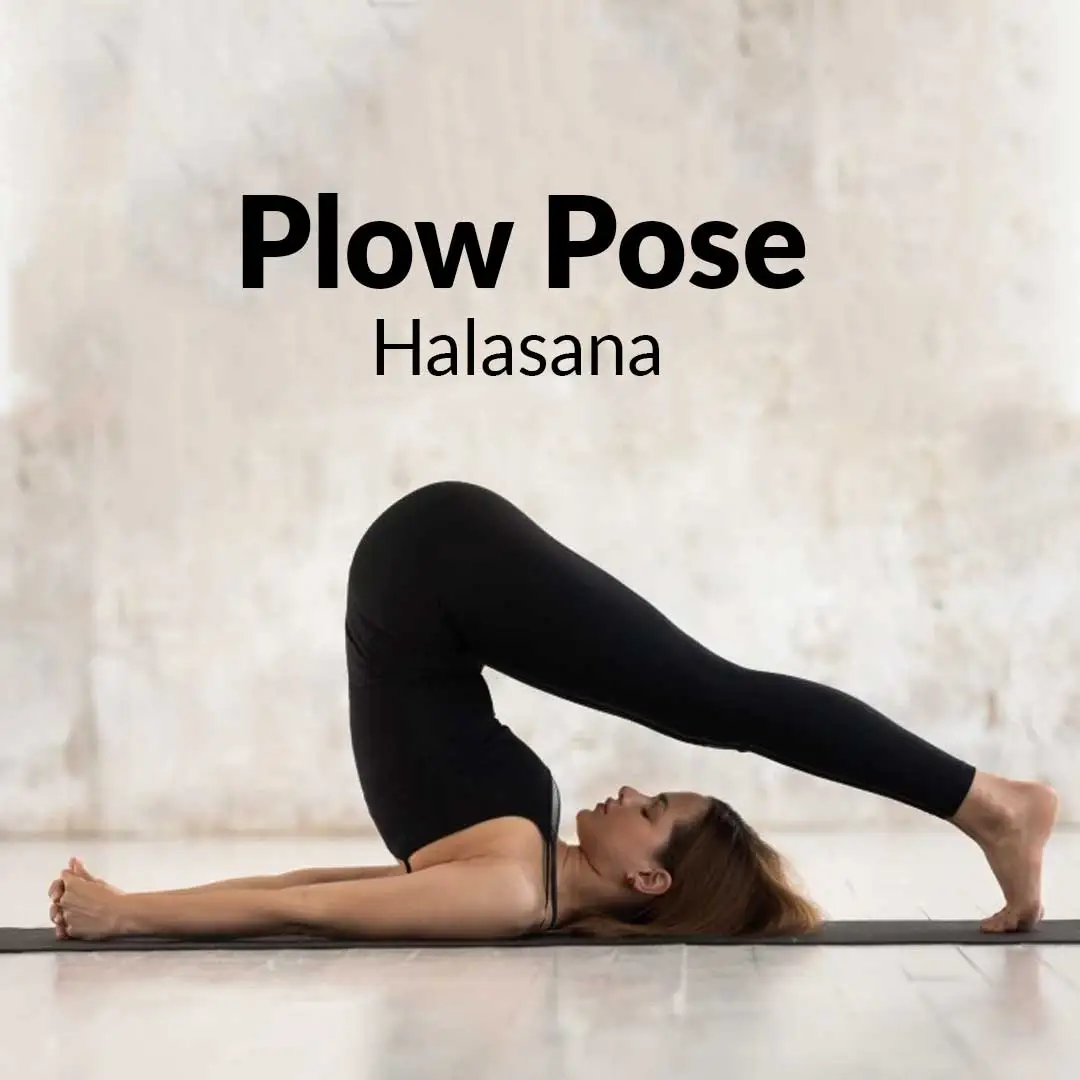
Halasana, or Plow Pose, is a classic yoga posture that stretches the spine, shoulders, and hamstrings while calming the mind. It improves flexibility, stimulates abdominal organs, and promotes relaxation, making it beneficial for overall body balance and stress relief.
The plow, a well-known farming equipment frequently used in Indian agriculture to prepare the soil for crop planting, is the source of the name for this yoga pose. Similar to its namesake, this pose prepares the body and mind’s “field” for profound regeneration. The pronunciation of Halasana is hah-LAHS-uh-nuh.
The cervical, thoracic, and lumbar parts of the spine are stretched by daily Halasana practice, which enhances flexibility and circulation. This position can lengthen the spine, stretch the shoulders, and lessen back pain. When done correctly, Plow Pose helps release tension in the throat and neck.
What Health Advantages Does Halasana Provide?
Numerous advantages of Halasana Yoga support and enhance a person’s physical and mental health.
Enhances Digestive System:
Several digestive issues can be effectively treated with the plow stance. Constipation, indigestion, and a host of other issues are caused by an upset digestive system put on by junk food and an improper eating regimen. By gently massaging the colon, the Halasana stimulates the digestive system and strengthens it. It causes the meal to be actually broken down and absorbed.
Reduces Back Pain:
By providing a perfect posture massage, the Halasana helps to alleviate backaches. It helps to relieve the strain on the back muscles and strengthens the spinal cord, which reduces pain. Increasing the flexibility of the back muscles is another benefit of this pose.
Decreases Stress:
The Halasana is a tried-and-true method for assisting in the relief of anxiety and stress-related problems. The plow stance aids in mental calm when combined with breathing techniques. By lowering stress-induced mental barriers, this pose enhances a person’s general well-being.
Helps Control Diabetes:
Halasana, one of the main types of yoga poses, is an effective method to control diabetes. It triggers the system to limit excessive blood sugar production. It controls blood sugar levels and also maintains control over diabetes.
Thyroid Glands Activated:
The plow stance helps to reverse the blood flow in your body. This enables blood from the lower extremities to reach the uppermost glands (pituitary in the head and thyroid in the neck). As a result, it promotes the endocrine system and helps to better regulate thyroid gland function.
Therapeutic for Leg Cramps:
Halasana is a simple and reasonably priced remedy for leg cramps. Leg cramps are caused by a variety of muscles that are stretched in the plow stance. It helps to improve the calf, thigh, and leg muscles’ flexibility, which lessens the pain of cramping.
Boosts Blood Circulation:
As previously indicated, the plow stance involves reverse circulation, which moves blood from the body’s lower extremities to its higher extremities. This pose improves blood circulation by helping the blood reach the tips of all glands and nerves.
Menopause Aid:
By relieving stress in key areas, the plow offers advantages throughout menopause. It provides proper posture-based shoulder, neck, and spine massages. Additionally, the asana is thought to lessen the symptoms of digestive problems.
Strengthens the Immune System :
The plow stance helps to circulate blood to all the nerve endings, strengthening the immune system. Through muscle flexibility and system strengthening, it boosts the immune system.
Benefits of Halasana for Hair:
The plow pose involves the practitioner lying down in a position that allows blood to flow. This facilitates blood flow to the hair’s roots and tips. The required blood circulation is provided by regular asana practice.
Benefits of Halasana for Hair:
The plow pose involves the practitioner lying down in a position that allows blood to flow. This facilitates blood flow to the hair’s roots and tips. The required blood circulation is provided by regular asana practice.
Benefits of Halasana for Weight Loss:
Regularly performing Halasana helps the body naturally break down excess fat. It aids in weight loss by burning fat and helping to create a smaller waist.
What are the Halasana preparation poses?
- Paschimottanasana (Seated Forward Bend)
- Bitilasana (Cow Pose)
- Marjaryasana (Cat Pose)
The beginning of the complete Halasana stance is Poorva Halasana, also known as the preliminary plow pose. It’s not that difficult.
In the Padma Sadhana sequence, the Shoulder Stand (Sarvangasana) is typically done before the Plow Pose (Halasana). When you raise your legs and hips off the floor to perform Sarvangasana, stretch them upward in the air so that you are high on your shoulders and your back is supported by your hands, rather than extending them 180 degrees over your head. Sarvangasana and Halasana are often practiced together.
Straighten your legs toward the roof after pulling your knees against your chest. Raise your hips off the floor and roll up until your shoulders are supporting you, using your abs’ strength and both hands at your low or mid-back for support. Your hips should be piled up above your shoulders.
Toes should touch the floor behind you as you slowly slide your legs backward over your head. With your feet flexed, place your toes on the ground. Place your arms on the floor, palms down, or with your hands clasped, after releasing your hands. To increase the lift along your spine, apply pressure with your outside upper arms and shoulders.
Take a minimum of five breaths there.
How do I watch a video to perform Halasana?
What are the Halasana counterposes?
- Matsyasana (Fish Pose)
- Urdhva Mukha Svanasana (Upward-Facing Dog Pose)
- Setu Bandha Sarvangasana (Bridge Pose)
- Cobra Pose (Bhujangasana)
- A different way to do it is to move your body slowly in the Wind-Relieving Pose (Pavanamuktasana).
What are Halasana alignment tips?
- As you look up, keep your neck in alignment with your spine.
- Try to shift your weight away from your head and neck and onto your upper shoulders.
- When your feet are overhead, never turn your head to the side or stare in a different direction.
- You can place your hands on the sides of your hips if you can’t place them on your spine.
- Your knees should be slightly flexed for ease and comfort.
- Apply light pressure on your chest while tucking your chin in.
- Take note of whether you’re shifting more of your weight to one side than the other, and make the necessary adjustments.
- To prevent overstressing your neck, strengthen the muscles in your arms and shoulders.
- You can either intentionally curve your back or press your toes into the ground to stretch your spine for spinal alignment.
- If your toes don’t touch the floor, keep your hands on your back for support.
What Kinds of Halasana Are There?
Halasana comes in a wide variety. A few are listed below:
- Ardha Halasana
- Ardh Padma Halasana
- Reclined Legs Raised Pose with bolster
- Plough Pose Hands-On Back/Halasana Hands On Back
- Ear Pressure Pose /Karnapidasana
- Easy Plough pose/Purva Halasana
- Legs raised with a strap
- Snail Pose
Ardha Halasana
What is Ardha Halasana?
Hala means plough, while Ardha means half. It is called Ardha Halasana because it is an intermediate pose for Halasana. The Manipura Chakra, or Solar Plexus, is activated and balanced by Ardha Halasana.
The practitioner assumes the shape of a half-plow in Ardha Halasana. Halasana, or “plough pose,” is a pose in which the practitioner assumes the shape of a plough. Ardha halasana is the halfway point of halasana, and it is where this pose ends.

Preparation for Ardha Halasana :
It is best to perform Ardha Halasana, also known as “a half plough pose,” early in the morning and on an empty stomach.
One must eat three to four hours before performing the asana if it is to be done at any other time of day, such as in the evening, as it is not practicable to do it during the day.
A person needs to maintain their bowel and bladder empty while performing the stance.
Health Benefits of Ardha Halasana:
- makes the abdominal muscles more flexible and strengthens the core muscles, which makes it easier to perform the plough pose.
- makes the abdomen stronger.
- makes the hip and thigh muscles more flexible and toned.
- reduces the spine’s rigidity and increases its suppleness and flexibility.
- Blood circulation in this area is improved by strengthening the muscles in the legs, hips, and other areas.
- This exercise is beneficial for the pelvic area.
- helps avoid injuries to the legs, hips, and spine during workouts and exercises.
- helps heal arthritis and lumbar spondylosis.
- lessens low back stiffness, pain, and irritation.
- aids in burning excess calories and fat.
- helps eliminate extra fat that has accumulated around the abdomen, thighs, and hips.
- It is the most effective physical activity.
- aids in improving blood flow throughout the body.
- helps the digestive system and other gastrointestinal organs perform more efficiently.
- cutting down on varicose vein pain and oedema.
- The stance improves sexual health and performance by stimulating the genital organs and increasing blood flow to them.
- The pose supports the uterus, tightens the pelvic muscles, and strengthens the reproductive system. lessens PMS-related problems and is beneficial for women going through menopause.
- The pose improves the health of your digestive system and helps prevent constipation and other digestive-related illnesses. It also helps with bowel movements. It enhances the synthesis of digestive juices and enzymes that aid in the digestion of complex carbs and proteins.
- Gathered gas disappears from the intestines and stomach.
- prevents heart attacks, excessive cholesterol, and other cardiovascular disorders, and encourages cardiovascular wellness.
- supports the liver and kidneys.
- relieves constipation, obesity, indigestion, and urinary problems.
- remedy for sinusitis and sleeplessness.
- keeps hernias at bay.
- prevents the rectum in men and the uterus in women from prolapsing.
- lessens anxiousness.
- It greatly increases bodily awareness.
- In a supine position, lie down. Shavasana.
- Put your legs back and exhale.
- Return to your regular posture and take some time to relax.
- Repeat three to five times.
- Additionally, you can only accomplish one at a time.
Modification of Ardha Halasana:
The pose appears easier to perform if you can raise your legs comfortably and control your breathing. You can put blankets beneath your shoulders and lower back if the pose is hard for you. You’ll feel more comfortable maintaining your legs at a 90-degree angle to the floor as a result. Until you are comfortable lifting and balancing your legs on your own, you can also use the wall as support.
When doing Ardha Halasana, how long should one stay in the pose?
If you are a beginner, hold the final pose for three to four breaths. You can hold this pose for as long as you feel comfortable doing so, or you can hold it for 8–10 breaths. For best effects, repeat the posture four or even ten times.
Contraindications and Precautions of Ardha Halasana :
Patients with difficulties described below ought to avoid doing Ardha Halasana:
- Sciatica pain
- Acute or chronic/severe low backache
- Recent surgery on the waist or back
- Spinal column illnesses in the lower vertebrae
- Hip and shoulder injury
- Pressure on the head or neck
- High or low blood pressure
- Severe headache
- Heart problems
- Detached retina
- Those suffering from abdominal surgery or any type of stomach infection
- This position is not appropriate for a pregnant woman.
- Work under the supervision of an expert.
Ardh Padma Halasana
Half is defined by “Ardha,” lotus by “Padma,” plough by “Hala,” and position by “asana.” An inversion that also provides the advantages of padmasana is Ardha Padma Halasana.
Ardh Padma Halasana’s advantage
- In addition to strengthening the back and abdominal muscles, this pose promotes intestinal peristalsis, which improves digestion and eases constipation.
- It stretches the pelvic area and stimulates the liver and gall bladder, which aids in the breakdown of lipids.
How to do Ardh Padma Halasana?
- Sit with your feet together and your legs outstretched.
- By extending the right leg and positioning the foot on top of the left thigh, one can determine the half-lotus position.
- With the palms facing down, place the arms close to the torso.
- Pull the straight leg over the head until the toes touch the ground, then roll backward while compressing down with the arms.
- Hold the left foot’s toes with both hands while lifting the arms over the head. The left leg doesn’t bend.
- Using both palms to support the lower back, stretch the extended leg, then slowly lower the torso and let the left leg fall to the floor.
- Repeat on the other side after moving the legs. Do several rounds on each side.

What are the Ardh Padma Halasana dos and don’ts?
Dos:
Before entering the pose, make sure your body is completely extended.
Don’t:
- If you suffer from sciatica, a hernia, or any other neck or back condition, avoid this stance.
- This pose is not recommended for people with high blood pressure, cardiovascular disease, or knee issues.
- If you suffer from sciatica, a hernia, or any other neck or back condition, avoid this stance.
- This pose is not recommended for people with high blood pressure, cardiovascular disease, or knee pain.
Reclined Legs Raised Pose with bolster
- Position yourself in Dandasana with your lower back resting against a long-side bolster.
- After taking a breath, gently recline on your back with your buttocks, hips, and sacrum resting on the support and your shoulders, neck, and the back of your head resting on the floor.
Plough Pose Hands-On Back/Halasana Hands-On Back
As opposed to keeping your hands stretched out on the floor, place them on your back for support when you are in the classic halasana stance.
Ear Pressure Pose /Karnapidasana
What is Ear Pressure Pose?
- A calming modern pose is the Ear Pressure Pose. How to incorporate the philosophical eight limbs of yoga into your asana practice and your life is a common topic of discussion in modern yoga sessions. A unique yoga pose that exhibits the pratyahara principle is Karnapidasana. The retreat of the senses, or distancing oneself from outside stimulation in order to focus inside, is known as pratyahara.
- It could be applied in a hamstring-focused or contemporary hip-opening sequence.

Easy Plough pose/Purva Halasana
What is Purva Halasana?
Poorva Halasana, or the beginning plough pose, is the first pose in the entire Halasana stance. Plows are called “hala” in Sanskrit, while “poorva” signifies “preliminary” or “previous.” The body stimulates the plow in Halasana’s conclusion.
Benefits of Poorva Halasana:
- After completing Poorva Halasana, the practitioner is ready to perform Halasana, or the full plow stance.
- Waist fat can be reduced using Poorva Halasana.
- It extends the abdominal organs, particularly the intestines and kidneys.
How is Poorva Halasana, the preliminary plough stance, performed?
- Lying on your back, start in the supine posture.
- Breathe regularly and fully relax.
- Continue raising the leg until it is about 45 degrees off the floor.
- Breathe out slowly and release the posture.
- Breathe regularly and relax all of your muscles.
- Repeat this step as many as ten times, considering time and need.
- This type of posture can be counterposed with any backward-bending position.

Contraindications for Poorva Halasana:
Although Poorva Halasana is relatively simple, anyone with sciatica or a slipped disk should avoid doing it.
Legs raised with a strap
How to do :
- In a supine position, lie down.
- Now secure your one-legged ankle with a strap.
- Using both hands, grasp the strap’s ends.
- Now raise your leg by pulling the strap.
- Hold this position for a short while.
- Take hold of the position.
- Continue to the opposite leg.
Snail Pose
What is a snail pose?
Snail Pose is a variant of Plough Pose or Halasana. The last position, which is supine with the body folded up backward, resembles a snail or a plough. The Crown Chakra (Sahasrara Chakra), Third Eye Chakra (Ajna Chakra), Solar Plexus (Manipura Chakra), and Throat Chakra (Vishuddha Chakra) are all affected by this pose. From the head, these are the body’s highest chakras.
“Snail Halasana,” a stretch pose performed with the body inverted, affects every part of the spine. Every internal organ is squeezed and massaged, strengthening and promoting proper function. The Urinary Bladder is the meridian that the Snail Pose influences.
Benefits of Snail Pose:
- Stretched spine: The first benefit is the stretched spine. It’s a fantastic exercise to make your spine more flexible. Additionally, it enhances the body’s oxygen intake, which increases prana Vayu flow.
- Mind-calming: Deep breathing that opens blocked channels and connects tissues is achieved by assuming and maintaining the stance. This encourages the
- parasympathetic nerve system, which lowers tension and promotes mental tranquility.
- Internal organ exercises: In this position, practically every organ in the body is stretched, compressed, and worked. This improves these organs’ general performance.
How to do the Snail Pose?
- Then place yourself flat on your back and raise your legs. These can be raised with the aid of your hands. You can press the lower back with your hands or set your hands on the ground around your hips.
- If the legs and spine stay straight during the climb, it becomes a Halasana, or Plough Pose. However, if the knees are bent across the pose and the lower back is turned, this is the Snail Posture.
- When the hands can support the lower back from the hip area, the legs can stay in this position.
- Raise your knees from above the head and place them close to the shoulders. On the ground, the hands would remain outstretched in the other direction. If the legs are kept extended, as in Halasana, they will be positioned somewhat away from the head in the inversion pose.
- It’s important to avoid stressing your neck once you’re in the pose. If the posture becomes excessive, you should break it.
- While returning to the normal position, hold the position for three to five minutes.
Snail Pose Alternatives and Variations:
One of its options is Naman Pranamasana. This pose involves bending forward and kneeling such that the head is on the floor near the knees. Your two hands make contact with your ankles or the heels. In addition to resembling the snail pose, this pose is comparatively simpler to execute than the inverted variation.
You can just have the legs extended up in the air or hanging in the air parallel to the floor, as opposed to putting them over the head to rest on the floor with the knees extended or relaxed. This position is called the half-plough position.
You might not completely roll over to land on your shoulders. Instead, you might simply lift your hips and lower back slightly to position your legs behind your head while keeping your upper back on the floor.
Contraindications for Snail Pose :
- The neck is under a lot of pressure both during the inversion and when maintaining the stance for a while. Therefore, avoid this pose if you have a neck problem.
- Similarly, because this pose increases blood flow to the head, it is not advised for those who have high blood pressure, vertigo, upper body illnesses, or colds.
- The asana is not recommended for persons with a damaged back or any other back condition because it requires elevating the spine and then flexing the legs overhead.
- This position should not be performed by women who are pregnant or who are on their menstrual cycle.

What are Halasana’s contraindications and precautions?
When performing Halasana, you must take certain precautions:
- If you have a neck injury, diarrhea, or high blood pressure, stay away from Plow Pose (Halasana).
- Plow Pose (Halasana) is not recommended for women during pregnancy or the first two days of their menstrual cycle.
- Before attempting Plow Pose (Halasana), see a doctor if you have a history of spinal issues or chronic illnesses.
- Avoid holding inversions for extended periods of time.
- If the stance hurts, don’t force it.
- Always focus on your body.
Which common mistakes are made when performing Halasana?
Beginners should not attempt Plow Pose. You must learn correct body alignment and develop a habit of doing the fundamentals. To do it safely, you must also possess adequate flexibility. You are not prepared for a plow if you are unable to shoulder-stand.
Prop Misuse: If you put too much weight on your cervical spine, the upper portion of the spinal column, Plow Pose may put your neck in danger. To help protect your neck and shift the weight from your neck to your shoulders, use a blanket as a prop.
Place the blanket in the center of your mat or at the end. The most important factor is that your head is lying on the bare ground, with your shoulders resting on the blanket. This allows your head to slide if necessary. After positioning yourself in this manner, lift your legs above your head.
If the blanket bothers you, you can achieve a similar effect by tucking your scapulae securely, creating a small floor for your back, as is commonly done in Bridge Pose.
Conclusion
Halasana is a calming, energizing pose that gives your back and spine muscles a thorough stretch. It can be done alone, in a mini-sequence, or as part of a longer session.
Although Halasana is often difficult, you can modify it to suit your needs.
You can try Sarvangasana (Shoulder Stand) or Viparita Karani (Legs-Up-the-Wall Pose), or try an inversion therapy or inversion sling if Halasana isn’t for you, but you still want to benefit from an inversion.
If you are taking any drugs or have any medical conditions, speak with your doctor before beginning a new yoga practice.
FAQs
What are Halasana’s limitations?
People with heart problems, glaucoma, hernias, excessive blood pressure, and neck and spinal injuries should avoid halasana (plow pose). Due to the strain on the abdomen and pelvis, pregnant women should avoid the position, as should people who have asthma, diarrhea, or enlarged organs such as the thyroid, liver, or spleen. It is a difficult posture that, if not performed with the right placement and support, can also result in typical problems, including shoulder soreness, hamstring tightness, back pain, and neck strain.
Which muscles are used in Halasana?
The Advantages of Halasana: Harvest Your Benefits with Plow Pose
Halasana tones, strengthens, and extends your back muscles as well as your spine. It prevents and relieves back, shoulder, and neck tension. Additionally, the stance strengthens your arms, knees, and shoulders.
Does Halasana make you taller?
Although Halasana (Plow Pose) doesn’t directly improve height, it does aid with spinal alignment and posture, which can make you look taller and stop slouching, causing you to lose height. Halasana encourages flexibility and relieves tension by strengthening and stretching the back muscles and spine, giving the appearance of being more extended and upright overall, especially throughout the developmental years.
Which body parts lose weight after performing Halasana?
Targeting extra fat in the hip and thigh regions is a good use of Ardha Halasana. The position helps tone the muscles surrounding the lower abdomen and reduce belly fat by concentrating on these areas.
References
- The Art of Living. (2023, July 4). How to do Halasana (Plow Pose) Steps & Benefits. Art Of Living (Ivory Coast). https://www.artofliving.org/ci-fr/node/438887
- Insurance, B. a. G. (2025, July 2). Halasana (Plow Pose) Guide: Steps and benefits explained. Bajaj Allianz General Insurance Company. https://www.bajajallianz.com/blog/wellness/step-by-step-halasana-guide-and-benefits.html
- Cronkleton, E. (2021, June 23). Benefits of Halasana. Healthline. https://www.healthline.com/health/fitness/benefits-of-halasana
- Bisht, H. (2025, July 16). Benefits of Halasana (Plough pose) and how to do it by Dr. Himani Bisht. PharmEasy Blog. https://pharmeasy.in/blog/health-fitness-benefits-of-halasana-and-how-to-do-it/